
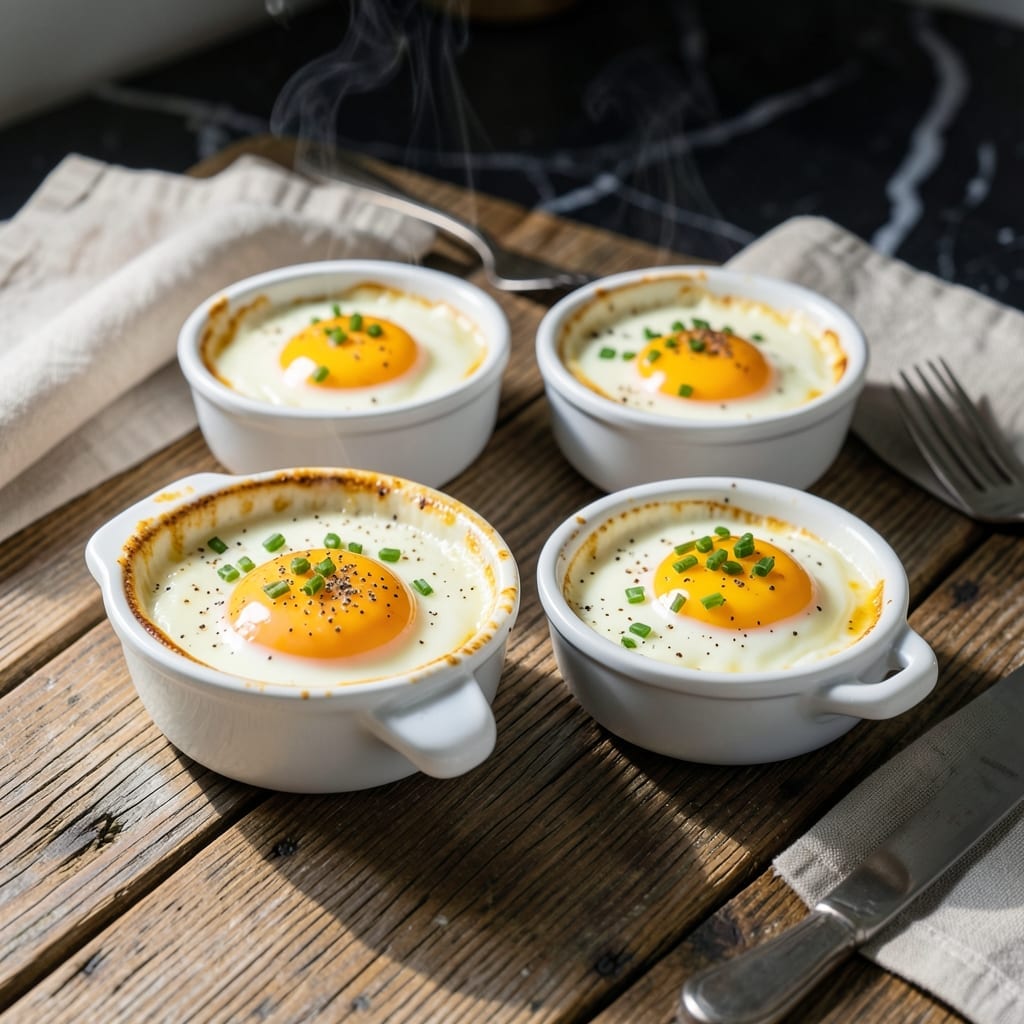
There’s something deeply satisfying about serving baked eggs straight from the ramekin, their runny yolks just begging to be scooped up with toasted bread soldiers.
This method delivers perfectly set whites and silky yolks every time, with minimal effort and maximum impression. A simple technique transforms humble eggs into an elegant breakfast.
I’ve tested this recipe countless times, adjusting temperature and timing to ensure foolproof results. The oven does most of the work while you prepare the rest of the meal.
Serve these directly from the oven for a dish that feels special enough for company but simple enough for a quiet morning.
Ingredients for Baked Eggs Recipe Ramekin
Simple ingredients elevate humble eggs into an elegant breakfast with perfectly set whites and silky yolks.
| Ingredient | Amount | Notes |
|---|---|---|
| Large Eggs 🥚 | 4 whole | Room temperature preferred |
| Unsalted Butter 🧈 | 2 tbsp | For greasing ramekins |
| Heavy Cream 🥛 | ¼ cup | Optional for richness |
| Kosher Salt 🧂 | ¼ tsp | Diamond Crystal preferred |
| Freshly Ground Black Pepper 🌶️ | 0.125 tsp | Coarse grind ideal |
| Fresh Chives 🌿 | 2 tbsp | Finely chopped for garnish |
| Fresh Parsley 🍃 | 1 tbsp | Flat-leaf, chopped finely |
| Grated Parmesan Cheese 🧀 | ¼ cup | Parmigiano-Reggiano recommended |
| Bread Slices 🍞 | 4 slices | Sourdough or brioche preferred |
| Garlic Clove 🧄 | 1 clove | Minced for garnish |
| Olive Oil 🫒 | 1 tbsp | For toasted bread |
| Dijon Mustard 🟡 | 1 tsp | Optional for cream mixture |
The eggs are the star here. Farm-fresh or organic yield the richest yolks and most stable whites. Room temperature ensures even cooking—place eggs in warm water for 10 minutes if cold. Butter quality matters for greasing; European-style unsalted has higher fat content. Ramekins should be oven-safe, ideally 6-ounce capacity for proper setting.
No heavy cream? Whole milk or half-and-half work in a pinch. Parmesan can be swapped for Pecorino Romano (more pungent) or Gruyère for nutty depth. Out of chives? Green onion tops at a 1:1 ratio. For herb flexibility, tarragon or chervil add sophisticated notes. Bread choice is adaptable—any sturdy loaf works for soldiers.
Store eggs in their original carton in the coldest part of the fridge for 3-4 weeks. Fresh herbs last 5-7 days wrapped in damp paper towels. Pre-grated Parmesan lacks the melting quality of freshly grated—always grate from a wedge. Leftovers? Unlikely, but cooked eggs keep 2 days refrigerated.
Why You’ll Love This Recipe
- One-Pan Wonder: I just crack eggs into buttered ramekins, add a splash of cream, and let the oven do the rest—no flipping, no fuss.
- Rich Indulgence: That buttery, creamy finish with a sprinkle of flaky salt? It turns simple eggs into something restaurant-worthy.
- Brunch or Dinner: I serve these for lazy Sunday brunches or quick weeknight dinners when I need something warm and satisfying fast.
Step-by-Step Instructions for Baked Eggs in Ramekins
This method ensures perfectly set whites with luxurious runny yolks every time.
Step 1: Prepare the Ramekins and Cream Mixture
Generously grease four ramekins with 2 tbsp unsalted butter, ensuring the entire interior surface is coated. This prevents sticking and creates a golden crust on the eggs. Place the prepared ramekins on a baking sheet for stability.
In a small bowl, whisk together 0.25 cup heavy cream, 0.25 tsp kosher salt, 0.125 tsp freshly ground black pepper, and 1 tsp Dijon mustard until fully combined. The mustard adds subtle depth to the cream without overpowering the eggs.
Step 2: Crack and Layer the Ingredients
Crack 4 whole large eggs one at a time into each greased ramekin, being careful not to break the yolks. For best results, use room temperature eggs—they’ll cook more evenly and create a more consistent texture.
Spoon 1 tablespoon of the cream mixture gently over each egg, allowing it to settle around the yolk. Sprinkle 0.25 cup grated Parmesan cheese evenly over the top of each ramekin. The cheese will melt into a savory blanket as the eggs bake.
Step 3: Bake to Perfection
Preheat your oven to 375°F. Bake the ramekins for 12-15 minutes, or until the whites are fully set but the yolks remain runny. Watch closely during the last few minutes—the eggs continue cooking slightly after removal from the oven.
The edges should be lightly golden, and the tops may appear slightly puffed. Avoid overbaking, as this will cause the yolks to firm up. The residual heat will finish setting the whites just enough while keeping the centers luscious.
Step 4: Toast the Bread and Finish
While the eggs bake, toast 4 slices bread slices. Brush each slice lightly with 1 tbsp olive oil and place under the broiler for 1-2 minutes per side until golden brown. Rub the warm toast with 1 clove garlic clove for added aroma.
Garnish the baked eggs with 2 tbsp fresh chives and 1 tbsp fresh parsley, finely chopped. Serve immediately with the toasted bread on the side, ready for dipping into the creamy yolks. The contrast of textures and flavors makes this dish unforgettable.
Pro Tips For Making Baked Eggs Recipe Ramekin
- Preheat the Ramekins: Always warm your ramekins in the oven for 5 minutes before adding the eggs—I learned this the hard way after too many cold starts left me with unevenly cooked whites.
- Butter Generously: Coat the inside of each ramekin with at least 1 teaspoon of softened unsalted butter, making sure to get the rim. Sounds excessive, but it prevents sticking and adds richness.
- Crack Eggs Separately: Crack each egg into a small bowl first, then slide it into the ramekin. This lets you check for shell fragments and keeps the yolks intact for that perfect presentation.
- Add Cream Last: Pour the heavy cream (about 1 tablespoon per ramekin) over the eggs just before baking—this keeps the cream from sinking to the bottom and gives a silky, even finish.
Troubleshooting This Dish
Eggs Stick to Ramekin
Always generously grease with 2 tbsp unsalted butter—I use European-style for higher fat content. If you skipped this step, carefully run a knife around the edges while warm. For future batches, try spraying with baking spray for extra insurance.
Whites Not Setting
Your oven may run cool. Try increasing to 400°F or extending time by 2-3 minutes. Room temperature eggs are key—I place cold eggs in warm water for 10 minutes before starting. A water bath can also help distribute heat evenly.
Yolks Overcooked
Pull them out at the first sign of the whites setting—usually 12-13 minutes at 375°F. The eggs continue cooking from residual heat. If they’re already overdone, reduce time by 1-2 minutes next round. 🔥
Cream Mixture Curdles
This happens if the cream is too cold. Let it sit at room temperature for 15 minutes before mixing. If it curdles, whisk in a splash of warm milk to smooth it out. Lower fat content (like using milk) may also separate more easily.
Cheese Doesn’t Melt
Pre-grated cheese often contains anti-caking agents that prevent melting. Always grate Parmigiano-Reggiano fresh from a wedge. If using pre-grated, mix with 1 tsp cornstarch to help it melt more smoothly.
Uneven Cooking
Ramekins too close together can block heat circulation. Space them at least 2 inches apart on the baking sheet. Rotate the tray halfway through if your oven has hot spots. I learned this the hard way during my early test batches.
Nutrition Facts
Frequently Asked Questions
What size ramekins work best for this recipe?
Use 6-ounce ramekins for perfect portioning and even cooking. Smaller ones may overcook the yolks, while larger ramekins can leave whites underdone.
Can I make these without heavy cream?
Yes! Substitute with whole milk or half-and-half for similar richness. For a lighter version, use 2% milk, though the texture will be less creamy.
How do I know when they’re done?
Look for fully set whites with jiggly yolks at 12-15 minutes. The eggs will finish cooking from residual heat, so remove them just before they look fully done.
Can I prepare these ahead of time?
Crack eggs into greased ramekins, cover, and refrigerate for up to 1 hour before baking. Add cream and cheese just before baking to prevent sogginess.

- BBQ Sausage Recipe Oven: Smoky Depth Without the Grill - September 28, 2026
- BBQ Chicken Bowl Recipe Rice: Smoky Sweetness Over Fluffy Grains - September 28, 2026
- Beef Cutlet Recipe Ideas: Crispy Breaded Patties With Bold Seasonings - September 28, 2026