
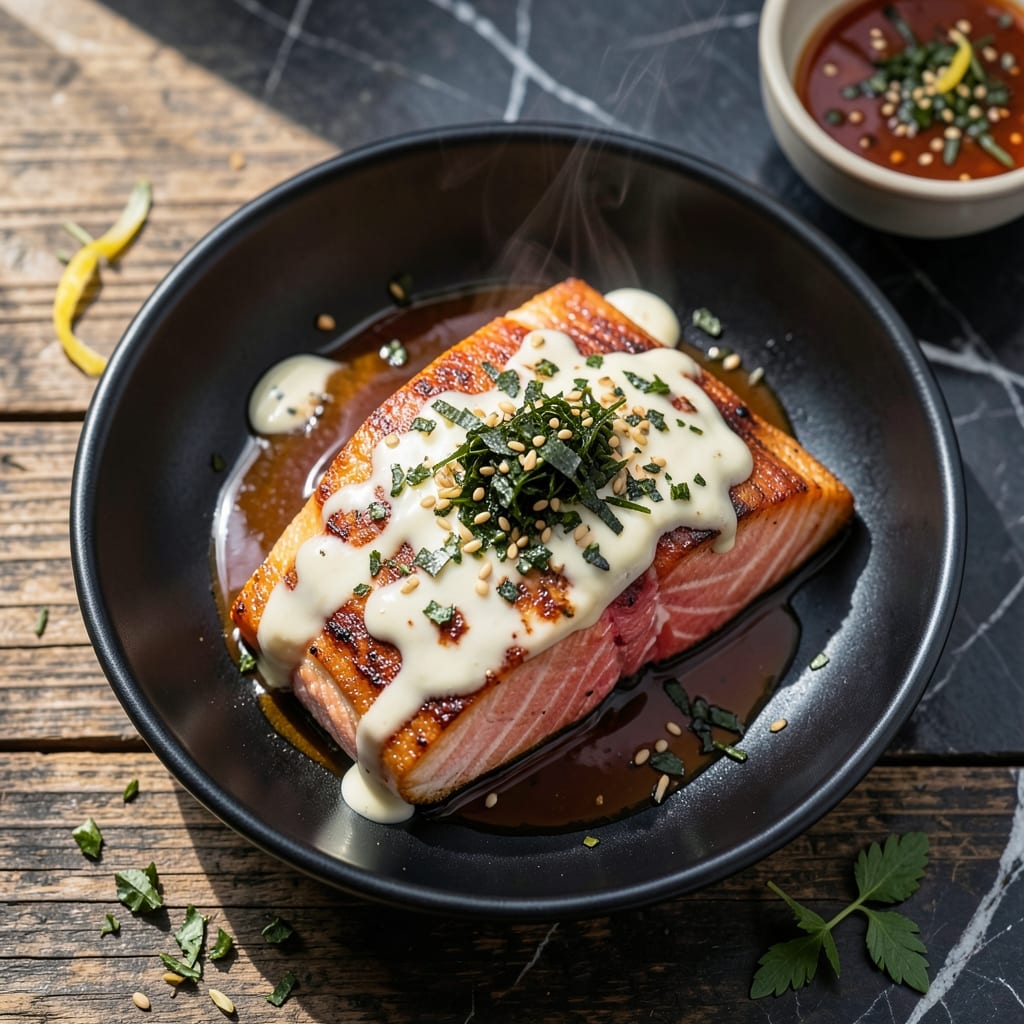
This baked salmon method delivers flaky, restaurant-quality results with minimal effort. I developed this technique after years of testing, focusing on a simple glaze that enhances the fish’s natural richness.
The combination of furikake and mayonnaise creates an umami-packed topping that forms a golden crust while keeping the salmon moist. A hot oven ensures even cooking and that perfect tender texture we all love.
What emerges is a fillet with crisp edges, flaky layers, and a savory depth that makes every bite satisfying. The furikake adds a subtle crunch and oceanic flavor that pairs beautifully with the rich mayonnaise glaze.
This dish proves that impressive meals don’t require complicated techniques. The oven does most of the work while you prepare the rest of your meal.
Ingredients for Baked Furikake Salmon Recipe Mayonnaise
Pantry staples plus fresh salmon make this umami-packed dish come alive.
| Ingredient | Amount | Notes |
|---|---|---|
| Salmon Fillets 🐟 | 1 ½ lb | Skin-on, wild-caught preferred |
| Mayonnaise 🥚 | ½ cup | Full-fat for richness |
| Furikake Seasoning 🌿 | ¼ cup | Japanese rice seasoning blend |
| Soy Sauce 🫒 | 2 tbsp | Low-sodium or regular |
| Honey 🍯 | 1 tbsp | Or maple syrup for vegan |
| Rice Vinegar 🍚 | 1 tbsp | Mild and slightly sweet |
| Garlic Cloves 🧄 | 2 cloves | Minced for glaze |
| Fresh Ginger 🌱 | 1 tsp | Grated for brightness |
| Sesame Oil 🫒 | 1 tsp | Toasted for aroma |
| Green Onions 🧅 | ¼ cup | Thinly sliced for garnish |
| Sesame Seeds 🌰 | 1 tbsp | Toasted, for extra crunch |
| Olive Oil 🫒 | 1 tbsp | For greasing baking sheet |
| Salt 🧂 | ½ tsp | Kosher or sea salt |
| Black Pepper 🌶️ | ¼ tsp | Freshly ground preferred |
The salmon is the star here. Wild-caught Sockeye or King have the best flavor and texture for baking. Most seafood counters will portion it for you—ask for center-cut fillets (they cook more evenly). Costco has great frozen wild salmon that thaws beautifully overnight. For the furikake, look for it in the Asian aisle or Japanese markets—nori komi or sesame varieties work best.
No furikake? Crushed nori sheets plus sesame seeds gets you close. Swap honey for maple syrup or agave if needed. Regular mayo works, but Japanese Kewpie mayo takes it next level (that’s what I use). Short on time? Skip the ginger and garlic—just mix mayo, furikake, and soy sauce. Still delicious. The green onions are optional but add a nice fresh finish.
Leftovers keep 2-3 days in the fridge but are best eaten fresh. Reheat gently in the oven or air fryer to keep the salmon moist. Freezing isn’t ideal—it dries out the fish. Prep the glaze ahead (it’ll keep 1 week in the fridge) but mix it into the salmon just before baking.
Why You’ll Love This Recipe
- I’ll be real: cold furikake salmon on rice the next day tastes even better. Saved me lunch prep time more than once.
- One Pan Magic: I toss the salmon with mayo, furikake, and a drizzle of honey—then bake. That’s it. One pan, minimal cleanup.
- Umami Bomb: The combo of salty furikake, sweet honey, and rich mayo on flaky salmon? Honestly, it’s the kind of flavor that makes you close your eyes mid-bite.
- Weeknight Hero: Between us, this is the only salmon recipe my picky nephew will eat twice in a week. Works for fancy dinners too.
Step-by-Step Instructions for Baked Furikake Salmon
Here’s the method I use for perfectly flaky, umami-packed salmon every time.
Step 1: Prepare the Marinade and Salmon
Preheat your oven to 400°F. In a medium bowl, whisk together the 0.5 cup mayonnaise, 2 tbsp soy sauce, 1 tbsp honey, 1 tbsp rice vinegar, 2 cloves minced garlic, 1 tsp grated fresh ginger, and 1 tsp sesame oil until smooth. This creates a rich, tangy glaze that’ll coat the salmon beautifully.
Pat the 1.5 lb salmon fillets dry with paper towels—this ensures the marinade adheres properly. Place them skin-side down on a baking sheet lined with parchment paper and lightly brushed with 1 tbsp olive oil. Season with 0.5 tsp salt and 0.25 tsp black pepper before spreading the marinade evenly over the top.
Step 2: Apply the Furikake Topping
Sprinkle the 0.25 cup furikake seasoning generously over the glazed salmon. I like to press it gently into the marinade so it sticks well. This Japanese seasoning blend adds layers of umami, saltiness, and a subtle crunch that contrasts perfectly with the tender fish.
For extra texture, sprinkle the 1 tbsp sesame seeds over the furikake. These will toast slightly in the oven, amplifying their nutty flavor. Let the salmon sit for 5 minutes while the oven finishes preheating—this helps the flavors meld before baking.
Step 3: Bake to Flaky Perfection
Bake the salmon on the center rack for 12-15 minutes. You’re looking for the edges to turn opaque and the center to still have a slight translucency—this ensures it stays moist. The furikake should appear slightly crispy and the glaze caramelized around the edges.
Resist the urge to overbake. The salmon will continue cooking for a minute or two after you remove it from the oven. When done, the fillets should flake easily with a fork but still hold their shape. If you’re unsure, use an instant-read thermometer: it should register 145°F in the thickest part.
Step 4: Garnish and Serve
Remove the salmon from the oven and let it rest for 2-3 minutes. Sprinkle the 0.25 cup thinly sliced green onions over the top—their fresh, oniony bite cuts through the richness of the dish. The residual heat will soften them slightly without wilting completely.
Serve immediately while the furikake is still crispy and the salmon is at its peak flakiness. The contrast of textures—creamy glaze, crispy topping, and tender fish—makes every bite satisfying. Pair with steamed rice and a simple vegetable side to let the salmon shine.
Pro Tips For Making Baked Furikake Salmon Recipe Mayonnaise
- Pat Salmon Dry: I learned this the hard way—skip this and your mayonnaise glaze slides right off. Press the fillets with a paper towel for 30 seconds to guarantee the coating sticks.
- Preheat the Pan: After burning three batches, I finally figured out: start with a screaming-hot oven at 425°F so the honey in your glaze caramelizes instead of steaming the salmon.
- Thin the Mayo: Sounds weird, but it works: mix your mayonnaise with 1 teaspoon of soy sauce before spreading—it thins just enough to coat evenly without globbing.
- Skip the Overmixing: Resist the urge to stir your furikake into the mayo-sauce. Sprinkle it on top right before baking so it stays crispy instead of turning into a soggy paste.
Dietary Considerations for baked furikake salmon recipe mayonnaise
Gluten-Free Friendly
This dish is naturally gluten-free as long as you use certified GF soy sauce. I recommend Tamari as a direct substitute—it has the same rich umami flavor without wheat. Always check furikake labels, as some brands add wheat-based seasonings. 💪
Dairy-Free Option
The recipe contains no dairy, making it safe for lactose-intolerant cooks. The mayonnaise provides all the creaminess needed. For strict vegan versions, swap regular mayo for vegan mayonnaise and use maple syrup instead of honey.
Low-Carb Perfect
With only 8g net carbs per serving (mostly from honey), this fits easily into keto or low-carb lifestyles. The protein and healthy fats from salmon keep you satisfied. I often serve it with cauliflower rice to keep carbs minimal.
Seafood Allergies
This recipe contains salmon and furikake (which often includes fish flakes). For shellfish allergies, verify furikake ingredients—some contain dried shrimp or crab. Always use separate utensils to prevent cross-contamination with other seafood.
Soy-Free Adaptation
Replace soy sauce with coconut aminos for a soy-free version. The flavor profile is slightly sweeter but still complementary. You may need to reduce the honey by ½ tbsp to balance the sweetness. 🌱
Egg-Free Consideration
Standard mayonnaise contains eggs, but egg-free mayo works perfectly here. Brands like Just Mayo or Hellmann’s Vegan maintain the same creamy texture. The furikake and soy sauce provide enough flavor that no one will notice the difference.
Nutrition Facts
Frequently Asked Questions
Can I use a different type of fish?
This glaze works wonderfully with cod or halibut. Adjust baking time to 10-12 minutes for thinner fillets. The umami flavors pair well with any mild white fish.
What if I don’t have furikake?
Mix 1 tbsp crushed nori with 1 tbsp sesame seeds and a pinch of salt. This DIY version captures the essence of furikake. For extra flavor, add a dash of soy sauce.
How do I prevent the salmon from sticking?
Use parchment paper and brush it with olive oil before placing the fillets. The skin-side down position helps too. Let the salmon rest for 2 minutes before transferring.
Can I make this ahead of time?
Prepare the glaze up to 1 day in advance, but apply it to the salmon just before baking. This keeps the topping crisp and prevents the fish from becoming soggy.

- Beef Kidney Recipe Keto: Bold Flavors with Low-Carb Simplicity - October 8, 2026
- Pea Salad Recipe With Egg and Mayonnaise: Classic Creamy Potluck Favorite - October 8, 2026
- Peach Salsa Canning Recipe No Tomatoes: Sweet and Spicy Preservation - October 8, 2026