
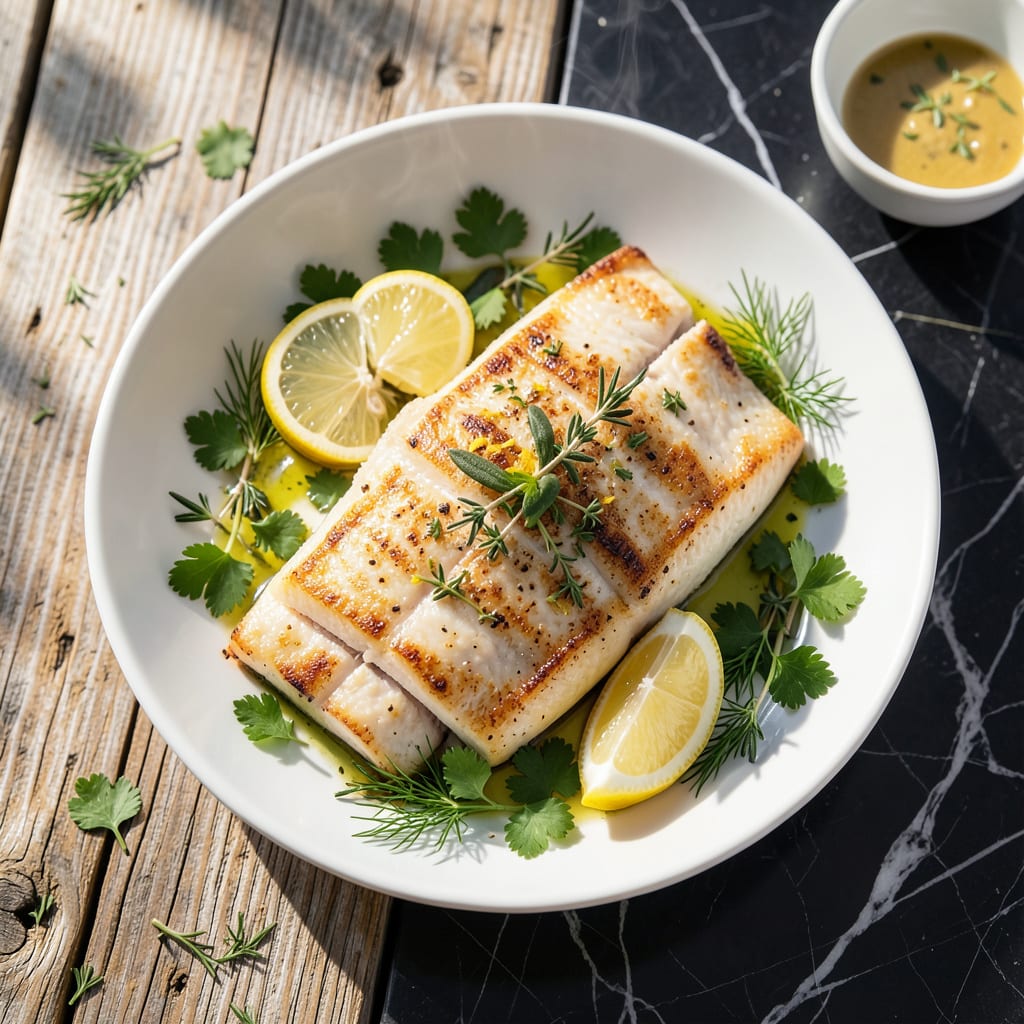
This baked largemouth bass delivers flaky, tender white fish with minimal effort. A simple lemon-herb crust enhances the natural sweetness without overpowering the delicate flavor.
The key is precise timing and temperature—just 15 minutes at 400°F ensures perfect doneness. The result is a restaurant-quality dish that highlights the fish’s clean, mild taste.
Ingredients for Baked Largemouth Bass
Fresh fish, bright herbs, and a zesty crust create this elegant yet simple dish.
| Ingredient | Amount | Notes |
|---|---|---|
| Largemouth Bass Fillets 🐟 | 1 ½ lb | Skin-on, scaled and gutted |
| Extra-Virgin Olive Oil 🫒 | 3 tbsp | Divided for brushing and crust |
| Lemon 🍋 | 1 whole | Zested and juiced |
| Fresh Parsley 🌿 | ¼ cup | Finely chopped, flat-leaf variety |
| Fresh Thyme 🍃 | 2 tsp | Leaves only, stems discarded |
| Fresh Dill 🌿 | 2 tsp | Chopped, optional but recommended |
| Garlic Cloves 🧄 | 3 cloves | Minced finely |
| Dijon Mustard 🟡 | 1 tbsp | Smooth, not whole grain |
| Panko Breadcrumbs 🍞 | ½ cup | For crispy topping |
| Kosher Salt 🧂 | 1 tsp | Diamond Crystal preferred |
| Freshly Ground Black Pepper 🌶️ | ½ tsp | Coarse grind preferred |
| Unsalted Butter 🧈 | 2 tbsp | Melted for crust |
The largemouth bass is the star here. Source it fresh from a trusted fishmonger—look for firm, translucent flesh and a mild, oceanic scent. Whole Foods often carries quality fillets, or local seafood markets are ideal. If unavailable, substitute with striped bass or branzino. The fish should be scaled and deboned by your fishmonger (ask for skin-on fillets for easier handling). Always cook fish the same day you buy it for optimal freshness.
No fresh herbs? Dried at one-third the amount works in a pinch, but fresh delivers the bright, aromatic notes this dish needs. Out of lemon? Lime zest and juice offer a similar acidity. For the breadcrumbs, regular breadcrumbs can replace panko, though the texture won’t be as crisp. Trader Joe’s has good panko if your store doesn’t stock it. Dijon mustard can be swapped with whole-grain for a rustic touch.
Store fresh herbs wrapped in damp paper towels for up to 5 days. The crust mixture can be prepped a day ahead (keep refrigerated). Cooked fish is best served immediately but reheats gently at 300°F for 8-10 minutes if needed. Never refreeze previously frozen fish—use it within 24 hours of thawing.
Why You’ll Love This Recipe
- One Pan Wonder: I just toss the bass fillets with olive oil, lemon, and herbs, then bake—no fancy techniques or extra dishes.
- Bright & Zesty: That fresh lemon and thyme combo makes the bass taste so clean and vibrant, not heavy or fishy.
- Weeknight Rescue: Honestly, it’s my go-to when I need a protein that cooks fast but still feels special.
- Budget-Friendly Luxury: Largemouth bass is often cheaper than salmon or cod, yet it feels like a restaurant-quality meal.
Step-by-Step Instructions for Baked Largemouth Bass
Master this technique to achieve perfectly flaky fish with a crisp, aromatic lemon-herb crust.
Step 1: Prepare the Lemon-Herb Crust Mixture
In a medium bowl, combine the 0.25 cup fresh parsley, 2 tsp fresh thyme, 2 tsp fresh dill, 3 cloves minced garlic, 1 tbsp Dijon mustard, and 1 tsp kosher salt.
Stir in the 0.5 cup panko breadcrumbs and 0.5 tsp freshly ground black pepper until evenly distributed. The mixture should resemble coarse, fragrant sand. Drizzle in 2 tbsp melted unsalted butter and mix thoroughly—this binds the crust and promotes browning.
Set the bowl aside while you prepare the largemouth bass fillets. The herb mixture will absorb the flavors as it rests, enhancing its depth when applied to the fish.
Step 2: Prep and Season the Fillets
Pat the 1.5 lb largemouth bass fillets completely dry with paper towels to remove excess moisture. This ensures the crust adheres properly and the skin crispens during baking. Place the fillets skin-side down on a parchment-lined baking sheet.
Brush the flesh side lightly with 1 tbsp extra-virgin olive oil from the 3 tbsp total. This creates a sticky surface for the crust to cling to. Avoid over-saturating the fillets—the oil should glisten subtly, not pool.
Zest the 1 whole lemon directly over the fillets, distributing the zest evenly. The natural oils in the zest will infuse the fish with bright citrus notes as it bakes.
Step 3: Apply the Crust and Bake
Press the lemon-herb-panko mixture firmly onto the oiled flesh side of each fillet, creating an even ¼-inch-thick layer. Use your fingers to compact it gently—the crust should stay in place when you lift the fillet. Drizzle the remaining 2 tbsp extra-virgin olive oil over the crust to promote even browning.
Bake in a preheated 400°F oven for 12-15 minutes until the crust turns golden brown and the fish flakes easily with a fork. The internal temperature should reach 145°F at the thickest part. Avoid overbaking; the fillets will continue cooking slightly as they rest.
Halfway through baking, rotate the pan 180 degrees to ensure even exposure to heat, especially if your oven has hot spots.
Step 4: Finish with Lemon and Serve
Remove the fillets from the oven and let them rest for 3-5 minutes. This allows the juices to redistribute, keeping the fish moist. Squeeze the juice from the zested 1 whole lemon evenly over the fillets—this adds a final burst of acidity that balances the richness of the crust.
Garnish with any remaining chopped herbs from your prep. The crust should be crisp to the touch, while the fish beneath remains tender and flaky. Serve immediately, as the crust loses its texture if left to sit too long.
Use a metal spatula to lift the fillets from the baking sheet, ensuring the crust stays intact. The skin should release cleanly from the parchment if properly crisped.
Pro Tips For Making Baked Largemouth Bass
- Pat Dry First: Always blot the bass fillets with a paper towel before oiling—they’ll sear better and the herbs will stick instead of sliding off.
- High Heat Start: Preheat your baking sheet or skillet in the oven at 425°F for 10 minutes before adding the fish to prevent sticking and ensure a crisp edge.
- Skip the Overcrowding: I learned this the hard way—leave at least an inch between fillets so they bake evenly and don’t steam each other into rubbery sadness.
- Zest Before Juicing: Grate the lemon zest directly over the fish before squeezing the juice—it packs way more flavor and looks prettier than just drizzling.
Essential Equipment for This Dish
Baking Sheet Essentials
Use a heavy-gauge half-sheet pan (like Nordic Ware) for even heat distribution. Line it with parchment paper to prevent sticking and make cleanup effortless. The lip around the edge catches any oil that might bubble over during baking. 💪
Mixing Bowl
A medium stainless steel mixing bowl is perfect for combining your crust ingredients. I prefer Cuisinox because it’s durable and won’t absorb odors. A 1.5-quart size gives enough room to mix without spilling.
Precision Tools
Invest in a microplane for zesting the lemon—it extracts the maximum flavor from the rind. A pastry brush helps apply the olive oil evenly without wasting a drop. Both tools are inexpensive but make a noticeable difference.
Measuring Accurately
Use stainless steel measuring spoons for the herbs and seasonings. I like OXO’s magnetic set because they nest together and stay organized. Accurate measurements ensure your crust has the perfect balance of flavors.
Oven Thermometer
Don’t trust your oven’s built-in thermometer. A $10 oven thermometer (like Taylor’s) hangs inside and gives you the true temperature. This is crucial for achieving that perfect 400°F bake every time.
Serving utensils
A thin, flexible metal spatula lifts the fillets without damaging the crust. I use a fish spatula from Mercer Culinary—its angled edge slides under the fish cleanly. Serve on a warmed platter to keep everything hot. 🔥
Nutrition Facts
Frequently Asked Questions
Can I use frozen fillets instead of fresh?
Yes, but thaw them overnight in the fridge first. Pat them extra dry to remove moisture before adding the crust. Never refreeze after thawing.
What if my crust isn’t browning?
Move the pan to the oven’s top rack for the last 2-3 minutes. Broil briefly if needed, but watch closely to avoid burning.
How do I know when it’s done?
The fish is ready when it reaches 145°F internally and flakes easily with a fork. The crust should be golden brown.
Can I make this ahead?
Prep the crust mixture a day early, but bake just before serving. Cooked fish is best fresh but reheats at 300°F for 8-10 minutes.

- BBQ Sausage Recipe Oven: Smoky Depth Without the Grill - September 28, 2026
- BBQ Chicken Bowl Recipe Rice: Smoky Sweetness Over Fluffy Grains - September 28, 2026
- Beef Cutlet Recipe Ideas: Crispy Breaded Patties With Bold Seasonings - September 28, 2026