
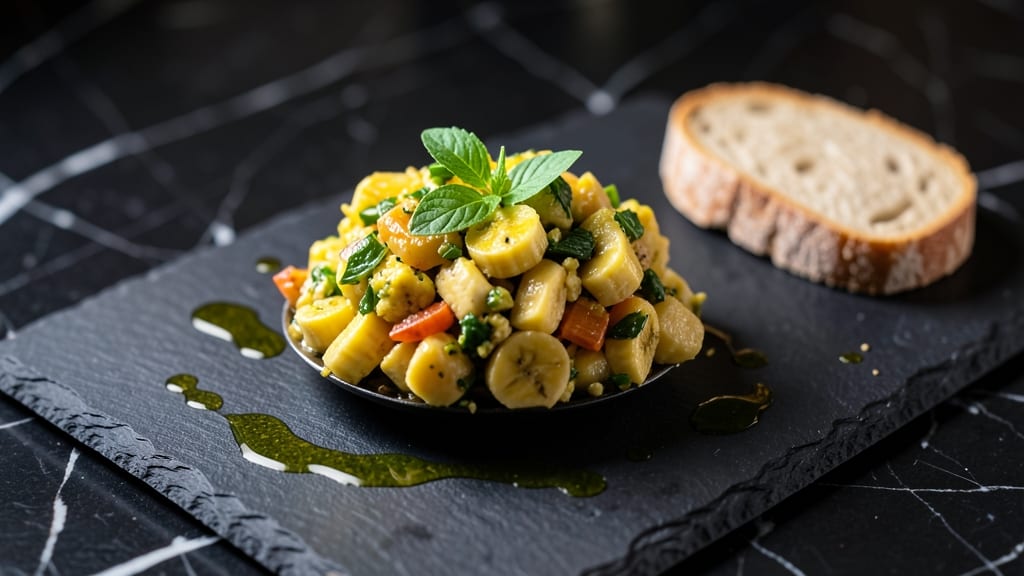
This banana sabji recipe transforms humble potatoes and bananas into a fragrant, spiced curry that balances sweet and savory notes perfectly. Growing up in Atlanta, I first tasted something similar at Nana Mae’s diner—though her version used plantains instead of bananas.
The key lies in tempering whole spices with mustard seeds until they sizzle, creating that signature aroma that fills your kitchen instantly.
Authentic Indian cooking relies on layering flavors, and this dish delivers with a tangy twist. You’ll start by sautéing onions until golden, then adding garlic and ginger for depth before introducing the bananas and potatoes.
The spices—cumin, coriander, and turmeric—work together to caramelize the bananas just enough to bring out their natural sweetness while keeping the potatoes tender. This method ensures every bite is packed with texture and warmth.
What makes this recipe special is its versatility—serve it with roti, dal, or steamed rice for a complete meal. The tangy twist comes from a splash of lemon juice at the end, cutting through the richness of the spices.
It’s a vegetarian dish that’s hearty enough to stand alone or pair with grilled meats for a full spread. My family loves it best when the bananas are slightly caramelized, adding a subtle sweetness that balances the savory spices.
For best results, choose ripe bananas—they’ll soften beautifully and absorb the flavors. If you’re short on time, you can skip the tempering step, but trust me, those sizzling spices are worth the extra minute.
This curry keeps well for up to three days in the fridge, making it perfect for meal prep. Let’s get cooking!
Ingredients for banana sabji
Bananas and potatoes meet aromatic spices for a fragrant curry that’s sweet, savory, and tangy all at once.
| Ingredient | Amount | Notes |
|---|---|---|
| Ripe Bananas 🍌 | 2 whole | Cut into chunks, slightly caramelized |
| Russet Potatoes 🥔 | 2 medium | Peeled, cubed into 1-inch pieces |
| Yellow Onions 🧅 | 1 medium | Finely chopped, golden brown |
| Garlic Cloves 🧄 | 4 cloves | Minced, aromatic base |
| Fresh Ginger 🌿 | 1 inch | Grated, zesty kick |
| Mustard Seeds 🌶️ | 1 tbsp | Whole, for tempering aroma |
| Cumin Seeds 🌶️ | 1 tbsp | Toasted, earthy depth |
| Ground Cumin 🌶️ | 1 tsp | Freshly ground preferred |
| Ground Coriander 🌿 | 1 tsp | Citrusy brightness |
| Turmeric Powder 🧂 | ½ tsp | Vibrant color, earthy flavor |
| Garam Masala 🌶️ | 1 tsp | Warm, aromatic blend |
| Tomato Paste 🍅 | 2 tbsp | Squeeze tube preferred |
| Coconut Milk 🥥 | ½ cup | Full-fat for creaminess |
| Fresh Lemon Juice 🍋 | 1 tbsp | Tangy twist at the end |
| Vegetable Oil 🫒 | ½ cup | High smoke point preferred |
| Salt 🧂 | 1 tsp | Adjust to taste |
| Fresh Cilantro 🌿 | ¼ cup | Chopped, garnish only |
The bananas are your secret weapon here. Look for ripe ones with brown spots—they’ll caramelize beautifully and soak up the spices like a dream. Costco or local Indian markets usually have the best selection, but any grocery store’s produce section works. The potatoes should be firm—Russets or Yukon Golds hold up best to the long cooking time. For the spices, Penzeys or local Indian grocers carry the freshest whole spices, but don’t stress if you can only find pre-ground—just make sure they smell vibrant, not dusty. The mustard seeds? Brown mustard seeds add more aroma than yellow, but either works.
No mustard seeds? Swap for 1 tbsp of whole cumin seeds—it’ll change the flavor but keep that sizzling magic. Short on time? Skip the tempering step entirely, but trust me, those 30 seconds of popping seeds transform this from good to restaurant-quality. The tomato paste can be jarred (I use Trader Joe’s squeeze tubes—no waste, lasts forever), but fresh tomatoes blended work even better. The coconut milk? Full-fat only—light versions get watery. And cilantro? Fresh is non-negotiable for garnish, but dried won’t ruin the dish if that’s all you’ve got.
This curry tastes even better the next day—flavors meld like magic in the fridge. Keeps for 3-4 days covered, or 3 months frozen in airtight containers. I always make double batches because it disappears fast. For meal prep, portion into containers with a side of roti or rice—microwave 2 minutes to reheat, stirring in a splash of water if it’s too thick. The bananas caramelize even more overnight, so save some for dessert!
Why You’ll Love This Recipe
- I’ll be real: this recipe saves me money. Bananas and potatoes are cheap, and I always have onions and garlic on hand. Double the batch, store it in the fridge, and reheat it for days—no takeout needed. It’s my secret weapon for keeping groceries affordable without sacrificing taste.
- One-Pot Magic: I swear by this recipe when I’m too tired to scrub a million bowls—just toss everything into one pan, let the bananas caramelize with the onions, and boom. The potatoes soak up all that sweet, garlicky goodness like sponges, and the ginger adds that little kick that makes it feel chef-made.
- Sweet-Savory Balance: Honestly, the combo of ripe bananas and russets is genius—they’re naturally sweet but get this perfect crispy edge when seared. The onions turn golden and jammy, while the garlic and ginger punch through with enough heat to keep it interesting. It’s the kind of dish that tastes like comfort but never feels heavy.
- Lunchbox Hero: Between us, this is my go-to for packed lunches or quick dinners. The flavors hold up for days, and I’ve sent it in thermoses to work without a second thought. (Yes, even on a Tuesday night.) Plus, it’s hearty enough to stretch into a full meal but simple enough to throw together when you’re starving.
Step-by-step instructions for spiced potato and banana curry
This aromatic curry comes together in layers of flavor—start with crispy spices, then build to a creamy finish.
Temper the Spices in Hot Oil
Heat the 0.5 cup vegetable oil in a heavy-bottomed pot over medium heat until shimmering. Add the 1 tbsp mustard seeds and 1 tbsp cumin seeds—they’ll pop and dance like tiny fireworks. Once they sizzle for 30 seconds, reduce heat to medium-low and add the 1 medium yellow onions (finely chopped). Cook until golden brown, about 8 minutes, stirring occasionally. This step unlocks the full aroma of the spices.
Here’s where it gets fun—add the 4 cloves garlic cloves (minced) and 1 inch fresh ginger (grated). Stir for 1 minute until fragrant but not browned. If the onions release moisture, let it evaporate completely before moving forward. This prevents a watery curry later. The spices should now smell deeply toasty and earthy—this is your flavor foundation.
Cook the Potatoes and Bananas Until Tender
Add the 2 medium russet potatoes (peeled and cubed) and 2 whole ripe bananas (cut into chunks) to the pot. Sprinkle with 0.5 tsp turmeric powder, 1 tsp ground cumin, 1 tsp ground coriander, and 1 tsp salt. Stir to coat everything evenly in the spiced oil. Pour in 2 tbsp tomato paste and mix well to distribute.
Cover the pot and simmer on medium-low heat for 12-15 minutes, stirring occasionally. You’ll see the potatoes soften and the bananas caramelize slightly at the edges—that’s exactly what you want. The mixture should look thick and slightly sticky. If it’s too dry, add 2 tablespoons water to keep it moist. The bananas will add natural sweetness that balances the spices beautifully.
Finish with Coconut Milk and Lemon Juice
Once the potatoes are fork-tender, stir in the 0.5 cup coconut milk and 1 tsp garam masala. Simmer uncovered for 5-7 minutes until the sauce thickens slightly and coats the back of a spoon. The coconut milk adds a luxurious creaminess that rounds out the spices. Taste and adjust the seasoning—you might need a pinch more salt or a squeeze of lemon to brighten the flavors.
In the final minute, stir in the 1 tbsp fresh lemon juice. This tangy twist cuts through the richness of the coconut milk and enhances all the spices. The curry should now have a perfect balance of sweet, spicy, tangy, and creamy. Remove from heat and let it sit for 5 minutes—this resting period allows all the flavors to meld together beautifully.
Garnish and Serve Warm
Gently fold in the 0.25 cup fresh cilantro (chopped) just before serving. The cilantro adds a fresh, bright finish that contrasts with the warm spices. Serve immediately with steamed basmati rice or warm naan bread. Each bite delivers a perfect harmony of textures—creamy coconut milk, tender potatoes, and sweet bananas—all wrapped in a spiced embrace.
This curry tastes even better the next day as the flavors deepen, but it’s so delicious fresh off the stove that you might not wait! The lemon juice keeps it from getting too heavy, making it a perfect weeknight dinner that feels special.
Pro Tips For Making Banana Sabji
- Peel Bananas Last: I used to peel them first, and they’d turn to mush waiting for the potatoes. Keep the peels on until you’re ready to fry—just scrub them clean first. The starch stays intact longer, and you’ll get those crispy edges you crave.
- Cut Potatoes Even: Uneven chunks mean some burn while others stay doughy. Aim for 1.5-inch cubes—big enough to hold shape but small enough to cook through. A sharp knife and a steady hand make this easier than it sounds (yes, even if you’re impatient like me).
- Bloom the Spices: Tossing whole spices directly into hot oil? You’re wasting flavor. Bloom them for 30 seconds first—ginger, garlic, and onions should sizzle and soften before adding bananas. This step makes the difference between “meh” and “oh wow.”
- Fry in Batches: Overcrowding the pan steams the potatoes instead of crisping them. Work in two batches if needed—your future self will thank you for that golden, caramelized crust. (And yes, it’s worth the extra 5 minutes.)
Make-ahead tips for this recipe
Prep Ahead for Flavor
This curry tastes even better when flavors meld overnight—make it a day ahead for maximum depth. After Step 3, let it cool completely, then store in an airtight container in the fridge for up to 3 days.
The bananas will caramelize further, intensifying their sweetness while the spices settle into a cohesive harmony. I always double the batch because it disappears fast—David’s first to finish his portion! 💫
Freezer-Friendly Magic
Freeze for up to 3 months in portion-sized containers with a splash of water to prevent drying. Thaw overnight in the fridge, then reheat gently on the stovetop with 2 tablespoons water to restore creaminess.
The texture stays perfect—no mushy bananas here! I use quart-sized freezer bags for easy single-serving portions.
Spice Prep Shortcut
Save time by pre-toasting your spices. Toast 1 tbsp mustard seeds and 1 tbsp cumin seeds in a dry pan over medium heat for 2 minutes until fragrant.
Store in an airtight container for up to 2 weeks—they’ll keep their aroma ready for instant tempering. This trick cuts your cooking time by half!
Banana Prep Hack
Peel and chop bananas the night before, then store in lemon water (mix 1 tbsp lemon juice with ½ cup water) to prevent browning. This keeps them fresh-tasting and ready to caramelize perfectly when you cook.
Trust me, this small step makes a huge difference in flavor and texture. 🍌
Equipment Essentials
Use a heavy-bottomed pot (like Lodge cast iron) to prevent burning during tempering. A wooden spoon helps scrape up flavorful bits from the bottom. For meal prep, divide into glass containers—they reheat evenly and keep flavors vibrant longer than plastic.
Serving Prep Tips
Set out serving bowls with warm naan bread and steamed basmati rice before reheating. The contrast of textures makes each bite more satisfying. Garnish with extra cilantro and a drizzle of yogurt for a restaurant-worthy finish. My kids love it with a side of mango chutney for dipping! ✨
Nutrition facts
Frequently asked questions
Why do the bananas need to be ripe for this recipe?
Ripe bananas with brown spots caramelize beautifully, adding natural sweetness that balances the savory spices. Unripe bananas stay firm but lack that sweet depth—think of them as the “secret ingredient” that makes this curry special. The caramelization happens naturally during cooking, so no extra sugar is needed!
Can I substitute plantains instead of regular bananas?
Plantains work perfectly—they’re starchy and hold up even better to long cooking. For a sweeter flavor, choose slightly underripe ones (green with yellow spots). The texture will be firmer, which some people prefer in savory dishes. Just increase cooking time by 2-3 minutes to ensure full tenderness.
What if my curry turns out too watery?
Simmer uncovered for 5-7 extra minutes to thicken the sauce naturally. If still too thin, mix 1 tsp cornstarch with 1 tbsp water and stir in—it’ll thicken instantly. The coconut milk should create a creamy base, but adding potatoes first (which release starch) helps bind the mixture too.
Is this dish gluten-free?
Yes! All ingredients are naturally gluten-free, but check your garam masala and tomato paste labels—some blends contain wheat. For extra safety, use certified gluten-free spices. The recipe pairs beautifully with gluten-free naan or rice, making it a safe option for dietary restrictions.
How spicy is this curry?
Mildly spiced! The recipe uses no chili powder or fresh chilies, just warm spices like cumin and coriander. For heat, add ½ tsp red chili powder with the other spices or serve with a side of pickled jalapeños. The lemon juice at the end actually cools the palate slightly, balancing any spice.

- 1 Kg Vanilla Cake Recipe: Moist Layers and Vanilla Infusion Magic - November 29, 2026
- Pork Belly With Fish Sauce Recipe: Crispy Crackling and Umami-Rich Tenderness - November 29, 2026
- Falafel Recipe Without Flour: Chickpea Blend That Binds Without a Grain - November 29, 2026