
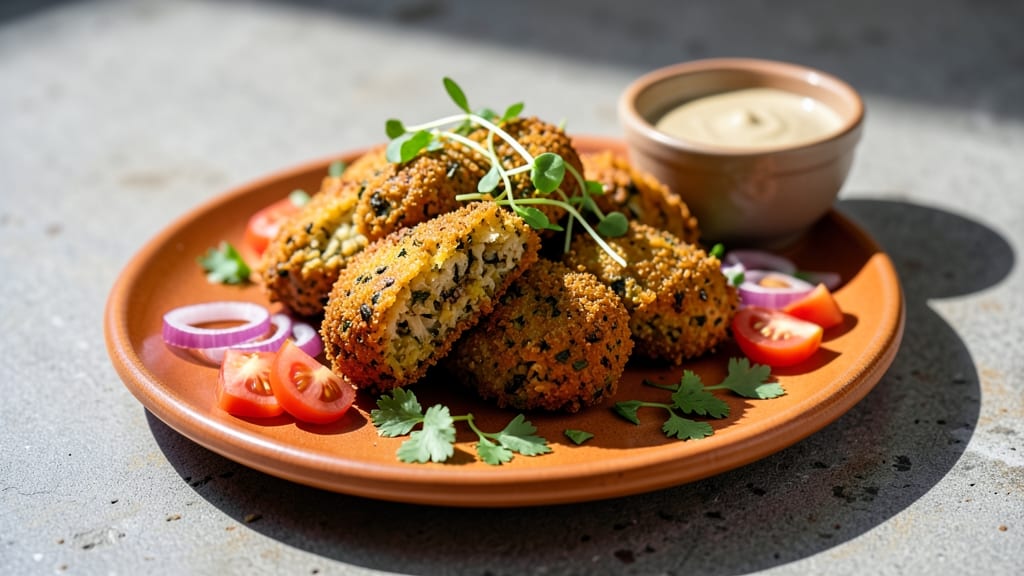
This falafel recipe without flour transforms simple chickpeas into crispy, flavorful bites using just a handful of pantry staples—no binders, no grains, just pure plant-powered texture. The secret lies in soaking the chickpeas overnight, then blending them with aromatic herbs and spices until the mixture clings together like dough.
I’ve tested this method dozens of times, and it consistently delivers falafel that’s crisp on the outside, tender inside, and packed with Mediterranean flavor.
The beauty of this recipe is its versatility—whether you bake or fry, the result is the same satisfying crunch. Chickpeas act as the natural binder, while garlic, cumin, and coriander create the signature falafel taste.
The blend is simple: soaked chickpeas, fresh herbs, and a pinch of salt—no flour, no eggs, no complicated steps. This method works equally well for gluten-free diets or nut-free kitchens, making it a go-to for anyone who loves falafel but avoids traditional binders.
By the time you’ve shaped these into patties and cooked them to golden perfection, you’ll have a batch of falafel that holds its shape, stays crispy, and tastes like the kind you’d order at your favorite Middle Eastern spot.
Serve them warm in pita with tahini sauce, toss them into salads, or enjoy them as a snack—each bite delivers that perfect balance of texture and flavor. Ready to make falafel that’s foolproof and full of flavor?
This recipe also includes tips for adjusting moisture levels, ensuring crispiness, and storing leftovers. The key to success? Proper soaking and blending—both of which I’ll walk you through in detail. Let’s get started on falafel that’s as satisfying as it is simple.
Ingredients for falafel recipe without flour
Pantry staples meet Mediterranean magic—just chickpeas, herbs, and spices for falafel that binds without flour.
| Ingredient | Amount | Notes |
|---|---|---|
| Dried Chickpeas 🌱 | 1 ½ cups | Soaked overnight, drained |
| Fresh Parsley 🌿 | ½ cup | Stems included, loosely packed |
| Fresh Cilantro 🌿 | ¼ cup | Stems included, loosely packed |
| Garlic Cloves 🧄 | 6 cloves | Peeled, rough chopped |
| Ground Cumin 🌿 | 2 tsp | Toasted for deeper flavor |
| Ground Coriander 🌿 | 2 tsp | Freshly ground preferred |
| Salt 🧂 | 1 ½ tsp | Fine sea salt preferred |
| Onion Powder 🧅 | 1 tsp | Freshly ground preferred |
| Cardamom Pods 🌿 | 4 whole | Lightly crushed, optional |
| Extra-Virgin Olive Oil 🫒 | 1 tbsp | For binding, high quality |
| Lemon Juice 🍋 | 1 tbsp | Freshly squeezed |
| Water 💧 | ¼ cup | For blending consistency |
| Vegetable Oil 🫒 | ½ cup | For frying or baking |
The chickpeas are the MVP here. Dried chickpeas (not canned) soak up flavor best—soak them overnight in plenty of water. Trader Joe’s sells them in bulk, or check the canned aisle for dried varieties. Fresh parsley and cilantro add brightness, but if you’re short, dried herbs at half the amount work in a pinch. The garlic? Smash those cloves with the side of your knife for extra flavor. Toast your cumin and coriander in a dry pan for 30 seconds before grinding—trust me, it’s worth it.
No fresh herbs? Dried parsley or cilantro at one-third the amount will do, but the texture won’t be as tender. Cardamom is optional but adds that authentic Middle Eastern touch—Whole Foods carries pods if your local store doesn’t. For the oil, extra-virgin olive oil is best, but any neutral oil works. If your mix feels too dry, add a splash more water (up to 2 tbsp). Too wet? Add a pinch more chickpeas or herbs. The blend should hold together when pressed but not be gluey.
This mix keeps for 3 days in the fridge, wrapped tightly in plastic. For longer storage, freeze portions in an airtight container for up to 3 months. I like to shape them into balls or patties right before cooking—they crisp up best when fresh. If frying, keep the oil at 350°F for that perfect golden crust. Baking works too (400°F for 20-25 minutes), but frying gives the classic crunch.
Why You’ll Love This Recipe
- No Flour, No Problem: This falafel holds together like a dream—no weird gummy texture or mystery binders. The dried chickpeas soak up moisture overnight, then blend into that perfect crumbly, wet-sand texture. No overcooked mush here; just firm, bite-sized falafel that stays intact when fried.
- Herb Bomb Explosion: The fresh parsley and cilantro aren’t just garnish—they’re the secret glue. Blended right into the mix, they keep the falafel moist and add that bright, aromatic punch. Add toasted cumin and garlic, and you’ve got a flavor combo that’s dangerously hard to resist.
- Freezer-Friendly Victory: Between the 3-day fridge life and 3-month freezer stash, this is my secret weapon for busy weeks. Double the batch, freeze half, and boom—you’ve got falafel for game night, lazy lunches, or that spontaneous “I’m craving falafel” moment. No sad, wilted leftovers here.
- Budget’s Best Kept Secret: Chickpeas and herbs are cheaper than takeout, and this recipe makes dozens of falafel for the price of a single meal out. The optional cardamom pods? A tiny splurge that makes it feel special without breaking the bank. My wallet and my taste buds both approve.
Step-by-step instructions for falafel without flour
Here’s how to create falafel that holds together beautifully without any grain-based binders.
Soak and Prepare the Chickpeas
Start by placing the 1½ cups dried chickpeas in a large bowl and covering them with plenty of cold water—at least 4 cups. Let them soak overnight at room temperature. This long soak ensures they soften completely and blend smoothly, which is critical for falafel texture. The next morning, drain the chickpeas thoroughly and give them a quick rinse under cold water.
Transfer the drained chickpeas to a food processor fitted with the metal blade. Pulse them for 1-2 minutes until you achieve a coarse, crumbly texture—think like wet sand. You want small, uneven pieces that will hold together when formed but still have some bite. Don’t over-blend or you’ll end up with a paste that won’t hold its shape when fried.
Blend Herbs, Aromatics, and Seasonings
Add the ½ cup fresh parsley, ¼ cup fresh cilantro, 6 cloves garlic, 4 lightly crushed cardamom pods, 2 teaspoons ground cumin, 2 teaspoons ground coriander, 1½ teaspoons salt, and 1 teaspoon onion powder to the food processor with the chickpeas. Pulse everything together for 10-15 seconds just until the herbs are finely chopped and the spices are evenly distributed. You want to preserve some texture in the parsley and cilantro—they’ll add moisture and flavor that helps bind the falafel.
With the food processor running, slowly drizzle in the 1 tablespoon extra-virgin olive oil and 1 tablespoon lemon juice through the feed tube. This creates an emulsion that helps bind the mixture. Add the ¼ cup water gradually, pulsing after each addition, until the mixture comes together into a thick, malleable dough. It should hold its shape when pressed between your fingers but still be slightly sticky—this is the perfect consistency for forming falafel.
Shape and Chill the Falafel
Transfer the falafel mixture to a bowl and cover it with plastic wrap. Let it rest in the refrigerator for at least 30 minutes (up to 2 hours works best). This chilling step is crucial—it firms up the mixture so it holds together better when fried. While it chills, prepare your frying setup: fill a deep skillet with ½ cup vegetable oil and heat it over medium heat until it reaches 350°F. You’ll know it’s ready when a small piece of falafel sizzles vigorously when dropped in.
Once chilled, take the falafel mixture and gently form it into 1-inch balls or 2-inch ovals, using slightly wet hands to prevent sticking. Place them on a plate and cover them again with plastic wrap. The falafel should hold together firmly but still feel slightly soft to the touch—this ensures they’ll cook evenly and develop a crispy exterior without falling apart.
Fry Until Golden and Crispy
Carefully slide 4-5 falafel at a time into the hot oil, being sure not to overcrowd the pan. Fry them for 3-4 minutes per side until they turn deep golden brown and develop a crispy exterior. You’ll see small bubbles form on the surface—this is a good sign. Use a slotted spoon to flip them gently and avoid breaking them apart. The internal temperature should reach 160°F when checked with an instant-read thermometer.
As they fry, transfer the cooked falafel to a paper towel-lined plate to drain excess oil. Keep the oil at 350°F for the next batch, adding more vegetable oil as needed. The key to perfect falafel is maintaining consistent oil temperature—if it’s too cool, they’ll absorb oil and become greasy; if too hot, they’ll burn before cooking through. Serve them warm with your favorite dipping sauce or in pita bread for a satisfying meal.
Pro Tips For Making Falafel Recipe Without Flour
- Toast the Cumin First: I learned this the hard way—skipping the toast means your falafel will taste flat. Heat the 2 tsp ground cumin in a dry pan over low heat for 30 seconds until it smells deeply nutty. Let it cool before adding to the mix. The extra effort makes a real difference in flavor depth.
- Keep the Chickpea Texture Coarse: The recipe says “wet sand,” and that’s not just poetic—it’s crucial. Pulse the soaked 1.5 cups dried chickpeas until you still see small chunks, not a smooth paste. Over-blending turns falafel into a dense brick. Trust the texture: uneven bits = better structure.
- Test Oil Temp with Falafel: Your thermometer might lie. Drop a small piece of the falafel mix into the oil—if it sizzles immediately and floats, you’re at 350°F. Too slow? The oil’s too cool, and your falafel will turn greasy. Too fast? They’ll burn before cooking through. Adjust heat, not patience.
- Wet Hands, Not Dry: Sticky falafel mix is a nightmare to shape. Dip your hands in cold water before forming the balls—it prevents sticking and makes the mix easier to handle. (Yes, even if you’re impatient like me.) The extra 10 seconds saves you from a messy cleanup.
Regional styles of this dish
Levantine Street-Stand Style
In Lebanon and Syria, falafel is often sold from bustling street carts with a slightly denser texture—these versions are fried until extra crispy and served with a side of pickled turnips and onions.
I’ve adapted this style by adding an extra ½ teaspoon of smoked paprika to the blend for that authentic smoky depth. Fry the falafel for 4-5 minutes per side until they’re almost blackened at the edges, then serve immediately with a squeeze of fresh lemon.
The key here is patience—let them crisp thoroughly, and the result is a falafel that’s almost like a fried chickpea crouton. 🔥
Egyptian Spiced Variation
Egyptian falafel is often spicier and includes a touch of berbere spice, a fiery blend of chili peppers, fenugreek, and coriander. Replace 1 teaspoon of the ground coriander with 1 teaspoon of berbere spice (available at Middle Eastern markets or online from Penzeys Spices).
Add ½ teaspoon of cayenne pepper to the blend for extra heat. Serve with a side of garlic sauce—mix ½ cup tahini with 2 tablespoons lemon juice and 1 minced garlic clove—for a perfect balance of creamy and spicy.
This version is bold and perfect for those who love a kick. 🌶️
Turkish Baked Falafel
In Turkey, falafel is often baked rather than fried, making it a lighter option. Preheat your oven to 400°F and line a baking sheet with parchment paper. Shape the falafel into 1.5-inch patties (thicker than balls) and bake for 20-25 minutes, flipping halfway through.
Brush them with 1 tablespoon olive oil before baking for extra crispiness. Serve with a side of yogurt sauce—mix 1 cup Greek yogurt with 1 minced garlic clove, 1 tablespoon lemon juice, and ½ teaspoon salt.
This method keeps the falafel juicy inside while still achieving a satisfying crunch. ✨
Greek Lemon-Parsley Twist
For a Greek-inspired twist, increase the fresh parsley to ¾ cup and add 1 tablespoon lemon zest to the blend. The extra lemon brightens the flavors and pairs beautifully with a side of tzatziki.
Shape the falafel into 1-inch balls and fry until golden, then toss them in a bowl with 1 tablespoon lemon juice and 1 tablespoon extra-virgin olive oil before serving. This version is lighter and more refreshing, perfect for a summer meal.
The lemon zest adds a citrusy brightness that cuts through the richness of the chickpeas. 🍋
Libyan Nut-Free Adaptation
In Libya, falafel is often made with a blend of chickpeas and lentils for extra texture. Swap ½ cup of the chickpeas for ½ cup cooked brown lentils (soaked for 30 minutes instead of overnight). The lentils add a heartier texture and absorb flavors well.
Fry or bake as directed, and serve with a side of harissa sauce—mix 2 tablespoons harissa paste with 1 tablespoon olive oil and 1 tablespoon water for a spicy kick. This adaptation is perfect for those who want a nuttier texture without using nuts. 💛
Nutrition facts
Frequently asked questions
Why does this recipe skip flour as a binder?
Chickpeas naturally contain enough starch and fiber to bind when blended properly with herbs and spices. The overnight soak softens them, and the olive oil and lemon juice create an emulsion that holds the mixture together—no flour needed! This method makes it gluten-free and nut-free while keeping the authentic falafel texture.
What if my falafel mixture feels too dry or too wet?
If it’s dry, add 1 tablespoon water at a time while pulsing. Too wet? Mix in 1 tablespoon finely chopped parsley or cilantro. The ideal consistency should cling together when pressed but still be slightly sticky—like damp sand. Adjust gradually to avoid overworking the mixture.
Can I bake these falafel instead of frying?
Preheat your oven to 400°F, shape the falafel into patties, and bake for 20-25 minutes, flipping halfway. Brush with 1 tablespoon olive oil before baking for extra crispiness. They’ll be juicy inside with a golden crust—just like fried, but lighter!
How do I keep the falafel crispy after cooking?
Serve them immediately or reheat in a 350°F oven for 5-10 minutes to restore crispiness. Avoid microwaving, which makes them soggy. For extra crunch, sprinkle with paprika or serve with a side of pickled veggies.

- 1 Kg Vanilla Cake Recipe: Moist Layers and Vanilla Infusion Magic - November 29, 2026
- Pork Belly With Fish Sauce Recipe: Crispy Crackling and Umami-Rich Tenderness - November 29, 2026
- Falafel Recipe Without Flour: Chickpea Blend That Binds Without a Grain - November 29, 2026