
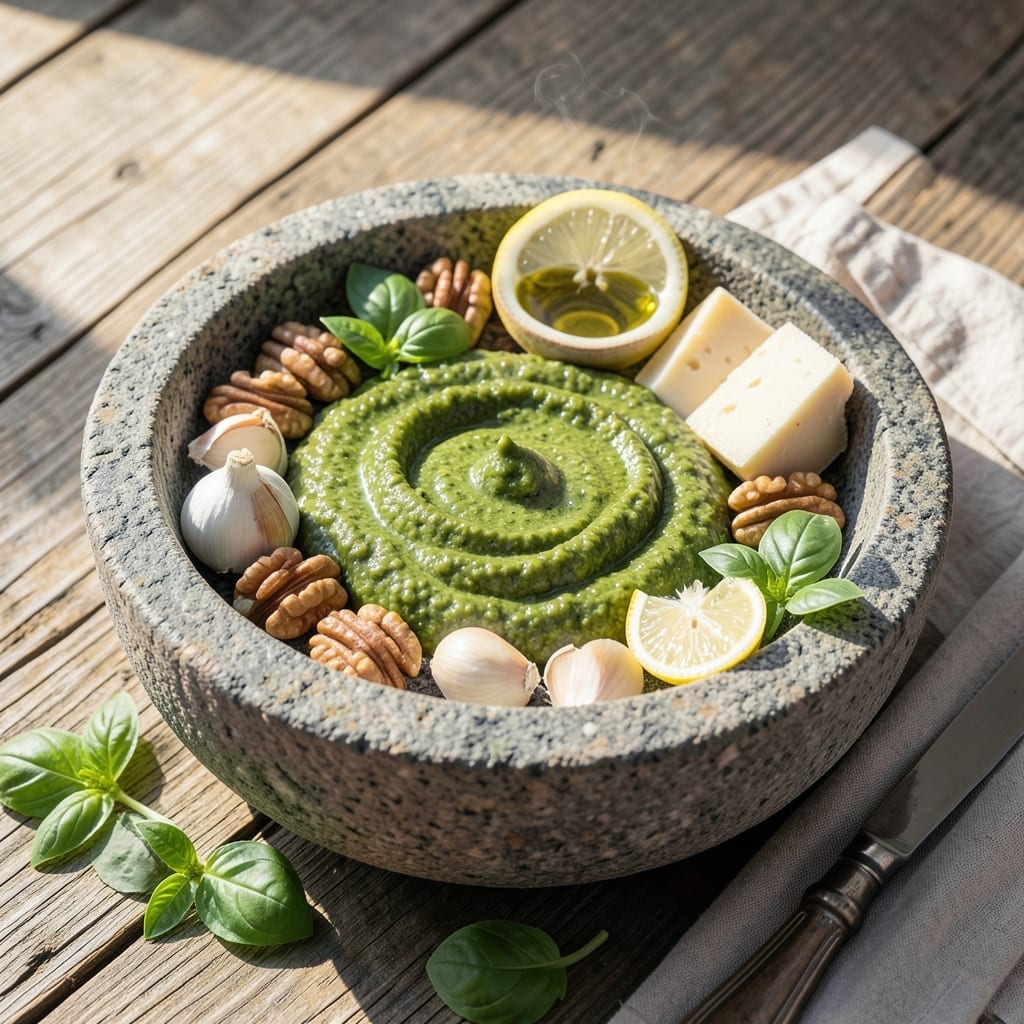
This fresh take on classic pesto proves you don’t need pine nuts to achieve rich, aromatic depth. Walnuts deliver a bold, earthy foundation that complements the basil perfectly.
The secret lies in toasting the walnuts first to enhance their natural oils, then blending them with fresh basil, garlic, and parmesan. A slow drizzle of olive oil creates the ideal smooth yet textured consistency.
Use this versatile sauce on pasta, sandwiches, or as a dip for vegetables. Its vibrant flavor brightens any dish without overpowering the main ingredients.
Store in an airtight container with a thin layer of olive oil on top to preserve its freshness for up to a week.
Ingredients for Basil Pesto Recipe Without Pine Nuts
Eight ingredients transform classic pesto with walnuts for bold, earthy richness.
| Ingredient | Amount | Notes |
|---|---|---|
| Fresh Basil Leaves 🌿 | 2 cups | Packed, stems removed |
| Walnuts 🥜 | ½ cup | Toasted for depth of flavor |
| Garlic Cloves 🧄 | 3 cloves | Peeled, rough chopped |
| Parmesan Cheese 🧀 | ¾ cup | Freshly grated preferred |
| Extra-Virgin Olive Oil 🫒 | ¾ cup | High quality, fruity |
| Lemon Juice 🍋 | 1 tbsp | Freshly squeezed |
| Salt 🧂 | ½ tsp | Sea salt preferred |
| Black Pepper 🌶️ | ¼ tsp | Freshly ground |
The walnuts are non-negotiable for this variation. Toast them first to release their oils—this builds the deep, nutty base that makes the swap work. Fresh basil leaves should be vibrant green without wilting. For the Parmesan, Parmigiano-Reggiano is ideal, but any aged Parmesan wedge from the grocery store deli counter will do. Avoid pre-grated—it lacks the melt and texture needed.
No walnuts? Pecans or almonds work well too, though the flavor profile shifts slightly. Short on basil? Stretch it with fresh spinach (up to half and half) for a milder taste. The olive oil should be extra-virgin and fruity—this isn’t the place for neutral oils. If you’re out of lemon juice, a splash of white wine vinegar can substitute in a pinch.
Pesto oxidizes quickly, so press plastic wrap directly onto the surface or add that thin olive oil layer to seal it off. Keeps 1 week refrigerated or 6 months frozen. Ice cube trays make perfect single-serving portions for later use.
Why You’ll Love This Recipe
- 5-Minute Blend: I toss the basil, walnuts, garlic, Parmesan, and oil in the food processor and it’s done before I can even set the table.
- Rich & Nutty: The walnuts give it a deeper, almost toasty flavor that pairs perfectly with the sharp Parmesan and bright basil.
- Pasta to Sandwiches: I slather it on sandwiches at lunch, toss it with pasta for dinner, and even stir a spoonful into scrambled eggs the next morning.
Step-by-Step Instructions for Basil Pesto Without Pine Nuts
Here’s the method. Straightforward, tested, works every time.
Step 1: Toast the Walnuts for Depth
Preheat a dry skillet over medium heat. Add the 0.5 cup Walnuts and toast for 5-6 minutes, stirring frequently, until they turn golden brown and smell fragrant. Watch closely—they burn quickly once they start browning.
Toasted walnuts develop a deeper, nuttier flavor that compensates for the absence of pine nuts. Remove them from the skillet immediately and let cool completely. This step prevents the nuts from continuing to cook and becoming bitter from residual heat.
Set aside the cooled walnuts. You’ll add them to the food processor once they’re no longer warm to the touch.
Step 2: Pulse Garlic and Walnuts First
In a food processor, combine the toasted 0.5 cup Walnuts and 3 cloves Garlic Cloves. Pulse in 1-second bursts until the mixture resembles coarse crumbs. This prevents over-processing later and ensures even texture throughout the pesto.
I pulse rather than run the processor continuously to maintain control over the texture. You want small, uniform pieces, not a paste. Scrape down the sides of the bowl as needed to incorporate all the bits.
Stop when the largest pieces are about the size of grain of rice. This creates the ideal base for the pesto’s signature texture.
Step 3: Add Basil and Process in Batches
Add the 2 cups Fresh Basil Leaves to the processor. Pulse again in 1-2 second bursts until the basil is finely chopped and incorporated with the walnut-garlic mixture. The basil will reduce significantly in volume as it releases its oils.
Don’t add all the basil at once if your processor is small—work in batches if needed to avoid overfilling. The key is to pulse until you see the mixture clump together slightly, which indicates the basil’s natural moisture is being released.
At this stage, the mixture will look like a thick, coarse paste with visible flecks of green and brown. That’s exactly what you want before adding the liquid ingredients.
Step 4: Emulsify with Cheese and Oil
Add the 0.75 cup Parmesan Cheese, 0.5 tsp Salt, and 0.25 tsp Black Pepper to the processor. Pulse briefly to combine. With the processor running continuously, slowly drizzle in the 0.75 cup Extra-Virgin Olive Oil through the feed tube.
This slow addition creates an emulsion that gives pesto its signature creamy texture. Stop to scrape down the sides once or twice during this process to ensure everything incorporates evenly. The mixture will lighten in color and become smooth as the oil binds everything together.
Once all the oil is incorporated, the pesto should be thick but pourable. If it’s too thick, you can add a tablespoon of water, but I find this ratio perfect with the walnuts’ natural oils.
Step 5: Finish with Acid and Adjust Seasoning
Add the 1 tbsp Lemon Juice and pulse once or twice to incorporate. The acid brightens all the flavors and balances the richness of the oil and cheese. Taste and adjust the seasoning if needed—you might want a pinch more salt depending on your Parmesan’s saltiness.
Transfer the pesto to a bowl or jar. It should have a vibrant green color with visible texture from the nuts. The lemon juice also helps preserve the bright green color by preventing oxidation.
Use immediately or store in an airtight container in the refrigerator for up to 5 days. For longer storage, cover the surface with a thin layer of olive oil to prevent discoloration from air exposure.
Pro Tips For Making Basil Pesto Recipe Without Pine Nuts
- Blanch the Basil: Drop basil leaves in boiling water for 10 seconds, then shock in ice water—I learned this the hard way after too many bitter batches from raw leaves.
- Toast the Walnuts: Spread walnuts on a dry pan over medium heat for 3-4 minutes until fragrant. Sounds weird, but it works: raw walnuts can taste harsh in pesto.
- Skip the Overcrowd: Process ingredients in batches if your food processor is small. After burning out a motor trying to force too much in at once, I finally figured out less is more.
- Grate Your Own: Use a microplane for the Parmesan instead of pre-grated—the anti-caking agents in store-bought make the texture grainy. My grandmother swore by this, and she was right.
Health Benefits of This Recipe
Heart-Healthy Fats
Walnuts bring omega-3 fatty acids to this pesto, supporting heart health and reducing inflammation. Just ½ cup provides 2.5g of ALA, a plant-based omega-3 that your body converts to beneficial EPA and DHA. I notice I feel more energized when I include walnuts regularly. 💪
Rich in Antioxidants
Fresh basil is packed with eugenol, a compound with powerful antioxidant properties. Combined with the polyphenols in extra-virgin olive oil, this pesto helps combat oxidative stress. The vibrant green color signals high chlorophyll content, another antioxidant.
Bone Support
The ¾ cup Parmesan cheese delivers a significant calcium boost—about 30% of your daily needs per serving. Parmesan also provides phosphorus and vitamin K, which work together to strengthen bones. It’s an easy way to sneak more calcium into meals.
Immune-Boosting Vitamins
Garlic and lemon juice provide vitamin C and zinc, both crucial for immune function. The 3 cloves of garlic also contain allicin, a compound known for its antimicrobial properties. Fresh ingredients maximize these benefits.
Digestive Health
Olive oil and walnuts contain monounsaturated fats that support gut health. These fats help reduce inflammation in the digestive tract. The fiber in basil and walnuts also promotes healthy digestion. I love how this pesto makes my meals feel lighter yet satisfying. ✨
Low-Carb & Keto-Friendly
With only 3g net carbs per 2-tbsp serving, this pesto fits perfectly into low-carb diets. The healthy fats keep you full while the fresh herbs provide flavor without added sugars. It’s my go-to for adding richness to keto meals.
Nutrition Facts
Frequently Asked Questions
Can I use other nuts instead of walnuts?
Almonds, cashews, or pecans work great. Toast them first for best flavor, and use the same ½ cup measurement. Each brings a unique taste—almonds add sweetness, while cashews make it creamier.
How long does it keep in the fridge?
Your pesto stays fresh for 5-7 days in an airtight container. Press plastic wrap directly on the surface or add a thin olive oil layer to prevent browning from air exposure.
Can I freeze pesto for later?
Yes! Freeze in ice cube trays for 6 months. Once solid, transfer cubes to a freezer bag. Thaw in the fridge overnight—it retains nearly all its fresh flavor.
Why did my pesto turn brown?
Oxidation causes browning. To prevent this, minimize air contact by storing with a thin olive oil layer on top. The color doesn’t affect taste, but fresh pesto tastes best within 3 days.

- BBQ Sausage Recipe Oven: Smoky Depth Without the Grill - September 28, 2026
- BBQ Chicken Bowl Recipe Rice: Smoky Sweetness Over Fluffy Grains - September 28, 2026
- Beef Cutlet Recipe Ideas: Crispy Breaded Patties With Bold Seasonings - September 28, 2026