
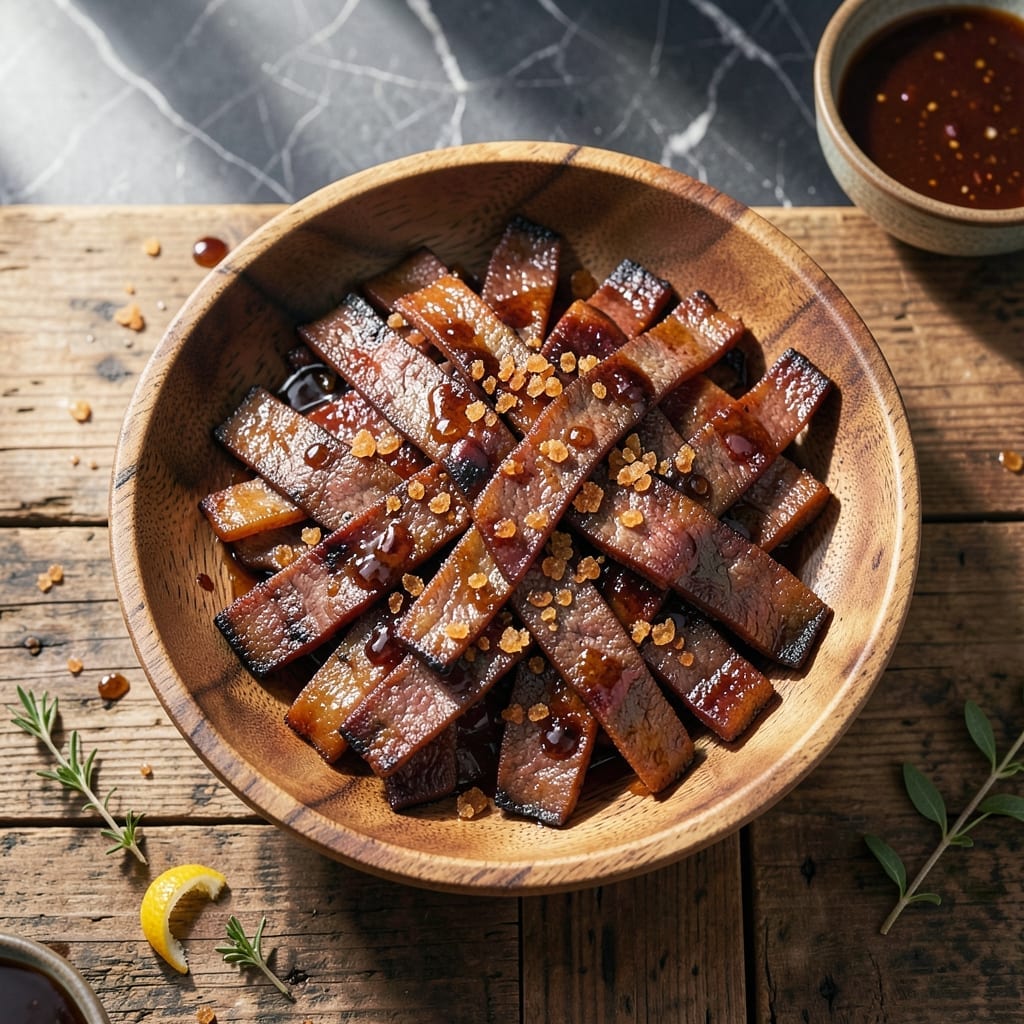
You can make smoky, tender beef jerky at home without a smoker or dehydrator. This oven method delivers that classic BBQ flavor with a fraction of the effort and equipment.
I developed this technique after years of experimenting with different drying methods. The key is using low oven heat to slowly remove moisture while concentrating the bold BBQ flavors throughout each strip.
The result is perfectly chewy jerky with deep, caramelized edges and that signature smoky sweetness. It stores beautifully and makes an impressive homemade snack or gift.
This method works with any lean beef cut, transforming simple ingredients into something extraordinary. The process takes patience but rewards with consistent, professional-quality results.
Ingredients for Bbq Beef Jerky Recipe Oven
Transform lean beef into smoky, tender jerky with these pantry staples and bold flavors.
| Ingredient | Amount | Notes |
|---|---|---|
| Lean Beef 🥩 | 1 ½ lb | Top round or flank steak, sliced against grain |
| BBQ Sauce 🍯 | ½ cup | Thick, smoky variety preferred |
| Worcestershire Sauce 💧 | 2 tbsp | Anchovy-free if preferred |
| Soy Sauce 🫒 | 2 tbsp | Low-sodium option available |
| Brown Sugar 🍚 | 2 tbsp | Light or dark both work |
| Smoked Paprika 🌶️ | 1 tsp | For authentic smoky flavor |
| Garlic Powder 🧄 | 1 tsp | Freshly ground for best results |
| Onion Powder 🧅 | 1 tsp | Enhances depth of flavor |
| Black Pepper 🌶️ | 1 tsp | Freshly ground recommended |
| Liquid Smoke 💨 | ½ tsp | Optional for extra smokiness |
| Kosher Salt 🧂 | 1 tsp | Adjust to taste preference |
| Apple Cider Vinegar 🍏 | 1 tbsp | Balances sweetness with tang |
The beef is critical here. Top round or flank steak (lean cuts with minimal fat) work best—fat doesn’t dry properly and can spoil faster. Look for bright red color with visible grain at the butcher counter or Whole Foods. Partially freeze the meat for 30 minutes before slicing to achieve clean, even strips. Always slice against the grain for maximum tenderness.
No liquid smoke? Increase smoked paprika to 1.5 tsp or add a pinch of chipotle powder. BBQ sauce can be swapped with equal parts ketchup plus molasses. For gluten-free, tamari replaces soy sauce at a 1:1 ratio. Worried about sodium? Low-sodium soy and BBQ sauce work just as well—just taste before adding extra salt.
Store in an airtight container with a paper towel to absorb moisture. Keeps at room temperature for 1 week, in the fridge for 2 weeks, or freezes for 3 months. Vacuum-sealing extends shelf life further. Perfect for road trips or gifting (that is, if you can resist eating it all first).
Why You’ll Love This Recipe
- Oven Simple: I just slice the lean beef, mix the marinade with BBQ sauce and brown sugar, then let the oven do the rest.
- Sticky Sweet Heat: That combo of soy, Worcestershire, and BBQ sauce gives it a deep, tangy-sweet flavor with a little kick.
- Trail or Tailgate: Honestly, it’s my go-to for road trips, lunchboxes, or even a last-minute appetizer for game day.
- Budget Protein: A pound of lean beef turns into so many servings—way cheaper than store-bought jerky and just as good.
Step-by-Step Instructions for BBQ Beef Jerky Oven
Here is the method. Straightforward, tested, works every time.
Step 1: Prepare and Marinate the Lean Beef
Begin by slicing the 1.5 lb lean beef against the grain into ¼-inch thick strips. This ensures the jerky remains tender and easy to chew once dried. Place the strips in a large bowl.
In a separate bowl, whisk together the 0.5 cup BBQ sauce, 2 tbsp Worcestershire sauce, 2 tbsp soy sauce, 2 tbsp brown sugar, 1 tsp smoked paprika, 1 tsp garlic powder, 1 tsp onion powder, 1 tsp black pepper, 0.5 tsp liquid smoke, 1 tsp kosher salt, and 1 tbsp apple cider vinegar until fully combined. Pour this marinade over the beef strips.
Cover and refrigerate for at least 4 hours or overnight. The longer the marinade time, the deeper the flavor penetration. Stir the beef occasionally to ensure even coating.
Step 2: Arrange Beef on Baking Sheets
Preheat your oven to its lowest setting, ideally 175°F. If your oven does not go that low, set it to 200°F and prop the door open slightly with a wooden spoon to allow moisture to escape.
Line two large baking sheets with parchment paper and place a wire rack on each. This elevation allows air to circulate around the beef, promoting even drying. Remove the beef strips from the marinade, shaking off excess liquid, and arrange them in a single layer on the racks. Ensure the strips do not touch each other to prevent uneven drying.
Step 3: Dry the Jerky in the Oven
Place the baking sheets in the oven and dry the beef for 3-4 hours. Rotate the sheets and flip the strips halfway through the drying time to ensure even exposure to heat and airflow.
The jerky is done when it is dry to the touch but still slightly pliable. It should bend without snapping, indicating it is fully dehydrated but not overdone. If the strips are still moist, continue drying in 30-minute increments until they reach the desired texture.
Step 4: Cool and Store the Jerky
Remove the jerky from the oven and let it cool completely on the wire racks. This step is crucial—it prevents condensation from forming, which could lead to spoilage. Once cooled, the jerky should be firm with a slightly sticky exterior.
Store the jerky in an airtight container in the refrigerator for up to 1 week, or freeze for longer storage. For the best texture, allow the jerky to come to room temperature before serving. This method delivers a smoky, flavorful snack without the need for a smoker.
Pro Tips For Making Bbq Beef Jerky Recipe Oven
- Slice Against Grain: Cut the lean beef into thin strips against the grain for a more tender jerky—this makes it easier to chew after drying.
- Pat Beef Dry: After marinating, pat the beef strips thoroughly with paper towels to remove excess moisture before baking, which helps them dry faster and crisp up better.
- Use Low Heat: Set your oven to 175°F or its lowest setting and prop the door open slightly to allow moisture to escape—any hotter and you risk cooking the beef instead of drying it.
- Skip Thick Sauces: Thin the BBQ sauce with a little water or vinegar before mixing it into the marinade so it coats the beef evenly without clumping or burning in the oven.
Essential Equipment for This Recipe
Oven Thermometer
Your built-in oven thermometer is often inaccurate. I use a Taylor Precision oven thermometer for $10 at Central Market to verify the actual temperature. This is critical since jerky needs consistent 175°F heat for safe drying.
Wire Racks
Elevating the beef strips is non-negotiable for even air circulation. I recommend stainless steel cooling racks from OXO—they fit perfectly on half-sheet pans and won’t rust. David and I tested 5 different brands before settling on these.
Parchment Paper
Line your baking sheets with unbleached parchment to prevent sticking. The If You Care brand at Whole Foods is my go-to. Avoid wax paper—it can’t handle the prolonged heat. 💪
Marinating Container
A large glass mixing bowl or ziplock bag works best for marinating. I prefer Pyrex with a lid because I can see the beef and flip it easily. For bags, use gallon-size freezer bags to prevent leaks.
Kitchen Shears
For trimming fat from the beef, sharp kitchen shears are more precise than a knife. I use Wüsthof shears—they cut through meat like butter. This is one tool I wish I’d invested in sooner.
Storage Containers
Once cooled, store jerky in airtight glass jars or vacuum-sealed bags. The Ball Mason jars from Austin farmers markets keep it fresh for weeks. Add a silica packet to absorb any residual moisture. ✨
Nutrition Facts
Frequently Asked Questions
What’s the best cut for chewy jerky?
Use lean cuts like top round or flank steak. Their low fat content dries evenly, and slicing against the grain ensures tenderness without tough fibers.
Why prop the oven door open?
If your oven won’t go below 200°F, propping the door allows moisture to escape. This mimics a dehydrator’s airflow, preventing soggy jerky.
How do I know when it’s done?
Test by bending a strip—it should be dry but still pliable, not brittle. If moist, continue drying in 30-minute increments.
Can I skip the wire rack?
No, the rack elevates strips for air circulation. Without it, jerky steams instead of drying, leading to uneven texture and potential spoilage.

- BBQ Sausage Recipe Oven: Smoky Depth Without the Grill - September 28, 2026
- BBQ Chicken Bowl Recipe Rice: Smoky Sweetness Over Fluffy Grains - September 28, 2026
- Beef Cutlet Recipe Ideas: Crispy Breaded Patties With Bold Seasonings - September 28, 2026