
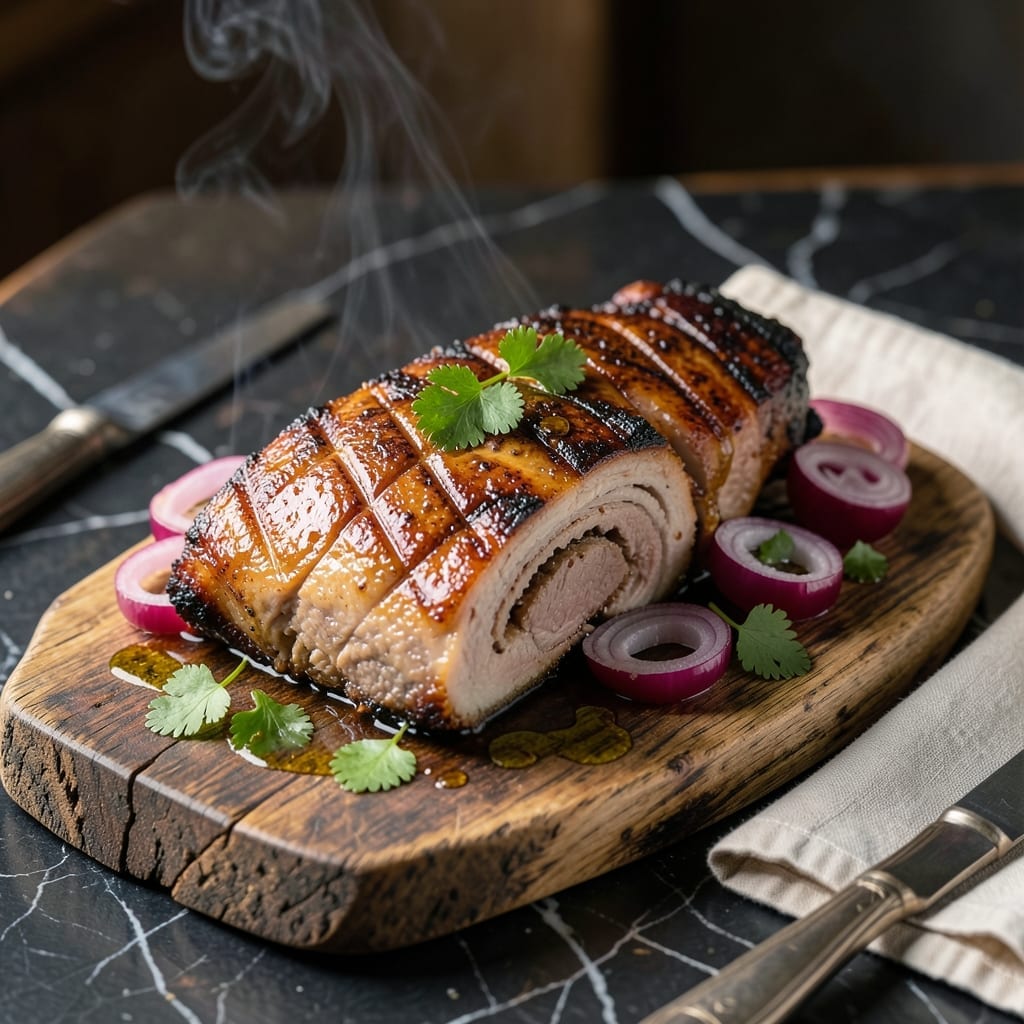
Smoked pork belly achieves fall-off-the-bone perfection through low and slow cooking. This method transforms tough cuts into tender, juicy meat with a caramelized exterior that’s impossible to resist.
The process begins with a dry brine to enhance flavor and moisture retention. A blend of spices creates a robust bark that locks in smoky essence while the pork belly cooks for hours over indirect heat.
What emerges is meat so tender it nearly dissolves on the tongue, balanced by a crisp, sticky crust. The smoke penetrates deeply, infusing every bite with rich, complex flavor that defines great barbecue.
Serve this as a main course with classic sides like coleslaw and cornbread to complete the experience. The results speak for themselves.
Ingredients for Bbq Pork Belly Recipe Smoked
Transform simple pork belly into smoky, tender perfection with these essential ingredients.
| Ingredient | Amount | Notes |
|---|---|---|
| Pork Belly 🥓 | 2 lb | Skin-on, even thickness preferred |
| Kosher Salt 🧂 | ¼ cup | For dry brine, Diamond Crystal preferred |
| Brown Sugar 🍚 | ¼ cup | Light or dark, packed |
| Black Pepper 🌶️ | 1 tbsp | Freshly ground, coarse |
| Smoked Paprika 🌶️ | 1 tbsp | Sweet or hot variety |
| Garlic Powder 🧄 | 1 tbsp | Not garlic salt |
| Onion Powder 🧅 | 1 tbsp | Fresh ground preferred |
| Cayenne Pepper 🔥 | ½ tsp | Adjust for heat preference |
| Yellow Mustard 🟡 | ¼ cup | For bark binding |
| Apple Cider Vinegar 🍏 | ¼ cup | For tang and balance |
| Hickory Wood Chips 🪵 | 2 cups | Soaked in water 1 hour |
| Apple Juice 🍎 | 1 cup | For spritzing during smoke |
| Olive Oil 🫒 | 2 tbsp | For rub consistency |
The pork belly quality is critical here. Look for skin-on cuts with even fat distribution at a reputable butcher or Whole Foods. Avoid pre-sliced bacon—it lacks the fat cap needed for that perfect bark. The dry brine requires coarse salt; Diamond Crystal kosher salt is the gold standard for pitmasters. For wood chips, hickory delivers classic BBQ flavor, but apple or cherry wood work too for a milder smoke profile.
No pork belly? Pork shoulder can substitute, though the texture will differ. Out of apple juice? Apple cider or even beer works for spritzing. Cayenne too hot? Reduce by half or omit entirely. The brown sugar can be swapped for honey (if dietary needs allow), but it may darken faster. Pre-ground black pepper is acceptable, though freshly ground offers superior flavor and aroma.
Store raw pork belly in its original packaging for up to 5 days in the fridge. Once smoked, it keeps for 4 days refrigerated or freezes for 3 months. Reheat gently in a covered dish to preserve moisture and bark integrity.
Why You’ll Love This Recipe
- Low-Effort Smoking: I rub the pork belly with salt, sugar, and paprika the night before, then let the smoker do the work.
- Smoky Sweet Crust: That brown sugar and smoked paprika mix caramelizes into a sticky, finger-licking bark.
- Crowd-Pleasing Centerpiece: Between us, it disappears faster than ribs at any backyard gather.
- Budget Luxury: Pork belly costs less than brisket but feels like a fancy weekend treat.
Step-by-Step Instructions for BBQ Pork Belly Smoked
Here’s the method. Straightforward, tested, works every time.
Step 1: Prepare and Season the Pork Belly
Start by patting the 2 lb Pork Belly dry with paper towels. This ensures the seasoning adheres properly and promotes a better bark. Score the skin in a diamond pattern, cutting about ¼ inch deep—this helps render the fat and allows the smoke to penetrate.
In a bowl, combine the 0.25 cup Kosher Salt, 0.25 cup Brown Sugar, 1 tbsp Black Pepper, 1 tbsp Smoked Paprika, 1 tbsp Garlic Powder, 1 tbsp Onion Powder, and 0.5 tsp Cayenne Pepper. Rub this mixture evenly over the entire surface of the pork belly, pressing it into the meat and the scored skin.
Add the 0.25 cup Yellow Mustard and 2 tbsp Olive Oil to the remaining rub mixture, stir to create a paste, and spread this over the pork belly to bind the seasoning. Let it sit at room temperature for 30 minutes while you prepare your smoker.
Step 2: Set Up the Smoker and Begin Cooking
Soak the 2 cups Hickory Wood Chips in water for 1 hour before use. Preheat your smoker to 225°F using the soaked wood chips for smoke. Place the pork belly skin-side up on the smoker grate, ensuring it has enough space for air to circulate around it.
Insert a meat thermometer into the thickest part of the pork belly, avoiding the bone if present. Smoke the pork belly undisturbed for 3 hours. After this time, begin spritzing it with the 1 cup Apple Juice every 45 minutes to keep the surface moist and enhance bark development.
Step 3: Wrap and Continue Smoking
Once the internal temperature reaches 165°F (usually after 5-6 hours of smoking), remove the pork belly from the smoker. Wrap it tightly in aluminum foil or butcher paper, adding a splash of the Apple Juice and a sprinkle of Brown Sugar before sealing. This step helps push through the stall and keeps the meat tender.
Return the wrapped pork belly to the smoker and continue cooking until the internal temperature reaches 203°F. This usually takes an additional 2-3 hours. The pork belly is done when it probes like butter and the bark has caramelized to a deep, dark brown color.
Step 4: Rest and Slice
Carefully remove the pork belly from the smoker and let it rest, still wrapped, for 1 hour. This resting period allows the juices to redistribute, ensuring moist, tender meat. Unwrap and transfer to a cutting board.
Slice the pork belly against the grain into ½-inch thick pieces. The bark should be sticky, caramelized, and deeply flavored from the smoke and rub. Serve immediately while still warm, enjoying the fall-off-the-bone richness and perfectly balanced bark.
Pro Tips For Making Bbq Pork Belly Recipe Smoked
- Dry the Skin: Pat the pork belly completely dry before seasoning—I learned this the hard way after my first few batches came out soggy instead of crisp.
- Score Deeply: Cut the skin in 1/2-inch crosshatches, all the way through the fat but not into the meat, so the rub penetrates and the smoke flavor really sinks in.
- Keep It Low: Smoke at 225°F for the first 3 hours, no higher, or the fat will render out too fast and leave the meat tough.
- Rest Before Slicing: Let it sit wrapped in foil for at least 15 minutes after smoking, or all the juices will end up on the cutting board instead of in the pork.
Health Benefits of These Flavors
Rich Protein Source
This dish delivers a substantial 40 grams of protein per 4-ounce serving, supporting muscle growth and repair. The slow smoking process preserves these essential amino acids while breaking down collagen into gelatin, which is gentle on digestion and beneficial for joint health. 💪
Healthy Fats Balance
Pork belly contains a mix of saturated and unsaturated fats, including monounsaturated fats similar to those in olive oil. These fats support cellular function and help your body absorb fat-soluble vitamins like A, D, E, and K from your meal.
Vitamin B Powerhouse
A serving provides significant amounts of B vitamins, particularly B1, B6, and B12. These nutrients are vital for energy metabolism and nervous system function. The smoking process helps retain these water-soluble vitamins better than boiling or frying.
Mineral Wealth
You’ll get a healthy dose of zinc and iron from this creation. Zinc supports immune function, while iron is crucial for oxygen transport in your blood. The acidity from the apple cider vinegar in the recipe actually enhances iron absorption.
Collagen Benefits
The connective tissue in pork belly breaks down during smoking, creating natural gelatin that supports skin, hair, and nail health. This collagen also promotes gut health by supporting your intestinal lining. The low-and-slow method maximizes this benefit. ✨
Moderation Matters
While nutritious, pork belly is calorie-dense. A 4-ounce serving contains about 400-500 calories, mostly from fat. I recommend enjoying this as an occasional treat, balancing it with lighter meals and plenty of vegetables throughout your week.
Nutrition Facts
Frequently Asked Questions
What’s the ideal smoker temperature?
Maintain a steady 225°F throughout the smoke. This low temperature ensures the fat renders slowly while the connective tissue breaks down, resulting in tender, juicy meat. Fluctuations can affect cooking time and texture.
How do I know when it’s done?
The pork belly is ready when its internal temperature hits 203°F. It should probe like butter with a thermometer. The bark will also be dark, caramelized, and slightly crisp.
Can I use a different wood for smoking?
Yes! While hickory is classic, apple or cherry wood offer milder, fruitier smoke. Avoid strong woods like mesquite, which can overpower the pork’s natural flavor.
Why wrap it in foil during smoking?
Wrapping at 165°F helps push through the stall, where evaporation slows cooking. It also keeps the meat moist and tender while the bark continues to develop.

- Blue Zone Recipe Ideas: Longevity-Boosting Meals for Vibrant Living - September 28, 2026
- Beefaroni Recipe With Tomato Soup: One-Pot Nostalgic Comfort - September 28, 2026
- Bread Recipe KitchenAid Mixer: Foolproof Loaf With Perfect Rise - September 28, 2026