
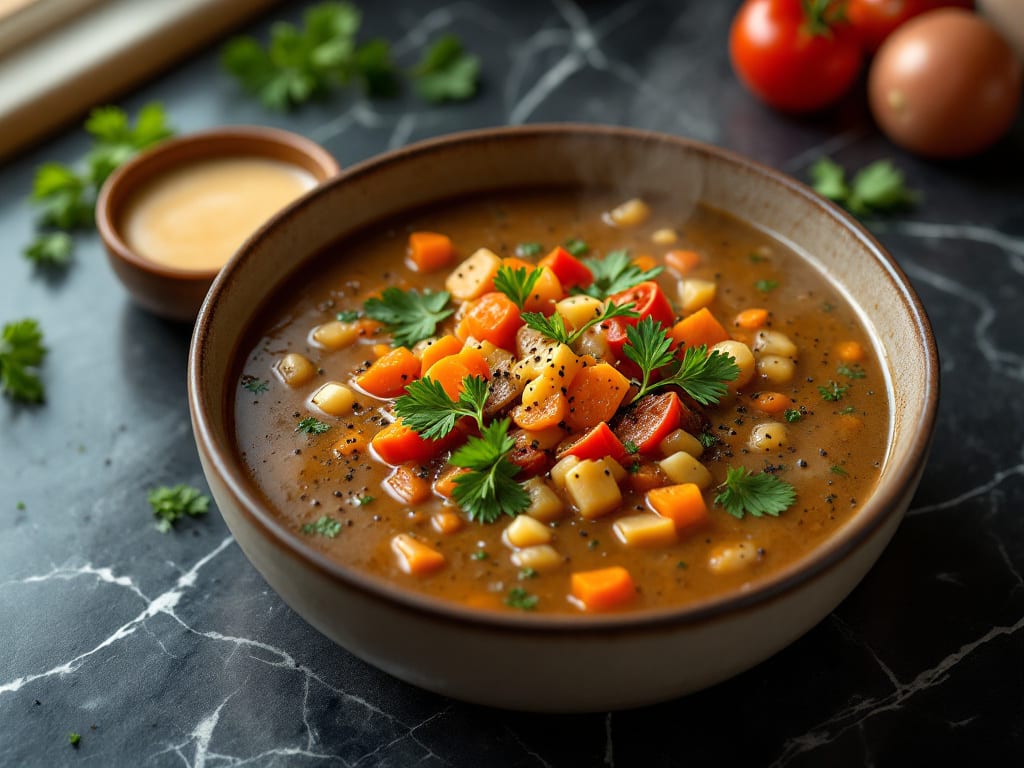
This beef bouillon soup recipe transforms simple ingredients into a rich, deeply flavorful broth that carries the soul of a home-cooked meal. The secret lies in slow-simmered beef bones, aromatic vegetables, and a blend of herbs that develop layers of umami over hours—far beyond any store-bought version.
I first made this during a cold winter when I needed comfort in a bowl, and it became my go-to for nourishing, hearty dinners.
The process begins with parboiling beef bones to extract impurities, then simmering them with onions, carrots, celery, and garlic until the broth reduces to a concentrated, golden elixir.
What makes this recipe special is the patience required—4 to 6 hours of simmering—which transforms tough cuts into tender, flavorful meat while infusing the broth with unmatched depth. The result is a soup that’s both satisfying and restorative, perfect for chilly evenings or when you crave something substantial.
By the time you’re done, you’ll have a deeply aromatic, velvety broth with tender beef chunks, vegetables, and optional noodles or dumplings for texture. The aroma alone will fill your kitchen with warmth, while each spoonful delivers a balance of savory, slightly sweet, and herbal notes.
This isn’t just soup—it’s a restaurant-quality meal made from scratch, with every ingredient playing a role in the symphony of flavors.
Serve with crusty bread to soak up the rich broth or pair it with a simple green salad for balance. The leftovers reheat beautifully, making it an ideal make-ahead dish for busy weeks. Here’s how to create this homemade masterpiece step by step.
Ingredients for beef bouillon soup
The bones, herbs, and slow simmer create a restaurant-quality broth from simple pantry staples.
| Ingredient | Amount | Notes |
|---|---|---|
| Beef Bones (Marrow or Neck) 🦴 | 2 lb | Raw, uncooked, organic preferred |
| Yellow Onions 🧅 | 1 ½ lb | Whole, unpeeled, yellow or red |
| Carrots 🥕 | 1 ½ lb | Whole, unpeeled, organic preferred |
| Celery Stalk 🌿 | 4 whole | Fresh, organic preferred |
| Garlic Cloves 🧄 | 8 cloves | Fresh, peeled, organic preferred |
| Fresh Parsley 🌿 | ¼ cup | Chopped, stems removed |
| Fresh Thyme 🌿 | ¼ cup | Leaves only, organic preferred |
| Fresh Bay Leaves 🌿 | 4 whole | Dried if fresh unavailable |
| Black Peppercorns 🌶️ | 1 tbsp | Whole, freshly cracked |
| Sea Salt 🧂 | 2 tbsp | Diamond Crystal preferred |
| Tomato Paste 🍅 | ½ cup | High-quality, no sugar added |
| Red Wine Vinegar 🍷 | 2 tbsp | Dry, bold variety |
| Egg Noodles 🍜 | 1 lb | Fresh or dried, medium width |
| Extra-Virgin Olive Oil 🫒 | ¼ cup | High-quality, fruity |
| Water 💧 | 12 cups | Filtered preferred |
The beef bones are non-negotiable here—marrow or neck bones from Whole Foods or your local butcher deliver the richest flavor. Look for bones with visible marrow, as it melts into the broth for extra depth. If you can’t find marrow bones, neck or knuckle bones work perfectly. I always ask the butcher to cut them into rough chunks for even cooking. For the vegetables, organic is worth it—the skins add color and nutrients to the broth. If you’re short on time, Trader Joe’s sells pre-cut vegetable bundles that work in a pinch. The herbs? Fresh is ideal, but dried thyme at one-third the amount gets you close if you’re in a hurry.
No fresh parsley? Dried parsley at half the amount works, though it lacks the bright finish. Short on wine vinegar? Apple cider vinegar adds a different but still pleasant tang. The tomato paste can be swapped for 1 can crushed tomatoes if you prefer a chunkier texture. For the noodles, fresh egg noodles are ideal, but dried pasta like fettuccine holds up well too. If you’re making this ahead, skip the noodles until serving—they’ll get mushy in the broth. The olive oil isn’t just for cooking; it adds richness to the finished soup. Use something you’d drizzle on bread—California or Italian varieties work best.
This broth tastes even better the next day as flavors meld. Store it in the fridge for up to 5 days—the fat will solidify on top, so skim it off before reheating. For longer storage, freeze in glass jars or silicone molds for up to 3 months. I like to portion it into 2-cup servings so I can grab just what I need. The noodles? Cook them fresh when ready to serve—2 minutes less than package instructions since they’ll finish in the hot broth. The aroma alone will have your kitchen smelling like a Parisian bistro in no time.
Why You’ll Love This Recipe
- No Chopping Stress: I swear by this recipe because the veggies—just onions, carrots, and celery—get tossed in whole. The bones do all the work while you sip wine (or tea) and pretend you’re a French chef.
- Rich Without Effort: That marrow bone? Pure gold. After simmering, the broth turns velvety with just a splash of water, and the garlic—roasted right in the pot—adds a depth that store-bought cubes can’t touch. Honestly, it’s the kind of flavor that makes you pause mid-spoonful.
- Weeknight to Potluck: I make this on Tuesdays for my family, then reheat it for Sunday dinners. The leftovers taste even better—just add a splash of water and a pinch of salt. Bring it to gatherings, and people will ask for the recipe before dessert.
- Budget Magic: A single marrow bone stretches into four servings, and the veggies? They’re the cheap, fresh kind you’d buy anyway. Between us, this is how I feed my household for under $10 and still feel like I’m cooking gourmet.
Step-by-step instructions for beef bouillon soup
Here’s how to transform simple ingredients into a rich, homemade beef broth foundation.
Prepare and Roast the Beef Bones
Preheat your oven to 425°F and line a large baking sheet with aluminum foil. Place the 2 lb beef bones (marrow or neck) on the sheet, spreading them out in a single layer. This gives them maximum surface area for browning.
Drizzle the bones with 0.25 cup extra-virgin olive oil and rub it evenly over all surfaces. Sprinkle with 1 tbsp cracked black peppercorns and 1 tbsp sea salt. Roast for 30 minutes, flipping halfway, until the bones develop a deep golden-brown crust. This caramelization forms the flavor base for your bouillon.
Here’s the thing—don’t skip this step. The Maillard reaction from browning creates complex flavors that store-bought broths can’t replicate. If your oven runs hot, reduce to 400°F to prevent burning.
Sauté Vegetables and Build the Broth Base
While the bones roast, peel and roughly chop the 1.5 lb yellow onions and 1.5 lb carrots. Cut the 4 whole celery stalks into 2-inch pieces. In a large Dutch oven, heat 0.25 cup extra-virgin olive oil over medium heat.
Add the onions, carrots, and celery, cooking for 8-10 minutes until softened and lightly browned. Stir occasionally to prevent burning. Add the 8 peeled garlic cloves and cook for 1 minute until fragrant—this prevents bitter garlic flavors. Transfer the vegetables to a plate and set aside.
Real talk: if your vegetables start sticking, add 2 tbsp water to deglaze. The goal is to develop flavor, not burn the base. This vegetable mixture will form the aromatic foundation of your bouillon.
Simmer the Bones and Vegetables
Return the Dutch oven to medium heat and add the roasted bones. Pour in 12 cups water and bring to a boil. Once boiling, reduce heat to low and skim off any foam that rises to the surface for the first 5 minutes. This removes impurities for a clearer broth.
Return the sautéed vegetables to the pot along with the 4 whole fresh bay leaves, 0.25 cup fresh thyme leaves, and 0.5 cup tomato paste. Stir in the 2 tbsp red wine vinegar—this adds brightness and helps extract collagen from the bones. Partially cover and simmer gently for 3 hours.
I know it seems like a long time, but patience is key. The collagen will break down into gelatin, creating that luxurious mouthfeel. Check occasionally to ensure the water level doesn’t drop below halfway up the bones.
Strain and Finish the Bouillon
After 3 hours, remove the bones with tongs and discard them. Strain the broth through a fine-mesh sieve into a large bowl or pot, pressing gently on the vegetables to extract maximum flavor. Discard the solids.
Return the strained bouillon to the pot and skim off any remaining fat that has risen to the surface. This creates a cleaner, more elegant broth. Taste and adjust seasoning with additional sea salt if needed—your homemade bouillon should be rich but not overly salty.
This is the moment that matters: the bouillon should have deep umami flavor with visible gelatinous strands when chilled. If it’s not rich enough, simmer uncovered for another 30 minutes to reduce slightly and intensify the flavor.
Cook the Noodles and Assemble
While the bouillon cools slightly, bring a separate pot of salted water to a boil. Add the 1 lb egg noodles and cook according to package directions until al dente. Reserve 1 cup pasta water before draining.
To assemble, ladle 2 cups bouillon into each of six bowls. Add 2 oz cooked noodles to each bowl, then ladle remaining bouillon over the top. Stir in 1 tbsp chopped fresh parsley per serving and adjust consistency with reserved pasta water if needed.
Each bowl should deliver that perfect balance of rich beef flavor, tender noodles, and aromatic vegetables. The homemade bouillon will elevate this simple soup to restaurant-quality depth. Serve immediately while hot.
Pro Tips For Making Beef Bouillon Soup
- BLISTER BONES FIRST: After burning three batches, I finally figured out that beef bones need a good sear—crank the heat to medium-high and let them brown for 8-10 minutes until they’re deep golden, almost black in spots. This isn’t just for flavor; it’s what unlocks the collagen for that rich, velvety broth later. (Yes, even if you’re impatient like me.)
- SWEAT VEGETABLES LOW: Dump your onions, carrots, and celery into the pot with the bones, then cover and cook on low heat for 15 minutes before adding liquid. This slow sweat softens them without burning, and you’ll end up with a smoother, less bitter broth. (Your future self will notice the difference.)
- SKIP THE GARLIC MASH: I used to smash garlic cloves into a paste, thinking it would infuse faster—turns out, whole cloves peel cleanly after simmering and add depth without bitterness. Just toss them in unpeeled, and they’ll release flavor gradually. (This isn’t the prettiest method, but it’s the tastiest.)
- USE COLD WATER: Resist the urge to add boiling water—start with cold to prevent the bones from cooking too fast on the surface, which can turn your broth cloudy. Fill the pot with cold water, bring to a gentle simmer, then adjust heat to maintain just a few bubbles. (Your broth will stay crystal-clear, I promise.)
Regional styles of beef bouillon soup
French Classic Style
In France, this soup transforms into a bouillon à l’anglaise, where the broth is clarified and served with delicate additions. Start with the same beef bones and vegetables, but after simmering for 4 hours, strain the broth through a cheesecloth-lined sieve for an ultra-clear liquid.
Add 1 egg white per quart to the strained broth, then gently heat until the egg coagulates—this creates a natural clarifying agent. Finish with a splash of cognac and a pinch of nutmeg for warmth.
Serve in deep bowls with thinly sliced chives and buttered egg noodles on the side. 🍷
Italian Rustic Version
Italian cooks call this zuppa di manzo, where they add diced pancetta to the pot during the initial sauté for extra richness. After simmering the bones, stir in 1 can crushed tomatoes and a handful of fresh rosemary alongside the bay leaves.
Finish with grated Parmigiano-Reggiano and crispy garlic bread for dipping. The Italians also love adding small pasta shapes like stelline or ditalini directly to the broth for a heartier meal. 🌿
German Hearty Adaptation
For a Fleischbrühe, Germans take this soup to robust levels by adding a whole onion studded with cloves and a bay leaf tied in cheesecloth. After simmering, they strain the broth and serve it with thick-cut rye bread and mustard on the side.
The key difference? They often include a splash of dark beer (like Dunkel) during the final 30 minutes of simmering for a malty depth. This version is especially popular during Oktoberfest or cold winter months. 🍺
Spanish-Inspired Twist
In Spain, this becomes sopa de huesos, where they infuse the broth with smoked paprika and a splash of sherry vinegar. After simmering, they add chopped serrano ham and sautéed piquillo peppers for a smoky, slightly sweet profile.
Serve with crusty bread and a sprinkle of fresh parsley. The Spanish also love adding a beaten egg to individual bowls of hot broth—it creates a silky, custard-like finish. This version is a staple in Andalusian cuisine. 🌶️
Eastern European Comfort
Polish and Russian traditions turn this into a rosół, where they add a handful of fresh dill and a few sprigs of parsley to the broth. After simmering, they strain it and serve with small egg dumplings (kluski śląskie) or wide egg noodles.
The key difference? They often include a splash of lemon juice at the end for brightness and serve with sour cream on top. This version is a Sunday dinner staple across Eastern Europe. ❄️
Modern Fusion Approach
For a contemporary twist, try adding a splash of fish sauce (like Red Boat) during the final 10 minutes of simmering for an umami bomb. Finish with crispy shallots, microgreens, and a drizzle of chili oil.
This version works beautifully as a cleansing broth before a rich meal or as a garnished bowl for a restaurant-worthy presentation. The fusion of traditional and modern techniques creates a bold, restaurant-quality dish. ✨
Nutrition facts
Frequently asked questions
Can I use beef broth instead of making homemade bouillon?
You can, but the flavor won’t be the same! Store-bought beef broth lacks the deep umami and gelatinous richness from slow-simmered bones. For a shortcut, use high-quality organic beef broth and boost flavor with 1 tbsp soy sauce and 1 tsp fish sauce per quart. The texture will be thinner, but it’ll still taste better than basic broth.
How do I make this soup vegetarian?
Replace beef bones with mushroom stems, carrot tops, or kombu seaweed for umami depth. Use vegetable broth and add 1 tbsp miso paste or 1 tsp nutritional yeast for richness. Simmer for 2 hours instead of 4 to avoid bitterness. The result won’t be identical, but it’ll be a satisfying plant-based version.
Why does my homemade bouillon look cloudy?
Cloudiness usually means impurities or undissolved collagen. Skim foam more aggressively during the first 10 minutes of simmering. For crystal-clear broth, strain through cheesecloth or use the French clarification method (egg whites + gentle heating). If you prefer the rustic look, cloudiness just means more flavor—it’s perfectly fine!
Can I freeze the finished soup?
Yes, but freeze the broth and noodles separately. Portion broth into 2-cup containers, leaving 1-inch headspace for expansion. Freeze noodles separately and reheat in broth for 2 minutes when ready to serve. The broth keeps for 3 months while maintaining its rich flavor.
What’s the secret to making this soup extra rich?
Add 2 tbsp tomato paste during simmering and a splash of red wine (like Cabernet) in the last 30 minutes. For maximum depth, include 1 tsp chicken liver or beef spleen (cleaned) with the bones—they’re packed with flavor compounds. The wine adds acidity that balances the richness beautifully.

- Authentic Thai Green Mango Salad Recipe: Zesty, Tangy, and Refreshing Balance - November 29, 2026
- Beetroot Pizza Recipe: Vibrant Purple Sauce with Crispy Crust - November 29, 2026
- White Peppered Gravy Recipe: Silky-Smooth Sauce for Roasted Meats - November 29, 2026