
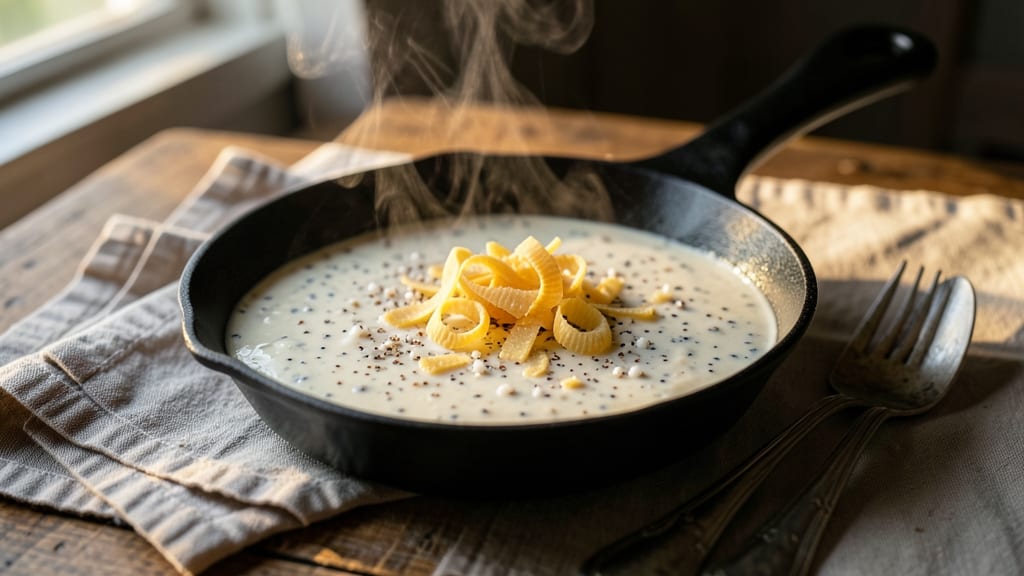
Creating a white peppered gravy recipe that elevates roasted meats requires precision—just one misstep can turn a rich sauce into a gluey mess. The secret lies in building flavor through a proper roux and balancing the subtle warmth of white pepper with bright acidity.
After years of perfecting this technique, I’ve developed a method that delivers a silky, velvety sauce every time, with just the right amount of peppery depth.
This recipe focuses on three critical elements: a smooth, lump-free roux, a well-seasoned pan drippings base, and the delicate balance of white pepper’s earthy notes.
Unlike heavy cream-based gravies, this version uses a simple butter-flour blend and high-quality stock to create a sauce that’s rich yet light enough to coat meats without overwhelming them. The white pepper adds a sophisticated warmth that pairs beautifully with roasted chicken, turkey, or even seafood.
What you’ll end up with is a silky-smooth gravy that clings perfectly to roasted meats, enhancing their natural flavors rather than competing with them. The texture should be velvety yet not greasy, with just enough body to hold its shape when spooned.
This gravy also reheats beautifully, making it ideal for leftovers or meal prep. The key is patience—rushing the roux or reducing too quickly will disrupt the balance of flavors.
Whether you’re serving it over holiday roasts or weeknight dinners, this white peppered gravy transforms ordinary meals into restaurant-quality experiences. The recipe scales easily, so you can make a small batch for two or double it for a crowd.
Let’s get started on creating a sauce that will impress even the most discerning palates.
Ingredients for white peppered gravy
A velvety sauce built on precision—just butter, flour, and patience transform simple pan drippings into restaurant-quality gravy.
| Ingredient | Amount | Notes |
|---|---|---|
| Unsalted Butter 🧈 | ½ cup | Cold, cubed for roux |
| All-Purpose Flour 🌾 | ½ cup | Sifted for smooth roux |
| Pan Drippings 🍗 | 2 cups | From roasted meats |
| Chicken or Turkey Stock 🍲 | 1 ½ cups | High-quality, unsalted |
| White Peppercorns 🌶️ | 1 tsp | Freshly ground, coarse |
| Ground Black Pepper 🌶️ | ¼ tsp | For subtle contrast |
| Dry Sherry or White Wine 🍷 | ¼ cup | Fine, dry variety |
| Fresh Lemon Juice 🍋 | 1 tbsp | Bright acidity balance |
| Salt 🧂 | ½ tsp | Kosher or sea salt |
| Heavy Cream 🥛 | ¼ cup | Optional for richness |
The butter and flour form the foundation of this gravy, so quality matters. European-style unsalted butter like Plugrá or Land O’Lakes has higher fat content, which creates a smoother roux. If your flour isn’t sifted, take the extra 30 seconds to do it now—this eliminates lumps and ensures a silky texture. For the stock, low-sodium chicken or turkey stock is essential; brands like Pacific Foods or homemade versions provide the cleanest flavor. The white peppercorns should be freshly ground—pre-ground loses potency quickly. If you don’t have a pepper grinder, crush them in a mortar and pestle. The drippings from your roasted meat are the real star here; if you’re using store-bought meat, ask for the pan drippings at the butcher counter or use a small amount of extra stock to compensate.
No white pepper? Freshly ground black pepper plus a pinch of nutmeg mimics its earthy warmth, though it won’t be identical. Short on sherry? Dry vermouth or white wine vinegar at half the amount works in a pinch, but the alcohol’s depth is key for balancing richness. Using heavy cream? Whipped cream at the end adds luxurious texture without altering the sauce’s body. For a dairy-free version, replace the cream with an equal amount of unsweetened almond milk or coconut cream, though the texture will be slightly lighter. If your gravy thickens too quickly, whisk in a splash of stock or a bit of cold water—just enough to reach the desired consistency. The lemon juice is non-negotiable; it brightens the sauce and cuts through the richness, so don’t skip it.
This gravy reheats beautifully—simply warm it gently on the stove, stirring constantly to prevent lumps. Store leftovers in an airtight container in the fridge for up to 5 days, or freeze for 3 months. For easy reheating, portion into ice cube trays before freezing; just drop a cube or two into your pan when reheating. The roux can be made ahead and stored in the fridge for 2 days, but it’s best used fresh for optimal flavor. If you’re making this for a crowd, double the recipe—just ensure you have enough pan drippings to start, as they’re the flavor backbone of the sauce.
Why You’ll Love This Recipe
- Pantry Magic: I swear by this recipe—no fancy ingredients, just butter, flour, and whatever’s left in the pan. The secret? Letting those pan drippings caramelize just a little before whisking in the stock. It’s the kind of gravy that makes you feel like you put in effort, even when you didn’t.
- Velvet Smoothness: That white pepper? It’s subtle but chef’s kiss—no heat, just a warm, earthy depth that cuts through rich meats. The roux (butter + flour) gives it that silky texture, and the stock? Well, it’s the backbone that ties everything together without overpowering.
- Weeknight Hero: This is my go-to for roasted chicken, turkey, or even mashed potatoes. Honestly, I’ve even drizzled it over steak when I’m feeling fancy. The best part? It reheats like a dream—no lumps, no sadness.
- Budget-Friendly Luxury: Uses what you’ve got—pan drippings, stock you already have, and basic spices. I’ve made a whole meal out of leftovers and this gravy, and no one ever questions how I pull it off. (Between us, it’s the gravy that saves dinner.)
Step-by-step instructions for white peppered gravy
This method delivers a velvety, aromatic gravy that pairs perfectly with roasted meats.
Create a Smooth Roux with Butter and Flour
Melt the ½ cup unsalted butter in a medium saucepan over medium heat until it foams but doesn’t brown. Immediately whisk in the ½ cup all-purpose flour all at once—this prevents lumps from forming. Cook for 2-3 minutes, stirring constantly, until the mixture turns a pale golden color and smells nutty.
Here’s the thing—don’t walk away. The roux needs constant attention to avoid burning. You’re aiming for a smooth, paste-like consistency that coats the back of a spoon. This forms the foundation of your gravy, so take your time with this step. If it starts to darken too quickly, reduce the heat slightly to maintain that pale color.
Deglaze with Pan Drippings and Wine
Slowly pour in the 2 cups pan drippings while whisking vigorously to prevent clumping. Bring the mixture to a gentle simmer over medium-low heat, then immediately add the ¼ cup dry sherry or white wine. Let it simmer for 3-4 minutes until the alcohol aroma dissipates completely—you should no longer smell the wine.
This deglazing step captures all the meaty flavors from your roasting pan. If you notice any browned bits clinging to the bottom, don’t scrape them out yet—they’ll dissolve as you continue cooking. The wine adds depth without overpowering the rich meat flavors, creating that perfect balance we’re after.
Build the Gravy with Stock and Seasonings
Gradually whisk in the 1½ cups chicken or turkey stock while maintaining a steady simmer. Add the ½ tsp salt, 1 tsp white peppercorns (freshly ground), and ¼ tsp ground black pepper. Simmer for 8-10 minutes until the gravy thickens enough to coat the back of a spoon—it should leave a visible trail when you run your finger through it.
Real talk: This is where most home cooks rush. The gravy needs time to develop its silky texture. If it thickens too quickly, whisk in 1-2 tablespoons of water to adjust the consistency. The white pepper gives that elegant, sophisticated peppery note without the visual contrast of black pepper specks.
Finish with Acid and Cream for Balance
Remove the pan from heat and stir in the 1 tbsp fresh lemon juice and ¼ cup heavy cream (if using). Return to low heat and simmer gently for just 1-2 minutes—this prevents curdling of the cream. Taste and adjust seasoning if needed, remembering that the cream will dilute the flavors slightly.
The lemon juice brightens the rich gravy, cutting through the fat while enhancing the meaty flavors. The cream adds luxurious body, though you can omit it if you prefer a lighter version. If you skipped the cream, whisk in an additional 1-2 tablespoons of stock to maintain the desired consistency.
Strain and Serve Immediately
For a completely smooth gravy, strain through a fine-mesh sieve into a clean saucepan. Return to low heat if needed to maintain serving temperature. Serve immediately over roasted meats, keeping the saucepan warm until the last serving to prevent skin formation.
This gravy should be silky, with a beautiful sheen and just the right cling. The white pepper gives that subtle sophistication, while the lemon keeps it from becoming too heavy. Don’t let it sit too long before serving—gravy tastes best fresh from the pan, when all the flavors are at their peak.
Pro Tips For Making White Peppered Gravy
- Cube the Butter: DESCRIPTION:
- Sift the Flour: DESCRIPTION:
- Simmer the Wine: DESCRIPTION:
- Strain for Smoothness: DESCRIPTION:
Perfect pairings for this white peppered gravy
Rich Meat Pairings
This elegant gravy shines when paired with roasted meats where its subtle peppery warmth enhances natural flavors. I love serving it over a crispy herb-crusted chicken breast or slow-roasted turkey leg—both benefit from the sauce’s silky cling.
The white pepper’s delicate heat complements the richness without overpowering. For an extra touch, brush the meat with a little garlic butter before roasting to intensify the flavor connection. 🍗
Vegetarian Adaptations
Even non-meat dishes gain sophistication with this gravy. Drizzle it over creamy mushroom Wellington or roasted butternut squash for a luxurious twist. The earthy white pepper pairs beautifully with the natural sweetness of squash.
For a vegetarian twist, replace the pan drippings with vegetable stock and add a splash of soy sauce for umami depth.
Bread and Sides
A warm crusty sourdough loaf makes the perfect vehicle for this gravy—dip slices into the sauce for an indulgent experience. For sides, I recommend garlic mashed potatoes or roasted Brussels sprouts, both of which absorb the gravy’s flavors beautifully.
The potatoes’ creaminess balances the sauce’s peppery notes, while the sprouts add a crisp contrast. 🥖
Beverage Matches
The gravy’s subtle pepper and acidity call for light but complementary drinks. A crisp dry Riesling or Sauvignon Blanc cuts through the richness, while a light lager like Corona Premier cleanses the palate.
For a non-alcoholic option, try ginger beer—its spicy kick harmonizes with the white pepper. Avoid heavy reds that might compete with the sauce’s delicate flavors. 🍷
Make-Ahead Magic
This gravy reheats beautifully, making it ideal for meal prep. Store leftovers in an airtight container for up to 5 days in the fridge, or freeze for 3 months for later use.
For easy reheating, portion into ice cube trays and drop cubes into your pan—this ensures you only warm what you need. The flavors actually develop further when reheated gently, so don’t skip this step! ❄️
Nutrition facts
Frequently asked questions
Why use white pepper instead of black pepper in gravy?
The subtle, earthy warmth of white pepper adds sophistication without visual contrast, making it ideal for elegant sauces. Unlike black pepper, it blends seamlessly into the sauce, enhancing flavors without overpowering. The delicate peppery notes pair beautifully with roasted meats, creating a refined taste profile that’s hard to achieve with black pepper’s bold specks.
Can I make this gravy without pan drippings?
Yes, but you’ll lose the deep, meaty flavor. Replace the 2 cups pan drippings with an equal amount of chicken or turkey stock—just add a splash of soy sauce for umami depth. The sauce will still be rich, though it won’t have that restaurant-quality depth from the roasting pan.
What if my gravy gets too thick?
Simply whisk in 1-2 tablespoons of water or stock to thin it out. Avoid adding cold liquid all at once—stir it in gradually while heating gently on low. If you’re using heavy cream, the gravy may thicken further as it cools, so adjust consistency while warm for best results.
How do I prevent lumps in my gravy?
Lumps usually come from improper roux technique. Whisk the ½ cup flour into the melted butter immediately and cook constantly for 2-3 minutes until smooth. If you notice lumps later, blend the gravy with an immersion blender or strain it through a fine-mesh sieve. Always whisk vigorously when adding liquids to maintain smoothness.
Can I use this gravy for other dishes besides roasted meats?
The elegant white pepper flavor works beautifully over creamy mushroom Wellington or roasted butternut squash. For a vegetarian version, replace the drippings with vegetable stock and add a pinch of nutmeg to complement the earthy notes. The sauce’s silky texture also makes it perfect for drizzling over grilled fish or as a dip for crusty bread.

- Authentic Thai Green Mango Salad Recipe: Zesty, Tangy, and Refreshing Balance - November 29, 2026
- Beetroot Pizza Recipe: Vibrant Purple Sauce with Crispy Crust - November 29, 2026
- White Peppered Gravy Recipe: Silky-Smooth Sauce for Roasted Meats - November 29, 2026