
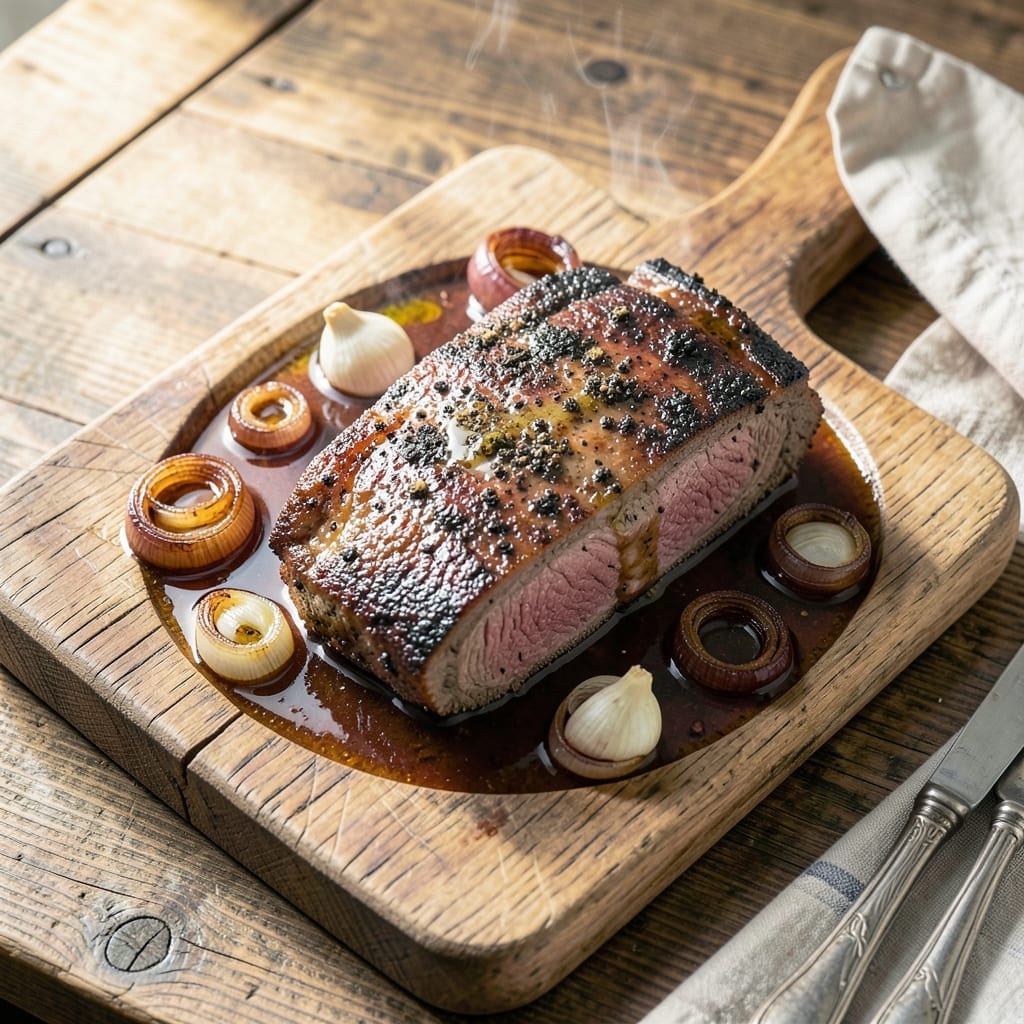
Achieving tender beef brisket at home requires patience and the right low-temperature approach. This method transforms tough cuts into fall-apart meat without a smoker.
By cooking at a steady 275°F for several hours, the connective tissue breaks down slowly. The result is juicy, flavorful brisket with a perfect texture every time.
Ingredients for Beef Brisket Recipe Oven
Transform tough cuts into tender perfection with these carefully selected ingredients for exceptional oven-braised results.
| Ingredient | Amount | Notes |
|---|---|---|
| Beef Brisket Flat Cut 🥩 | 4 lb | Trimmed of excess fat |
| Kosher Salt 🧂 | 2 tbsp | Diamond Crystal preferred |
| Coarse Black Pepper 🌶️ | 2 tbsp | Freshly ground preferred |
| Garlic Powder 🧄 | 1 tbsp | Not garlic salt |
| Onion Powder 🧅 | 1 tbsp | Fresh ground preferred |
| Smoked Paprika 🌶️ | 1 tbsp | For depth of flavor |
| Brown Sugar 🍚 | ¼ cup | Light or dark variety |
| Apple Cider Vinegar 🍏 | ¼ cup | For acidity balance |
| Worcestershire Sauce 💧 | ¼ cup | Lea & Perrins recommended |
| Beef Broth 🥣 | 2 cups | Low-sodium preferred |
| Olive Oil 🫒 | 2 tbsp | For searing brisket |
| Yellow Mustard 🟡 | ¼ cup | For binding rub |
| Crushed Tomatoes 🍅 | 1 can | 28 oz can, undrained |
The brisket quality is paramount. Select a flat cut with good marbling from a reputable butcher or Costco for consistent results. The flat cut (also called the lean cut) cooks more evenly than the point. Look for USDA Choice or Prime grade—the fat cap should be about 1/4 inch thick for optimal flavor and moisture retention.
For the liquid components, low-sodium beef broth allows better control over seasoning. If apple cider vinegar isn’t available, red wine vinegar works at equal amounts. Lea & Perrins Worcestershire sauce is the standard, but Annie’s brand offers a quality alternative. The brown sugar can be substituted with coconut sugar at a 1:1 ratio.
The dry rub should be applied just before cooking for maximum adhesion. Store unused portions of the rub in an airtight container for up to 3 months. Leftovers reheat beautifully and can be frozen for 6 months without texture degradation.
Why You’ll Love This Recipe
- One Pan Wonder: I toss the brisket with salt, pepper, and those powders, then let the oven do the rest—no babysitting required.
- Smoky Depth: The garlic and onion powders crust the meat so every bite’s packed with that slow-roasted flavor I crave.
- Feeds a Crowd: I’ll serve it sliced for sandwiches, shredded for tacos, or chunked over rice—same batch, three different dinners.
- Leftovers Gold: Honestly, it tastes even better the next day—piled on toast or stirred into chili, it stretches my grocery dollar further.
Step-by-Step Instructions for Beef Brisket Oven
This low-temperature method guarantees fall-apart tenderness with minimal hands-on time.
Step 1: Prepare and Season the Brisket
Begin by patting the 4 lb Beef Brisket Flat Cut completely dry with paper towels. Trim any remaining excess fat, leaving about ¼-inch for flavor and moisture. This step ensures the rub adheres properly and promotes even cooking.
In a small bowl, combine the 2 tbsp Kosher Salt, 2 tbsp Coarse Black Pepper, 1 tbsp Garlic Powder, 1 tbsp Onion Powder, 1 tbsp Smoked Paprika, and 0.25 cup Brown Sugar. Rub this mixture all over the brisket, pressing firmly to create a crust. The 0.25 cup Yellow Mustard acts as a binding agent—spread it thinly over the surface before applying the dry rub.
Step 2: Sear the Brisket for Depth of Flavor
Heat the 2 tbsp Olive Oil in a large Dutch oven or oven-safe pot over medium-high heat. Once shimmering, add the brisket and sear for 4-5 minutes per side until deeply browned. This creates a flavorful crust through the Maillard reaction.
You’ll know it’s ready to flip when the brisket releases easily from the pot. Don’t rush this step—proper searing enhances the overall depth of the dish. Transfer the brisket to a plate and reduce the heat to medium.
Step 3: Create the Braising Liquid
In the same pot, pour in the 0.25 cup Apple Cider Vinegar and 0.25 cup Worcestershire Sauce, scraping up any browned bits from the bottom. Add the 2 cups Beef Broth and 1 can Crushed Tomatoes, stirring to combine. These liquids will infuse the brisket with moisture and rich, savory notes.
Return the brisket to the pot, spooning some of the liquid over the top. The liquid should come about halfway up the brisket—this ensures even cooking without submerging the meat completely.
Step 4: Braise Low and Slow in the Oven
Cover the pot tightly with a lid and transfer it to a preheated 300°F oven. Braise for 3-4 hours, turning the brisket halfway through the cooking time. This low and slow method breaks down the collagen in the meat, resulting in that coveted tenderness.
Check the brisket occasionally to ensure the liquid hasn’t evaporated too much. If it seems dry, add a splash of water or additional Beef Broth. The brisket is done when it’s fork-tender and easily pulls apart.
Step 5: Rest and Serve
Remove the brisket from the oven and let it rest in the braising liquid for 15-20 minutes. This allows the juices to redistribute, ensuring every slice is moist and flavorful. Skim any excess fat from the surface of the liquid if desired.
Slice the brisket against the grain into ½-inch thick pieces. Serve with the braising liquid spooned over the top. The meat should be incredibly tender, with a rich, deeply flavorful sauce that complements each bite perfectly.
Pro Tips For Making Beef Brisket Recipe Oven
- Season Overnight: I learned this the hard way—rub the brisket with kosher salt, pepper, garlic, and onion powder the night before. The spices penetrate deep, and the salt starts breaking down the meat fibers for a more tender result.
- Low and Slow: Set your oven to 275°F and plan for 1 to 1.5 hours per pound. Rushing with higher heat just toughens the flat cut—patience is what turns it buttery.
- Skip the Trim: Resist the urge to cut off all the fat; that marbling melts into the brisket as it cooks, keeping it moist. Just trim any thick, hard chunks.
- Rest Under Foil: After pulling it from the oven, tent the brisket with foil and let it sit for at least 30 minutes. Slicing too soon sends all the juices straight to the cutting board.
Health Benefits of This Recipe
Rich Protein Source
This dish delivers a substantial 40-50 grams of protein per serving, essential for muscle repair and growth. The slow cooking process preserves these nutrients, making it an excellent choice for active lifestyles. I notice I feel more satisfied after meals with this level of protein. 💪
Iron and Zinc Boost
Beef brisket is packed with heme iron, which your body absorbs more easily than plant-based iron. A 4-ounce serving provides about 20% of your daily iron needs and is also rich in zinc, supporting immune function.
B Vitamin Powerhouse
You’ll get a significant dose of vitamin B12, crucial for nerve function and red blood cell production. The dish also contains niacin, riboflavin, and B6, which help convert food into energy. This is why I feel energized after enjoying it.
Collagen Benefits
The slow cooking breaks down collagen into gelatin, which supports joint and skin health. This process also creates that desirable tender texture. The connective tissue in brisket is naturally rich in these beneficial compounds.
Low-Carb Friendly
With approximately 2-3 grams of carbs per serving from the meat itself, this is naturally low-carb. The braising liquid adds minimal additional carbs, making it great for keto or low-carb diets. I often serve it with roasted veggies for a balanced meal. ✨
Essential Amino Acids
Beef contains all nine essential amino acids your body can’t produce on its own. These building blocks support everything from muscle maintenance to hormone production. A 6-ounce portion covers a significant portion of your daily needs.
Frequently Asked Questions
Should I use a flat or point cut for oven brisket?
Use a flat cut for oven cooking. It’s leaner and cooks more evenly in 3-4 hours. The point cut has more fat and works better for smoking or long braises.
Can I cook brisket at a higher temperature to save time?
Not recommended. High heat makes brisket tough. Stick to 300°F or lower to break down collagen properly. Patience ensures tender results.
How do I know when oven brisket is done?
It’s ready when fork-tender and pulls apart easily. Test with a meat thermometer—internal temp should reach 195-203°F. Rest for 15-20 minutes before slicing.
What if my brisket turns out dry?
Add more braising liquid next time. Ensure the pot is covered tightly and check liquid levels halfway through. Slicing against the grain also helps retain moisture.
Nutrition Facts

- BBQ Sausage Recipe Oven: Smoky Depth Without the Grill - September 28, 2026
- BBQ Chicken Bowl Recipe Rice: Smoky Sweetness Over Fluffy Grains - September 28, 2026
- Beef Cutlet Recipe Ideas: Crispy Breaded Patties With Bold Seasonings - September 28, 2026