
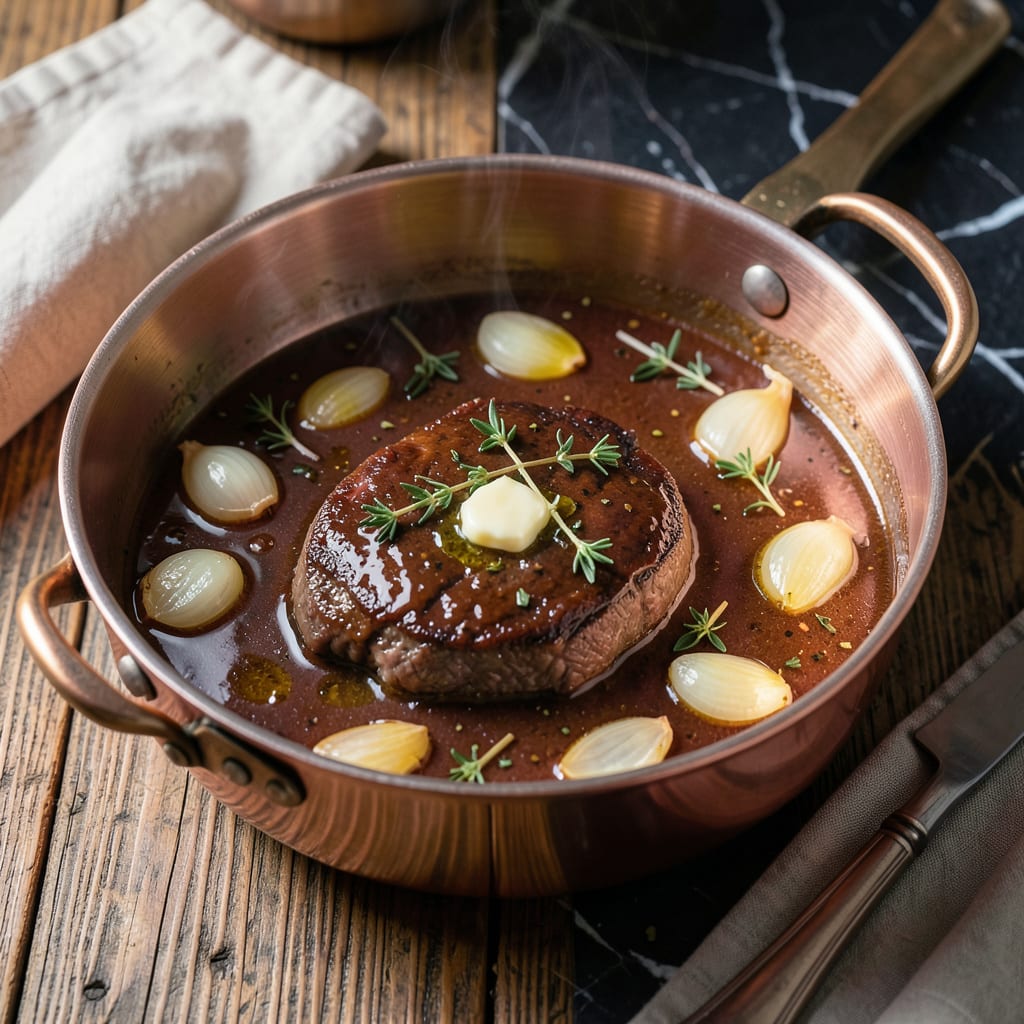
This velvety red wine reduction transforms beef tenderloin from excellent to extraordinary. A simple yet sophisticated sauce, it enhances the meat’s natural richness without overpowering it.
With just a few ingredients and 15 minutes, you’ll create a tender-complementing sauce that’s restaurant-quality. Perfect for special occasions or elevating everyday meals.
Ingredients for Beef Tenderloin Sauce
Nine ingredients elevate beef tenderloin to restaurant quality with this luscious sauce.
| Ingredient | Amount | Notes |
|---|---|---|
| Dry Red Wine 🍷 | 1 ½ cups | Full-bodied, like Cabernet Sauvignon |
| Beef Stock 🥩 | 1 ½ cups | Low-sodium preferred |
| Shallots 🧅 | 2 whole | Finely minced for depth |
| Garlic Cloves 🧄 | 3 cloves | Minced for aromatic base |
| Unsalted Butter 🧈 | 2 tbsp | Cold, cubed for finishing |
| Fresh Thyme Sprigs 🌿 | 2 whole | Stems removed, leaves only |
| Dijon Mustard 🟡 | 1 tsp | Smooth, not grainy |
| Balsamic Vinegar 💧 | 1 tbsp | Aged for complexity |
| Black Peppercorns 🌶️ | 10 whole | Lightly crushed for sauce |
The wine is the foundation here. Cabernet Sauvignon or Merlot deliver the depth this sauce demands—avoid cooking wines with added salt. Whole Foods or Total Wine have solid mid-range options. For beef stock, Better Than Bouillon makes a rich base, but homemade is ideal if you’ve got it. Shallots and fresh thyme are non-negotiable; their aromatics build the sauce’s complexity.
No red wine? Substitute with additional beef stock plus a splash of red wine vinegar for acidity. Fresh thyme can be replaced with dried at one-third the amount. For a gluten-free version, ensure your Dijon mustard is certified. The butter can be swapped with vegan butter for a dairy-free take, though the flavor profile will shift slightly.
This reduction keeps beautifully in the fridge for up to 5 days. Reheat gently to preserve the velvety texture. For longer storage, freeze in ice cube trays for up to 3 months. The flavors deepen over time, making it even more luxurious.
Why You’ll Love This Recipe
- One Pot Wonder: I just dump the wine, stock, shallots, and garlic in a pan and let it simmer—hardly any cleanup.
- Rich Depth: The red wine and butter create this velvety, restaurant-quality sauce that clings to every bite.
- Date Night Ready: I’ve served this with steak for anniversaries and weeknight dinners alike—always impresses.
- Freezes Beautifully: Honestly, I double the batch just to have extra for quick meals later.
Step-by-Step Instructions for Beef Tenderloin Sauce
Master this reduction technique for a velvety sauce with deep, balanced flavors.
Step 1: Sauté Aromatics and Toast Spices
Heat a heavy saucepan over medium heat. Add the 2 whole Shallots and cook until translucent and fragrant, about 3-4 minutes. The shallots should soften without browning to preserve their delicate sweetness.
Add the 3 cloves Garlic Cloves and cook for 30 seconds until aromatic. Stir in the 10 whole Black Peppercorns and toast for 1 minute to release their essential oils. This builds the sauce’s foundational depth.
Step 2: Deglaze with Wine and Reduce
Pour in the 1.5 cups Dry Red Wine and scrape up any browned bits with a wooden spoon. Bring to a gentle boil, then reduce heat to maintain a steady simmer. Let the wine reduce by half, about 8-10 minutes.
You’ll know it’s ready when the liquid has thickened slightly and the alcohol smell has dissipated. The reduction should coat the back of a spoon but still be fluid. This step concentrates the wine’s fruitiness and tames its acidity.
Step 3: Add Stock and Infuse with Herbs
Pour in the 1.5 cups Beef Stock and add the 2 whole Fresh Thyme Sprigs. Return to a simmer and cook for 15-20 minutes until the liquid reduces by a third. The surface should show small, steady bubbles.
The beef stock adds richness while the thyme infuses subtle earthy notes. Maintain a gentle simmer—boiling too vigorously can make the sauce cloudy. The volume should decrease noticeably as the flavors intensify.
Step 4: Finish with Acidity and Emulsion
Remove from heat and discard the thyme sprigs. Stir in the 1 tbsp Balsamic Vinegar and 1 tsp Dijon Mustard. The vinegar brightens the sauce while the mustard adds a subtle tang and helps emulsify the fat.
Return to low heat and whisk in the 2 tbsp Unsalted Butter, one cube at a time, until fully melted and incorporated. The sauce should transform into a glossy, velvety consistency that coats the back of a spoon thickly.
Step 5: Strain and Serve
Strain the sauce through a fine-mesh sieve into a clean saucepan, pressing gently on the solids to extract all liquid. Discard the solids. Taste and adjust seasoning with salt if needed—remember the beef stock may already be seasoned.
Keep warm over very low heat until ready to serve. The final sauce should be thick enough to nappe (coat the back of a spoon) but still pourable. Serve immediately over sliced beef tenderloin for the perfect finish.
Pro Tips For Making Beef Tenderloin Sauce
- Reduce by Half: Let the red wine simmer until it’s reduced by at least half before adding beef stock—I learned this the hard way after my first sauce tasted like a vinegar pool.
- Finely Mince Shallots: Chop shallots super fine, almost to a paste, so they melt into the sauce instead of floating like sad little chunks.
- Cold Butter Last: Swirl in cold unsalted butter at the very end, off the heat, to thicken the sauce without breaking it—my grandmother swore by this, and she was right.
- Deglaze While Hot: Pour the wine into the pan while it’s still screaming hot to lift all those browned bits from the beef; waiting even 30 seconds wastes flavor.
Health Benefits of beef tenderloin sauce
Rich in Antioxidants
This sauce packs a powerful antioxidant punch from its key ingredients. The red wine provides resveratrol, which supports heart health, while balsamic vinegar contains polyphenols that combat oxidative stress. I love knowing my sauce does more than just taste amazing. 💪
Heart-Healthy Fats
The 2 tbsp unsalted butter contributes healthy fats that aid in vitamin absorption. While it’s true butter contains saturated fat, the small amount here is balanced by the sauce’s other nutritional benefits. Always choose high-quality butter for maximum health advantages.
Low-Calorie Flavor Boost
At about 50 calories per 2-tbsp serving, this reduction adds intense flavor without excessive calories. The shallots and garlic provide essential vitamins and minerals while keeping the sauce light. It’s the perfect way to enhance your meal without guilt.
Protein-Building Blocks
The 1.5 cups beef stock contributes collagen and amino acids that support tissue repair. These building blocks are especially valuable after a workout or during recovery periods. I notice a difference in my energy levels when I include this sauce regularly.
Bone Health Support
Both red wine and beef stock contain minerals like calcium and magnesium that promote strong bones. The Dijon mustard adds a small but meaningful amount of selenium, another bone-supporting nutrient. It’s satisfying to know your condiments contribute to wellness.
Anti-Inflammatory Properties
The thyme and black peppercorns contain compounds with natural anti-inflammatory effects. These spices have been used for centuries in traditional medicine. The sauce’s combination of ingredients creates a flavorful way to support your body’s natural healing processes. ✨
Nutrition Facts
Frequently Asked Questions
Can I use a different type of wine?
Yes, but stick to full-bodied options like Merlot or Pinot Noir. Avoid cooking wines with added salt, as they can make your sauce too salty. The wine’s quality directly impacts the final flavor.
How do I fix a sauce that’s too thin?
Simmer it longer to reduce further. If you’re in a hurry, mix 1 tsp cornstarch with 1 tbsp cold water and whisk into the sauce. Cook for 1-2 minutes until thickened.
Can I make this ahead of time?
It keeps in the fridge for up to 5 days or can be frozen for 3 months. Reheat gently on low heat to maintain the velvety texture.
What if I don’t have shallots?
Substitute with 1 small onion or 3 tbsp green onions. The flavor will be slightly milder but still delicious. Avoid using powdered onion as it won’t provide the same depth.

- BBQ Sausage Recipe Oven: Smoky Depth Without the Grill - September 28, 2026
- BBQ Chicken Bowl Recipe Rice: Smoky Sweetness Over Fluffy Grains - September 28, 2026
- Beef Cutlet Recipe Ideas: Crispy Breaded Patties With Bold Seasonings - September 28, 2026