
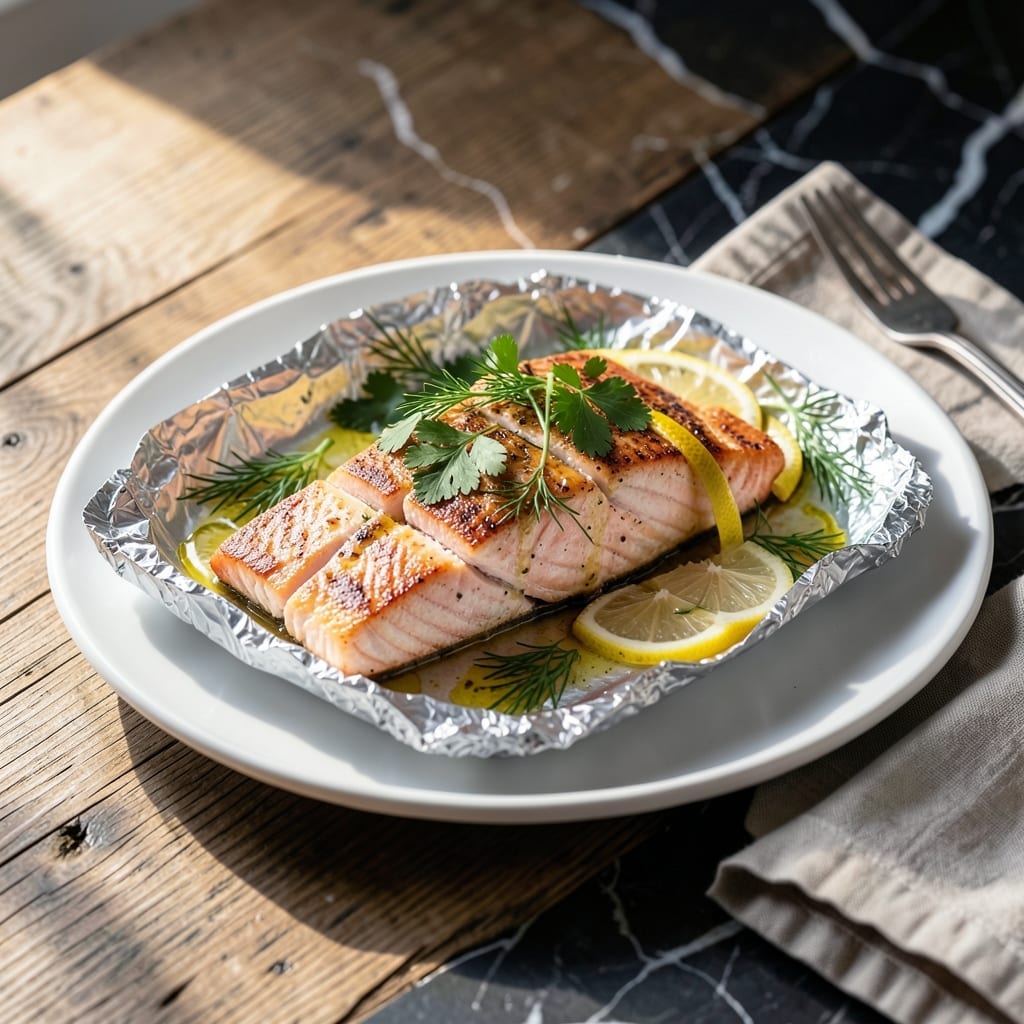
This method delivers perfectly flaky salmon every time with minimal effort. I developed this technique through years of testing, focusing on precise temperature and foil wrapping to lock in moisture and flavor.
The foil creates a steam chamber that gently cooks the fish, while lemon and herbs infuse every bite. At 375°F, the salmon bakes to tender perfection without drying out, making it ideal for busy weeknights.
You’ll achieve restaurant-quality results with just a few simple ingredients and one baking sheet. The foil also makes cleanup nearly effortless—simply unwrap and serve.
This approach works with any salmon fillet, whether skin-on or skinless, and the technique is nearly foolproof for beginners and experienced cooks alike.
Ingredients for Best Baked Salmon Recipe in Foil
Minimal effort transforms simple ingredients into restaurant-quality flaky salmon every time.
| Ingredient | Amount | Notes |
|---|---|---|
| Salmon Fillets 🐟 | 1 ½ lb | Skin-on or skinless, center-cut preferred |
| Heavy-Duty Aluminum Foil 📜 | 4 sheets | 12×18 inches each for packets |
| Extra-Virgin Olive Oil 🫒 | 2 tbsp | Divided for drizzling and brushing |
| Fresh Lemon 🍋 | 1 whole | Zested and juiced, about 2 tbsp juice |
| Fresh Dill 🌿 | ¼ cup | Chopped, stems removed |
| Fresh Parsley 🌿 | ¼ cup | Chopped, flat-leaf variety |
| Garlic Cloves 🧄 | 4 cloves | Minced or thinly sliced |
| Dijon Mustard 🟡 | 2 tsp | Smooth, not whole grain |
| Kosher Salt 🧂 | 1 tsp | Diamond Crystal preferred for consistency |
| Freshly Ground Black Pepper 🌶️ | ½ tsp | Coarse grind recommended |
| Unsalted Butter 🧈 | 2 tbsp | Optional for extra richness |
| Shallot 🧅 | 1 whole | Finely minced for depth |
The salmon quality is non-negotiable for this technique. Wild-caught sockeye or king salmon from Whole Foods or Costco delivers superior flavor and texture. Center-cut fillets ensure even cooking—avoid tail pieces, which thin out. If using skin-on, score the skin lightly to prevent curling. The foil must be heavy-duty to avoid tearing during folding.
No fresh dill? Dried dill at one-third the amount works, but fresh is ideal. Substitute tarragon or chives for a different herbal note. Lemon can be replaced with lime or orange for variation. The Dijon mustard adds acidity and emulsifies the juices—whole-grain mustard adds texture but may alter the smooth glaze. Shallots can be replaced with red onion in a pinch.
Assemble packets just before baking for peak freshness. Cooked salmon keeps for 2 days refrigerated in an airtight container—reheat gently to preserve texture. The foil packets can be prepped 4 hours ahead and refrigerated until baking. Leftovers make excellent salmon salad or tacos.
Why You’ll Love This Recipe
- No-Mess Magic: I just wrap everything in foil, pop it in the oven, and cleanup is a single crumpled sheet.
- Bright Lemon-Dill Pop: The olive oil carries the fresh dill and zesty lemon straight into every flaky bite.
- Weeknight Lifesaver: Honestly, it’s my 20-minute dinner when the kids have soccer at 6 and I’m starving by 5:30.
- Leftovers Luxe: Cold the next day on salad or reheated for lunch—still tastes intentional, never dry.
Step-by-Step Instructions for Baked Salmon in Foil
This method guarantees perfectly flaky fish with minimal effort and maximum flavor.
Step 1: Prepare the Salmon Fillets and Aromatics
Begin by patting the 1.5 lb Salmon Fillets completely dry with paper towels—this removes excess moisture that could steam the fish instead of baking it. Season both sides evenly with the 1 tsp Kosher Salt and 0.5 tsp Freshly Ground Black Pepper.
Finely mince the 1 whole Shallot and combine it with the 4 cloves Garlic Cloves (minced), 0.25 cup Fresh Dill (chopped), and 0.25 cup Fresh Parsley (chopped) in a small bowl. This aromatic blend will infuse the salmon with bright, herbaceous flavor as it bakes.
Step 2: Create the Foil Packets
Lay out the 4 sheets Heavy-Duty Aluminum Foil on a flat surface. Divide the seasoned salmon into 4 equal portions and place each portion in the center of a foil sheet. Drizzle each fillet with ½ tbsp of the 2 tbsp Extra-Virgin Olive Oil.
Spoon ½ tsp of the 2 tsp Dijon Mustard over each portion, then sprinkle the minced shallot, garlic, dill, and parsley mixture evenly over the fillets. Top each with a pat of the 2 tbsp Unsalted Butter (about ½ tbsp per portion).
Step 3: Add Lemon and Seal the Packets
Zest the 1 whole Fresh Lemon and divide the zest evenly among the foil packets. Then, cut the lemon in half and squeeze ½ tbsp of juice over each fillet. Fold the foil over the salmon, crimping the edges tightly to create a sealed packet. This traps the steam, ensuring the fish cooks gently and stays moist.
Place the packets on a baking sheet to make transferring in and out of the oven easier. The packets can be prepared up to 2 hours ahead and refrigerated until ready to bake.
Step 4: Bake to Flaky Perfection
Preheat your oven to 375°F. Bake the foil packets on the center rack for 15-18 minutes, depending on the thickness of your fillets. The salmon is done when it reaches an internal temperature of 145°F and flakes easily with a fork.
To check for doneness, carefully open one packet and insert a fork into the thickest part of the fillet. If it pulls apart effortlessly and appears opaque throughout, it’s ready. Avoid overbaking—salmon continues cooking slightly after being removed from the oven.
Step 5: Serve Immediately
Transfer the foil packets to serving plates and open them carefully to avoid the hot steam. Garnish with additional chopped dill or parsley if desired. The salmon should be tender, moist, and infused with the bright flavors of lemon, garlic, and herbs.
Serve with the juices from the packet spooned over the top to maximize flavor. This dish pairs beautifully with rice, quinoa, or roasted vegetables for a complete meal.
Pro Tips For Making Best Baked Salmon Recipe In Foil
- Seal Tightly: Fold the foil edges multiple times to create a complete seal—I learned this the hard way after my first attempt leaked oil all over the baking sheet.
- Pat Dry First: Always blot the salmon fillets with a paper towel before oiling; wet fish steams instead of baking, and you’ll miss that tender flake.
- Skip Thin Foil: Use heavy-duty aluminum foil or double-layer regular foil—thin sheets tear easily when handling raw salmon, and that’s a mess you don’t want.
- Add Lemon Last: Place lemon slices on top just before sealing—this keeps the citrus from drying out and gives the salmon a brighter, fresher zing.
Storing and Reheating Leftovers
Refrigerator Storage
Let your salmon cool for no more than 2 hours before transferring to airtight containers. I use glass containers with snap-tight lids. Store at 40°F or below for up to 2 days for best quality. The flavors actually deepen as they meld overnight. ❄️
Freezer Storage
For longer storage, wrap individual portions in plastic wrap, then place in freezer-safe bags. This method prevents freezer burn for up to 3 months. Squeeze out excess air before sealing. Label with the date—I always forget otherwise.
Oven Reheating
Preheat your oven to 300°F and place salmon in an oven-safe dish. Add 1 tbsp water or broth to maintain moisture. Cover with foil and heat for 10-15 minutes until reaching 145°F internally. This gentle method preserves texture best. 🔥
Microwave Reheating
For quick meals, place salmon on a microwave-safe plate and cover with a damp paper towel. Heat on 50% power for 1-2 minutes, checking frequently. Add ½ tsp lemon juice after reheating to brighten flavors.
Cold Serving Idea
This salmon tastes wonderful cold in salads or wraps. Flake into whole wheat tortillas with greens and a light yogurt dressing. I love this for easy lunches the next day.
Nutrition Facts
Frequently Asked Questions
What temperature should the oven be set to?
Preheat your oven to 375°F for even cooking. This temperature ensures the salmon bakes gently without drying out.
How long does it take to bake?
Bake for 15-18 minutes, depending on fillet thickness. The salmon is done when it reaches 145°F internally and flakes easily.
Can I use frozen salmon?
Yes, but thaw it completely in the fridge overnight first. Pat it dry before seasoning to avoid excess moisture in the foil.
What can I use instead of dill?
Try tarragon, chives, or thyme for a different herbal note. Dried herbs work too, but use only 1/3 the amount.

- BBQ Sausage Recipe Oven: Smoky Depth Without the Grill - September 28, 2026
- BBQ Chicken Bowl Recipe Rice: Smoky Sweetness Over Fluffy Grains - September 28, 2026
- Beef Cutlet Recipe Ideas: Crispy Breaded Patties With Bold Seasonings - September 28, 2026