
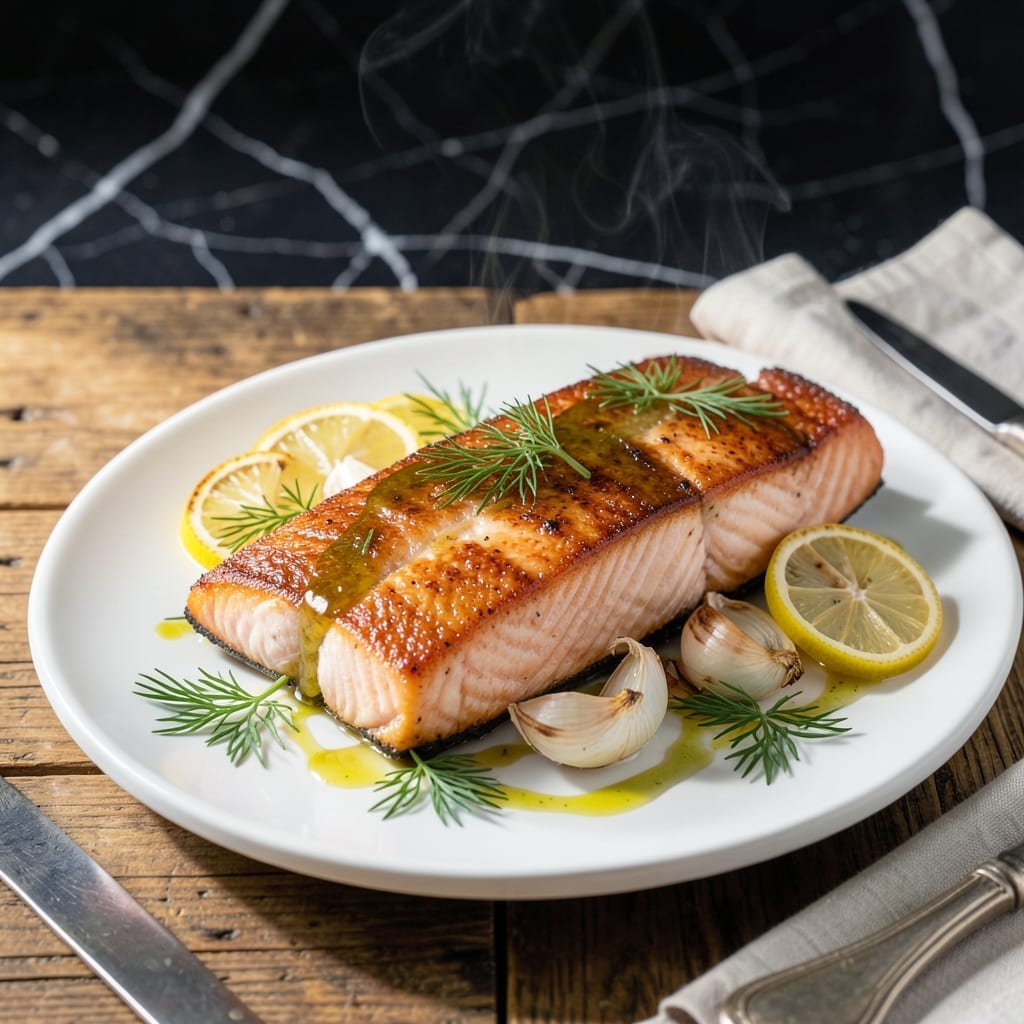
This baked salmon recipe delivers flaky, tender results that put restaurant versions to shame. The secret lies in a precise 400°F oven temperature and a simple herb-lemon topping that infuses every bite with bright flavor.
What makes this method superior is its foolproof simplicity. A short bake time ensures the salmon stays moist while developing a lightly crisp exterior. The lemon and fresh herbs add complexity without overpowering the fish’s natural richness.
You’ll achieve perfectly cooked salmon with a buttery texture that separates effortlessly with a fork. The aromatic topping creates a light crust that seals in juices, making each mouthful absolutely irresistible.
Serve with roasted asparagus or a simple green salad for a complete meal that feels special but takes less than 30 minutes to prepare.
Ingredients for Best Baked Salmon Recipe in the World
Fresh salmon fillets meet bright lemon, herbs, and a touch of sweetness for flaky perfection.
| Ingredient | Amount | Notes |
|---|---|---|
| Salmon Fillets 🐟 | 1 ½ lb | Skin-on, center-cut preferred |
| Extra-Virgin Olive Oil 🫒 | 2 tbsp | Divided for fish and topping |
| Lemon 🍋 | 1 whole | Zested and juiced, divided |
| Fresh Dill 🌿 | ¼ cup | Chopped, stems removed |
| Fresh Parsley 🌿 | ¼ cup | Chopped, flat-leaf variety |
| Garlic Cloves 🧄 | 3 cloves | Minced finely |
| Dijon Mustard 🟡 | 1 tbsp | Smooth or whole-grain |
| Honey 🍯 | 1 tbsp | Optional for glaze |
| Kosher Salt 🧂 | 1 tsp | Diamond Crystal preferred |
| Freshly Ground Black Pepper 🌶️ | ½ tsp | Coarse grind ideal |
| Unsalted Butter 🧈 | 2 tbsp | Melted, for topping |
| Shallot 🧅 | 1 whole | Finely diced |
The salmon quality is non-negotiable here. Wild-caught center-cut fillets from Whole Foods or Costco yield the most consistent results, with even thickness ensuring uniform cooking. Look for vibrant color and a mild ocean scent—avoid anything with a fishy odor. The skin should glisten, not appear dull or dried out. If buying frozen, thaw overnight in the refrigerator for optimal texture.
No fresh dill? Dried dill at one-third the amount works in a pinch, though fresh delivers superior brightness. Substitute parsley with fresh cilantro or tarragon for a different but complementary profile. Honey can be replaced with maple syrup or agave for a vegan-friendly option. The Dijon mustard is flexible—whole-grain or regular yellow mustard both add tang without overpowering.
Prepare the topping just before baking to preserve the herbs’ aromatic oils. Leftovers keep in the fridge for up to 2 days, though the salmon is best served fresh. For meal prep, cook the fillets slightly underdone, then finish in a skillet when ready to serve to maintain that perfect flaky texture.
Why You’ll Love This Recipe
- One Pan Magic: I toss the salmon with olive oil, lemon, and herbs, then bake—no flipping, no fuss, just perfect results.
- Bright & Zesty: The fresh dill and lemon make every bite taste like a sunny day at the coast.
- Weeknight Hero: I serve this for quick dinners, but it’s fancy enough for guests (Yes, even on a Tuesday night).
- Leftovers Win: Cold salmon tastes amazing in salads or wraps—I always make extra.
Step-by-Step Instructions for Baked Salmon
Master these precise techniques to achieve restaurant-quality results with every bake.
Step 1: Prepare and Season the Salmon Fillets
Pat the 1.5 lb Salmon Fillets completely dry with paper towels. This crucial step removes surface moisture that would otherwise steam the fish instead of allowing it to develop a beautiful crust. I always use skin-on fillets for this preparation as the skin protects the delicate flesh during cooking.
Rub the salmon all over with 1 tbsp Extra-Virgin Olive Oil, then season evenly with 1 tsp Kosher Salt and 0.5 tsp Freshly Ground Black Pepper. The salt should adhere to the surface, creating a light coating that enhances flavor and helps form a crisp exterior.
Step 2: Create the Herb and Citrus Topping
In a small bowl, combine the 0.25 cup Fresh Dill, 0.25 cup Fresh Parsley, zest of 1 whole Lemon, 3 cloves minced Garlic Cloves, 1 whole finely diced Shallot, 1 tbsp Dijon Mustard, and 1 tbsp Honey. Mix thoroughly until all ingredients are evenly incorporated.
The dill and parsley should be finely chopped to release their essential oils, while the lemon zest provides bright citrus notes. This aromatic mixture will infuse the salmon with complex flavors as it bakes, creating a harmonious balance of herbal, sweet, and tangy elements.
Step 3: Apply Topping and Bake to Perfection
Place the seasoned salmon fillets skin-side down on a parchment-lined baking sheet. Spread the herb mixture evenly over the top of each fillet, pressing gently to adhere. Drizzle the remaining 1 tbsp Extra-Virgin Olive Oil over the topping, then pour 2 tbsp Unsalted Butter (melted) evenly over the fillets.
Bake in a preheated 400°F oven for 12-15 minutes, depending on thickness. The salmon is done when the internal temperature reaches 145°F and the flesh flakes easily with a fork. The topping should be golden brown and fragrant, with the butter creating a glossy finish.
Step 4: Rest and Finish with Fresh Citrus
Remove the salmon from the oven and let it rest for 5 minutes before serving. This allows the juices to redistribute throughout the fillets, ensuring moist, tender flesh. The residual heat will continue cooking the salmon slightly, so resist the temptation to cut into it immediately.
Just before serving, squeeze 1 tbsp fresh lemon juice from the remaining lemon over each fillet. This final touch brightens all the flavors and complements the rich, buttery topping. Serve immediately while hot, with any accumulated pan juices spooned over the top.
Pro Tips For Making Best Baked Salmon Recipe In The World
- Pat It Dry: I learned this the hard way—wet salmon steams instead of searing, so blot the fillets with paper towels before oiling. Sounds tedious, but it’s the only way to get that crisp, golden crust.
- High Heat First: Start at 425°F for 8 minutes, then drop to 375°F to finish. This gives you a perfect crust while keeping the inside tender.
- Skip the Overcrowding: Leave at least an inch between fillets on the baking sheet, or they’ll steam each other and turn out soggy. I was skeptical until I tried it.
- Zest Before Juicing: Grate the lemon zest directly over the salmon before slicing for juice—it packs way more flavor than just the juice alone. My grandmother swore by this, and she was right.
Make-Ahead Tips for This Dish
Prep the Topping
Mix your herb-citrus topping up to 2 days ahead and store in an airtight container in the fridge. The flavors meld beautifully overnight, making the dill and parsley even more aromatic. I always prep this first—it saves 10 minutes on cooking day. 💡
Partial Bake Method
Bake the salmon for just 8-10 minutes at 400°F, then cool and refrigerate. Finish baking at 375°F for 5-7 minutes when ready to serve. This keeps the texture perfect without drying out.
This method works best with center-cut fillets of even thickness. Avoid this with very thin tail pieces, as they’ll overcook during the final bake.
Cold Storage
Cooked salmon keeps in the fridge for up to 3 days in a sealed container. Let it cool completely before storing to prevent condensation, which can make the topping soggy. I use glass containers for easy reheating. ❄️
Reheating Tips
Gently reheat in a 300°F oven for 10-12 minutes, covered with foil to retain moisture. Avoid microwaving, as it can make the fish rubbery. A splash of water in the pan adds steam to revive the flakiness.
Freezing Guide
Freeze unbaked, seasoned fillets with topping applied for up to 2 months. Wrap tightly in plastic wrap, then foil, to prevent freezer burn. Thaw overnight in the fridge before baking as directed.
Nutrition Facts
Frequently Asked Questions
What oven temperature works best?
A preheated 400°F oven creates the perfect balance of crisp topping and moist interior. This temperature ensures even cooking without drying out the delicate flesh.
Can I use frozen salmon?
Yes, but thaw it overnight in the fridge first for best texture. Pat it completely dry before seasoning to prevent steaming instead of baking.
How do I know when it’s done?
The salmon is ready when it reaches 145°F internally and flakes easily with a fork. The topping should be golden brown and fragrant.
What sides pair well?
Roasted asparagus, quinoa, or a simple green salad complement the rich, buttery flavor. Avoid overpowering sides that compete with the salmon’s delicate taste.

- BBQ Sausage Recipe Oven: Smoky Depth Without the Grill - September 28, 2026
- BBQ Chicken Bowl Recipe Rice: Smoky Sweetness Over Fluffy Grains - September 28, 2026
- Beef Cutlet Recipe Ideas: Crispy Breaded Patties With Bold Seasonings - September 28, 2026