
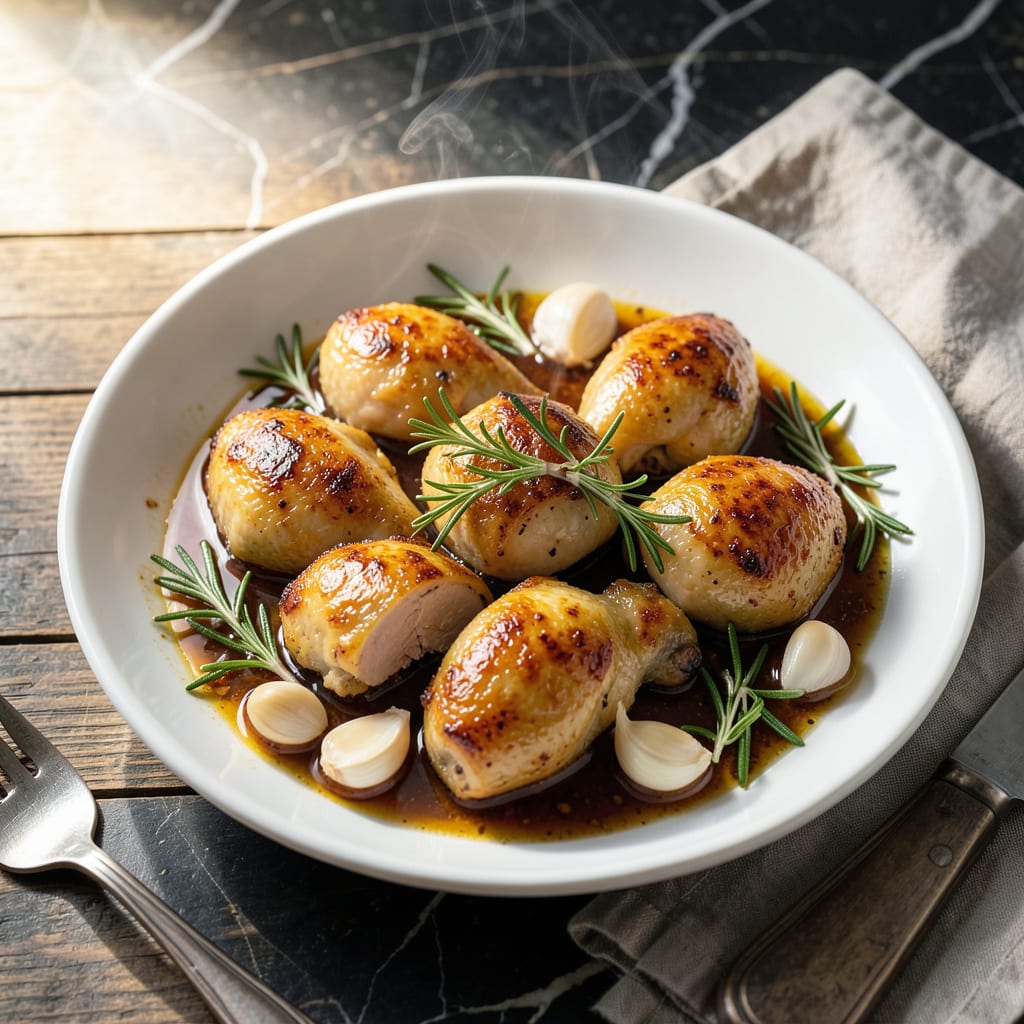
This brine transforms ordinary chicken into juice-locking perfection every time. The precise salt-to-water ratio ensures maximum moisture retention without overpowering the natural flavor.
With just a few simple ingredients and a short soak, you’ll achieve restaurant-quality results that stay tender and flavorful through cooking. The method works for whole birds or individual pieces.
Ingredients for Best Brine Recipe for Chicken
Ten ingredients transform ordinary chicken into restaurant-quality perfection every time.
| Ingredient | Amount | Notes |
|---|---|---|
| Water 💧 | 4 cups | Cold, for brine base |
| Kosher Salt 🧂 | ½ cup | Diamond Crystal preferred |
| Granulated Sugar 🍚 | ¼ cup | Balances saltiness |
| Brown Sugar 🟤 | ¼ cup | Adds depth of flavor |
| Garlic Cloves 🧄 | 6 cloves | Smashed for infusion |
| Fresh Rosemary Sprigs 🌿 | 3 pieces | Bruised to release oils |
| Fresh Thyme Sprigs 🍃 | 3 pieces | Bruised to release oils |
| Black Peppercorns 🌶️ | 1 tbsp | Lightly crushed |
| Bay Leaves 🌿 | 2 pieces | Dried, whole |
| Lemon Slices 🍋 | 2 slices | Thin, for brightness |
The salt is critical here. Diamond Crystal kosher salt dissolves cleanly and delivers consistent results—table salt will overpower the brine. For the herbs, fresh rosemary and thyme from the grocery store produce section provide the best aromatic infusion. If using dried, reduce quantities by half. Whole Foods or local farmers markets often carry the freshest options.
No kosher salt? Morton kosher salt at three-quarters the amount works in a pinch. Short on fresh herbs? Dried herbs at half the quantity substitute well, though fresh delivers superior flavor. The sugars can be swapped—honey or maple syrup at the same volume. For citrus, lime or orange slices work as well as lemon for a different brightness profile.
Brine keeps refrigerated for 3 days—discard after use. Always brine in non-reactive containers (glass, stainless steel). Prep herbs and aromatics just before mixing to preserve their potency. This recipe makes enough for one whole chicken or 4-5 pounds of pieces.
Why You’ll Love This Recipe
- 5-Minute Mix: I just stir water, salts, sugars, and smashed garlic cloves in a pot—no chopping, no fuss.
- Sweet-Savory Magic: The brown sugar and garlic turn plain chicken into juicy, caramel-kissed perfection every time.
- Meal Prep Hero: Brine a batch Sunday night and you’ve got flavorful chicken ready for salads, tacos, or roasts all week.
- Penny-Wise Flavor: Five ingredients I already have, and it makes cheap cuts taste like a weekend special.
Step-by-Step Instructions for Chicken Brine
This method ensures maximum flavor penetration and moisture retention for perfectly juicy poultry.
Step 1: Dissolve Salts and Sugars in Cold Water
In a large pot or container, combine the 4 cups Water with the 0.5 cup Kosher Salt, 0.25 cup Granulated Sugar, and 0.25 cup Brown Sugar. Stir vigorously until all solids are completely dissolved—this should take 2-3 minutes of consistent mixing.
The sugars balance the saltiness while the brown sugar adds caramelized depth to the final flavor. I use cold water to prevent premature extraction of flavors from the aromatics we’ll add next. Diamond Crystal kosher salt is preferred for its clean taste and consistent dissolution.
Step 2: Infuse with Aromatics
Add the 6 cloves Garlic Cloves (smashed to release their oils), 3 pieces Fresh Rosemary Sprigs, 3 pieces Fresh Thyme Sprigs (both bruised to maximize infusion), 1 tbsp Black Peppercorns (lightly crushed), 2 pieces Bay Leaves, and 2 slices Lemon Slices to the brine solution.
Stir once to distribute the ingredients evenly. The lemon slices add a bright citrus note that cuts through the richness, while the herbs and spices create a complex aromatic base. Allow this mixture to sit at room temperature for 15 minutes to begin the flavor extraction process.
Step 3: Chill Thoroughly Before Use
Cover the container and refrigerate the brine for at least 1 hour (or up to 24 hours for deeper infusion). This chilling step is critical—it ensures the brine remains at a safe temperature when added to the chicken and allows the flavors to meld completely.
I recommend placing the container in the coldest part of your refrigerator. The longer you chill, the more pronounced the herb and citrus notes will be in your final dish. This step is non-negotiable for both food safety and flavor development.
Step 4: Brine the Chicken for Optimal Results
Submerge your chicken completely in the chilled brine. For a whole chicken, this typically requires 12-24 hours of brining time. For smaller cuts like chicken breasts or thighs, 4-8 hours is sufficient. The piece should be fully immersed—use a weight or plate if necessary to keep it below the surface.
During this time, the salt penetrates the meat, breaking down proteins to retain moisture while the sugars and aromatics infuse flavor deeply. The result will be meat that stays juicy even after cooking. Remove the chicken from the brine just before cooking—do not rinse, as this washes away flavor and seasoning.
Pro Tips For Making Best Brine Recipe For Chicken
- Brine Overnight: I learned this the hard way—8 to 12 hours in the fridge is the sweet spot for juicy, flavorful chicken. Less than 4 hours and you’re just wasting salt and sugar.
- Smash the Garlic: Crush those garlic cloves before adding them to the brine so their flavor actually infuses the meat. Whole cloves just float around doing nothing.
- Use Cold Water: Start with ice-cold water to dissolve the salt and sugar faster, and keep the chicken safe while it brines. Warm water just breeds bacteria and slows the process.
- Dry Before Cooking: Pat the chicken completely dry after brining—this guarantees a better sear or crispy skin. Skip this and you’ll steam it instead of brown it.
Perfect Pairings for This Recipe
Side Dish Pairings
Brined chicken pairs beautifully with roasted vegetables like asparagus or Brussels sprouts. Toss them in 2 tbsp olive oil and roast at 400°F for 20-25 minutes to complement the bird’s juiciness. 🌟
Potato Partners
Creamy mashed potatoes or crispy roasted baby potatoes soak up the brine’s savory notes. For roasted potatoes, cut into 1-inch cubes and toss with rosemary and garlic before baking.
Salad Complements
A fresh green salad with a light vinaigrette balances the richness. Try mixed greens, cucumber, and cherry tomatoes with a lemon-Dijon dressing. The acidity cuts through the chicken’s richness perfectly.
Bread Options
Serve with warm crusty bread or buttery cornbread to mop up any juices. I love a sourdough baguette for its chewy texture and mild tang.
Beverage Pairings
A crisp white wine like Sauvignon Blanc or a light lager beer enhances the meal. The wine’s acidity mirrors the brine’s brightness, while beer’s effervescence cleanses the palate. 🍷
Herb Butter Finish
For an extra touch, top cooked chicken with herb butter made from 4 tbsp softened butter, 1 tbsp chopped parsley, and 1 minced garlic clove. It melts beautifully into the meat.
Nutrition Facts
Frequently Asked Questions
How long should I brine chicken breasts?
For boneless, skinless breasts, 4-6 hours is ideal. Bone-in pieces can handle 8-12 hours for deeper flavor. Never exceed 24 hours as it can make the meat mushy.
Can I reuse the brine for another batch?
No, always discard used brine. It contains raw chicken juices and bacteria that multiply rapidly. For safety, make a fresh batch each time.
Do I need to rinse the chicken after brining?
Skip the rinse to preserve flavor and seasoning. Just pat dry with paper towels before cooking. Rinsing washes away the salt and sugars that enhance moisture.
What if I don’t have kosher salt?
Use 1/3 cup table salt instead of 1/2 cup kosher. Table salt is finer and more concentrated. Measure carefully to avoid over-salting.

- BBQ Sausage Recipe Oven: Smoky Depth Without the Grill - September 28, 2026
- BBQ Chicken Bowl Recipe Rice: Smoky Sweetness Over Fluffy Grains - September 28, 2026
- Beef Cutlet Recipe Ideas: Crispy Breaded Patties With Bold Seasonings - September 28, 2026