
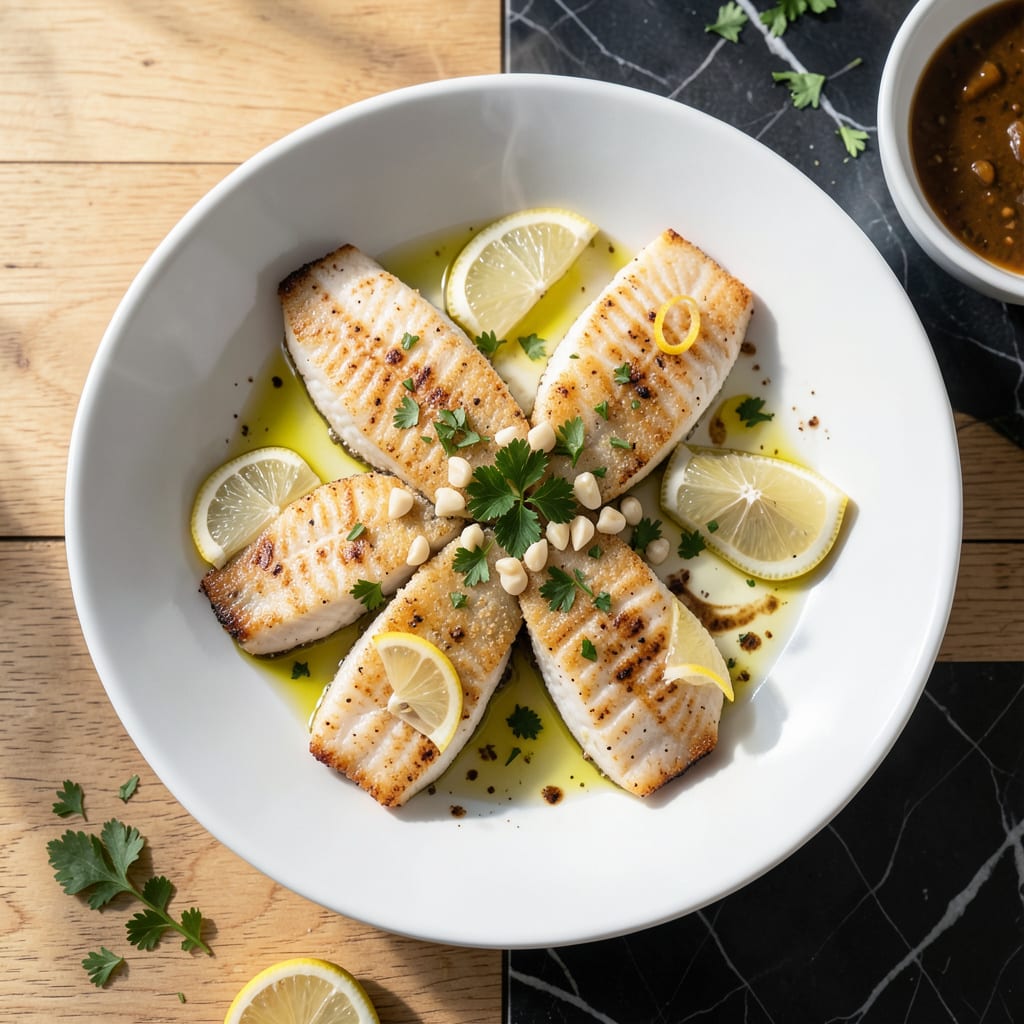
This best method for flounder delivers perfectly cooked fish with minimal effort. The broiling technique ensures a flaky texture while keeping the preparation simple.
You’ll achieve fork-tender results in just 10 minutes, making this an ideal weeknight meal. The high heat creates a light crust while maintaining the fish’s delicate nature.
Ingredients for Best Broiled Flounder
Simple ingredients highlight the delicate flavor of perfectly broiled flounder in this quick dish.
| Ingredient | Amount | Notes |
|---|---|---|
| Flounder Fillets 🐟 | 1 ½ lb | Fresh or thawed, skinless |
| Extra-Virgin Olive Oil 🫒 | 2 tbsp | Divided for brushing and drizzling |
| Lemon 🍋 | 1 whole | Zested and juiced |
| Garlic Cloves 🧄 | 3 cloves | Minced finely |
| Fresh Parsley 🌿 | ¼ cup | Chopped, for garnish |
| Dijon Mustard 🟡 | 1 tbsp | For crust formation |
| Panko Breadcrumbs 🍞 | ½ cup | For crispy topping |
| Grated Parmesan Cheese 🧀 | ¼ cup | Freshly grated preferred |
| Salt 🧂 | ½ tsp | Kosher or sea salt |
| Black Pepper 🌶️ | ¼ tsp | Freshly ground |
| Paprika 🌶️ | ½ tsp | Sweet or smoked variety |
| Dry White Wine 🍷 | ¼ cup | For deglazing pan |
The flounder is the centerpiece—opt for wild-caught if available, though farmed works equally well. Whole Foods or Trader Joe’s consistently stock high-quality fillets. Look for fillets that are evenly thick (about 1 inch) to ensure even cooking. Fresh should smell clean, like the ocean, not fishy. If using frozen, thaw completely and pat dry to avoid steaming the fish.
No flounder? Sole or tilapia are excellent substitutes with similar delicate textures. The panko can be swapped for regular breadcrumbs at a 1:1 ratio, though the texture will be slightly less crisp. For a gluten-free option, use almond flour or crushed rice crackers. The white wine can be replaced with chicken or vegetable broth in a pinch.
Cook immediately for best results, though the topping can be prepped 1 hour ahead. Store leftovers in an airtight container for up to 2 days—reheat gently to avoid drying out the fish. Not recommended for freezing.
Why You’ll Love This Recipe
- 5-Minute Prep: I just toss the flounder with olive oil, lemon, garlic, and parsley—no fancy steps.
- Bright, Zesty Bite: The lemon and garlic give it that fresh, punchy flavor without overpowering the fish.
- Weeknight Hero: It’s my go-to for busy evenings when I need dinner fast but still crave restaurant-quality taste.
- Budget-Friendly Feast: Flounder cooks up light yet satisfying, and a little goes a long way for a filling meal.
Step-by-Step Instructions for Broiled Flounder
This method delivers perfectly cooked fish with a crispy, flavorful topping every time.
Step 1: Prepare the Flounder Fillets
Preheat your broiler on high and position the oven rack 6 inches from the heat source. Pat the 1.5 lb flounder fillets completely dry with paper towels—this ensures the seasoning adheres and promotes even cooking.
Lightly brush both sides of the fillets with 1 tbsp extra-virgin olive oil from the 2 tbsp total. Season evenly with 0.5 tsp salt, 0.25 tsp black pepper, and 0.5 tsp paprika. The paprika adds a subtle depth of flavor and a hint of color to the finished dish.
Step 2: Create the Panko-Parmesan Topping
In a small bowl, combine 0.5 cup panko breadcrumbs, 0.25 cup grated parmesan cheese, 1 tbsp dijon mustard, and the zest of 1 whole lemon. The mustard acts as a binder while adding a tangy contrast to the richness of the cheese.
Mince 3 cloves garlic cloves finely and stir them into the breadcrumb mixture. The garlic should be uniformly small to distribute its flavor evenly without overpowering any single bite. This topping should resemble wet sand—it will crisp up beautifully under the broiler.
Step 3: Broil to Perfection
Place the seasoned fillets on a broiler pan or a wire rack set over a baking sheet. This setup allows heat to circulate around the fish, preventing the bottom from steaming. Distribute the panko-parmesan mixture evenly over the top of each fillet, pressing gently to adhere.
Broil for 6-8 minutes until the topping is golden brown and the fish flakes easily with a fork. Watch closely during the last 2 minutes—broilers vary in intensity, and the topping can go from golden to burnt quickly. The flounder is done when it reaches an internal temperature of 145°F and the flesh is opaque throughout.
Step 4: Finish with Fresh Flavors
Remove the flounder from the oven and let it rest for 2 minutes. Drizzle with the remaining 1 tbsp extra-virgin olive oil and a squeeze of juice from the 1 whole lemon. This brightens the flavors and adds a final layer of freshness.
Garnish with 0.25 cup fresh parsley, chopped, for a pop of color and a clean, herbal note. For an optional pan sauce, deglaze the baking sheet with 0.25 cup dry white wine over medium heat, scraping up any browned bits, and drizzle this over the fish before serving. This step elevates the dish from excellent to extraordinary.
Pro Tips For Making Best Broiled Flounder
- Preheat the Broiler: I learned this the hard way—crank the broiler for at least 10 minutes before adding the flounder. A screaming-hot element guarantees that perfect golden crust without overcooking the delicate fish.
- Pat Fillets Dry: Skip the soggy skin: blot the flounder fillets thoroughly with paper towels before oiling. Even a little moisture steams the fish instead of searing it.
- Watch the Time: Flounder cooks fast—4-6 minutes per side max. After burning a few batches, I finally started setting a timer to pull it just as it flakes.
- Use Room-Temp Fish: Take the flounder out of the fridge 15 minutes before cooking. Cold fillets seize up under the broiler, but room-temp ones cook evenly and stay tender.
Regional Styles of This best broiled flounder
New England Style
In coastal New England, we keep this dish simple to let the fresh flounder shine. I use local sea salt and cracked black pepper as the only seasonings, then finish with melted butter and a squeeze of lemon. The focus stays on the fish’s natural sweetness. 🌊
Southern Cajun Twist
Down in Louisiana, we add some heat with a Cajun seasoning blend—about 1 tsp mixed into the panko topping. I also like to swap the parmesan for pecorino cheese for a sharper bite. Serve with a side of remoulade sauce for dipping.
Mediterranean Approach
For a Mediterranean flair, I mix chopped kalamata olives and sun-dried tomatoes into the topping. Replace the parsley garnish with fresh basil or oregano for an aromatic finish. A drizzle of balsamic glaze adds the perfect sweet-tangy note. 💛
Pacific Northwest
Out west, we embrace the local flavors by adding chopped fresh dill and capers to the topping mixture. I also like to use Dungeness crab meat as a luxurious addition. The bright, briny flavors complement the flounder beautifully.
Asian Fusion
For an Asian-inspired version, I replace the panko with crushed rice crackers and add 1 tsp grated ginger and 1 tbsp soy sauce to the topping. Garnish with thinly sliced scallions and a sprinkle of sesame seeds for crunch.
Nutrition Facts
Frequently Asked Questions
How do I know when flounder is done?
It’s ready when it reaches an internal 145°F and flakes easily with a fork. The flesh should appear opaque throughout with no translucent spots.
Can I use frozen flounder?
Yes, but thaw it completely in the fridge overnight and pat it very dry before cooking. This prevents steaming and ensures even broiling.
Why use a wire rack for broiling?
A rack allows heat to circulate underneath, preventing the bottom from becoming soggy. It also helps the topping crisp evenly on all sides.
What if my topping burns?
Move the rack lower or switch to bake at 400°F for the last 2-3 minutes. Keep a close eye on it, as broilers vary in intensity.

- BBQ Sausage Recipe Oven: Smoky Depth Without the Grill - September 28, 2026
- BBQ Chicken Bowl Recipe Rice: Smoky Sweetness Over Fluffy Grains - September 28, 2026
- Beef Cutlet Recipe Ideas: Crispy Breaded Patties With Bold Seasonings - September 28, 2026