
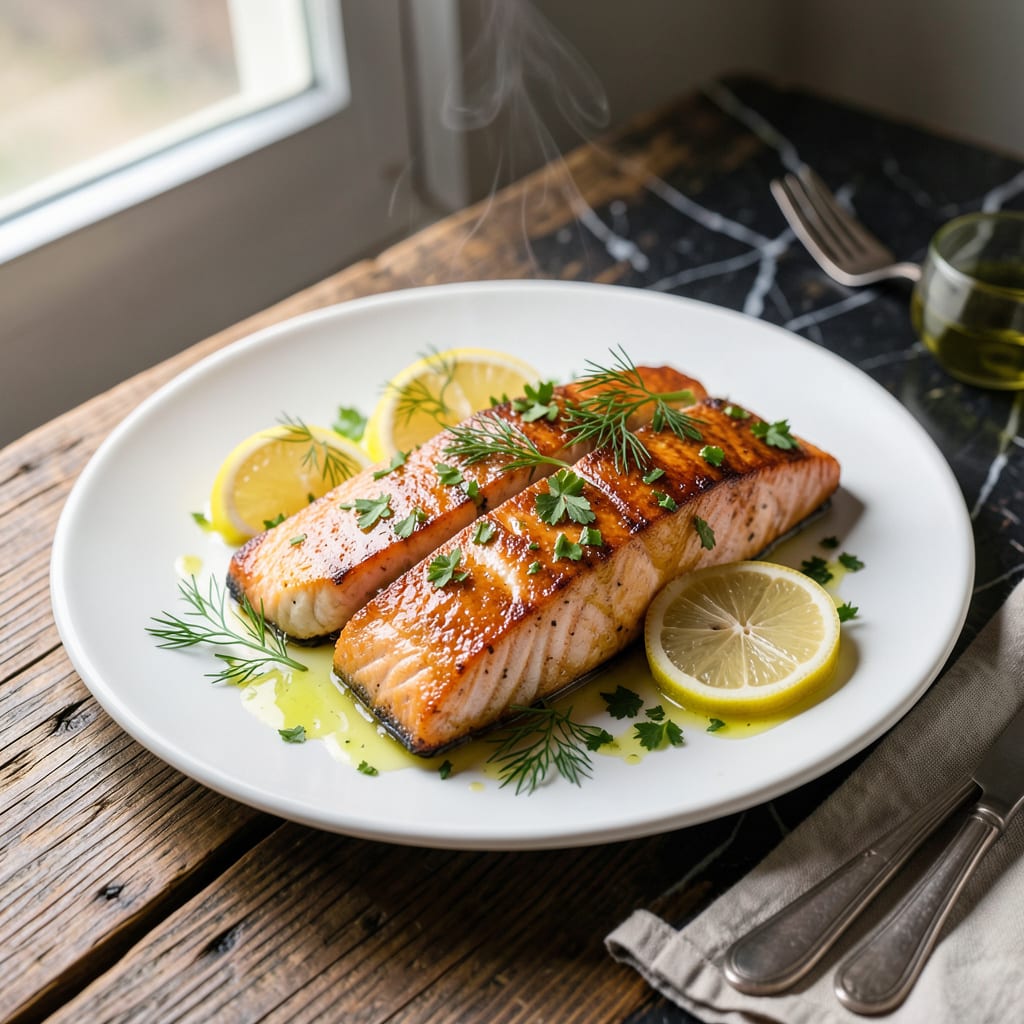
This baked salmon delivers on its name with a garlic butter glaze that creates the most tender, flaky layers you’ve ever tasted. The secret lies in a precise baking method that locks in moisture while developing rich, caramelized edges.
Simple ingredients come together to create a dish that’s both elegant and foolproof. The result is restaurant-quality salmon with a golden crust and perfectly cooked interior—every single time.
Ingredients for Best Damn Baked Salmon
Center-cut salmon, garlic butter glaze, and fresh herbs create restaurant-quality results at home.
| Ingredient | Amount | Notes |
|---|---|---|
| Salmon Fillets 🐟 | 1 ½ lb | Skin-on, center-cut preferred |
| Unsalted Butter 🧈 | ½ cup | Melted for glaze |
| Garlic Cloves 🧄 | 4 cloves | Minced finely for even distribution |
| Fresh Lemon 🍋 | 1 whole | Zest and juice separated |
| Fresh Dill 🌿 | ¼ cup | Chopped, stems removed |
| Fresh Parsley 🍃 | ¼ cup | Chopped for garnish |
| Dijon Mustard 🟡 | 1 tbsp | Smooth variety preferred |
| Honey 🍯 | 1 tbsp | For balancing acidity |
| Olive Oil 🫒 | 1 tbsp | For greasing baking dish |
| Kosher Salt 🧂 | 1 tsp | Diamond Crystal preferred |
| Freshly Ground Black Pepper 🌶️ | ½ tsp | Coarse grind preferred |
| Paprika 🌶️ | ½ tsp | Sweet or smoked variety |
The salmon quality is non-negotiable for optimal flakiness. Wild-caught sockeye or king salmon from Whole Foods or Trader Joe’s delivers the best texture and flavor. Ensure fillets are uniformly thick (about 1 inch) for even cooking. The butter should be high-fat European-style—Plugrá or Kerrygold are excellent choices. Fresh herbs are essential; dried simply won’t provide the same vibrant finish.
No fresh dill? Fresh tarragon at equal amounts offers a similar anise note. Substitute maple syrup for honey if avoiding bee products. The Dijon can be replaced with whole-grain mustard for texture, though the flavor profile will shift slightly. If using skinless fillets, reduce baking time by 2-3 minutes to prevent overcooking (the skin acts as a natural barrier).
Store raw salmon on a bed of ice in the coldest part of your fridge—use within 1-2 days of purchase. The garlic butter glaze can be made 2 days ahead and reheated gently. Leftovers keep for 3 days refrigerated, though the texture is best enjoyed immediately after baking.
Why You’ll Love This Recipe
- One Pan Magic: I just toss the salmon on a sheet pan with melted butter, garlic, and lemon slices—no fancy techniques or extra dishes.
- Buttery Garlic Bliss: The butter, garlic, and dill create this rich, savory crust that makes every bite ridiculously good.
- Weeknight Hero: Honestly, it’s my go-to for busy evenings—ready in 20 minutes and fancy enough for company.
- Leftovers Win: The flavors taste even better the next day, and it reheats beautifully for lunch.
Step-by-Step Instructions for Baked Salmon
Here’s the method. Straightforward, tested, works every time.
Step 1: Prep and Season the Salmon Fillets
Preheat your oven to 400°F to ensure it’s fully hot when the dish goes in. Lightly brush a baking dish with the 1 tablespoon Olive Oil to prevent sticking—this creates a non-stick surface that helps the skin crisp up beautifully.
Pat the 1.5 lb Salmon Fillets completely dry with paper towels. This step is crucial for achieving that perfect sear on the skin. Season both sides evenly with the 1 teaspoon Kosher Salt, ½ teaspoon Freshly Ground Black Pepper, and ½ teaspoon Paprika for a subtle depth of flavor.
Step 2: Create the Garlic Butter Glaze
In a small saucepan over low heat, melt the ½ cup Unsalted Butter until just liquefied. Remove from heat and stir in the 4 cloves Garlic Cloves (minced), 1 tablespoon Dijon Mustard, 1 tablespoon Honey, and the zest of the 1 whole Fresh Lemon.
The butter should be warm but not hot—adding it to the salmon while too hot can begin cooking the fish prematurely. The glaze should be smooth and fragrant, with the garlic fully incorporated. This mixture will baste the salmon as it bakes, infusing every bite with rich, balanced flavor.
Step 3: Bake to Flaky Perfection
Place the seasoned salmon fillets skin-side down in the prepared baking dish. Pour the garlic butter glaze evenly over the top, ensuring each fillet is well coated. Sprinkle the ¼ cup Fresh Dill over the salmon, pressing it lightly so it adheres to the glaze.
Bake in the preheated oven for 12-15 minutes until the salmon is opaque and flakes easily with a fork. The internal temperature should reach 145°F in the thickest part. Watch for the edges to turn lightly golden—this indicates the glaze is caramelizing beautifully.
Step 4: Garnish and Serve Immediately
Remove the salmon from the oven and let it rest for 3-5 minutes. This brief rest allows the juices to redistribute, ensuring moist, tender flesh. Squeeze the juice from the 1 whole Fresh Lemon over the top for a bright, citrusy finish.
Sprinkle the ¼ cup Fresh Parsley over the dish for a pop of color and freshness. Serve immediately while hot—the flaky layers should separate effortlessly with a fork, and the skin should be crisp to the bite. The glaze will have thickened slightly, creating a glossy, flavorful coating.
Pro Tips For Making Best Damn Baked Salmon
- Pat It Dry: Blot the salmon fillets with a paper towel before seasoning—this guarantees a better sear and prevents the butter from pooling around the fish instead of crisping the skin.
- Room Temp First: Pull the salmon out of the fridge 15 minutes before baking. Cold fish straight from the fridge cooks unevenly, and I learned this the hard way with dry edges and a raw center.
- Butter Last: Add the butter, garlic, and lemon slices on top of the salmon only after it’s already in the oven for 5 minutes. This keeps the butter from burning before it can infuse flavor.
- Use the Dill Stems: Don’t toss the dill stems—chop them finely and mix with the butter. They pack just as much flavor as the leaves, and it’s an easy way to stretch your herbs.
Pro Cooking Tips for Perfect Results
Perfect Oven Temp
I always preheat to 400°F for this method—hot enough to caramelize the glaze but not so high it dries the fish. Use an oven thermometer to verify, as many home ovens run 10-15°F off. This temperature ensures the butter melts into the salmon without burning the garlic. 🌡️
Dry the Skin Well
Pat the fillets completely dry with paper towels before seasoning. Moisture is the enemy of crispy skin. I press firmly to remove all surface water, which helps the salt and paprika adhere better for maximum flavor penetration.
Glaze Timing
Remove the butter from heat before adding garlic to prevent bitterness. The glaze should be warm but not bubbling when poured over the salmon. I let it sit for 2 minutes to infuse the flavors before baking.
Doneness Check
Use a fork test at 12 minutes—the salmon should flake easily but still look slightly translucent in the center. An instant-read thermometer in the thickest part should hit 145°F. The carryover heat will finish the cooking during resting.
Rest for Perfection
Let the salmon rest 3-5 minutes after baking. This allows the muscle fibers to relax and reabsorb juices. I tent loosely with foil to keep it warm while the glaze sets slightly. 💡
Herb Placement
Press the fresh dill lightly into the glaze before baking so it adheres. This prevents it from blowing around in the oven. The heat will mellow the dill’s sharpness while keeping its fresh aroma.
Nutrition Facts
Frequently Asked Questions
Can I use frozen salmon fillets?
Thaw frozen fillets overnight in the fridge before baking. Pat them extra dry to remove moisture. Never bake from frozen—it leads to uneven cooking and dry texture.
How do I prevent the skin from sticking?
Use a well-oiled baking dish and ensure the oven is fully preheated to 400°F. Place fillets skin-side down and avoid moving them during baking.
Can I substitute the honey?
Maple syrup or brown sugar work well. Use the same 1 tablespoon measurement. These alternatives add similar sweetness while balancing the garlic and mustard.
What if my salmon cooks too fast?
Check at 10 minutes if fillets are thin. If browning too quickly, tent with foil. The 145°F internal temp is your best guide for doneness.

- BBQ Sausage Recipe Oven: Smoky Depth Without the Grill - September 28, 2026
- BBQ Chicken Bowl Recipe Rice: Smoky Sweetness Over Fluffy Grains - September 28, 2026
- Beef Cutlet Recipe Ideas: Crispy Breaded Patties With Bold Seasonings - September 28, 2026