
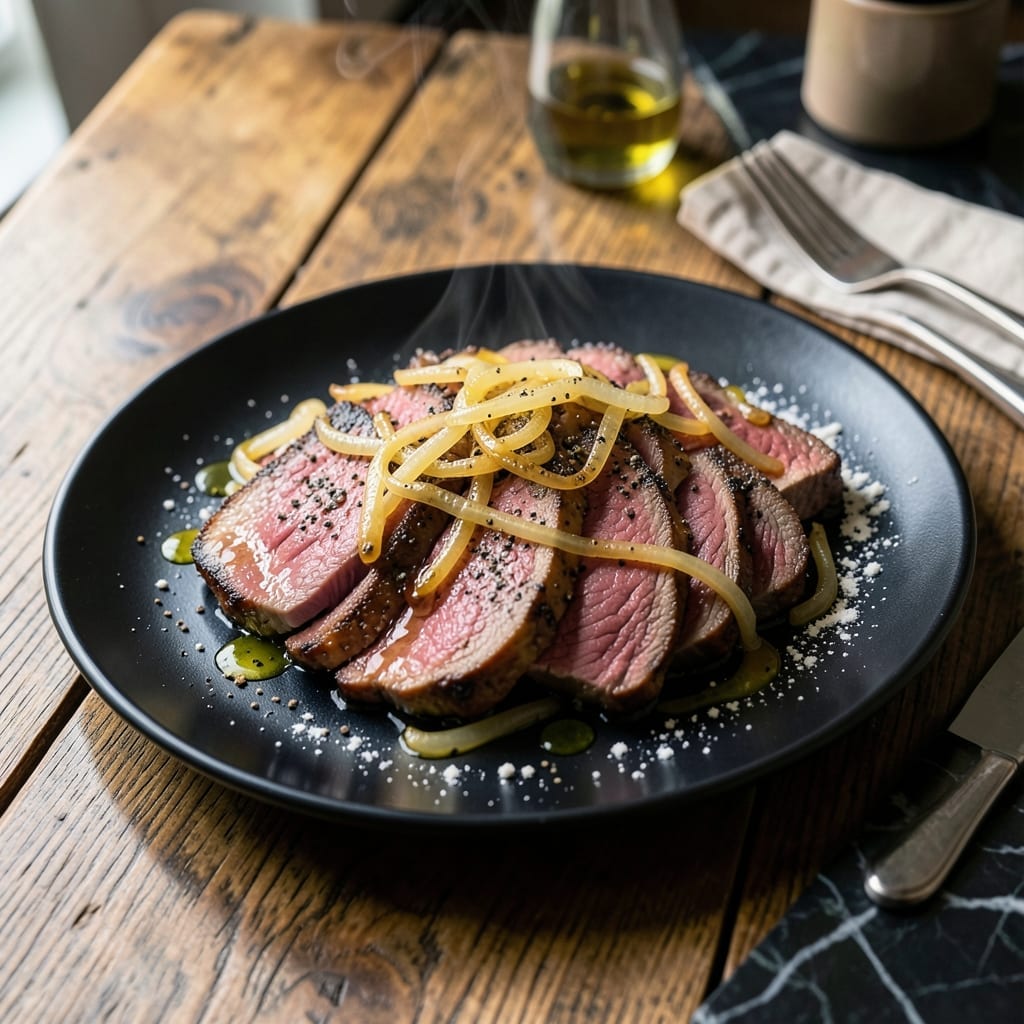
Liver often gets a bad reputation, but this pan-seared version with caramelized onions will change your mind. The key is proper preparation and cooking time to achieve tender, flavorful results without bitterness.
I developed this method to highlight liver’s natural richness while balancing it with sweet, deeply browned onions. The technique ensures a quick sear that locks in juices, creating a dish that’s both nutritious and delicious.
You’ll end up with perfectly cooked liver—slightly pink inside with a caramelized crust—and onions so soft they melt into every bite. It’s a simple yet elevated way to enjoy this iron-rich protein.
Serve with mashed potatoes or crusty bread to soak up every drop of the savory pan sauce. Here’s how to make it.
Ingredients for Best Liver
Quality beef liver and sweet onions transform into something extraordinary with these ingredients.
| Ingredient | Amount | Notes |
|---|---|---|
| Beef Liver 🥩 | 1 ½ lb | Sliced into 1/2-inch thick pieces |
| Yellow Onions 🧅 | 3 whole | Thinly sliced for caramelizing |
| All-Purpose Flour 🌾 | ½ cup | For dredging liver slices |
| Kosher Salt 🧂 | 1 ½ tsp | Divided for seasoning |
| Freshly Ground Black Pepper 🌶️ | 1 tsp | Divided for seasoning |
| Unsalted Butter 🧈 | 4 tbsp | Divided for cooking |
| Olive Oil 🫒 | 2 tbsp | For initial searing |
| Garlic Cloves 🧄 | 3 cloves | Minced for pan sauce |
| Fresh Thyme Sprigs 🌿 | 4 sprigs | Leaves stripped and chopped |
| Beef Stock 🥫 | ½ cup | Low-sodium preferred |
| Dijon Mustard 🟡 | 1 tbsp | For pan sauce finish |
| Fresh Parsley 🌿 | ¼ cup | Chopped for garnish |
The liver is the star here. Calf’s liver from a trusted butcher (like Whole Foods or your local shop) is milder and more tender than beef liver—ask them to slice it for you. Look for vibrant color and smooth texture, avoiding anything with a strong odor. For the onions, sweet yellow onions caramelize the best. I always grab a few extra since they shrink down so much during cooking.
No calf’s liver? Beef liver works fine—just soak it in milk for an hour first to mellow the flavor. Out of thyme? Rosemary at half the amount adds a nice piney note. The beef stock can be swapped for chicken stock (use low-sodium), or mushroom broth for a vegetarian twist. The Dijon mustard is non-negotiable though—it cuts through the richness perfectly.
Liver is best cooked the day you buy it, but it’ll keep in the fridge for 1-2 days. Caramelized onions can be made ahead and reheated gently. The pan sauce doesn’t store well—make it fresh each time. Leftovers? 2-3 days in the fridge max.
Why You’ll Love This Recipe
- 20-Minute Meal: I can get this from pan to plate faster than the kids can set the table.
- Caramelized Onion Magic: The onions turn sweet and jammy, balancing the liver’s richness beautifully.
- Budget Stretcher: Beef liver costs pennies compared to steak but feels just as special.
- Next-Day Victory: Honestly, the leftovers taste even better reheated for lunch the next day.
Step-by-Step Instructions for Pan-Seared Beef Liver with Caramelized Onions
Here’s my time-tested method for tender liver with a rich, savory sauce that highlights its natural depth.
Step 1: Prep and Season the Liver
Pat the 1.5 lb Beef Liver dry with paper towels—this ensures a good sear rather than steaming. Season both sides with 1 tsp Freshly Ground Black Pepper and 1 tsp Kosher Salt. I always use a light hand with salt initially; you can adjust later.
Dredge each slice in the 0.5 cup All-Purpose Flour, shaking off the excess. The flour creates a delicate crust that locks in moisture and prevents the liver from curling during cooking. Set the dredged slices aside while you caramelize the onions.
Step 2: Caramelize the Onions Low and Slow
In a large skillet, melt 2 tbsp Unsalted Butter with the 2 tbsp Olive Oil over medium-low heat. Add the 3 whole Yellow Onions, thinly sliced, and ½ tsp Kosher Salt. Cook for 25-30 minutes, stirring occasionally, until they transform into a deep, golden brown with a jam-like consistency.
This is where patience pays off. If the onions start to stick, reduce the heat slightly and add a splash of water to deglaze. The natural sugars in the onions will caramelize, creating a sweet, rich base for your sauce. When they’re nearly done, stir in the 3 cloves Garlic Cloves, minced, and cook for 1 minute until fragrant.
Step 3: Sear the Liver to Perfection
Increase the heat to medium-high and add the remaining 2 tbsp Unsalted Butter to the skillet. Once it’s foaming, add the liver slices in a single layer, working in batches if necessary. Sear for 2-3 minutes per side until the exterior is browned but the interior remains slightly pink.
Liver cooks quickly, so keep an eye on it. Overcooking will make it tough and chalky. Transfer the liver to a warm plate and tent loosely with foil to keep it warm while you finish the sauce.
Step 4: Build the Pan Sauce
Reduce the heat to medium and pour in the 0.5 cup Beef Stock, scraping up any browned bits from the bottom of the skillet. Stir in the 1 tbsp Dijon Mustard and the chopped leaves from the 4 sprigs Fresh Thyme Sprigs. Let the sauce simmer for 2-3 minutes until it thickens slightly.
Taste and adjust the seasoning with the remaining ½ tsp Kosher Salt if needed. The sauce should be rich and savory with a subtle tang from the mustard. Pour this over the liver and onions, garnishing with the 0.25 cup Fresh Parsley, chopped.
Pro Tips For Making Best Liver
- Soak the Liver: I learned this the hard way—soak beef liver in milk for 30 minutes before cooking to mellow the metallic taste. Makes a real difference in the final flavor.
- Dry Before Dredging: Pat the liver slices completely dry with paper towels after soaking, then dredge in flour. Skip this and you’ll get a gummy coating instead of a crisp one.
- Sear Fast, Rest Brief: High heat, 2-3 minutes per side max—any longer and it turns tough. Let it rest 2 minutes on a warm plate before serving.
- Slice Onions Thin: Yellow onions cook faster and sweeter when cut paper-thin. Sounds fussy, but it actually changes the outcome in this dish.
Common Mistakes When Making This Recipe
Overcooking the Liver
Liver cooks incredibly fast—2-3 minutes per side is all it needs. Overcooking turns it tough and chalky, ruining the texture. I set a timer to avoid getting distracted while it sears in the medium-high heat pan.
Skipping the Milk Soak
If using beef liver, soak slices in milk for 30-60 minutes first. This removes bitterness and mellows the flavor. I skip this step only with calf’s liver, which is naturally milder. It makes a noticeable difference in the final taste.
Rushing the Onions
Caramelized onions need 25-30 minutes on medium-low heat to develop their sweet, jammy texture. Higher heat burns them, while impatience leaves them raw. I stir occasionally and add a splash of water if they start to stick.
Overcrowding the Pan
Cook liver in batches if needed to avoid steaming. Crowding the pan drops the temperature, causing the liver to release moisture instead of searing. I use a large skillet and give each piece 1-2 inches of space. 🔥
Skipping the Pan Sauce
The sauce ties everything together. After removing the liver, deglaze with 0.5 cup Beef Stock and scrape up those flavorful browned bits. Simmering for 2-3 minutes with thyme and Dijon creates a rich finish.
Using Cold Liver
Always bring liver to room temperature before cooking. Cold liver cooks unevenly, with tough edges and a raw center. I take it out of the fridge 20-30 minutes before starting, just like steak.
Nutrition Facts
Frequently Asked Questions
How do I know when liver is fully cooked?
Liver is done when it reaches 145°F internally. It should be slightly pink inside with a browned exterior after searing for 2-3 minutes per side. Overcooking makes it tough, so pull it off heat just before it looks fully done.
Should I soak liver before cooking?
Yes for beef liver! Soak slices in milk for 30-60 minutes to remove bitterness. Calf’s liver is milder and doesn’t need this step. This simple trick makes a big difference in flavor.
What’s the best way to reheat leftover liver?
Gently warm it in a skillet over low heat with a splash of broth or butter. Microwaving can make it rubbery. Store leftovers for 2-3 days in the fridge.
Can I use a different type of onion?
Sweet onions work best, but red onions add nice color. Avoid white onions as they can be too sharp. Cook all types on medium-low heat for 25-30 minutes to caramelize properly.

- BBQ Sausage Recipe Oven: Smoky Depth Without the Grill - September 28, 2026
- BBQ Chicken Bowl Recipe Rice: Smoky Sweetness Over Fluffy Grains - September 28, 2026
- Beef Cutlet Recipe Ideas: Crispy Breaded Patties With Bold Seasonings - September 28, 2026