
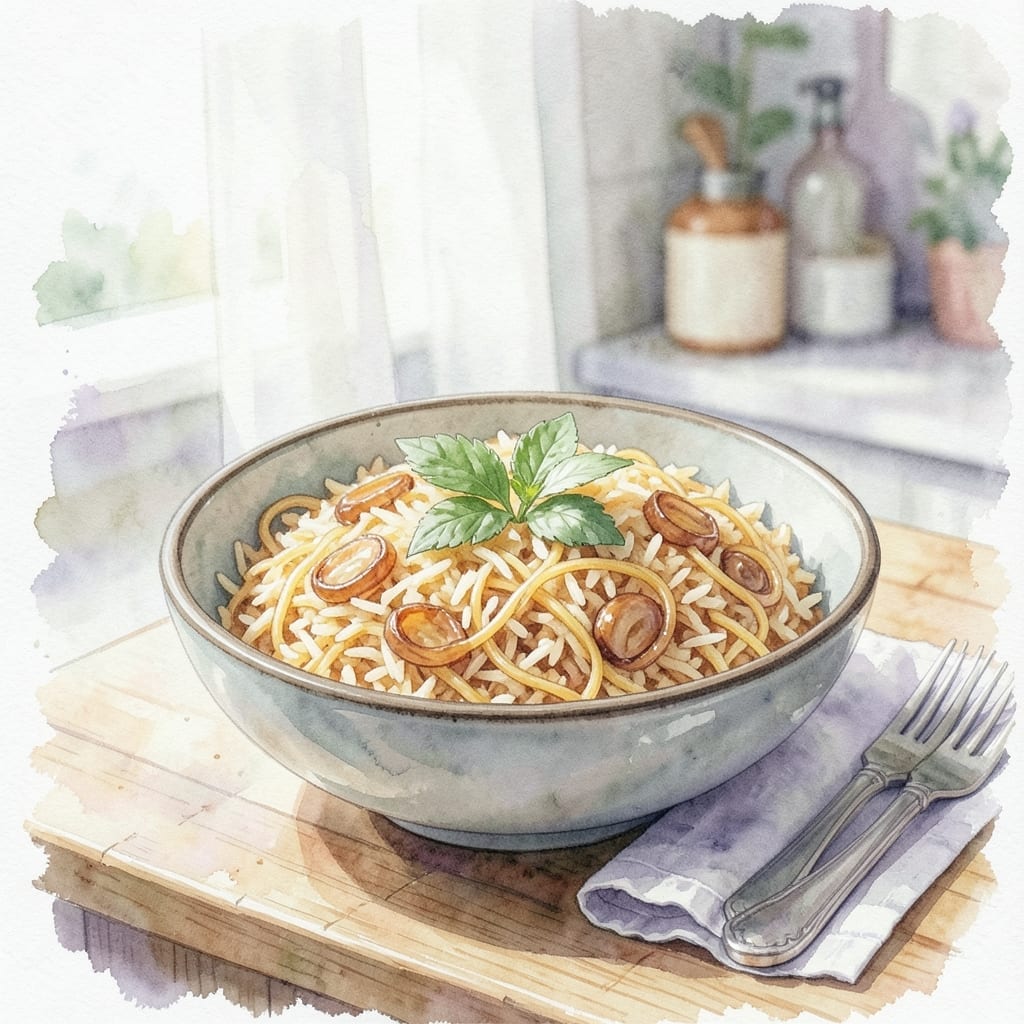
This rice pilaf recipe elevates simple ingredients into a dish that’s aromatic, flavorful, and impressively restaurant-quality. The secret lies in toasting the vermicelli until golden, which adds a subtle nuttiness to every bite.
Basmati rice, with its long grains and delicate fragrance, is the perfect foundation. Cooked in broth with a touch of butter, it absorbs the flavors beautifully, resulting in fluffy, separate grains that never clump.
What sets this apart is the balance of textures and tastes—toasted vermicelli adds a delicate crunch, while the rice remains light and airy. It’s a side dish that complements everything from grilled meats to roasted vegetables.
Simple to prepare but undeniably elegant, this pilaf delivers consistent results every time. Here’s how to make it perfectly.
Ingredients for Best Recipe for Rice Pilaf
Fragrant basmati and golden vermicelli create a restaurant-quality side with everyday ingredients.
| Ingredient | Amount | Notes |
|---|---|---|
| Basmati Rice 🍚 | 1 ½ cups | Rinsed until water runs clear |
| Vermicelli Pasta 🍝 | ½ cup | Broken into 1-inch pieces |
| Unsalted Butter 🧈 | 3 tbsp | Divided for toasting and cooking |
| Vegetable Broth 🥣 | 3 cups | Low-sodium preferred for control |
| Yellow Onion 🧅 | 1 whole | Finely diced for even distribution |
| Garlic Cloves 🧄 | 3 cloves | Minced for aromatic base |
| Bay Leaf 🌿 | 1 whole | Removed before serving |
| Salt 🧂 | 1 ¼ tsp | Diamond Crystal kosher preferred |
| Black Pepper 🌶️ | ½ tsp | Freshly ground for peak flavor |
| Ground Cumin 🌿 | ½ tsp | Toasted briefly for depth |
| Dried Thyme 🍃 | ½ tsp | Crushed between fingers to release oils |
| Fresh Parsley 🌿 | ¼ cup | Chopped for bright garnish |
Basmati rice quality is non-negotiable here. Look for aged basmati—the grains elongate beautifully without breaking. Indian grocery stores often carry superior varieties at better prices than mainstream supermarkets. The vermicelli should be fine and pale; De Cecco or Barilla brands work reliably. For the broth, Imagine or Pacific Foods offer consistent low-sodium options that let you control the seasoning precisely.
No basmati? Jasmine rice at a 1:1 ratio works, though the grains won’t be as distinct. Skip the vermicelli? Angel hair pasta broken into pieces toasts similarly. Vegetable broth can be swapped for mushroom broth for deeper umami. For a richer finish, ghee instead of butter adds nutty depth (still vegetarian). The cumin and thyme can be replaced with 1 tsp curry powder for a different aromatic profile.
Toasted vermicelli keeps in a sealed container for 1 week at room temperature. Cooked pilaf holds in the fridge for 4-5 days—reheat with a splash of water to restore moisture. The dish freezes well for 3 months, though the rice texture softens slightly upon thawing. Always bring to room temperature before reheating for best results.
Why You’ll Love This Recipe
- One Pot Wonder: I toss everything in, cover it, and forget it until the rice is fluffy and the vermicelli turns golden.
- Buttery Nostalgia: The butter toasts the vermicelli and onions into this rich, nutty aroma that fills the kitchen.
- My Lunchbox Hero: Honestly, it tastes even better the next day—cold or reheated, the texture holds up perfectly.
- Pantry MVP: Between us, I always have these five ingredients on hand, so dinner’s never a panic.
Step-by-Step Instructions for Rice Pilaf
Master the technique for perfectly fluffy grains and deeply aromatic toasted vermicelli every time.
Step 1: Toast the Vermicelli and Aromatics
Heat a large, heavy-bottomed pot over medium heat. Add 2 tbsp Unsalted Butter and let it melt until foaming. Add the 0.5 cup Vermicelli Pasta and stir constantly for 2-3 minutes until it turns a rich golden brown—this creates the signature nutty depth.
Add the finely diced Yellow Onion and cook for 4-5 minutes until translucent and just beginning to caramelize at the edges. Stir in the minced Garlic Cloves, 0.5 tsp Ground Cumin, and 0.5 tsp Dried Thyme, cooking for 30 seconds until fragrant. The spices should bloom in the butter, releasing their essential oils.
Step 2: Rinse and Add the Rice
Rinse the 1.5 cups Basmati Rice thoroughly under cold water until the water runs completely clear—this removes excess starch that would otherwise make the grains gummy. Drain well, shaking off any lingering water.
Add the rinsed rice to the pot with the toasted vermicelli and aromatics. Stir to coat the grains in the buttery mixture, ensuring every piece is well incorporated. This step infuses the rice with flavor before the liquid is added.
Step 3: Simmer with Broth and Seasonings
Pour in the 3 cups Vegetable Broth, then add the 1 whole Bay Leaf, 1.25 tsp Salt, and 0.5 tsp Black Pepper. Stir once to distribute the ingredients evenly, then bring the mixture to a gentle boil over medium-high heat.
Once boiling, reduce the heat to low, cover the pot with a tight-fitting lid, and let it simmer undisturbed for 15 minutes. Resist the urge to lift the lid—steam is crucial for even cooking, and releasing it prematurely can lead to unevenly cooked rice.
Step 4: Rest and Fluff for Perfect Texture
After 15 minutes, remove the pot from the heat and let it sit, covered, for an additional 10 minutes. This resting period allows the rice to steam in its own moisture, ensuring each grain is tender and separate.
Discard the Bay Leaf, then use a fork to gently fluff the rice, breaking up any clumps and redistributing the toasted vermicelli throughout. The grains should be light and airy, with no residual moisture at the bottom of the pot.
Step 5: Garnish and Serve
Stir in the remaining 1 tbsp Unsalted Butter for a final layer of richness. Sprinkle the 0.25 cup Fresh Parsley over the top, reserving a small amount for garnish if desired. The parsley adds a bright, fresh contrast to the warm, spiced rice.
Serve immediately while hot, with any remaining parsley used as a vibrant garnish. The rice should be fragrant and fluffy, with the toasted vermicelli adding a satisfying texture in every bite.
Pro Tips For Making Best Recipe For Rice Pilaf
- Toast the Vermicelli: Cook the vermicelli in butter until deep golden brown—about 3-4 minutes on medium heat. I learned this the hard way: under-toasted pasta tastes like raw flour in the finished dish.
- Rinse the Basmati: Soak the basmati rice for 15 minutes, then rinse until the water runs clear. Sounds tedious, but it removes excess starch so your pilaf stays fluffy, not gummy.
- Skip Cold Broth: Use warm vegetable broth when adding to the rice. After ruining a batch with cold liquid, I realized it drops the temperature too fast and makes the cooking uneven.
- Rest Before Serving: Cover the pot and let it sit off heat for 10 minutes after cooking. My grandmother swore by this, and she was right: it lets the steam finish the job without turning the rice to mush.
Regional Styles of This Dish
Middle Eastern Style
In this version, I swap the vermicelli for 2 tbsp pine nuts toasted until golden. I also add ½ tsp ground allspice and ½ tsp cinnamon to the butter with the onions. The broth becomes more aromatic with the addition of 1 whole cardamom pod and 1 star anise during simmering. 🌿
Indian Jeera Rice
Here, I use 1 tsp cumin seeds instead of ground cumin, toasting them in the butter before adding the onion. I also stir in ½ tsp turmeric with the rice for a golden hue. The vermicelli is optional—sometimes I skip it entirely for a simpler, more traditional jeera rice experience.
Persian Chelow
This method layers the rice with thinly sliced potatoes at the bottom of the pot to create a crispy tahdig crust. I use saffron threads steeped in 2 tbsp hot water mixed into the rice before cooking. The result is a stunning golden pilaf with a crispy, caramelized base. ✨
Turkish Sehriyeli Pilav
Turkish pilaf often uses orzo pasta instead of vermicelli. I toast it in 2 tbsp olive oil with the onion until deep brown. The broth is typically just water with 1 tsp salt and ½ tsp sugar, letting the toasted orzo and rice shine with their natural nuttiness.
Greek Lemon Pilaf
For a bright, citrusy twist, I add the zest of 1 lemon to the butter with the onion. The cooking liquid is a mix of 2 cups vegetable broth and 1 cup water with 2 tbsp lemon juice. Finished with fresh dill instead of parsley, this version pairs perfectly with grilled fish. 💛
Nutrition Facts
Frequently Asked Questions
Can I use a different type of rice?
Yes, jasmine rice works well at a 1:1 ratio, though the grains won’t be as distinct. Avoid short-grain varieties as they become sticky.
Why do I need to rinse the rice?
Rinsing removes excess starch that would make the grains gummy. Continue until the water runs completely clear for the fluffiest texture.
What if my pilaf is undercooked?
Add 2-3 tbsp hot broth, cover, and steam for 5-10 minutes off heat. Resist stirring while cooking to prevent mushy rice.
Can I make this ahead of time?
Cooked pilaf keeps in the fridge for 4-5 days. Reheat with a splash of water to restore moisture.

- BBQ Sausage Recipe Oven: Smoky Depth Without the Grill - September 28, 2026
- BBQ Chicken Bowl Recipe Rice: Smoky Sweetness Over Fluffy Grains - September 28, 2026
- Beef Cutlet Recipe Ideas: Crispy Breaded Patties With Bold Seasonings - September 28, 2026