
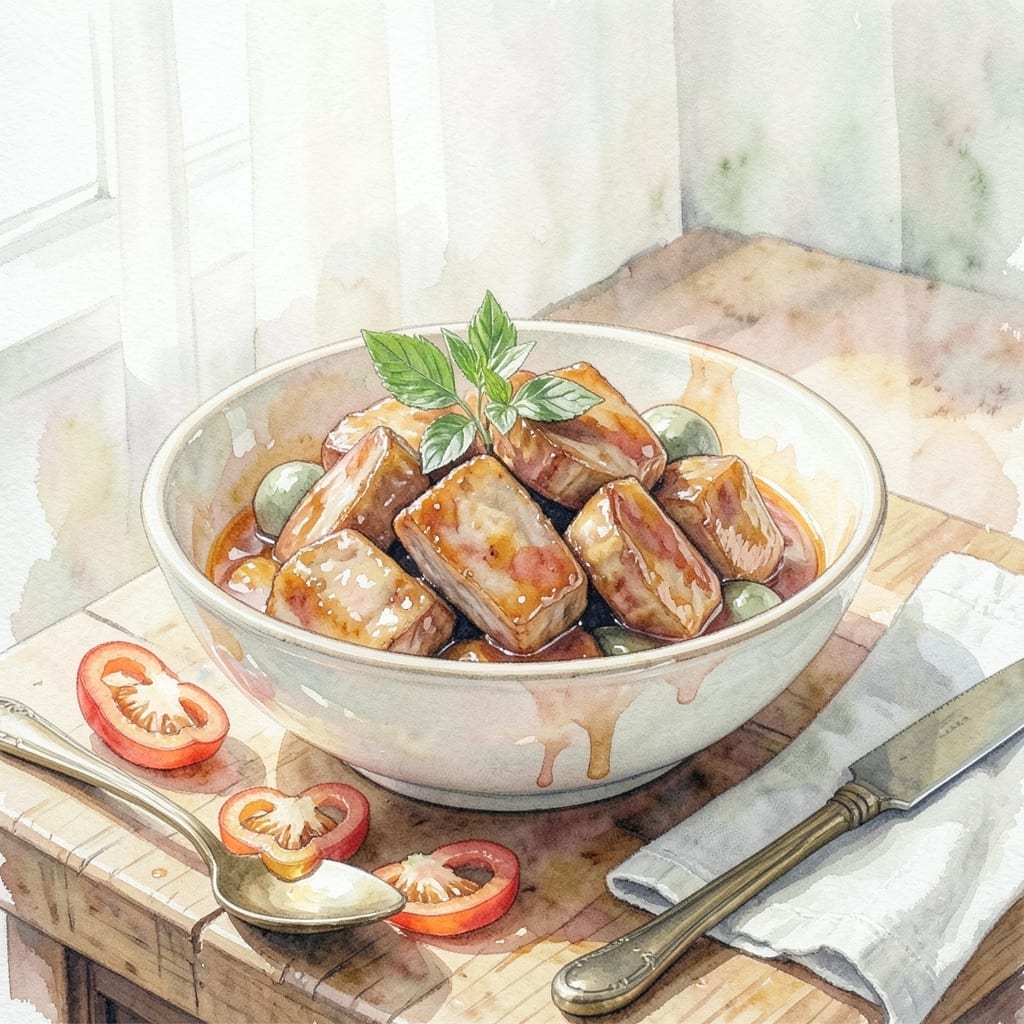
This recipe delivers on its promise of crispy pork bites coated in a perfectly balanced tangy sauce. I’ve refined the technique over years to achieve that ideal texture and flavor combination.
The key is double-frying the pork to ensure it stays crispy even after tossing in the sauce. A proper batter and hot oil create that golden, shatteringly light crust that’s the hallmark of great sweet and sour pork.
What sets this version apart is the sauce—bright, tangy, and just sweet enough to complement the pork without overwhelming it. The balance is precise, with no artificial aftertaste.
Serve immediately over rice to preserve the pork’s texture. This is the best way to make it at home.
Ingredients for Best Sweet and Sour Pork Recipe Ever
A few pantry staples and fresh ingredients create this restaurant-quality dish at home.
| Ingredient | Amount | Notes |
|---|---|---|
| Pork Shoulder 🥩 | 1 ½ lb | Cut into 1-inch cubes |
| All-Purpose Flour 🌾 | 1 cup | For batter coating |
| Cornstarch 🌾 | ½ cup | For crispy texture |
| Large Eggs 🥚 | 2 whole | Beaten for batter |
| Water 💧 | ¾ cup | Cold, for batter |
| Vegetable Oil 🫒 | 4 cups | For deep frying |
| Ketchup 🍅 | ¾ cup | Base for sauce |
| Rice Vinegar 🍯 | ½ cup | For tangy flavor |
| Brown Sugar 🍚 | ½ cup | Packed, for sweetness |
| Soy Sauce 🫒 | 2 tbsp | Low-sodium preferred |
| Garlic Cloves 🧄 | 3 cloves | Minced for sauce |
| Fresh Ginger 🌿 | 1 tbsp | Grated, for depth |
| Green Bell Pepper 🌶️ | 1 whole | Diced, for crunch |
| Red Bell Pepper 🌶️ | 1 whole | Diced, for color |
| Pineapple Chunks 🍍 | 1 cup | Fresh or canned, drained |
The pork is everything here. Pork shoulder stays juicy after frying—avoid lean cuts like tenderloin (they dry out). Look for pieces with good marbling at Whole Foods or your local butcher. For the best texture, cut the pork into uniform 1-inch cubes yourself—pre-cut pieces from the store often have inconsistent sizes, which leads to uneven cooking.
No rice vinegar? Apple cider vinegar at the same amount works well. Fresh ginger is ideal, but ground ginger at one-quarter the amount in a pinch. The brown sugar can be swapped for honey or maple syrup (adjust to taste). For a gluten-free version, use cornstarch instead of flour in the batter—just as crispy.
Fry the pork in batches to avoid crowding the pan (this drops the oil temp). Sauce keeps in the fridge for up to 5 days—make it ahead to save time. Serve immediately for that perfect crispy texture, or reheat in the oven at 375°F for 10 minutes to revive leftovers.
Why You’ll Love This Recipe
- Foolproof Coating: The cornstarch and flour mix gives that restaurant-style crunch every time—no soggy bites here.
- Sweet-Savory Balance: Pork shoulder soaks up the tangy sauce while keeping its juicy richness. Honestly, it’s the combo I crave.
- Weeknight Hero: From prep to table in under an hour, it’s my go-to when I need to feed everyone fast.
- Budget Stretcher: Pork shoulder is affordable, and one batch makes enough for leftovers that taste even better the next day.
Step-by-Step Instructions for Sweet and Sour Pork
Master the crispy coating and tangy sauce that define this crowd-pleasing dish with precision.
Step 1: Prepare and Coat the Pork
Cut the 1.5 lb Pork Shoulder into 1-inch cubes and pat them dry with paper towels. Any excess moisture will prevent the batter from adhering properly, so be thorough.
In a large bowl, whisk together the 1 cup All-Purpose Flour, 0.5 cup Cornstarch, 2 whole Large Eggs, and 0.75 cup Water until smooth. The batter should be thick enough to coat the back of a spoon but still pourable. Dip each piece of pork into the batter, ensuring it’s fully coated, then let it rest for 5 minutes to set.
Step 2: Fry the Pork to Golden Perfection
Heat the 4 cups Vegetable Oil in a deep, heavy-bottomed pot or Dutch oven to 350°F. Use a thermometer to monitor the temperature—this ensures even cooking and prevents the pork from absorbing too much oil.
Working in batches to avoid overcrowding, carefully lower the battered pork into the hot oil. Fry for 4-5 minutes until the exterior turns golden brown and crispy. Turn the pieces occasionally for uniform browning. Remove with a slotted spoon and drain on a wire rack or paper towels to maintain crispiness.
Step 3: Sauté the Aromatics and Vegetables
In a separate large skillet, heat 1 tablespoon of the reserved frying oil over medium-high heat. Add the minced 3 cloves Garlic Cloves and grated 1 tbsp Fresh Ginger, stirring for 30 seconds until fragrant. Be careful not to let them burn, as this will add bitterness to the sauce.
Add the diced 1 whole Green Bell Pepper and 1 whole Red Bell Pepper, cooking for 3-4 minutes until they soften slightly but retain their vibrant color and a bit of crunch. Stir in the 1 cup Pineapple Chunks and cook for another 1 minute to warm through.
Step 4: Create the Sweet and Sour Sauce
In a small bowl, combine the 0.75 cup Ketchup, 0.5 cup Rice Vinegar, 0.5 cup Brown Sugar, and 2 tbsp Soy Sauce. Whisk until the brown sugar fully dissolves and the mixture is smooth.
Pour the sauce over the vegetables in the skillet and bring to a gentle simmer. Cook for 2-3 minutes until the sauce thickens slightly and becomes glossy. The aroma should be a balance of tangy vinegar and sweet caramelized sugar.
Step 5: Combine and Serve Immediately
Add the crispy pork to the skillet with the sauce and vegetables. Toss gently to coat every piece evenly, ensuring the pork stays crisp despite the moisture from the sauce. Cook for an additional 1-2 minutes just to heat everything through.
Serve hot, garnished with additional pineapple chunks if desired. The pork should remain crisp on the outside, tender on the inside, with a thick, tangy-sweet sauce clinging to each bite. This dish is best enjoyed fresh, as the coating loses its crispness over time.
Pro Tips For Making Best Sweet And Sour Pork Recipe Ever
- Double Fry the Pork: Fry the pork shoulder once at 350°F for 3-4 minutes, rest it, then fry again at 375°F for 2 minutes. This double-fry method guarantees extra crispiness that holds up to the sauce.
- Use Cold Pork: Chill the pork shoulder for 30 minutes before cutting and coating. I learned this the hard way—cold pork slices more cleanly and clings better to the flour-cornstarch batter.
- Skip Overcrowding: After burning three batches, I finally figured out that frying too many pieces at once drops the oil temp and leads to soggy pork. Stick to small batches.
- Add Vodka to Batter: Sounds weird, but it works: replace half the water with vodka in your flour-cornstarch-egg batter. It evaporates faster, creating a lighter, crispier coating without the alcohol taste.
Wine and Beer Pairings for This Recipe
Crisp White Wines
I love pairing this dish with a chilled Riesling from Germany or Washington state. Its natural sweetness mirrors the sauce while the acidity cuts through the richness. A slightly off-dry style with 8-10% residual sugar balances the tang perfectly. 🍷
Light Red Options
For red wine lovers, try a Pinot Noir from Oregon or Burgundy. The bright red fruit notes and earthy undertones won’t overpower the pork. Serve it slightly chilled at 55-60°F to enhance its refreshing qualities.
Asian Beer Choices
An ice-cold Sapporo or Asahi beer cleanses your palate between bites. The crisp, clean profile with a hint of sweetness complements the dish without competing with the bold flavors. 🍺
Craft Beer Alternatives
American craft breweries like Firestone Walker make excellent blonde ales that work beautifully. Look for ones with subtle citrus notes and a light malt profile to match the sauce’s tang.
Non-Alcoholic Pairing
For a non-alcoholic option, try sparkling pineapple juice mixed with a splash of lime. The effervescence and tropical flavors echo the pineapple in the dish while the acidity keeps your palate fresh.
Nutrition Facts
Frequently Asked Questions
Can I use chicken instead of pork?
Yes! Swap for 1.5 lb boneless chicken thighs cut into 1-inch pieces. Chicken cooks faster, so reduce frying time to 3-4 minutes per batch.
What makes the pork stay crispy?
The double-coating of flour and cornstarch plus frying at 350°F creates a shatteringly crisp crust. Drain on a wire rack, not paper towels, to prevent steam.
How do I fix sauce that’s too thin?
Mix 1 tbsp cornstarch with 1 tbsp water, then stir into simmering sauce. Cook for 1-2 minutes until thickened. Avoid over-reducing or it may turn syrupy.
Can I make this gluten-free?
Replace all-purpose flour with cornstarch in the batter. Use tamari instead of soy sauce. The texture will be just as crispy.

- BBQ Sausage Recipe Oven: Smoky Depth Without the Grill - September 28, 2026
- BBQ Chicken Bowl Recipe Rice: Smoky Sweetness Over Fluffy Grains - September 28, 2026
- Beef Cutlet Recipe Ideas: Crispy Breaded Patties With Bold Seasonings - September 28, 2026