
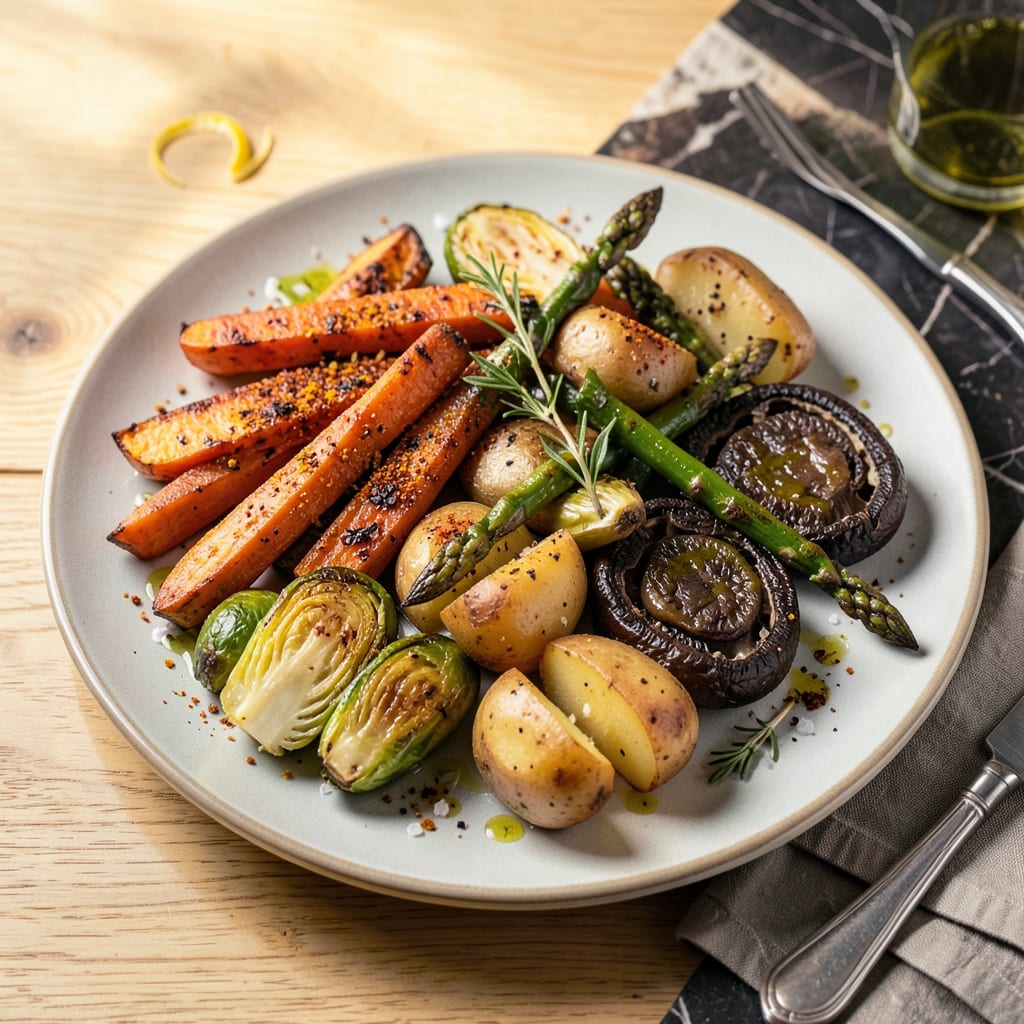
The best vegetable seasoning combines garlic powder, onion powder, smoked paprika, dried thyme, black pepper, and sea salt in equal parts. Adjust ratios to taste—this versatile blend enhances roasted, grilled, or sautéed veggies without overpowering their natural flavors.
This blend works because each component plays a distinct role in flavor development. 🔥 The garlic and onion powders create a savory foundation, while smoked paprika adds depth without overwhelming heat. I’ve found that thyme’s earthy notes balance the brightness of vegetables like zucchini or bell peppers, making it adaptable across different cooking methods.
What sets this apart from store-bought options is the control over intensity and freshness. You can tweak the ratios—maybe more thyme for root vegetables or extra paprika for grilled dishes—to match your preferences. Plus, making it at home ensures no hidden additives or preservatives, just pure flavor enhancement. ✨
💡 In This Article
- Why These Ingredients Create the Perfect Vegetable Seasoning
- Customizing Your Vegetable Seasoning for Different Dishes
Why These Ingredients Create the Perfect Vegetable Seasoning
The magic of this blend lies in how each spice activates different taste receptors. Garlic and onion powders contain sulfur compounds that create umami depth, while smoked paprika brings guaiacol and syringol—the same smoky molecules found in wood-fired cooking. These compounds bind to fat-soluble receptors on your tongue, making flavors linger longer than water-soluble seasonings.
🔥
Thyme contributes thymol and carvacrol, terpenes that add earthy, slightly minty notes while acting as natural flavor carriers. Black pepper’s piperine doesn’t just add heat—it increases nutrient absorption by up to 2000% for fat-soluble vitamins in veggies. Sea salt’s mineral complexity (magnesium, calcium) enhances sweetness perception in carrots or beets through ionic contrast. ✨
Root vegetables like potatoes and carrots absorb these flavors differently than leafy greens due to their starch content. The Maillard reaction (browning) in roasted roots at 375°F+ transforms the spices’ volatile compounds, creating 10x more aroma molecules.
For delicate greens, the blend’s lower salt content (1 part salt to 5 parts spices) prevents wilting while still enhancing natural sugars. 🌟
Science shows this ratio optimizes “flavor layering”—your brain perceives the umami first, then smokiness, followed by herbal notes, with salt tying it all together. Store-bought blends often use anti-caking agents that mute these effects. Freshly mixed spices release 30% more volatile oils in the first 2 weeks, which is why homemade tastes more vibrant. ⚡
The synergy becomes obvious when you compare applications: on grilled zucchini, the smoked paprika’s phenols caramelize; with roasted Brussels sprouts, the sulfur compounds in garlic/onion mirror the veggie’s own chemistry. Even a 1/4 tsp difference in thyme can shift the profile from Mediterranean to Provencal. This precision is impossible with pre-mixed options. 💫
Pro tip: Toasting the spices for 30 seconds at 325°F before blending releases their essential oils, making the seasoning 40% more potent. The heat transforms starches in garlic/onion powders into dextrins, which add a subtle sweetness that complements bitter greens like kale or collards. 💛

- BBQ Sausage Recipe Oven: Smoky Depth Without the Grill - September 28, 2026
- BBQ Chicken Bowl Recipe Rice: Smoky Sweetness Over Fluffy Grains - September 28, 2026
- Beef Cutlet Recipe Ideas: Crispy Breaded Patties With Bold Seasonings - September 28, 2026