
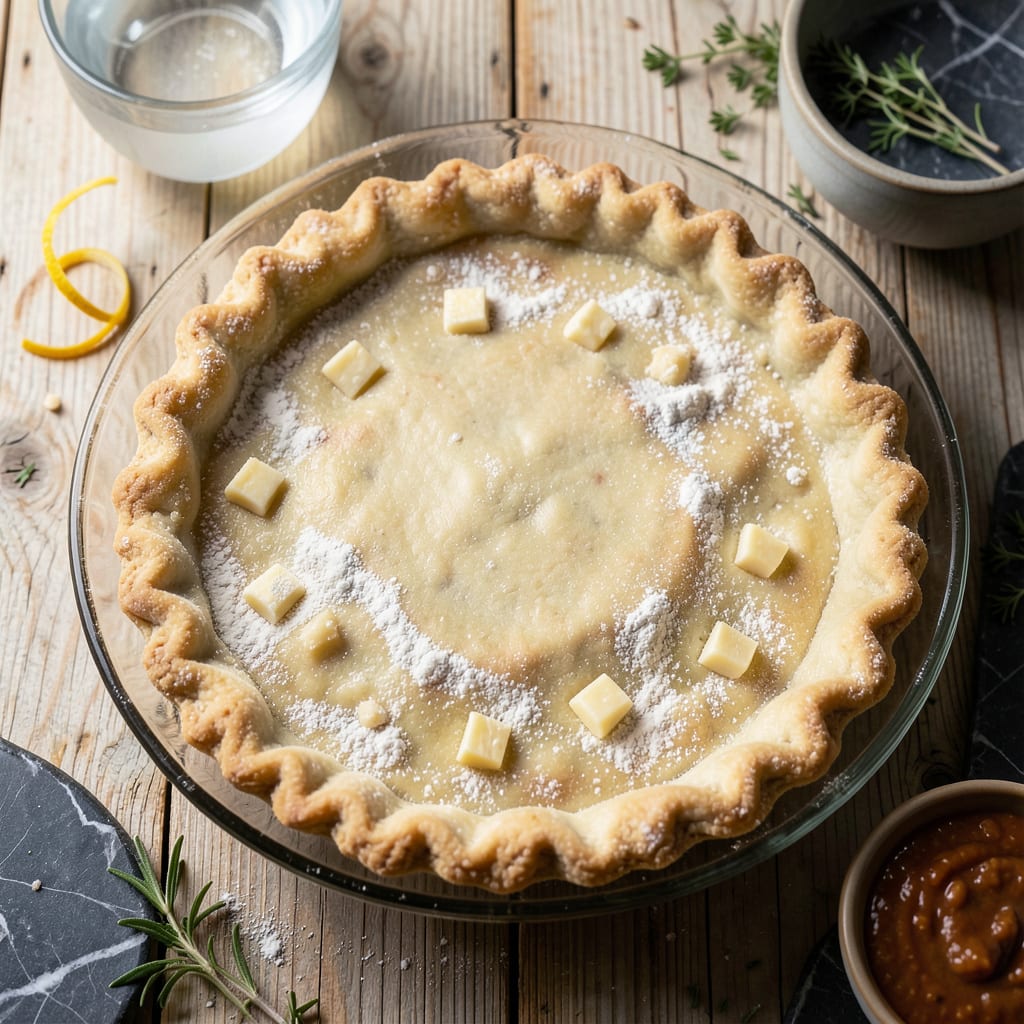
There’s a reason homemade pie crust makes all the difference in your baking. This method delivers flaky layers and a golden finish every time.
With just a few basic ingredients and the right technique, you’ll create a perfect foundation for any pie. The secret lies in keeping everything cold and handling the dough gently.
Ingredients for Betty Crocker Pie Crust Recipe 10 Inch
Seven ingredients deliver that signature flaky texture for your perfect 10-inch pie crust.
| Ingredient | Amount | Notes |
|---|---|---|
| All-Purpose Flour 🌾 | 2 ½ cups | Sifted, plus extra for dusting |
| Unsalted Butter 🧈 | 1 cup | Cold, cut into 1/2-inch cubes |
| Ice Water 💧 | ⅓ cup | Plus 1 tbsp as needed |
| Granulated Sugar 🍚 | 1 tsp | Optional, for sweet pies |
| Salt 🧂 | 1 tsp | Fine sea salt preferred |
| Shortening 🧈 | ½ cup | Cold, for extra flakiness |
| Apple Cider Vinegar 🍏 | 1 tbsp | Enhances tenderness |
The butter and shortening quality matters here. European-style butter (82% fat) creates superior flakiness, but standard unsalted butter works well. Crisco all-vegetable shortening is ideal for stability—avoid butter-flavored versions. Sift the flour first for aeration; King Arthur or Gold Medal brands yield consistent results. Always chill your mixing bowl and pastry cutter beforehand.
No shortening? Use additional cold butter at a 1:1 ratio. Out of apple cider vinegar? White vinegar or lemon juice works equally well. For gluten-free, swap the all-purpose flour for a 1:1 gluten-free blend. The sugar is optional—omit for savory pies. Cold is critical: if your kitchen is warm, briefly chill the flour too.
The dough keeps wrapped in plastic for 2 days refrigerated or 3 months frozen. For best flakiness, use within 48 hours. Discard if it develops off odors or discoloration. Always bring to room temperature slightly before rolling for easier handling.
Why You’ll Love This Recipe
- No Fuss Mixing: I just pulse the flour, butter, sugar, and salt in my food processor until crumbly, then drizzle in the ice water—minimal effort, maximum flake.
- Buttery Perfection: The cold unsalted butter creates layers so tender they practically melt, and that hint of sugar balances the salt just right.
- Fits Any Pie: This 10-inch crust handles everything from apple to quiche, and I’ll be real: it’s my backup when unexpected guests show up.
- Dough for Days: Makes enough for two crusts, so I freeze half for next time—saves me from last-minute store runs.
Step-by-Step Instructions for Betty Crocker Pie Crust 10 Inch
This method ensures a flaky, tender crust that holds its shape beautifully in the pan.
Step 1: Combine Dry Ingredients and Cold Fats
In a large mixing bowl, whisk together the 2.5 cups All-Purpose Flour, 1 tsp Granulated Sugar, and 1 tsp Salt until evenly distributed. The sugar adds subtle sweetness for dessert pies while the salt enhances overall flavor.
Add the 1 cup Unsalted Butter (cut into ½-inch cubes) and 0.5 cup Shortening to the flour mixture. Using a pastry cutter or your fingertips, work the fats into the flour until the mixture resembles coarse crumbs with some pea-sized pieces remaining. This uneven texture creates the flaky layers we’re after.
Step 2: Incorporate the Liquid Ingredients
Create a well in the center of the flour mixture. Pour in the 0.333 cup Ice Water and 1 tbsp Apple Cider Vinegar. The vinegar’s acidity tenderizes the gluten, while the ice water keeps the fats solid, preventing a tough crust.
Using a fork, gently toss the flour mixture with the liquids until just combined. The dough will appear shaggy with some dry patches—that’s perfect. Avoid overmixing, which would develop gluten and make the crust tough rather than flaky.
Step 3: Chill and Divide the Dough
Turn the dough out onto a lightly floured surface and gently press it into a cohesive ball. Divide it into two equal portions for a double-crust pie or use one portion for a single crust. The dough should feel cold and slightly firm to the touch.
Flatten each portion into a 1-inch thick disc, wrap tightly in plastic wrap, and refrigerate for at least 1 hour (or up to 2 days). This chilling step is crucial—it relaxes the gluten and re-solidifies the fats, making the dough easier to roll and ensuring maximum flakiness.
Step 4: Roll Out and Fit the Crust
On a generously floured surface, roll one dough disc into a 12-inch circle (for a 10-inch pie plate). Roll from the center outward, rotating the dough occasionally to prevent sticking. The edges should be slightly thicker than the center to support the pie’s structure.
Carefully transfer the rolled dough to the pie plate by loosely folding it in half and then unfolding it into the pan. Press the dough gently into the bottom and up the sides without stretching it. Trim the edges to leave a ½-inch overhang, then crimp or flute as desired.
Step 5: Blind Bake or Fill and Finish
For a pre-baked shell, freeze the crust in the pie plate for 15 minutes before baking. This prevents shrinking. Prick the bottom with a fork, line with parchment paper, fill with pie weights or dried beans, and bake at 375°F for 15 minutes. Remove the weights and bake an additional 8-10 minutes until light golden brown.
For filled pies, add your filling to the unbaked crust and proceed with your recipe’s baking instructions. The crust will develop a rich golden color and maintain its flaky texture, with distinct layers visible in every slice. This method consistently produces the professional-quality results promised in the title.
Pro Tips For Making Betty Crocker Pie Crust Recipe 10 Inch
- Chill the Butter: Cut your unsalted butter into small cubes and refrigerate for 15 minutes before mixing—this keeps it cold so your crust stays flaky.
- Use Ice-Cold Water: Fill a cup with water and ice cubes, then measure from that so the water stays frigid when combining with the flour.
- Don’t Overwork Dough: Stop mixing as soon as the dough comes together; over-handling makes it tough, not tender.
- Rest Before Rolling: Let the dough rest in the fridge for at least 30 minutes—it relaxes the gluten and prevents shrinking when baked.
Perfect Pairings for This Dish
Sweet Pairings
For classic apple or cherry pies, pair this crust with vanilla ice cream or whipped cream. The buttery layers complement the fruit fillings perfectly. I love serving warm slices with cold ice cream for that classic contrast. 🍦
Savory Options
This crust works beautifully for quiches or chicken pot pies. Try a spinach and feta quiche—the flaky texture holds up to the egg filling. For pot pies, the crust stays crisp even under the rich gravy.
Beverage Matches
A chilled glass of milk is traditional with fruit pies, but I also enjoy a cup of strong coffee to cut through the sweetness. For savory pies, a dry Riesling or sparkling water with lemon pairs wonderfully. 🍷
Topping Ideas
Dust with powdered sugar for sweet pies or brush with egg wash before baking for extra shine. For a gourmet touch, drizzle caramel sauce or sprinkle toasted nuts over the top.
Dessert Combinations
Serve slices with fresh berries or a dusting of cinnamon for added flavor. I like to add a scoop of salted caramel ice cream to apple pie for a modern twist.
Holiday Special
For Thanksgiving, pair pumpkin pie made with this crust with spiced whipped cream. The combination is always a crowd-pleaser at my family gatherings. 💛
Nutrition Facts
Frequently Asked Questions
Can I use all butter instead of shortening?
Yes, but the texture will be slightly different. Replace the ½ cup shortening with an additional ½ cup cold butter. Shortening creates extra flakiness, while all-butter crusts offer richer flavor but may be slightly less tender.
Why does the dough need to chill for an hour?
Chilling relaxes the gluten and re-solidifies the fats. This prevents shrinking during baking and ensures those coveted flaky layers. Skipping this step often results in a tougher, less flaky crust.
How do I prevent the crust from sticking when rolling?
Use plenty of flour on both your surface and rolling pin. If it starts sticking, lift the dough, add more flour underneath, and continue. Avoid pressing too hard—let the rolling pin do the work.

- BBQ Sausage Recipe Oven: Smoky Depth Without the Grill - September 28, 2026
- BBQ Chicken Bowl Recipe Rice: Smoky Sweetness Over Fluffy Grains - September 28, 2026
- Beef Cutlet Recipe Ideas: Crispy Breaded Patties With Bold Seasonings - September 28, 2026