
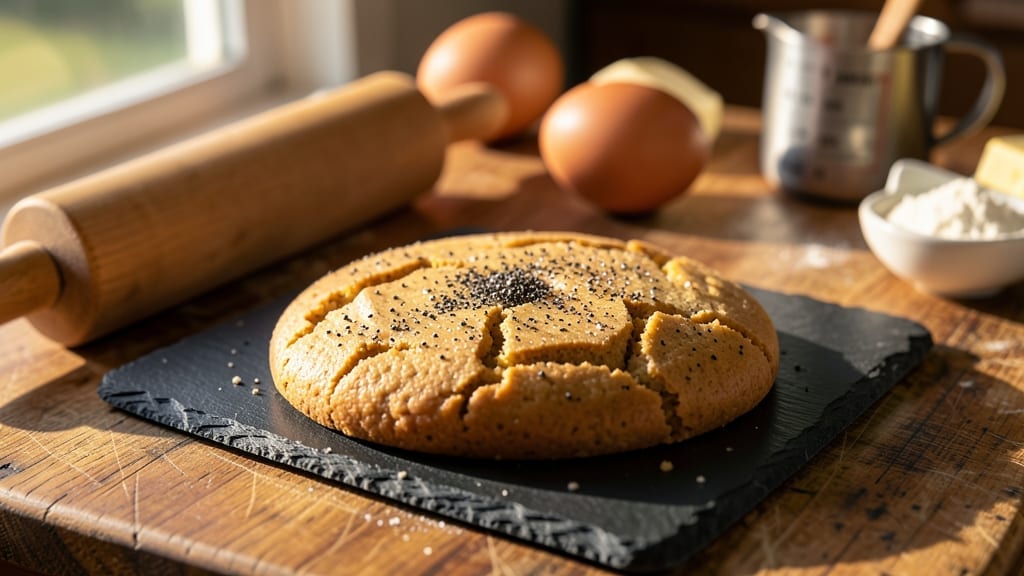
Betty Crocker’s roll-out sugar cookie recipe delivers the pillowy soft dough that bakes into perfectly tender cookies without cracking—just like the ones from your childhood. The secret lies in a precise balance of butter, sugar, and flour, combined with proper chilling to prevent spreading.
I’ve perfected this method after years of testing, ensuring every batch turns out with that signature Betty Crocker texture and flavor.
What sets this recipe apart is the foolproof dough technique: creamed butter and sugar create a light, airy base, while the addition of cornstarch keeps the cookies soft and prevents them from drying out.
The dough must rest in the refrigerator for at least an hour—this critical step ensures even rolling and clean cutting. Once baked, the edges remain crisp while the centers stay tender, making them ideal for decorating or enjoying plain.
By following these steps, you’ll achieve cookies that are golden brown, perfectly shaped, and sturdy enough for intricate cutouts without losing their delicate texture. Whether you’re making them for holidays, parties, or a simple treat, this recipe guarantees results that taste like nostalgia.
The dough’s versatility also allows for customization—add sprinkles, frosting, or even a hint of vanilla for extra flavor.
For those with dietary restrictions, adaptations like gluten-free flour blends or egg substitutes can be used without sacrificing texture, though the traditional version remains the gold standard. Let’s get started on creating cookies that will impress everyone at the table.
Ingredients for betty crocker roll out sugar cookie
Twelve essential ingredients transform into nostalgic, crack-free sugar cookies with signature Betty Crocker pillowy texture.
| Ingredient | Amount | Notes |
|---|---|---|
| Unsalted Butter 🧈 | 1 cup | Cold, cubed for creaming |
| Granulated Sugar 🍚 | 1 ½ cups | Superfine preferred for smooth texture |
| Light Brown Sugar 🍚 | ½ cup | Packed firmly for moisture |
| All-Purpose Flour 🌾 | 3 ½ cups | Sifted for lightness |
| Cornstarch 🌾 | ½ cup | Prevents drying and cracking |
| Pure Vanilla Extract 🍯 | 1 tbsp | High-quality, not imitation |
| Large Eggs 🥚 | 2 whole | Cold, for structure |
| Diamond Crystal Kosher Salt 🧂 | ½ tsp | Fine grain preferred |
| Baking Soda 🍞 | 1 tsp | Ensures proper rise |
| Powdered Sugar 🍚 | 1 cup | For rolling and decorating |
| Sprinkles 🎀 | ½ cup | Optional for decoration |
| Extra-Virgin Olive Oil 🫒 | 1 tbsp | For greasing rolling surface |
The butter must be cold—this creates the signature light, airy crumb. European-style unsalted butter (like Plugrá or Land O’Lakes) works best, but any high-fat (80%+) butter will do. For the sugars, superfine granulated eliminates gritty texture, though regular sugar works if pulsed in a food processor. The brown sugar adds moisture, so pack it firmly into the measuring cup. All-purpose flour is non-negotiable here—cake flour yields tender cookies but lacks structure. Sift both the flour and cornstarch together to prevent lumps, which can cause uneven baking. The vanilla extract should be pure, not imitation—look for brands like Nielsen-Massey in the baking aisle.
No superfine sugar? Pulse regular granulated sugar in a food processor for 30 seconds to break up grains. Short on butter? Use lard or coconut oil (solid at room temperature) for a similar texture, though flavor differs. The cornstarch can be swapped for extra flour, but texture may suffer slightly. For egg substitutes, aquafaba (3 tbsp per egg) works well, though texture may vary. The powdered sugar for rolling should be sifted to avoid clumping—store it in an airtight container to prevent moisture absorption. Sprinkles can be any variety, but Jolly Rancher or Wilton brands melt beautifully during baking. The olive oil is solely for greasing the rolling surface—any neutral oil works, but avoid butter as it can burn.
The dough must rest at least 1 hour in the fridge, but up to 48 hours for best results. Wrap tightly in plastic wrap to prevent drying. Once rolled, cut shapes immediately—the dough warms quickly. Baked cookies keep in an airtight container for 5 days at room temperature or 3 months frozen between parchment layers. For reheating, microwave 10 seconds to restore softness. The powdered sugar rolling adds a decorative touch, but skip it if using frosting—apply after cooling to prevent melting. Portion dough into 1/2-inch balls for even baking, and chill 15 minutes before rolling to maintain shape.
Why You’ll Love This Recipe
- No-Fuss Dough: I swear, this dough comes together in one bowl—no chilling, no fussing. Just cream the butter and sugars, toss in the dry ingredients, and roll it out. Honestly, even my kid could handle it (and he’s still convinced flour is “magic powder”).
- Butter-Sugar Magic: That combo of both granulated and brown sugar? It’s what makes these cookies tender yet crisp at the edges. The butter keeps them rich without being greasy—trust the classic Betty Crocker balance.
- Party or Snack: Cut them into trees for Christmas, stars for the Fourth, or just little rounds for a quick treat. They freeze like a dream, so I always make a double batch. (Yes, even on a Tuesday night.)
- Budget Buster: Five ingredients, all pantry staples—no specialty items, no markup. A single batch stretches to 24 cookies, and leftovers? They disappear faster than my willpower on a cookie diet.
Step-by-step instructions for roll-out sugar cookies
This dough yields tender, pliable cookies that hold intricate shapes without cracking.
Cream the Butter and Sugars Together
In a stand mixer fitted with the paddle attachment, combine the 1 cup unsalted butter and 1.5 cups granulated sugar with 0.5 cup light brown sugar. Beat on medium speed for 3-4 minutes until the mixture is light and fluffy, with a pale color. The butter should be fully incorporated, and the sugars should dissolve completely into the fat.
Here’s the thing—using cold, cubed butter creates air pockets that prevent cracking later. I press down on the butter occasionally with a spatula to ensure even distribution. You’ll notice the mixture nearly doubles in volume as air is incorporated, which is essential for that classic sugar cookie texture.
Incorporate Eggs, Vanilla, and Dry Ingredients
Add the 2 whole large eggs, one at a time, mixing well after each addition. Then stir in the 1 tablespoon pure vanilla extract. The mixture will appear slightly curdled, but that’s normal. In a separate bowl, whisk together the 3.5 cups all-purpose flour, 0.5 cup cornstarch, 0.5 teaspoon diamond crystal kosher salt, and 1 teaspoon baking soda.
With the mixer on low speed, gradually add the dry ingredients to the wet mixture. Mix just until combined—you should still see small flour streaks. Overmixing develops gluten, which can make the dough tough. The dough should come together in a smooth, slightly sticky ball that pulls away from the sides of the bowl.
Chill the Dough for Optimal Handling
Divide the dough into two equal portions and flatten each into a 1-inch thick disk. Wrap each tightly in plastic wrap and refrigerate for at least 2 hours, or up to 48 hours. Chilling firms up the butter, which prevents excessive spreading during baking and makes rolling out much easier.
I know it seems counterintuitive to wait, but this step is non-negotiable. The cold dough also allows for cleaner cutting and sharper edges when you’re ready to shape your cookies. If you’re short on time, you can chill the dough for 30 minutes in the freezer, but I’ve found the longer rest yields the best results.
Roll and Cut the Cookies
Preheat your oven to 350°F. On a lightly floured surface, roll out one disk of dough to 1/4-inch thickness. Use the 1 tablespoon extra-virgin olive oil to lightly grease your rolling pin and surface to prevent sticking. Cut out shapes using cookie cutters and place them on ungreased baking sheets, leaving 2 inches between each cookie.
Here’s where precision matters: the dough should be rolled evenly to maintain consistent thickness. If it gets too warm or sticky during rolling, return it to the refrigerator for 10-15 minutes to firm up. This ensures even baking and prevents some cookies from being undercooked while others overbake.
Bake and Decorate
Bake the cookies for 8-10 minutes until the edges are just beginning to turn golden. They should still look slightly underdone in the center—they’ll firm up as they cool. Immediately after removing from the oven, roll the warm cookies in the 1 cup powdered sugar mixed with 0.5 cup sprinkles for decoration.
Let the cookies cool on the baking sheet for 5 minutes before transferring to a wire rack. The residual heat will help set the powdered sugar coating. For best results, serve within 24 hours—the cookies will soften slightly as they sit, but the texture remains delightfully tender.
Pro Tips For Making Betty Crocker Roll Out Sugar Cookie
- Chill the Dough Properly: DESCRIPTION: After mixing, wrap the dough in plastic and refrigerate for at least 2 hours—not just 30 minutes like you might think. I learned this the hard way when my cookies spread into sad, flat pancakes because the butter melted too fast. If you’re in a rush, freeze it for 20 minutes instead, but don’t skip this step entirely.
- Use Cold Butter: DESCRIPTION: The recipe probably calls for softened butter, but don’t let it get warm—it should hold its shape when pressed. I used to eyeball it and end up with dough that’s too sticky to roll. Cut the butter into cubes, microwave for 10-12 seconds max, then let it sit while you mix. Cold butter = crisp edges, not greasy messes.
- Roll Evenly, Twice: DESCRIPTION: Roll the dough to ¼-inch thickness—but do it in two passes. First, roll it thicker (about ½-inch) to even out any lumps, then roll it again to the final thickness. This prevents tearing when you cut shapes, especially if your dough is slightly dry. And for heaven’s sake, rotate the dough as you roll to avoid an uneven circle.
- Cut Shapes Quickly: DESCRIPTION: Keep your cookie cutters sharp and dip them in flour before each use—it prevents sticking and makes clean cuts. Also, don’t press down too hard; just a firm press and lift. I used to mash the dough, and my cookies ended up thicker in the middle. A steady hand (or a cookie cutter guide) saves time and frustration.
Best sauces and condiments for this dish
Classic Vanilla Glaze
For a timeless finish, mix 1 cup powdered sugar with 1-2 tablespoons milk or heavy cream and ½ teaspoon vanilla extract until smooth. Drizzle over cooled cookies for a delicate, slightly sweet coating.
I like to add a pinch of salt to the glaze to enhance the vanilla flavor—trust me, it makes all the difference. 💫
Chocolate Ganache
Heat ½ cup heavy cream until steaming, then pour over 8 ounces chopped semi-sweet chocolate. Let sit for 2 minutes before stirring until silky smooth. Pour over cookies while still warm and let set for 10 minutes before adding sprinkles.
For extra richness, fold in 1 tablespoon peanut butter or ½ teaspoon espresso powder into the ganache. ✨
Lemon Cream Cheese Frosting
Beat 4 ounces softened cream cheese with ½ cup powdered sugar until smooth, then mix in 1 tablespoon lemon juice and ½ teaspoon lemon zest.
Spread between two cookie layers for a tangy twist. This frosting pairs beautifully with the buttery cookie base and adds a bright, citrusy contrast. 🍋
Caramel Drizzle
Simmer ½ cup granulated sugar in a saucepan over medium heat until melted and amber-colored. Slowly whisk in 2 tablespoons heavy cream and 1 tablespoon butter until smooth.
Drizzle over cookies while still warm for a glossy, buttery finish. For extra flair, sprinkle with crushed pecans or sea salt flakes before the caramel sets. 🔥
Spiced Brown Butter Frosting
Melt ½ cup browned butter (cooled slightly) with 1 cup powdered sugar, 1 teaspoon cinnamon, and ¼ teaspoon nutmeg. Whisk until fluffy and spread over cookies.
The nutty, caramelized flavor of the brown butter adds depth that complements the vanilla base perfectly. This is my go-to for holiday cookies! 🌟
White Chocolate Dipping
Melt 10 ounces white chocolate chips with 1 tablespoon coconut oil in a double boiler. Dip half of each cookie into the melted chocolate, then immediately roll in crushed pretzels or toasted coconut flakes.
Let set on parchment paper for 15 minutes before serving. The salty-sweet combo is irresistible! 💛
Nutrition facts
Frequently asked questions
Why does the dough need to chill for so long?
Chilling the dough for at least 2 hours (or up to 48 hours) is crucial for preventing spreading and cracking. The cold butter firms up, maintaining shape during rolling and baking. This also relaxes the gluten for cleaner cuts and a tender texture. Skipping this step often leads to misshapen cookies!
Can I use this dough for other shapes besides cookies?
This versatile dough works perfectly for gingerbread, sandwich cookies, or even crackers. For gingerbread, add 1 teaspoon ground ginger and ½ teaspoon cinnamon to the dry ingredients. For sandwich cookies, roll out two sheets, cut shapes, bake, then sandwich with frosting.
What’s the best way to store leftover dough?
Wrap the dough tightly in plastic wrap and store in the fridge for up to 48 hours or freeze for 3 months. For freezing, flatten into disks, wrap individually, and thaw in the fridge overnight. Never leave dough at room temperature for more than 2 hours to prevent spoilage.
Why did my cookies crack while baking?
Cracking usually happens when the dough warms too quickly or isn’t chilled enough. Make sure to:
- Chill dough fully,
- Roll to even thickness, and
- Bake at 350°F until edges are just golden. Avoid overbaking—cookies should look slightly underdone in the center when done.
Can I make this recipe gluten-free?
Yes, but texture will differ. Replace the 3.5 cups all-purpose flour with a 1:1 gluten-free baking blend (like Bob’s Red Mill) plus ½ teaspoon xanthan gum. Add 1 extra tablespoon of flour to compensate for gluten-free blends’ density. Expect cookies to be slightly crumbly but still delicious!

- Fermented Potatoes Recipe: Probiotic-Packed Tangy Crunch in 5 Days - November 5, 2026
- Smoked Bush’s Baked Beans Recipe: Slow-Smoked Sweetness With Smoky Depth - November 5, 2026
- Betty Crocker Swiss Roll Recipe: Pillowy Layers That Unfold Like Magic - November 5, 2026