
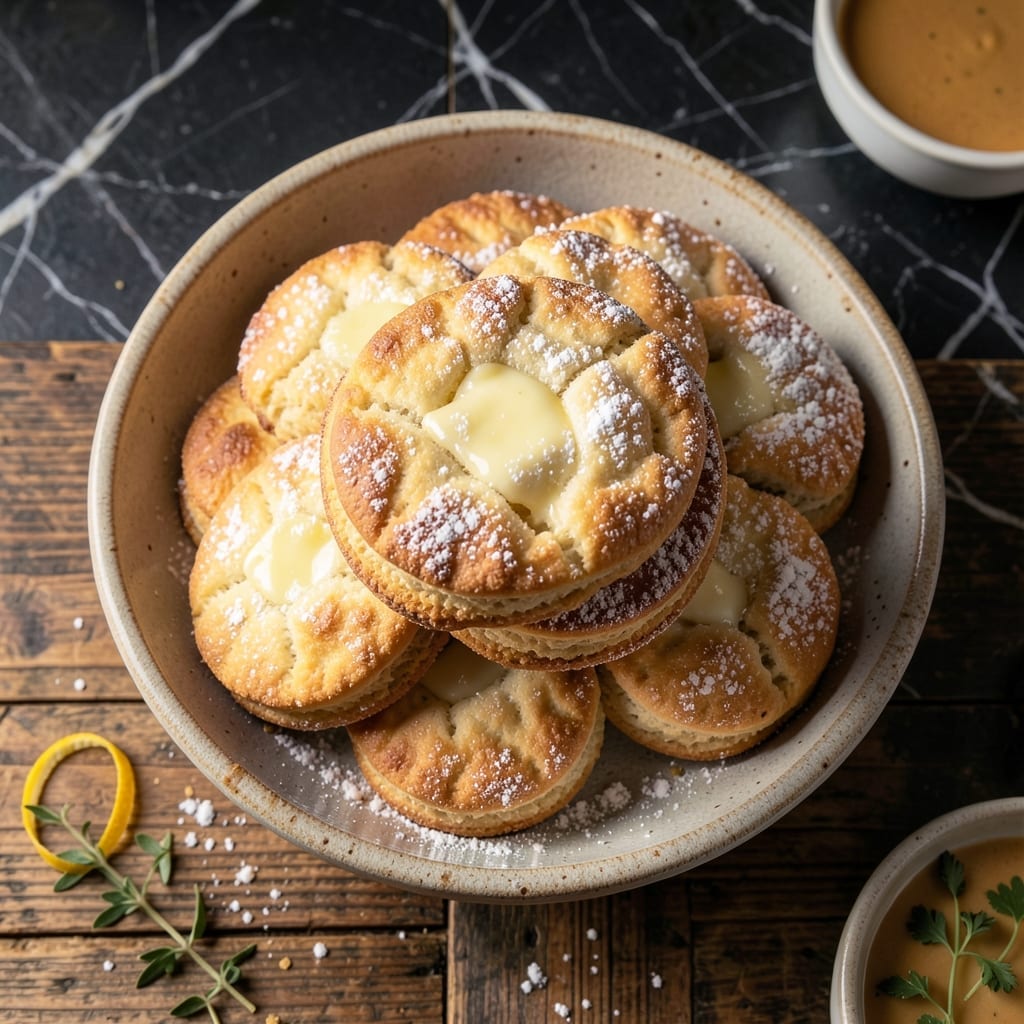
I developed this dairy-free biscuit recipe to prove that fluffy, layered results don’t require milk. The secret lies in using a simple pantry substitution that delivers the same tender texture and golden crust.
This method relies on cold water and a touch of vinegar to activate the baking powder, creating that coveted rise without any dairy. The dough comes together quickly with minimal effort, yet bakes into perfectly golden biscuits every time.
You’ll get biscuits that are light, airy, and rich in flavor, with a crisp exterior giving way to soft layers inside. They hold their shape beautifully and taste just as indulgent as traditional versions.
Ideal for breakfast, dinner, or as a snack, these biscuits are ready in 20 minutes from start to finish.
Ingredients for Biscuit Recipe No Milk
Simple pantry staples create fluffy, golden layers without any dairy at all.
| Ingredient | Amount | Notes |
|---|---|---|
| All-Purpose Flour 🌾 | 2 cups | Sifted for lighter texture |
| Baking Powder 🧂 | 1 tbsp | Aluminum-free preferred |
| Salt 🧂 | ½ tsp | Fine sea salt |
| Sugar 🍚 | 1 tsp | Granulated, optional |
| Cold Water 💧 | ¾ cup | Ice cold for flakiness |
| White Vinegar 💧 | 1 tbsp | Activates baking powder |
| Vegetable Shortening 🧈 | ½ cup | Cold, cut into small pieces |
| Nutritional Yeast 🧀 | 1 tbsp | For cheesy flavor (optional) |
| Baking Soda 🧂 | ¼ tsp | Balances acidity |
The flour is the foundation here. King Arthur or Gold Medal all-purpose work beautifully—avoid bread flour, which is too dense. Vegetable shortening is key for that classic biscuit texture; Crisco is the standard (use the butter-flavored if you want extra richness). Cold ingredients are non-negotiable: keep your water chilled and shortening straight from the fridge.
No vinegar? Lemon juice at the same amount works just as well. Out of shortening? Coconut oil (solid, chilled) is a great substitute, though it adds a slight coconut note. For extra flavor, add 1 tsp garlic powder or a pinch of smoked paprika to the dry mix. The nutritional yeast is optional but gives a subtle cheesy depth without dairy.
Store dry ingredients in airtight containers at room temperature. Baked biscuits are best eaten fresh but can be reheated in a 350°F oven for 5-10 minutes. Dough can be frozen for up to 1 month—just thaw before baking.
Why You’ll Love This Recipe
- No-Fuss Mixing: I just stir flour, baking powder, salt, sugar, and cold water—no milk to measure or spoil.
- Buttery Crisp Edges: Honestly, the sugar caramelizes just enough to give these biscuits a golden, slightly sweet crust.
- Breakfast to Dinner: I serve them with jam at dawn and alongside stew at night—same batch, two totally different vibes.
- Pantry Stable: Between us, I keep the dry ingredients pre-mixed in a jar; add water and bake whenever the craving hits.
Step-by-Step Instructions for Biscuits Without Milk
Master the technique for tall, flaky layers using this dairy-free method.
Step 1: Combine Dry Ingredients
In a large bowl, whisk together the 2 cups All-Purpose Flour, 1 tbsp Baking Powder, 0.5 tsp Salt, 1 tsp Sugar, 1 tbsp Nutritional Yeast, and 0.25 tsp Baking Soda until evenly distributed. I sift the flour first for a lighter texture, which helps create those airy layers we’re after.
This step ensures all the leavening agents are uniformly mixed throughout the flour. The baking powder and baking soda will react with the acid in the vinegar later, creating that rise. Make sure there are no visible streaks of white—complete homogeneity is key for even lifting.
Step 2: Cut in Shortening
Add the 0.5 cup Vegetable Shortening (cut into small pieces and chilled) to the flour mixture. Using a pastry cutter or two forks, work the shortening into the flour until the mixture resembles coarse crumbs with some pea-sized pieces remaining. This creates the flaky texture in your biscuits.
The cold shortening won’t melt into the flour, which is exactly what you want. Those little pieces of fat will create pockets as they melt during baking, giving you distinct layers. If the shortening starts to soften or the mixture feels greasy, chill the bowl for 10 minutes before proceeding.
Step 3: Create the Liquid Mixture
In a separate small bowl or measuring cup, combine the 0.75 cup Cold Water and 1 tbsp White Vinegar. The vinegar activates the baking powder, giving your biscuits extra lift. This is your dairy-free buttermilk substitute that works beautifully.
Stir gently—you don’t need to fully incorporate them as they’ll mix when added to the dry ingredients. The colder your water, the better; this prevents the shortening from melting prematurely, which would compromise your layers.
Step 4: Form the Dough
Make a well in the center of your flour mixture and pour in the cold water-vinegar mixture. Using a wooden spoon or silicone spatula, stir just until the dough comes together. It will be shaggy and slightly sticky—that’s perfect. Overmixing develops gluten, which makes biscuits tough instead of tender.
Turn the dough out onto a lightly floured surface. Gently pat it into a 1-inch thick rectangle, folding the dough over itself once or twice to create layers. Don’t use a rolling pin—this compresses the air we’ve worked so hard to incorporate.
Step 5: Cut and Bake
Using a 2.5-inch biscuit cutter or a glass, cut out biscuits by pressing straight down without twisting. Twisting seals the edges and prevents the biscuits from rising as high. Place them on a parchment-lined baking sheet so they’re touching—this helps them rise upward rather than outward.
Bake in a preheated 450°F oven for 12-15 minutes until the tops are golden brown. The biscuits should be tall with distinct layers when split open. Serve immediately while warm for the best texture and flavor.
Pro Tips For Making Biscuit Recipe No Milk
- Chill Your Water: Use ice-cold water straight from the fridge—about 35-40°F—to keep the fat-free dough from developing gluten, which makes biscuits tough.
- Don’t Overmix: Stir just until the dough comes together, even if it looks shaggy. I learned this the hard way—overworking it turns biscuits dense instead of flaky.
- Use Fresh Baking Powder: Check the expiration date on your baking powder. Old leavening agents lose their punch, and your biscuits won’t rise properly.
- Cut Thick: Roll the dough to at least 3/4-inch thickness before cutting. Thinner biscuits dry out faster, while thicker ones stay tender and split nicely at the top.
Make-Ahead Tips for Leftovers
Prep Dry Ingredients
Measure and sift all dry ingredients the night before. Store in an airtight container at room temperature. This saves 5 minutes on baking day while keeping the flour light and ready for optimal rise. 💡
Pre-Cut Shortening
Cut the 0.5 cup Vegetable Shortening into small pieces and refrigerate in a sealed container. Cold fat is crucial for flaky layers, and prepping it ahead ensures it stays firm until mixing.
Make Dough Balls
Combine dry ingredients and pre-cut shortening, then store in the fridge. On baking day, just add the water-vinegar mix. This shortcut keeps the dough cold and ready for 1-2 days.
Freeze Unbaked Dough
Shape dough into a 1-inch thick rectangle, cut into rounds, and freeze on a tray. Transfer to a bag once solid. Bake from frozen, adding 2-3 minutes to the bake time.
Reheat Baked Biscuits
Wrap cooled biscuits in foil and store at room temp for 2 days. Reheat at 350°F for 5-10 minutes to restore that fresh-baked warmth and flakiness. ❄️
Double Batch Tip
This recipe scales perfectly—just double all ingredients. Bake extra biscuits, cool completely, then freeze in gallon freezer bags for up to 1 month. Perfect for busy mornings.
Nutrition Facts
Frequently Asked Questions
Why does the recipe use vinegar?
The vinegar reacts with baking powder to create extra lift. It mimics buttermilk’s acidity for fluffier results without dairy.
Can I use oil instead of shortening?
Yes, but use cold coconut oil for best texture. Liquid oils won’t create the same flaky layers as solid fats.
How do I get taller biscuits?
Pat dough to 1-inch thickness and avoid twisting the cutter. Place biscuits touching on the tray to encourage upward rise.
Can I make these ahead?
Freeze unbaked dough rounds for up to 1 month. Bake from frozen, adding 2-3 minutes to bake time.

- Peach Syrup Recipe for Ice Cream: Sweet and Silky Drizzle for Scoops - October 6, 2026
- Pav Bhaji Recipe Food Lab: Mumbai Street Food Magic at Home - October 6, 2026
- Peach Jelly Recipe Without Pectin: Naturally Set Sweet Spread - October 6, 2026