
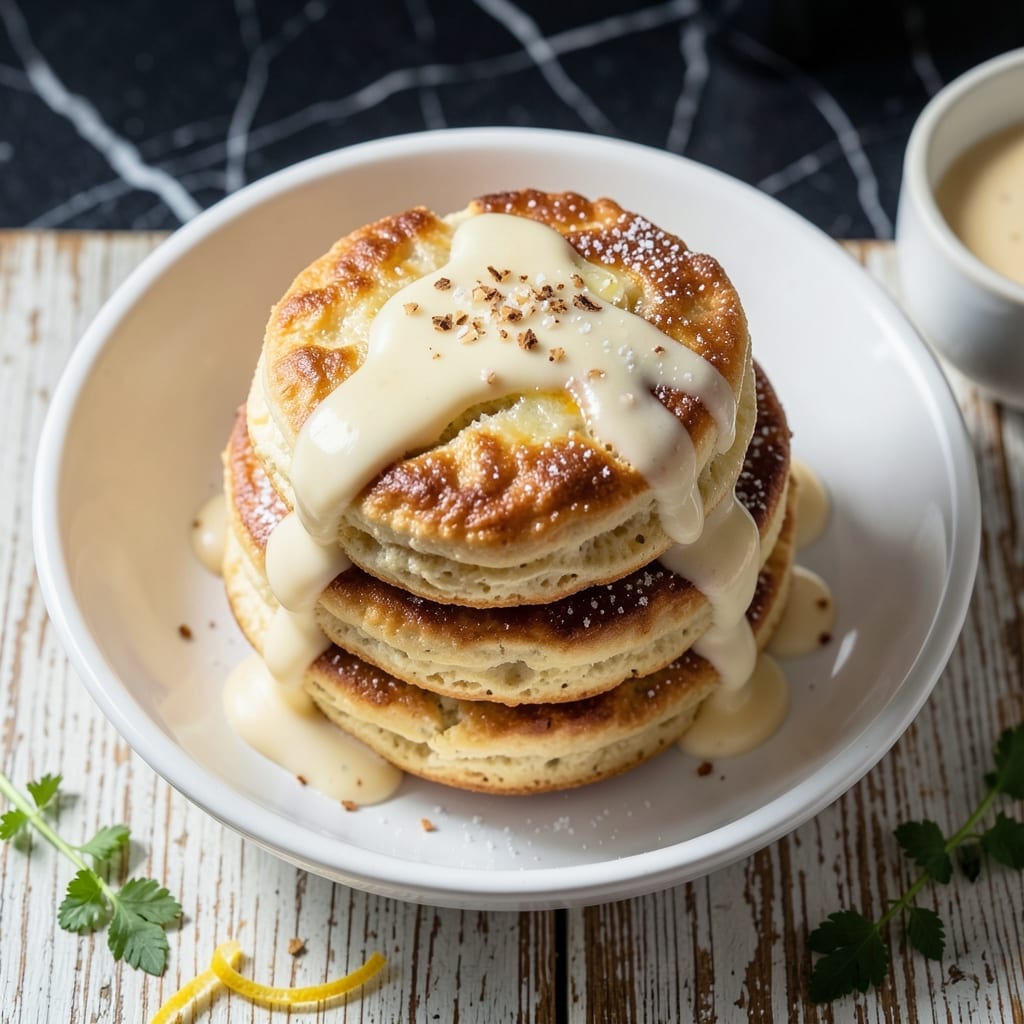
There’s a reason Southern biscuits are legendary, and this recipe captures that tradition perfectly. The secret lies in cold butter and a gentle touch to create those flaky, sky-high layers that separate with every bite.
With just a few simple ingredients and a proven technique, you can achieve bakery-quality results at home. The key is keeping everything cold until it hits the oven, which ensures the butter creates steam for maximum rise.
What you’ll get is golden-brown biscuits with a tender crumb and a buttery richness that’s impossible to resist. These are the kind of biscuits that make a meal feel like a special occasion.
Serve them warm with honey, gravy, or as the base for a hearty sandwich. Here’s how to make them right.
Ingredients for Biscuitville
Cold butter, simple flour, and a touch of buttermilk make these legendary layers.
| Ingredient | Amount | Notes |
|---|---|---|
| All-Purpose Flour 🌾 | 2 cups | Plus extra for dusting |
| Baking Powder 🧂 | 1 tbsp | Aluminum-free preferred |
| Granulated Sugar 🍚 | 1 tbsp | Balances the richness |
| Salt 🧂 | 1 tsp | Fine sea salt works best |
| Cold Unsalted Butter 🧈 | ½ cup | Cut into small cubes |
| Buttermilk 🥛 | ¾ cup | Cold, full-fat preferred |
| Baking Soda 🧂 | ¼ tsp | Helps with rise |
The butter is non-negotiable here—cold and unsalted. I grab mine from Whole Foods or any store with a good dairy section. Look for European-style if you want that extra flakiness. The flour should be all-purpose, nothing fancy. Keep it in the fridge for 15 minutes before starting if your kitchen runs warm.
No buttermilk? Whole milk plus a tablespoon of vinegar works in a pinch (let it sit 5 minutes). Want more flaky layers? Freeze the butter and grate it in like coarse sand (trust me on this). Baking powder losing its kick? Check the expiration date—old leaveners won’t give you that sky-high rise.
The dough comes together fast, so have your oven preheated. Leftovers? Wrap them tight and warm in a 350°F oven for 5-10 minutes. They’re best the same day but still delicious for 2 days.
Why You’ll Love This Recipe
- Five Ingredient Magic: I love that this comes together with just flour, baking powder, sugar, salt, and cold butter—no fancy pantry items required.
- Buttery Layers: The cold butter creates those flaky, golden layers that make these biscuits irresistibly tender.
- Breakfast to Dinner: I’ve served these with gravy at sunrise and as a side with fried chicken at dinner—same great result.
- Freezer Friendly: Honestly, I double the batch and freeze half for lazy mornings when fresh biscuits feel like a luxury.
Step-by-Step Instructions for Flaky Buttermilk Biscuits
Master the technique for tall, layered biscuits with a golden, buttery finish every time.
Step 1: Combine Dry Ingredients for Maximum Rise
In a large bowl, whisk together the 2 cups All-Purpose Flour, 1 tbsp Baking Powder, 1 tbsp Granulated Sugar, 1 tsp Salt, and 0.25 tsp Baking Soda. I sift these together first to ensure even distribution—this prevents pockets of concentrated leavening that could create uneven texture.
Make sure your bowl is large enough to accommodate the butter and liquid later. The sugar isn’t just for sweetness; it caramelizes slightly during baking, contributing to that perfect golden-brown crust. Use fine sea salt as specified—it dissolves evenly into the dough.
Step 2: Cut in Cold Butter for Flaky Layers
Add the 0.5 cup Cold Unsalted Butter (cut into small cubes as directed) to the dry ingredients. Using a pastry cutter or your fingertips, work the butter into the flour until the mixture resembles coarse crumbs with some pea-sized butter pieces remaining. The key is keeping the butter cold—warm butter melts into the flour, sacrificing flakiness.
I prefer using my fingertips because I can feel the texture better, but work quickly to avoid warming the dough. Those visible butter pieces create steam during baking, which separates the layers for that signature flaky structure. If the butter starts to soften, pause and chill the mixture for 10 minutes before continuing.
Step 3: Add Buttermilk and Form the Dough
Create a well in the center of the flour-butter mixture. Pour in the 0.75 cup Buttermilk (cold, full-fat as specified) all at once. Using a fork or silicone spatula, gently stir until the dough just comes together. It will look shaggy and slightly sticky—that’s exactly what you want.
Don’t overmix. The moment the flour is moistened and no dry pockets remain, stop stirring. Overworking develops gluten, which makes biscuits tough instead of tender. If there’s a little dry flour at the bottom, that’s fine—it will incorporate during the folding process.
Step 4: Fold and Laminate for Layered Texture
Turn the dough onto a lightly floured surface (use extra All-Purpose Flour as mentioned in the ingredients). Gently pat it into a 1-inch thick rectangle. Fold the dough in half like a book, then rotate it 90 degrees and pat out again to 1-inch thickness. Repeat this folding and turning process 2 more times.
This lamination technique creates distinct layers in your biscuits. Each fold multiplies the layers, and the cold butter between them will steam during baking, pushing the layers apart. After the final fold, pat the dough to ¾-inch thickness for baking.
Step 5: Cut and Bake to Golden Perfection
Using a 2½-inch biscuit cutter, press straight down through the dough—don’t twist, as this seals the edges and prevents rising. Place the biscuits on a parchment-lined baking sheet, touching each other slightly. This close placement helps them rise upward rather than outward.
Bake in a preheated 450°F oven for 12-15 minutes until the tops are golden brown. Rotate the pan halfway through for even browning. The biscuits are done when the layers are visibly separated and the bottoms are golden. Serve warm for the ultimate flaky experience.
Pro Tips For Making Biscuitville
- Keep Butter Ice Cold: Grate your cold unsalted butter directly into the flour mixture—I learned this the hard way after my first few batches turned out flat. The smaller, colder pieces create those perfect flaky layers.
- Chill the Dough: After cutting in the butter, give the dough 10-15 minutes in the fridge before rolling. Sounds weird, but it works: prevents the butter from melting prematurely and ruining the texture.
- Don’t Overwork It: Mix just until the dough comes together—resist the urge to keep stirring. Overworking develops the gluten, and suddenly your biscuits are tough instead of tender.
- Use a Hot Oven: Crank it to 450°F and make sure it’s fully preheated. My grandmother swore by this, and she was right: the high heat makes the baking powder react fast for that tall, golden rise.
Pro Cooking Tips for Perfect Results
Butter Temperature Control
Keep your 0.5 cup Cold Unsalted Butter ice-cold until the last moment. I cut mine into ¼-inch cubes and chill them on a plate for 10 minutes before mixing. Warm butter blends into the flour, ruining those precious flaky layers we love so much. 🧈
Buttermilk Matters
Use full-fat, cold buttermilk as specified. The acidity reacts with baking soda for extra lift, while the fat adds tenderness. In a pinch, I mix ¾ cup whole milk with 1 tbsp vinegar and let it sit for 5 minutes before using.
Dough Handling
Handle the dough as little as possible. Overworking develops gluten, making biscuits tough. I use a fork to stir just until the flour is moistened—about 10-12 strokes. The dough should look shaggy, not smooth.
Lamination Technique
Fold the dough like a book 3 times, rotating 90 degrees between each fold. This creates layers that puff up beautifully. Pat to ¾-inch thickness before cutting—this ensures even baking and maximum rise. 🔥
Cutting and Baking
Press your 2½-inch cutter straight down—no twisting. Place biscuits touching on the tray so they rise upward, not outward. Bake at 450°F for 12-15 minutes, rotating the pan halfway for even browning.
Oven Prep
Preheat your oven for at least 15 minutes before baking. A hot oven creates immediate steam, which is crucial for those towering layers. I place my baking sheet in the oven during preheating to ensure it’s piping hot when the biscuits go in.
Nutrition Facts
Frequently Asked Questions
Can I use regular milk instead of buttermilk?
Yes, mix ¾ cup whole milk with 1 tbsp vinegar and let sit for 5 minutes to mimic buttermilk’s acidity. This works in a pinch for similar results.
Why do my biscuits turn out flat?
Flat biscuits usually mean warm butter or old leavening. Always use ice-cold butter and check your baking powder’s expiration date. Overmixing can also deflate the layers.
How do I get taller layers?
Fold the dough like a book 3 times, rotating 90 degrees between folds. This creates steam pockets that puff up during baking at 450°F.
Can I make these ahead of time?
Shape and cut the biscuits, then freeze on a tray for 1 hour. Transfer to a bag and bake from frozen, adding 2-3 minutes to the time.

- BBQ Sausage Recipe Oven: Smoky Depth Without the Grill - September 28, 2026
- BBQ Chicken Bowl Recipe Rice: Smoky Sweetness Over Fluffy Grains - September 28, 2026
- Beef Cutlet Recipe Ideas: Crispy Breaded Patties With Bold Seasonings - September 28, 2026