
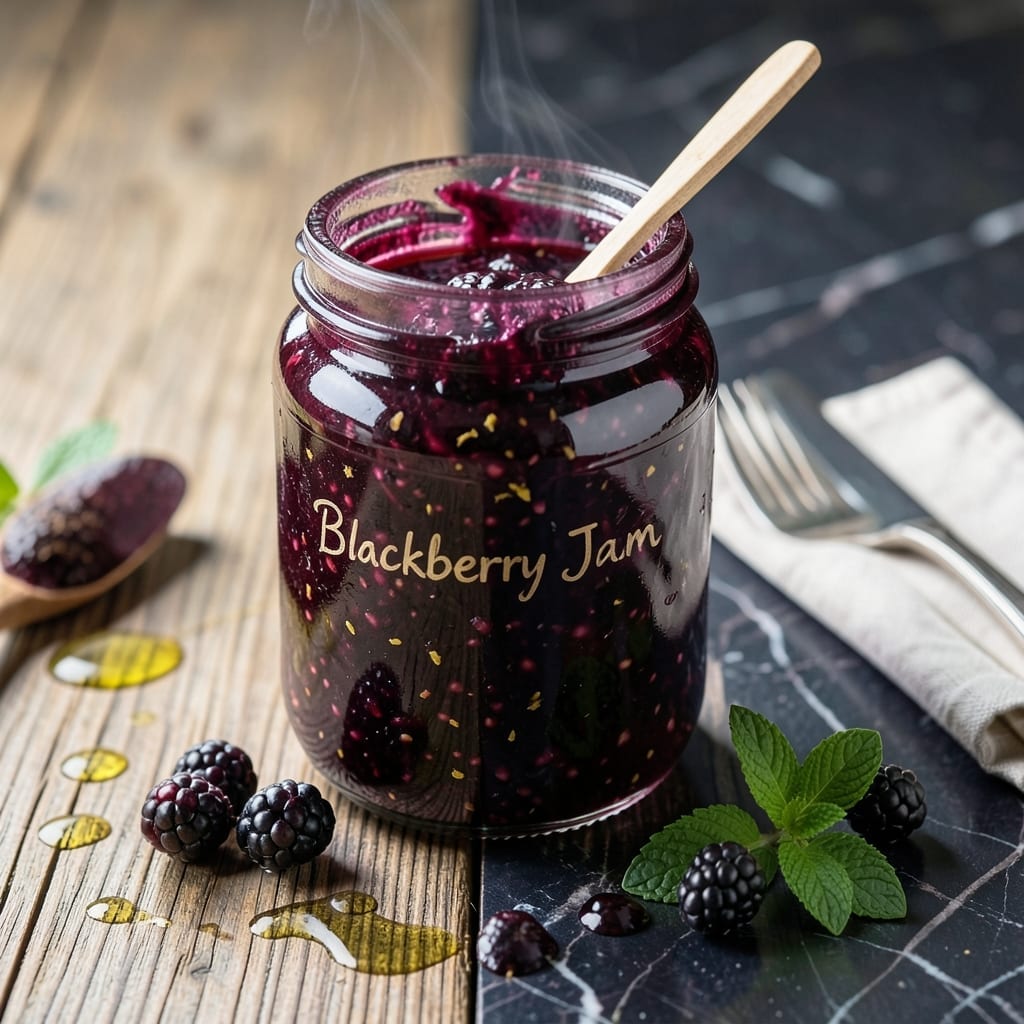
There’s a pure satisfaction in making jam that relies solely on fruit’s natural thickening power. This method produces a thick, spreadable blackberry jam without commercial pectin.
The key is prolonged cooking to concentrate the fruit’s natural pectin and sugar. You’ll end up with a vibrant, glossy jam that captures summer’s essence in every jar.
Ingredients for Blackberry Jam Recipe Without Pectin
Six simple ingredients transform into a luscious, naturally thick blackberry spread with no added pectin.
| Ingredient | Amount | Notes |
|---|---|---|
| Fresh Blackberries 🫐 | 4 cups | Fully ripe, unwashed |
| Granulated Sugar 🍚 | 2 ½ cups | Organic preferred for purity |
| Lemon Juice 🍋 | ¼ cup | Freshly squeezed for acidity |
| Lemon Zest 🍋 | 1 tbsp | Finely grated yellow part only |
| Vanilla Extract 🌿 | 1 tsp | Pure extract for depth |
| Sea Salt 🧂 | ¼ tsp | Fine grain for even distribution |
The blackberries are everything here. Pick your own at peak ripeness (late summer) or source from local farmers markets—avoid supermarket berries shipped from afar, as they lack the natural pectin concentration. Look for berries that are deep purple-black, plump, and just slightly soft to the touch. Organic sugar ensures no anti-caking agents interfere with the jam’s set.
No fresh lemon? Bottled juice at half the amount works in a pinch, but fresh is ideal for that bright pop of acidity. Swap vanilla extract for a vanilla bean (scraped seeds only) if you’re feeling fancy. The sugar amount can be adjusted slightly, but going below 1.5 cups may prevent proper thickening. Underripe berries? Add an extra tablespoon of lemon juice to compensate for lower natural pectin.
Jam keeps beautifully. Store in sterilized jars for up to 1 year unopened, or 3 months once opened and refrigerated. For short-term use, any airtight container works for about 2 weeks in the fridge. The flavor deepens over time—worth the wait.
Why You’ll Love This Recipe
- No-Fuss Cooking: I just dump the blackberries, sugar, and a squeeze of lemon into a pot—no pectin, no fuss.
- Bright & Balanced: The lemon zest and vanilla extract turn the berries into something ridicuously good, tangy and sweet all at once.
- Gift-Worthy Jar: Honestly, I double the batch and give half away—it’s my go-to hostess gift that feels special but costs pennies.
- Pantry Hero: A single jar lasts me weeks on toast, in yogurt, even swirled into oatmeal. Between us, it’s my secret weapon for lazy breakfasts.
Step-by-Step Instructions for Blackberry Jam Without Pectin
This method relies on natural fruit pectin and proper cooking technique for a perfect set.
Step 1: Prepare and Mash the Blackberries
Place the 4 cups Fresh Blackberries in a large, heavy-bottomed pot. Using a potato masher or fork, gently crush the berries until they release their juices and break down slightly. You want to maintain some texture, so avoid over-mashing into a puree.
This initial breakdown helps the blackberries release their natural pectin, which is essential for achieving the right consistency without added pectin. The juice will begin to pool at the bottom of the pot, creating the liquid base for your jam.
Step 2: Combine with Sugar and Acid
Add the 2.5 cups Granulated Sugar, 0.25 cup Lemon Juice, 1 tbsp Lemon Zest, 1 tsp Vanilla Extract, and 0.25 tsp Sea Salt to the pot. Stir thoroughly to combine, ensuring the sugar begins to dissolve in the berry juices.
The lemon juice provides necessary acidity to balance the sweetness and help activate the natural pectin. The vanilla extract adds depth of flavor, while the sea salt enhances all the other ingredients. This combination creates the complex flavor profile characteristic of high-quality jam.
Step 3: Cook to the Gelling Point
Place the pot over medium-high heat and bring the mixture to a full rolling boil, stirring frequently. Once boiling, reduce the heat to medium to maintain a steady, vigorous simmer. Continue cooking for 20-25 minutes, stirring occasionally.
As the mixture cooks, it will thicken noticeably. To test for doneness, place a small spoonful on a chilled plate and return it to the freezer for 1 minute. If the jam wrinkles when pushed with a finger and holds its shape, it has reached the proper gel point.
Step 4: Skim and Finalize
Remove the pot from heat. Using a metal spoon, skim off any foam that has risen to the surface. This foam is primarily air bubbles and excess liquid that can affect the final texture of your jam.
Let the jam sit undisturbed for 5 minutes. This brief rest allows the fruit to settle and the jam to begin setting. The mixture will thicken further as it cools, reaching its final consistency.
Step 5: Jar and Store
Ladle the hot jam into sterilized jars, leaving ¼ inch headspace at the top. Seal with lids and let cool to room temperature. As the jam cools, you’ll hear the satisfying “ping” of the lids sealing.
Once completely cool, store in the refrigerator for up to 3 weeks, or process in a water bath for longer shelf storage. The jam will continue to thicken slightly as it cools completely, achieving that perfect spreadable consistency.
Pro Tips For Making Blackberry Jam Recipe Without Pectin
- Test for Set: After 20-25 minutes of simmering, drop a spoonful on a chilled plate—if it wrinkles when pushed, it’s done. I learned this the hard way after pulling my first batch off the heat too early.
- Mash Some Berries: Crush about a quarter of the blackberries before cooking to release pectin naturally. Sounds weird, but it works and thickens the jam without added gunk.
- Skip the Over-Stirring: Stir only occasionally once the sugar dissolves to avoid breaking down the fruit too much. My grandmother swore by this, and her jam always had the best texture.
- Add Vanilla Late: Stir in the vanilla extract in the last 5 minutes of cooking to preserve its flavor. I was skeptical until I tried it—now I can actually taste it in the finished jam.
Health Benefits of This Recipe
Rich in Antioxidants
Blackberries are packed with polyphenols and vitamin C, powerful antioxidants that combat oxidative stress. A single ½ cup serving of this jam provides about 30% of your daily vitamin C needs. These compounds support immune function and skin health. 💪
Fiber Boost
Each 2-tablespoon serving contains about 1 gram of fiber from the blackberry skins and seeds. Dietary fiber aids digestion and promotes gut health. Unlike store-bought jams with added pectin, this version keeps all the fruit’s natural fiber intact.
Low in Fat
This jam is virtually fat-free, making it a guilt-free way to satisfy sweet cravings. The natural sugars from fruit and added sugar provide quick energy without unhealthy fats. It’s a great topping for toast or yogurt without adding extra calories from fat.
Natural Energy Source
The carbohydrates in blackberries and sugar offer a natural energy boost. A 2-tablespoon serving contains about 50 calories, perfect for a mid-afternoon pick-me-up. I often spread it on whole-grain toast for a balanced snack.
Heart Health Support
Blackberries contain anthocyanins, the pigments that give them their deep color, which have been linked to improved heart health. Regular consumption may help lower blood pressure and reduce inflammation. This jam makes it easy to incorporate these benefits into your diet. 💛
No Artificial Additives
Since this recipe skips commercial pectin, you avoid preservatives and artificial additives often found in store-bought versions. You control the ingredients, ensuring a pure, wholesome product. It’s a healthier alternative for those watching their intake of processed foods.
Frequently Asked Questions
Why does my jam stay runny without pectin?
It likely needs more cooking time. Natural pectin in blackberries activates at a full boil for 20-25 minutes. Test by chilling a spoonful—if it wrinkles, it’s ready. Underripe berries also have less pectin.
Can I reduce the sugar amount?
Sugar helps with preservation and thickening. Going below 1.5 cups may prevent proper gel formation. For less sweetness, try adding 1 tablespoon lemon juice to compensate and cook longer.
How long does homemade blackberry jam last?
In sterilized, sealed jars, it keeps for up to 1 year unopened. Once opened, refrigerate and use within 3 months. For short-term storage, any airtight container works for about 2 weeks.
Nutrition Facts

- BBQ Sausage Recipe Oven: Smoky Depth Without the Grill - September 28, 2026
- BBQ Chicken Bowl Recipe Rice: Smoky Sweetness Over Fluffy Grains - September 28, 2026
- Beef Cutlet Recipe Ideas: Crispy Breaded Patties With Bold Seasonings - September 28, 2026