
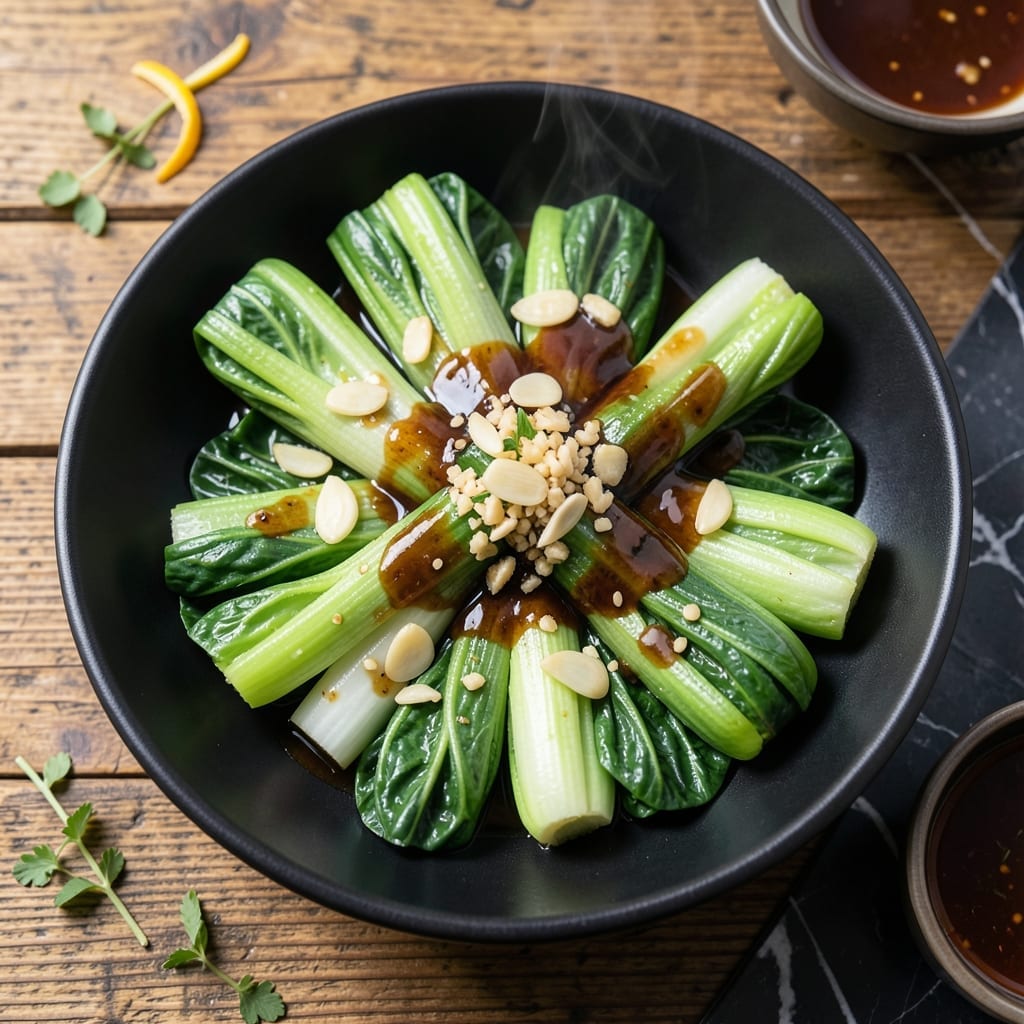
This Asian-inspired bok choy dish delivers restaurant-quality results in under 15 minutes. The secret lies in high-heat stir-frying, which preserves the vegetable’s natural crunch while infusing it with bold flavors.
Garlic and ginger form the aromatic base, while a splash of soy sauce and a touch of sesame oil create depth. The technique ensures each leaf stays tender-crisp, never soggy, with a glossy finish that makes it irresistible.
What emerges is a side that pairs perfectly with proteins or stands alone as a light meal. The contrast between the savory sauce and bok choy’s mild sweetness is what makes it special.
Simple ingredients, precise timing, and traditional methods guarantee authentic taste every time. Ready to cook with confidence.
Ingredients for Bok Choy Asian
Fresh vegetables and pantry staples create this vibrant, restaurant-style dish in minutes.
| Ingredient | Amount | Notes |
|---|---|---|
| Baby Bok Choy 🥬 | 1 ½ lb | Trimmed, halved lengthwise |
| Garlic Cloves 🧄 | 6 cloves | Thinly sliced |
| Fresh Ginger 🌿 | 1 tbsp | Minced or grated |
| Soy Sauce 🫒 | 3 tbsp | Low-sodium preferred |
| Toasted Sesame Oil 🫒 | 1 tsp | Pure, not blended |
| Vegetable Oil 🫒 | 2 tbsp | High-smoke point for stir-frying |
| Rice Vinegar 💧 | 1 tbsp | Unseasoned variety |
| Coconut Sugar 🥥 | 1 tsp | Or brown sugar substitute |
| Red Pepper Flakes 🌶️ | ½ tsp | Adjust to spice preference |
| Green Onions 🧅 | 3 whole | Thinly sliced for garnish |
| Sesame Seeds 🌰 | 1 tsp | Toasted for garnish |
The bok choy is the star—look for firm, crisp heads with vibrant green leaves. Most Asian markets carry it year-round, but well-stocked Whole Foods or Trader Joe’s locations often have it too. Baby bok choy is ideal for its tender texture and quick cooking time. Avoid any with wilted leaves or soft stems. The ginger and garlic should be fresh for maximum aromatic impact.
No rice vinegar? Apple cider vinegar works in a pinch. Out of coconut sugar? Brown sugar or maple syrup can substitute. For a gluten-free version, swap the soy sauce for tamari. The sesame oil is non-negotiable for authentic flavor—Kadoya or Kadokawa brands are widely available and reliable. If you don’t have vegetable oil, any neutral oil like avocado or peanut works too.
Bok choy keeps 5-7 days in the fridge—store unwashed in a sealed bag. The stir-fry is best served immediately but reheats decently within 2 days. For longer storage, blanch the bok choy first, then freeze for up to 3 months.
Why You’ll Love This Recipe
- One Pan Wonder: I toss the bok choy in a hot pan with garlic and ginger, and it’s ready before the rice finishes cooking.
- Umami Bomb: The soy sauce and sesame oil combo hits that sweet-savory spot every time.
- Weeknight Hero: Honestly, it’s my go-to for busy evenings—pairs with anything from tofu to chicken.
- Budget Friendly: Baby bok choy is cheap, and a little goes a long way with these bold flavors.
Step-by-Step Instructions for Stir-Fried Baby Bok Choy With Garlic and Ginger
Master the wok technique and achieve restaurant-quality results with this precise method.
Step 1: Prepare the Aromatics and Vegetables
Thinly slice the 6 cloves garlic cloves and mince the 1 tbsp fresh ginger. This fine preparation ensures even distribution and maximum flavor infusion. I always slice the garlic rather than crushing it to prevent bitterness in the final dish.
Trim the 1.5 lb baby bok choy and halve lengthwise, keeping the core intact so the leaves stay together during cooking. The uniform size promotes even cooking. Thinly slice the 3 whole green onions, separating whites from greens for layered flavor.
Step 2: Create the Stir-Fry Sauce Base
In a small bowl, combine the 3 tbsp soy sauce, 1 tbsp rice vinegar, 1 tsp coconut sugar, and 0.5 tsp red pepper flakes. Whisk until the sugar dissolves completely—this ensures even seasoning without grainy texture in your sauce.
Add the 1 tsp toasted sesame oil last and stir to incorporate. The sesame oil adds depth but can become bitter if heated too long, so we add it at the end of cooking. This sauce balance of salty, sweet, and spicy creates the signature flavor profile.
Step 3: Stir-Fry the Bok Choy with Precision
Heat a wok or large skillet over high heat until a bead of water sizzles and evaporates instantly. Add the 2 tbsp vegetable oil and swirl to coat the surface. The high smoke point of vegetable oil makes it ideal for this high-temperature cooking.
Add the sliced garlic and minced ginger to the hot oil. Stir constantly for 15-20 seconds until fragrant but not browned—burnt garlic turns bitter. Immediately add the baby bok choy, cut-side down, and stir-fry for 2-3 minutes until the leaves wilt slightly but retain their vibrant green color.
Step 4: Finish with Sauce and Garnish
Pour the prepared sauce over the bok choy and toss to coat evenly. Continue stir-frying for an additional 1-2 minutes until the sauce reduces slightly and glazes the vegetables. The leaves should be tender-crisp with a glossy sheen.
Remove from heat and sprinkle with the sliced green onions and 1 tsp sesame seeds. The residual heat will slightly soften the green onions while maintaining their fresh bite. Serve immediately while the vegetables retain their bright color and crisp texture.
Pro Tips For Making Bok Choy Asian
- Halve the Bok Choy: Cut baby bok choy lengthwise into quarters or halves so the heat penetrates evenly—whole leaves stay raw in the middle. I learned this the hard way after serving undercooked stems.
- Bloom Aromatics First: Cook minced garlic and ginger in toasted sesame oil for 30 seconds before adding bok choy to release their flavors. After burning three batches, I finally figured out the timing.
- Skip the Overcrowding: Use a wide pan or wok and don’t overload it, or the bok choy will steam instead of sear. My grandmother swore by this, and she was right.
- Finishing Drizzle: Add a final teaspoon of toasted sesame oil off the heat for a nutty depth. Sounds weird, but it works.
Perfect Pairings for This Recipe
Protein Partners
This dish pairs beautifully with pan-seared salmon—the rich, oily fish balances the bright, crisp bok choy perfectly. I like to cook my salmon skin-side down in a cast iron skillet for 4-5 minutes per side for crispy skin. 💪
Rice Companions
Serve over steamed jasmine rice or brown rice to soak up that flavorful sauce. For extra flair, try coconut rice—simmer 1 cup rice in 1 can coconut milk plus ½ cup water for a fragrant, slightly sweet base.
Noodle Options
Swap rice for udon noodles or rice noodles to turn this into a heartier meal. Toss the cooked noodles with the bok choy and sauce right in the wok. I prefer 10-ounce packages of fresh udon for their chewy texture.
Soup Pairings
A light miso soup or hot and sour soup makes a perfect starter. The warm broth complements the stir-fry without overwhelming it. I often add 1 tsp miso paste to my soup for depth.
Beverage Choices
Serve with jasmine tea or a crisp Riesling wine to cleanse the palate. For beer lovers, a light Asian lager like Sapporo or Asahi pairs perfectly. The carbonation cuts through the savory sauce beautifully. ✨
Nutrition Facts
Frequently Asked Questions
Can I use regular bok choy instead of baby?
Yes! Regular bok choy works, but it needs more time. Cut into 1-inch pieces and stir-fry for 4-5 minutes instead of 2-3. The stems will be slightly firmer.
Why is my bok choy soggy?
Overcrowding the pan or low heat causes steam instead of searing. Use a large wok or skillet and cook in batches if needed. Keep the heat at high for best results.
Can I make this ahead?
For best texture, cook and serve immediately. If prepping ahead, blanch the bok choy first, then store in the fridge for up to 1 day. Reheat quickly in a hot pan.
What can I substitute for soy sauce?
For gluten-free, use tamari. For lower sodium, try coconut aminos. Both maintain the savory depth without overpowering the dish.

- BBQ Sausage Recipe Oven: Smoky Depth Without the Grill - September 28, 2026
- BBQ Chicken Bowl Recipe Rice: Smoky Sweetness Over Fluffy Grains - September 28, 2026
- Beef Cutlet Recipe Ideas: Crispy Breaded Patties With Bold Seasonings - September 28, 2026