
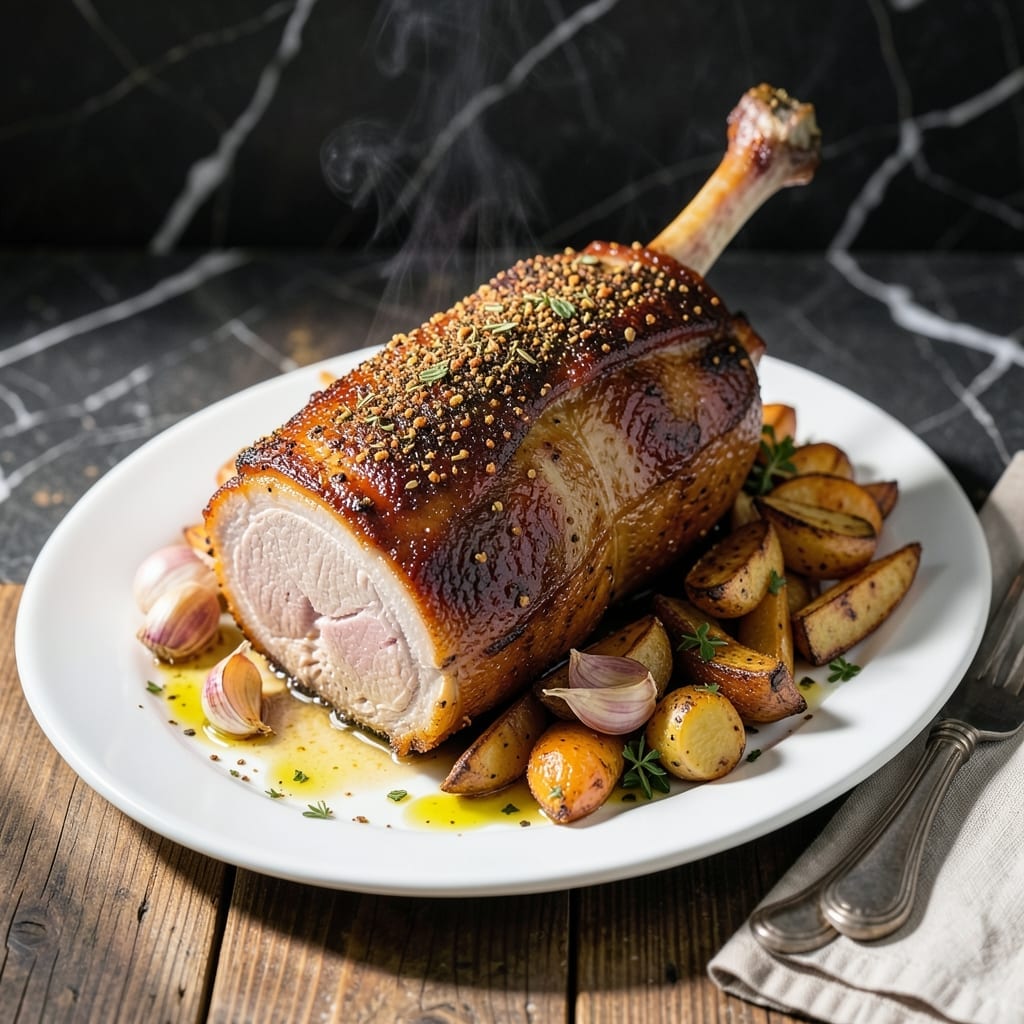
This oven-roasted pork shoulder transforms tough cuts into fall-apart tender perfection through low, slow cooking. The bone-in version stays juicier and more flavorful than boneless.
With just a few seasonings and 4-5 hours in the oven, you’ll achieve restaurant-quality results with minimal effort. The meat practically shreds itself when done.
Ingredients for Bone-in Pork Shoulder Roast Recipe Oven
A handful of bold seasonings and one incredible cut of pork. That is all.
| Ingredient | Amount | Notes |
|---|---|---|
| Bone-In Pork Shoulder 🥩 | 4 lb | Boston butt cut, skin-on preferred |
| Kosher Salt 🧂 | 2 tbsp | Diamond Crystal preferred for texture |
| Black Pepper 🌶️ | 1 tbsp | Freshly cracked for best aroma |
| Garlic Cloves 🧄 | 6 cloves | Smashed, skin left on |
| Dried Oregano 🌿 | 1 tbsp | Mediterranean variety if available |
| Ground Cumin 🌿 | 1 tsp | Toasted whole seeds if possible |
| Smoked Paprika 🌶️ | 1 tbsp | Sweet or hot variety works |
| Olive Oil 🫒 | 2 tbsp | Extra-virgin for richness |
| Yellow Onion 🧅 | 1 whole | Large, quartered with skin |
| Carrots 🥕 | 3 whole | Cut into large chunks |
| Celery Stalks 🥬 | 3 whole | Cut into 2-inch pieces |
| Chicken Stock 🍲 | 1 cup | Low-sodium preferred |
| Apple Cider Vinegar 🍏 | 2 tbsp | Balances richness of pork |
| Brown Sugar 🍚 | 2 tbsp | Light or dark both work |
The pork shoulder is everything here. Bone-in Boston butt (about 4 pounds) gives you that melt-in-your-mouth texture—boneless just doesn’t compare. Look for good marbling and a thick fat cap. Costco has great prices on large cuts, but your local butcher can portion it perfectly. If you see skin-on, grab it (crispy crackling is a bonus). Don’t trim the fat—it bastes the meat as it roasts.
Out of smoked paprika? Regular paprika plus a pinch of cayenne gets close. No fresh garlic? Garlic powder at one-third the amount works in a pinch. Chicken stock can be swapped for vegetable stock (or water with a bouillon cube). The vinegar adds brightness—white wine vinegar or lemon juice are fine substitutes. Brown sugar can be honey or maple syrup (just reduce liquid slightly).
This actually gets better overnight. Store in the fridge for up to 4 days—the fat solidifies, making it easy to skim off. Freezes beautifully for 3 months. Reheat gently in the oven with a splash of water to keep it juicy. Leftovers make killer tacos (trust me on this).
Why You’ll Love This Recipe
- Set and Forget: It just needs salt, pepper, garlic, and oregano before going into the oven—no babysitting required.
- Crispy and Tender: The bone-in cut roasts up with a caramelized crust while staying juicy inside.
- Feeds the Crew: I make this for Sunday dinner and there’s always enough for tacos the next day.
- Budget Hero: A pork shoulder stretches farther than pricier cuts, and the leftovers freeze beautifully.
Step-by-Step Instructions for Bone-In Pork Shoulder Roast
Here’s the method I use for fall-apart tender pork every time.
Step 1: Season and Sear the Pork Shoulder
Pat the 4 lb Bone-In Pork Shoulder dry with paper towels—this ensures a proper sear. Rub it all over with the 2 tbsp Olive Oil, then coat evenly with the 2 tbsp Kosher Salt, 1 tbsp Black Pepper, 1 tbsp Dried Oregano, 1 tsp Ground Cumin, and 1 tbsp Smoked Paprika.
Let it sit at room temperature for 30 minutes while you preheat the oven to 300°F. This resting period allows the salt to penetrate the meat, enhancing flavor throughout. Meanwhile, heat a Dutch oven over medium-high heat and sear the pork on all sides until deep golden brown.
You’ll know it’s ready to flip when it releases easily from the pot. This searing step builds a flavorful crust and locks in juices. Don’t rush—it should take 3-4 minutes per side.
Step 2: Build the Aromatic Base
Once the pork is seared, remove it and set aside. In the same pot, add the 1 whole Yellow Onion (quartered with skin on), 3 whole Carrots (cut into large chunks), and 3 whole Celery Stalks (cut into 2-inch pieces).
Cook for 5 minutes until the vegetables start to soften and brown slightly. The skin on the onion adds depth to the broth, so leave it on. Add the 6 cloves Garlic Cloves (smashed, skin left on) and cook for 1 minute just until fragrant.
These vegetables will infuse the cooking liquid with rich, savory flavor as the pork slow-roasts. The garlic cloves will mellow into sweetness during the long cook.
Step 3: Deglaze and Begin Slow Roasting
Pour in the 2 tbsp Apple Cider Vinegar and scrape up all the browned bits from the bottom of the pot. This deglazing step captures all the concentrated pork flavor that’s stuck to the pan.
Add the 1 cup Chicken Stock and 2 tbsp Brown Sugar, stirring to dissolve the sugar. Return the pork to the pot, spooning some of the liquid over the top. The liquid should come about halfway up the pork—this creates a braising effect as it roasts.
The brown sugar adds a subtle caramel note that balances the smokiness of the paprika. Cover the pot tightly with a lid and transfer it to the preheated oven.
Step 4: Slow Roast to Tenderness
Roast covered for 3 hours, then uncover and roast for another 1-2 hours. The pork is done when it reaches an internal temperature of 195-205°F and a fork slides in with no resistance.
You’ll know it’s ready when the meat starts to pull away from the bone and shreds easily with a fork. The uncovered time at the end allows the top to develop a beautiful, sticky glaze from the reduced cooking liquid.
Baste the pork with the pan juices every 30-45 minutes during the uncovered roasting time. This keeps it moist and builds layers of flavor.
Step 5: Rest and Shred
Carefully transfer the pork to a cutting board and tent loosely with foil. Let it rest for 20-30 minutes—this allows the juices to redistribute throughout the meat, ensuring every bite is moist and flavorful.
Discard the bone and shred the pork using two forks. It should come apart with almost no effort. Skim any excess fat from the cooking liquid if desired, then toss the shredded pork with some of the juices to keep it moist.
The vegetables will have softened into the cooking liquid, creating a rich, flavorful sauce that pairs perfectly with the tender pork. Serve immediately with your favorite sides.
Pro Tips For Making Bone-In Pork Shoulder Roast Recipe Oven
- Dry the Skin: Pat the pork shoulder thoroughly dry with paper towels before seasoning—this guarantees a better crust and helps the salt and spices stick where they belong.
- Start Hot, Finish Low: Sear the roast at 450°F for 20-30 minutes, then drop the oven to 300°F for the remaining time. This gives you that deep brown exterior without drying out the meat.
- Score the Fat: Use a sharp knife to cut 1/4-inch deep slits in the fat cap before seasoning. I learned this the hard way—it lets the garlic and oregano penetrate deeper and renders the fat more evenly.
- Rest Before Carving: Let the roast rest under foil for at least 20 minutes after pulling it from the oven. Sounds tedious, but it keeps all those juices inside the meat instead of on your cutting board.
Perfect Pairings for bone-in pork shoulder roast recipe oven
Side Dish Stars
I love serving this with creamy coleslaw—the cool crunch balances the richness. Toss 4 cups shredded cabbage with ½ cup mayo and 2 tbsp apple cider vinegar for tang. 🥗
Starch Pairings
Garlic mashed potatoes soak up the juices beautifully. Boil 2 lbs Yukon Golds until tender, then mash with ½ cup warm milk and 4 roasted garlic cloves. Buttered cornbread works too for a Southern touch.
Vegetable Sides
Roasted Brussels sprouts add a caramelized contrast. Toss 1 lb halved sprouts with 2 tbsp olive oil and 1 tsp smoked paprika, then roast at 400°F for 25 minutes. Green beans with slivered almonds are another simple favorite.
Beverage Matches
A dry hard cider like Angry Orchard Crisp Apple cuts through the fat with its acidity. For beer, try a brown ale such as Newcastle—its malty sweetness complements the pork. 🍺
Wine Pairings
Zinfandel is my go-to red here, with its jammy fruit and pepper notes. For white, Viognier offers floral aromas and enough body to stand up to the dish. Both work beautifully with the smoky-sweet flavor profile.
Finishing Touches
Pickled red onions add a bright, tangy bite that cuts through the richness. Quick-pickle 1 onion in ½ cup vinegar and 1 tbsp sugar for 30 minutes. Fresh cilantro brings a herbaceous note to the plate. 💛
Frequently Asked Questions
What’s the ideal oven temperature?
Slow and steady wins the race. Keep your oven at 300°F for the first 3 hours covered, then finish uncovered. This low temp breaks down collagen without drying the meat out.
How do I know when it’s done?
Use a meat thermometer—pork is perfect at 195-205°F internally. The bone should pull out cleanly, and the meat will shred with a fork. Don’t rely on color alone, as pork can look done before it’s truly tender.
Can I cook it faster at a higher temperature?
Not recommended. Higher heat can make the outside dry before the inside cooks through. Stick to 300°F for that melt-in-your-mouth texture. Patience pays off with pork shoulder!
What if my pork isn’t shredding easily?
It likely needs more time. Return it to the oven, covered, with a splash of liquid. Check every 30 minutes until it reaches 200°F internally. The collagen needs time to break down completely.
Nutrition Facts

- BBQ Sausage Recipe Oven: Smoky Depth Without the Grill - September 28, 2026
- BBQ Chicken Bowl Recipe Rice: Smoky Sweetness Over Fluffy Grains - September 28, 2026
- Beef Cutlet Recipe Ideas: Crispy Breaded Patties With Bold Seasonings - September 28, 2026