
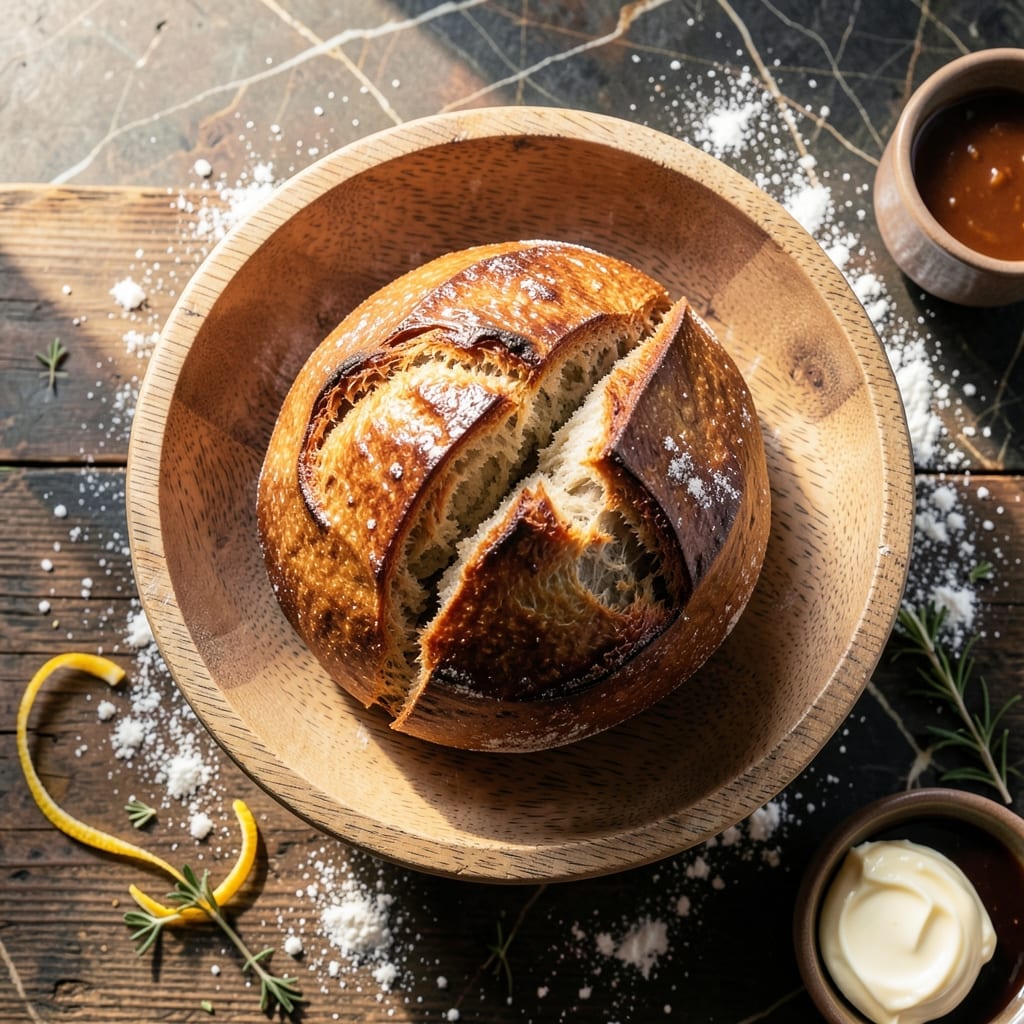
There’s nothing quite like the satisfaction of pulling a homemade loaf from your own oven, its crust crackling as it cools.
This recipe delivers a perfect balance of soft interior and artisan crust, using simple ingredients and proven techniques anyone can master.
Ingredients for Bread Recipe for Bread
Ten ingredients transform into crusty, golden homemade bread with that perfect artisan texture.
| Ingredient | Amount | Notes |
|---|---|---|
| Bread Flour 🌾 | 4 cups | High-protein for structure |
| Active Dry Yeast 🍞 | 2 ¼ tsp | One packet, proofed |
| Warm Water 💧 | 1 ¼ cups | 110-115°F for activation |
| Granulated Sugar 🍚 | 1 tbsp | Feeds the yeast |
| Kosher Salt 🧂 | 2 tsp | Diamond Crystal preferred |
| Unsalted Butter 🧈 | 2 tbsp | Softened for dough |
| Olive Oil 🫒 | 1 tbsp | For bowl coating |
| Honey 🍯 | 1 tbsp | For golden crust glaze |
| Cornmeal 🌽 | 2 tbsp | For dusting baking surface |
| Vital Wheat Gluten 🌾 | 1 tbsp | Enhances chewiness |
The flour is critical here. King Arthur Bread Flour is the gold standard for home bakers—consistent protein content ensures that open crumb structure. Yeast freshness matters too; check the expiration date and store unopened packets in the freezer. For the butter, Plugrá or European-style gives superior flavor, but any unsalted variety works. The water temperature is non-negotiable: use a thermometer to hit 110-115°F precisely.
No bread flour? All-purpose flour plus 1 tbsp vital wheat gluten per cup gets you close. Out of honey? Maple syrup or agave work for the glaze. Active dry yeast can be swapped for instant yeast at the same quantity—just skip the proofing step. The cornmeal prevents sticking, but semolina or extra flour work in a pinch. For a lighter loaf, reduce the butter to 1 tbsp.
Store yeast in the freezer for up to 1 year. Dough can be refrigerated overnight for slower fermentation (better flavor development). Baked loaves stay fresh for 2-3 days in a paper bag, or freeze for 1 month wrapped tightly in plastic and foil.
Why You’ll Love This Recipe
- Minimal Effort: I just mix flour, yeast, water, sugar, and salt—no fancy steps, no stress.
- Warm, Toasty Flavor: The yeast and sugar work magic, giving it that classic, home-baked taste.
- Endless Uses: It’s my sandwich base, toast star, or even a quick garlic bread fix.
- Budget Stretch: Honestly, a loaf costs pennies compared to store-bought, and it’s way fresher.
Step-by-Step Instructions for Homemade Artisan Bread
Here’s the tested method for achieving a bakery-quality loaf with a crisp crust and open crumb structure.
Step 1: Activate the Yeast and Prepare the Dough
In a stand mixer bowl, whisk together the 1.25 cups Warm Water, 1 tbsp Granulated Sugar, and 2.25 tsp Active Dry Yeast. Let this mixture sit for 5-7 minutes until it becomes frothy and cloudy—this visual confirmation means the yeast is active and ready.
Add the 4 cups Bread Flour, 2 tsp Kosher Salt, 2 tbsp Unsalted Butter, and 1 tbsp Vital Wheat Gluten. The vital wheat gluten enhances the dough’s elasticity and chewiness. Using the dough hook attachment, mix on low speed until all ingredients are incorporated, then increase to medium for 8-10 minutes until the dough is smooth and pulls away from the bowl.
Step 2: First Rise and Dough Development
Lightly coat a large bowl with the 1 tbsp Olive Oil. Transfer the dough to this bowl, turning once to coat the surface. Cover with a damp kitchen towel and let rise in a warm, draft-free location for 1 to 1.5 hours, or until doubled in volume.
This first rise, or bulk fermentation, allows the yeast to develop flavor and the gluten to relax. You’ll know it’s ready when the dough springs back slowly when poked with a finger, leaving a slight indent. Resist the urge to rush this step—proper fermentation is key to an open, airy crumb.
Step 3: Shape and Final Proof
Turn the risen dough onto a lightly floured surface and gently deflate it. Shape the dough into a round loaf by folding the edges toward the center, creating surface tension. This tension helps the loaf maintain its shape during the final rise.
Sprinkle 1 tbsp Cornmeal on a baking sheet to prevent sticking and add texture. Place the shaped dough on the cornmeal and cover loosely with the damp towel. Let it proof for 45-60 minutes until it has risen by about half and holds an indent when gently pressed.
Step 4: Bake to Perfection
Preheat your oven to 425°F with a baking stone or inverted baking sheet inside. Just before baking, use a sharp knife to score the top of the loaf in a decorative pattern. This scoring controls the loaf’s expansion and prevents cracking.
Bake for 25-30 minutes until the loaf is deep golden brown and sounds hollow when tapped on the bottom. For an extra crisp crust, brush the top with 1 tbsp Honey diluted with a teaspoon of water during the last 5 minutes of baking. The honey glaze adds a beautiful sheen and subtle sweetness.
Step 5: Cool and Serve
Transfer the baked loaf to a wire rack and let it cool completely for at least 1 hour before slicing. I know the aroma is tempting, but cooling allows the crumb structure to set properly. Slicing too early can result in a gummy texture.
Once cooled, your loaf should have a crisp, artisan-style crust with a soft, open interior. The cornmeal on the bottom adds a pleasant texture contrast. Serve slices warm with butter or use for sandwiches. Store any leftovers in an airtight container at room temperature for up to 3 days, or freeze for longer storage.
Pro Tips For Making Bread Recipe For Bread
- Check Water Temperature: Use a thermometer to hit 105-110°F—any hotter kills the yeast, any cooler slows the rise. I learned this the hard way after killing three batches with water straight from the tap.
- Knead Until Smooth: Work the dough for 8-10 minutes until it’s silky and elastic—under-kneading gives you dense, tough bread. My grandmother swore by this, and she was right.
- Skip Old Yeast: Test your yeast in warm water with sugar first—if it doesn’t foam in 5 minutes, toss it. Sounds weird, but it works: stale yeast is the #1 reason bread doesn’t rise.
- Use Bread Flour: Resist the urge to substitute all-purpose—bread flour’s higher protein content actually changes the outcome, giving you that chewy, bakery-style texture.
Creative Variations of bread recipe for bread
Herb-Infused Focaccia
Transform this base recipe into Italian-style focaccia by adding 2 tbsp fresh rosemary and 1 tbsp fresh thyme to the dough. Press the dough into a 9×13-inch pan and create dimples with your fingertips. Drizzle generously with olive oil before baking. 🌿
Whole Wheat Option
Replace 1 cup bread flour with 1 cup whole wheat flour for a nuttier, heartier loaf. Add 1 extra tbsp vital wheat gluten to maintain structure. The dough may need 1-2 tbsp additional water as whole wheat absorbs more liquid.
Sweet Cinnamon Loaf
Add 1 tbsp ground cinnamon and ¼ cup raisins to the dough for a sweet breakfast bread. After shaping, brush the top with melted butter and sprinkle with cinnamon sugar. Bake as directed for a fragrant, lightly spiced variation.
Cheesy Garlic Bread
Mix ½ cup shredded cheddar and 2 minced garlic cloves into the dough. Before baking, top with additional cheese and a sprinkle of dried oregano. The result is a savory, pull-apart loaf perfect for sharing. 🧀
Sourdough Conversion
Replace the yeast and water with 1 cup active sourdough starter. Reduce the flour to 3 cups to account for the starter’s hydration. The fermentation time will be longer—4-6 hours for the first rise—creating that signature tangy flavor.
Multigrain Variation
Add ¼ cup mixed seeds (sunflower, flax, sesame) and ¼ cup rolled oats to the dough. The seeds add crunch and nutrition while maintaining the soft interior. Let the dough rest for 10 minutes after mixing to hydrate the grains.
Frequently Asked Questions
Can I use all-purpose flour instead?
Yes, but add 1 tbsp vital wheat gluten per cup to match bread flour’s protein. This ensures proper structure and chewiness. Without it, your loaf may be denser.
Why did my bread come out dense?
Underproofing or old yeast are common causes. Make sure your yeast is fresh and give the dough enough time to double during rises. Patience is key for a light, airy texture.
How do I get a crispier crust?
Bake on a preheated baking stone or add 1 tbsp honey glaze in the last 5 minutes. Also, ensure your oven is fully preheated to 425°F before baking.
Can I make this without a stand mixer?
Knead by hand for 10-12 minutes until smooth. The dough will be sticky at first—use a bench scraper to help. The results are just as good.
Nutrition Facts

- BBQ Sausage Recipe Oven: Smoky Depth Without the Grill - September 28, 2026
- BBQ Chicken Bowl Recipe Rice: Smoky Sweetness Over Fluffy Grains - September 28, 2026
- Beef Cutlet Recipe Ideas: Crispy Breaded Patties With Bold Seasonings - September 28, 2026