
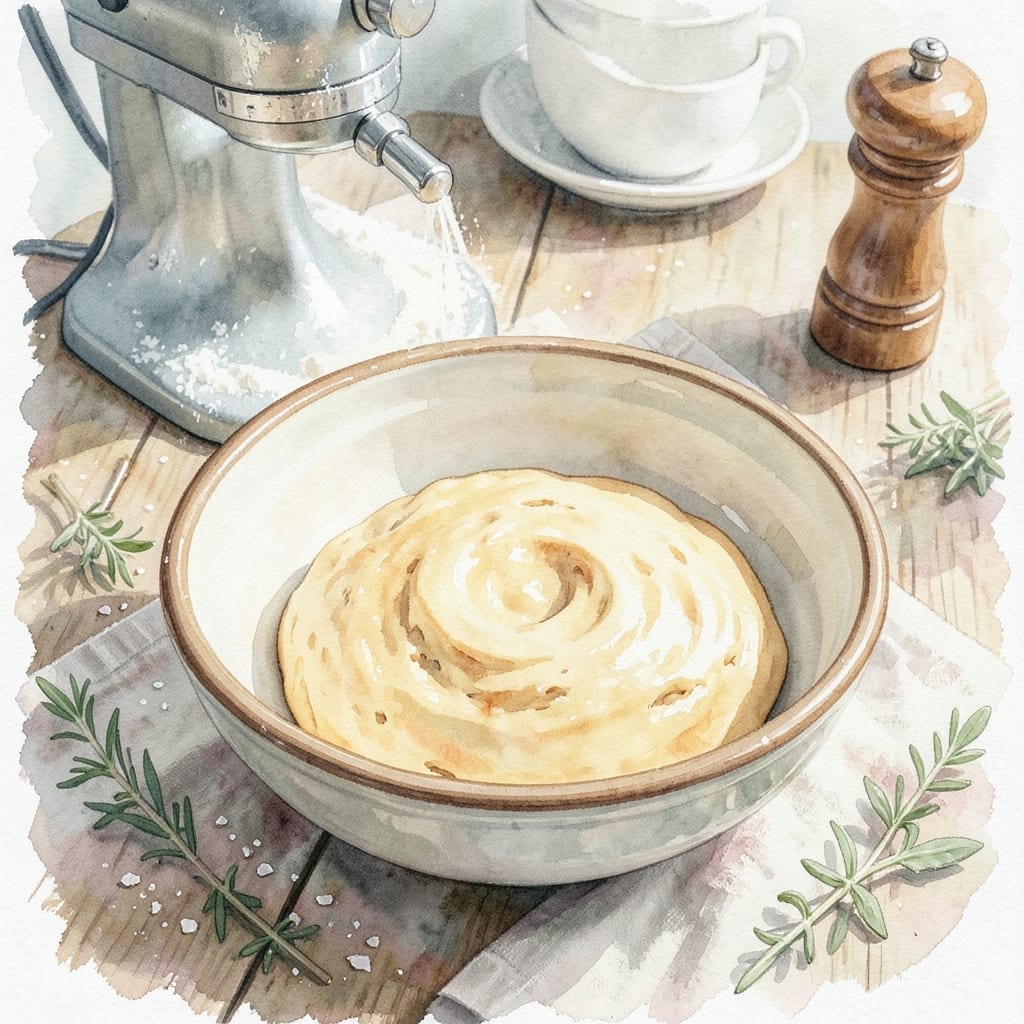
There’s nothing like the aroma of fresh-baked bread filling your kitchen, and this mixer method makes it effortlessly achievable.
Using a stand mixer handles the kneading for you, ensuring consistent texture without the manual work. The dough comes together in minutes, then proofs into a light, airy loaf ready for baking.
You’ll end up with a golden crust and soft, tender interior—homemade quality without the traditional effort. The process is streamlined but delivers authentic results.
Perfect for sandwiches, toast, or serving warm with butter. Let’s begin.
Ingredients for Bread Recipe with Mixer
Pantry staples plus a stand mixer turn into warm, fresh bread in no time.
| Ingredient | Amount | Notes |
|---|---|---|
| Bread Flour 🌾 | 4 cups | Plus extra for dusting |
| Active Dry Yeast 🍞 | 2 ¼ tsp | One packet, proofed in warm water |
| Warm Water 💧 | 1 ¼ cups | 110-115°F for yeast activation |
| Granulated Sugar 🍚 | 1 tbsp | Feeds the yeast for rise |
| Salt 🧂 | 2 tsp | Fine sea salt preferred |
| Unsalted Butter 🧈 | 2 tbsp | Softened, for tender crumb |
| Olive Oil 🫒 | 1 tbsp | For bowl greasing |
| Whole Milk 🥛 | ¼ cup | Warmed, for richness |
| Honey 🍯 | 1 tbsp | Optional, for subtle sweetness |
| Large Egg 🥚 | 1 whole | Room temperature, for structure |
| Cornmeal 🌽 | 1 tbsp | For dusting baking sheet |
The flour is the foundation here. King Arthur Bread Flour is my go-to—high protein content means better gluten development (that’s what gives you that chewy interior). Yeast is yeast, but check the expiration date—old yeast won’t proof properly. Warm the water to about 110°F (use a thermometer if you’re unsure). The sugar and honey feed the yeast, so don’t skip them even if you prefer less sweet bread.
No bread flour? All-purpose works in a pinch, but add an extra tablespoon of vital wheat gluten per cup. Out of milk? Warm water plus a tablespoon of butter gets you close. The egg adds richness but can be skipped if needed—just expect a slightly denser loaf. For a vegan version, swap honey for maple syrup and butter for olive oil.
Store yeast in the freezer to extend its life. The dough can proof overnight in the fridge for deeper flavor. Baked loaves keep 3-4 days at room temperature, wrapped in foil. Slice and freeze extras for up to 3 months.
Why You’ll Love This Recipe
- Hands-Off Kneading: The mixer does all the work—just toss in the flour, yeast, sugar, and salt, then walk away.
- Warm, Yeasty Perfection: That first bite with its soft crumb and slightly crisp crust? Worth every second of the rise time.
- Sandwich Savior: I make two loaves on Sunday and we’re set for lunches all week—no sad store-bought slices here.
- Penny-Wise Loaf: A bag of bread flour and a packet of yeast cost less than a single artisanal loaf, and honestly, it tastes better.
Step-by-Step Instructions for Homemade Bread With Mixer
Here’s the method. Straightforward, tested, works every time.
Step 1: Activate the Yeast and Mix Wet Ingredients
In the bowl of your stand mixer, combine the 1.25 cups Warm Water, 1 tbsp Granulated Sugar, and 2.25 tsp Active Dry Yeast. Let it sit for 5-10 minutes until the mixture becomes frothy and the yeast is fully activated. You should see a foamy layer on top—that’s how you know the yeast is alive and ready to work.
Once the yeast is activated, add the 0.25 cup Whole Milk, 1 tbsp Honey, 2 tbsp Unsalted Butter, and 1 whole Large Egg. Mix on low speed using the paddle attachment until all the wet ingredients are well combined. The butter should be softened but not melted to maintain the right texture.
Step 2: Incorporate Dry Ingredients and Knead
Switch the mixer to the dough hook attachment. Gradually add the 4 cups Bread Flour and 2 tsp Salt to the wet mixture, about 1 cup at a time, allowing each addition to fully incorporate before adding more. This prevents flour from flying everywhere and ensures even mixing.
Once all the flour is added, increase the speed to medium and knead for 6-8 minutes. The dough should pull away from the sides of the bowl and form a smooth, elastic ball. If it feels too sticky, add a bit more bread flour, 1 tablespoon at a time. If it’s too dry, add a splash of warm water. You’re aiming for dough that’s tacky but not sticky.
Step 3: First Rise Until Doubled in Size
Lightly grease a large bowl with the 1 tbsp Olive Oil. Transfer the dough to the bowl, turning it once to coat all sides with the oil. Cover the bowl with a clean kitchen towel or plastic wrap and place it in a warm, draft-free spot. I like to turn on my oven light and place the bowl inside for a consistent environment.
Let the dough rise for 1-2 hours, or until it has doubled in size. You can test this by gently pressing two fingers into the dough—if the indentations remain, it’s ready. This rise allows the yeast to ferment the sugars, developing the bread’s flavor and texture.
Step 4: Shape, Second Rise, and Bake
Punch down the risen dough to release the air, then turn it out onto a lightly floured surface. Shape the dough into a loaf by flattening it into a rectangle and rolling it up tightly from the short end, pinching the seams and ends to seal. Place the loaf seam-side down on a baking sheet dusted with the 1 tbsp Cornmeal to prevent sticking and add a slight crunch.
Cover the loaf loosely with the kitchen towel and let it rise again for 30-45 minutes, or until it has puffed up noticeably. Preheat your oven to 375°F during the last 15 minutes of rising. Bake the loaf for 25-30 minutes until it’s golden brown and sounds hollow when tapped on the bottom. If the top browns too quickly, tent it with foil.
Step 5: Cool and Enjoy
Remove the bread from the oven and let it cool on a wire rack for at least 20 minutes before slicing. I know the smell is irresistible, but cooling allows the crumb structure to set properly. If you slice too soon, the bread can be gummy.
Once cooled, slice with a sharp serrated knife for clean cuts. Serve warm with butter or enjoy as sandwich bread. Store any leftovers in an airtight container at room temperature for up to 3 days, or freeze for longer storage.
Pro Tips For Making Bread Recipe With Mixer
- Test the Yeast: I learned this the hard way—always proof your active dry yeast in the warm water with a pinch of sugar first. If it doesn’t foam within 5-10 minutes, your bread won’t rise, no matter how long you wait.
- Use Bread Flour: Skip the all-purpose and stick with bread flour—its higher protein content gives you that chewy, bakery-style texture. The difference is night and day.
- Don’t Overmix: Once the dough pulls away from the bowl, stop the mixer. Overworking it develops too much gluten, and you’ll end up with a dense, tough loaf.
- Warm the Bowl: Sounds weird, but it works: rinse your mixing bowl with warm water before adding ingredients. It keeps the yeast active and helps the dough rise more evenly.
Flavor Customization for This bread recipe with mixer
Sweet Additions
For a subtly sweeter loaf, increase the honey to 2 tbsp or swap it for maple syrup. I love adding ½ cup raisins or dried cranberries soaked in warm water for 10 minutes before mixing. These fruits plump up beautifully during baking. 💛
Savory Twists
Mix in ½ cup shredded cheddar and 2 tbsp chopped fresh rosemary for a cheesy herb bread. Or try ¼ cup grated Parmesan and 1 tsp garlic powder for a garlic-Parmesan loaf. The cheese melts into pockets of gooey goodness.
Whole Grain Boost
Replace 1 cup bread flour with whole wheat flour for a nuttier flavor and extra fiber. I also like adding 2 tbsp flaxseeds or sunflower seeds for crunch. The dough may need 1-2 tbsp extra water to compensate for the drier flour.
Spiced Variations
Add 1 tsp cinnamon and ½ tsp nutmeg to the dry ingredients for a warm, aromatic loaf. Or go bold with 1 tsp Italian seasoning and ½ tsp red pepper flakes for a kick. These spices pair wonderfully with butter. ✨
Citrus Zing
Stir in 1 tbsp lemon zest or orange zest for a bright, fresh flavor. I often combine this with ½ cup chopped walnuts for texture. The citrus oils perfume the bread beautifully, making it perfect for breakfast toast.
Seeded Delight
Roll the shaped loaf in a mix of 2 tbsp sesame seeds, poppy seeds, or everything bagel seasoning before the second rise. Press the seeds lightly into the dough so they stick. This adds visual appeal and a delightful crunch to every bite.
Nutrition Facts
Frequently Asked Questions
What mixer speed should I use for kneading?
Start on low to combine ingredients, then switch to medium speed with the dough hook for kneading. Knead for 6-8 minutes until smooth and elastic.
Can I use all-purpose flour instead of bread flour?
Yes, but add 1 tbsp vital wheat gluten per cup of all-purpose flour to boost protein content. The texture will be slightly less chewy.
Why isn’t my dough rising?
Check your yeast expiration date and water temperature (110-115°F). Also ensure the bowl is in a warm, draft-free spot. Old yeast or cold temps often cause this.
How do I know when the bread is fully baked?
The loaf should be golden brown and sound hollow when tapped on the bottom. An internal temperature of 190-200°F confirms it’s done.

- BBQ Sausage Recipe Oven: Smoky Depth Without the Grill - September 28, 2026
- BBQ Chicken Bowl Recipe Rice: Smoky Sweetness Over Fluffy Grains - September 28, 2026
- Beef Cutlet Recipe Ideas: Crispy Breaded Patties With Bold Seasonings - September 28, 2026