
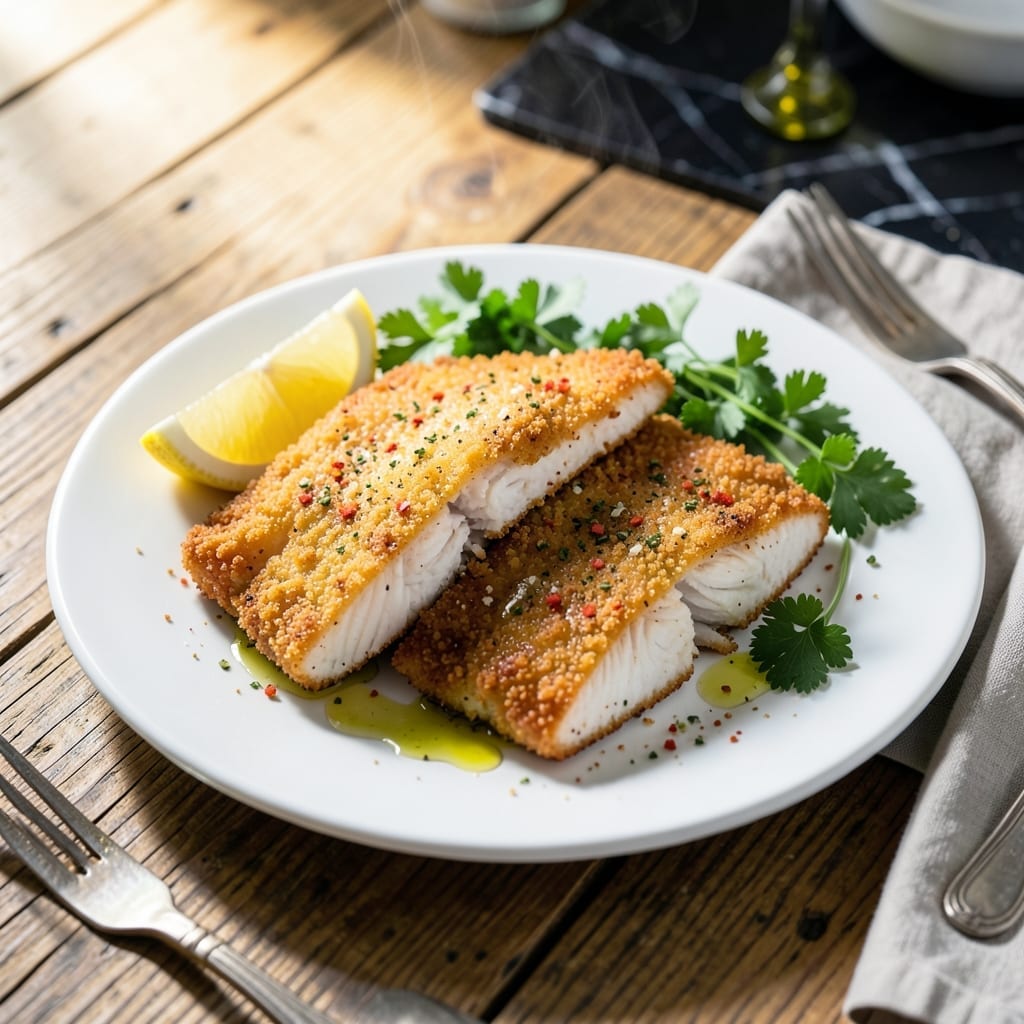
This breaded fish delivers a golden crunch with every bite, proving that homemade can outshine any restaurant version. The secret lies in a simple but precise breading technique that guarantees crispy results.
I’ve refined this method to ensure the coating stays put during cooking, creating a perfect seal that locks in moisture. The fish emerges tender inside with a shatteringly crisp exterior that’s impossible to resist.
Whether you choose to bake or fry, the result is the same: beautifully breaded fish with a texture that’s both delicate and satisfying. The process takes less than 30 minutes from start to finish.
Serve with lemon wedges and your favorite dipping sauce for a meal that’s both impressive and approachable. This technique works with any white fish fillet.
Ingredients for Breaded Fish!
Golden, crispy perfection starts with these carefully chosen ingredients for your fish.
| Ingredient | Amount | Notes |
|---|---|---|
| White Fish Fillets 🐟 | 1 ½ lb | Cod, haddock, or tilapia work well |
| All-Purpose Flour 🌾 | 1 cup | For initial dredging coat |
| Large Eggs 🥚 | 2 whole | Beaten for egg wash |
| Panko Breadcrumbs 🍞 | 2 cups | Japanese-style for extra crunch |
| Cornstarch 🌾 | 2 tbsp | Mixed with flour for crispiness |
| Old Bay Seasoning 🌶️ | 1 tbsp | Classic seafood seasoning blend |
| Garlic Powder 🧄 | 1 tsp | Adds savory depth to coating |
| Paprika 🌶️ | 1 tsp | Sweet or smoked variety |
| Salt 🧂 | 1 tsp | Kosher or sea salt preferred |
| Black Pepper 🌶️ | ½ tsp | Freshly ground for best flavor |
| Vegetable Oil 🫒 | ½ cup | For frying or baking |
| Lemon Wedges 🍋 | 4 pieces | For serving and brightness |
| Tartar Sauce 🥣 | ½ cup | Store-bought or homemade |
The fish selection is critical. Cod or haddock offer the ideal firm yet flaky texture that holds up to breading. Fresh wild-caught fillets from Whole Foods or a trusted fishmonger ensure the best results. For budget-friendly options, frozen tilapia works well if thawed properly. Look for fillets of even thickness to ensure uniform cooking. The Panko breadcrumbs are non-negotiable—Kikkoman brand delivers consistent texture and crunch.
No Panko on hand? Crushed saltine crackers provide a similar crisp texture. Old Bay can be replaced with a mix of celery salt, paprika, and cayenne at equal parts. For a gluten-free version, swap all-purpose flour for rice flour. The cornstarch is key for extra crispiness, but arrowroot powder works in a pinch. Fresh herbs like dill or parsley can be added to the breading for an herby twist.
Breaded fish is best served immediately for peak crispiness. Leftovers keep in the fridge for 2-3 days but lose their crunch. To reheat, place on a wire rack in a 375°F oven for 10-12 minutes to restore some crispness. The fish can also be frozen before cooking—just add a few extra minutes to the cooking time.
Why You’ll Love This Recipe
- One Pan Wonder: I coat the fillets in flour, dip in egg, roll in panko, and bake—no splattering oil, no messy stovetop.
- That Crunch Though: The panko and cornstarch combo gives it a shatteringly crisp crust that stays crunchy even after a few minutes out of the oven.
- Kid-Tested Favorite: Even my picky nephew cleans his plate when I serve this with tartar sauce and lemon wedges.
- Leftovers? Still Great: Honestly, it reheats beautifully in the toaster oven—crispy outside, flaky inside, just like fresh.
Step-by-Step Instructions for Breaded Fish
This method ensures a perfectly crisp exterior with tender, flaky fish inside every time.
Step 1: Prepare and Season the Fish Fillets
Pat the 1.5 lb white fish fillets completely dry with paper towels. This critical step removes excess moisture that would prevent the coating from adhering properly. Any remaining dampness creates a barrier between the fish and the flour.
Season both sides of each fillet evenly with the 1 tsp salt, 0.5 tsp black pepper, 1 tsp garlic powder, and 1 tsp paprika. I find that using my hands ensures the most even distribution. The seasoning should form a visible, uniform layer on the fish surface.
Step 2: Create the Three-Station Breading Assembly
In a shallow dish, whisk together the 1 cup all-purpose flour and 2 tbsp cornstarch until thoroughly combined. The cornstarch enhances the crispiness of the final coating. In a second dish, beat the 2 whole large eggs until the yolks and whites are fully integrated.
In a third dish, combine the 2 cups panko breadcrumbs with the 1 tbsp Old Bay seasoning. Mix well to distribute the seasoning evenly throughout the breadcrumbs. The Old Bay adds that classic seafood flavor profile that complements the fish perfectly.
Step 3: Bread the Fish with Precise Technique
Working with one fillet at a time, dredge it in the flour-cornstarch mixture, pressing gently to ensure full coverage. Shake off any excess—you want a thin, even layer that adheres to the fish. The excess flour would create a gummy texture rather than crispiness.
Dip the floured fillet into the beaten eggs, allowing any excess to drip off for 5 seconds. Then immediately press it into the seasoned panko breadcrumbs, turning to coat all sides completely. The egg wash acts as the glue that binds the crumbs to the fish.
Place the breaded fillet on a wire rack set over a baking sheet. This setup allows air circulation on all sides, preventing the coating from becoming soggy as you finish breading the remaining fillets.
Step 4: Cook to Golden Perfection
Heat the 0.5 cup vegetable oil in a large, heavy skillet over medium-high heat until it shimmers—about 350-375°F. To test the temperature, drop in a pinch of panko; it should sizzle immediately and float to the surface.
Carefully place the breaded fillets in the hot oil, working in batches if necessary to avoid overcrowding. Cook for 3-4 minutes per side until the coating is deep golden brown and crisp. The fish is done when it flakes easily with a fork and reaches an internal temperature of 145°F.
Transfer the cooked fillets to a paper towel-lined plate to drain any excess oil. The paper towels absorb residual oil while maintaining the crisp texture of the breading.
Step 5: Serve Immediately with Classic Accompaniments
Arrange the fish on a serving platter while still hot. The contrast between the crisp exterior and tender interior is best experienced immediately after cooking. Serve with the 4 pieces lemon wedges on the side for a bright, citrusy accent.
Offer the 0.5 cup tartar sauce in a small bowl for dipping. The creamy, tangy sauce complements the crisp fish perfectly. I always recommend serving this dish with additional lemon wedges for those who prefer a squeeze of fresh citrus over their portion.
Pro Tips For Making Breaded Fish!
- Dry the Fillets: Pat the white fish fillets bone dry with paper towels before breading—any moisture makes the coating slide right off.
- Chill the Breaded Fish: After coating, let the fish rest in the fridge for 15 minutes so the panko sticks better and doesn’t flake off mid-fry.
- Double Coat for Crunch: Dip the fish in flour, egg, then panko twice for extra crunch—sounds tedious, but it’s the only way to get that restaurant-style crust.
- Skip Cold Oil: Heat your oil to 350°F before adding the fish, or the breading will absorb oil and turn soggy instead of crisp.
Regional Styles of These Flavors
New England Classic
In coastal New England, breaded fish often uses Ritz cracker crumbs instead of panko for a buttery, crisp texture. I love adding 1 tsp dried dill to the breading for that classic seafood shack flavor. The fish is typically fried in cl amyloid oil for a lighter taste. 🌊
Southern Cornmeal Twist
Down South, they swap panko for fine yellow cornmeal mixed with 1 tsp cayenne pepper for a spicy kick. The cornmeal creates an incredibly crisp crust that’s perfect with a cold beer. I often use catfish fillets for this version, which hold up beautifully to the bold seasoning.
British Beer Batter
Across the pond, they create a light beer batter by mixing 1 cup flour, 1 egg, and ½ cup lager beer. The carbonation in the beer makes the coating extra crispy. I find Bass Ale works particularly well for this method, giving the fish a subtle malty flavor.
Caribbean Coconut Crunch
For a tropical twist, replace panko with 1 cup shredded coconut mixed with ½ cup crushed macadamia nuts. The coconut adds sweetness that pairs perfectly with the fish. I like to add 1 tsp lime zest to the breading for a bright, citrusy note that complements the island vibe.
This version works especially well with mahi-mahi or snapper fillets. 💛
Nutrition Facts
Frequently Asked Questions
What’s the best fish for crispy breading?
Firm white fish like cod or haddock work best. Their sturdy texture holds up to breading without falling apart during cooking.
Can I bake instead of fry?
Yes! Bake at 400°F for 12-15 minutes on a wire rack. Spray lightly with oil first for extra crispiness. The result is lighter but still delicious.
Why does my breading fall off?
Pat the fish completely dry first and let each coating layer set for 1-2 minutes before adding the next. Rushing the process causes the breading to detach.
How do I keep it crispy for leftovers?
Reheat on a wire rack in a 375°F oven for 10-12 minutes. This allows air circulation to restore some crunch. Avoid microwaving, as it will make the coating soggy.

- BBQ Sausage Recipe Oven: Smoky Depth Without the Grill - September 28, 2026
- BBQ Chicken Bowl Recipe Rice: Smoky Sweetness Over Fluffy Grains - September 28, 2026
- Beef Cutlet Recipe Ideas: Crispy Breaded Patties With Bold Seasonings - September 28, 2026