
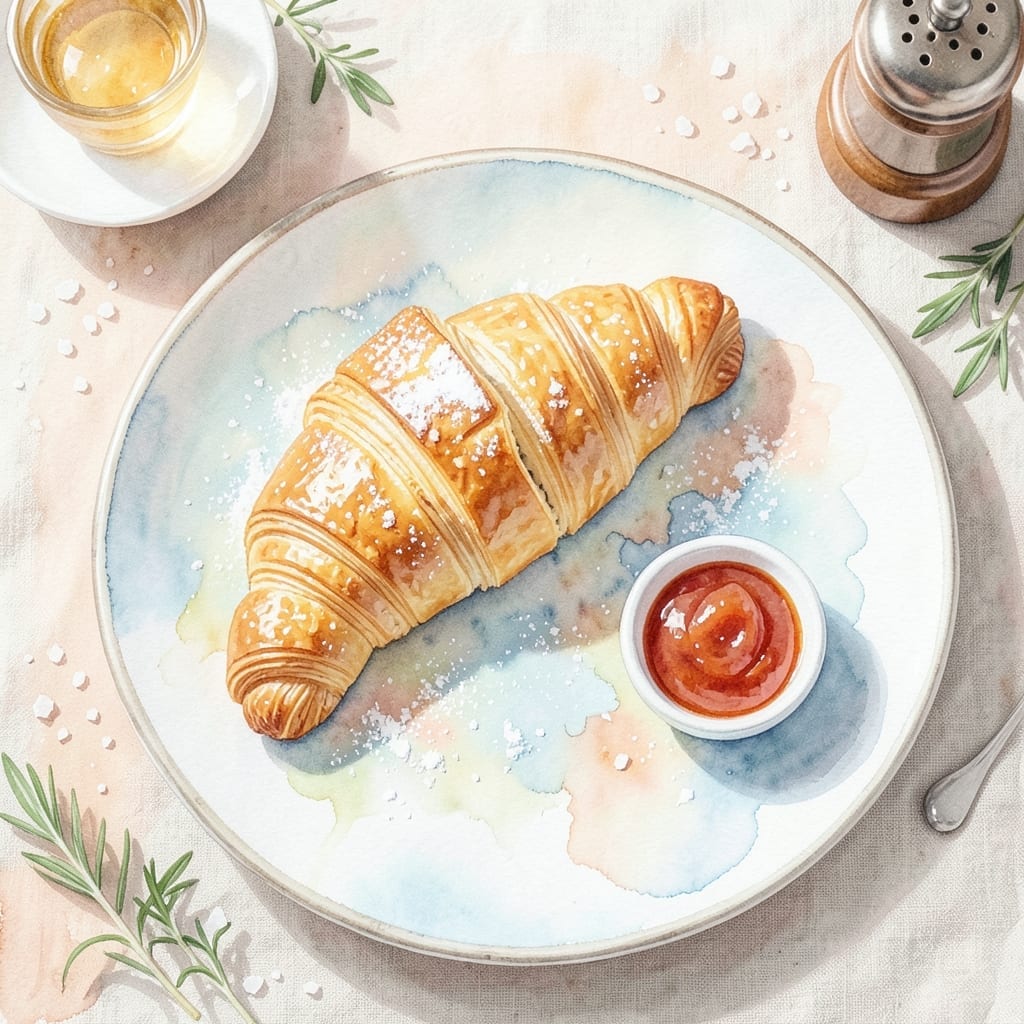
This recipe delivers flaky, buttery croissants with a delicate vanilla bean glaze that transforms them into a special breakfast treat. The process is streamlined for home cooks, ensuring impressive results without professional equipment.
What sets this version apart is the careful layering technique that creates those signature flaky layers, combined with a glaze that adds just the right amount of sweetness. The dough comes together with basic pantry ingredients, proving you don’t need fancy tools.
You’ll achieve golden, layered pastries with a tender crumb and a glossy vanilla glaze. The aroma alone makes these worth the effort, filling your kitchen with the scent of warm, buttery dough.
Perfect for weekend brunches or holiday mornings. Here’s how to make them.
Ingredients for Breakfast Croissant Recipe Sweet
Basic pantry staples and a few special touches create these golden, layered pastries with ease.
| Ingredient | Amount | Notes |
|---|---|---|
| All-Purpose Flour 🌾 | 4 cups | Plus extra for dusting |
| Granulated Sugar 🍚 | ¼ cup | Divided for dough and glaze |
| Active Dry Yeast 🍞 | 1 package | 2 1/4 tsp equivalent |
| Whole Milk 🥛 | 1 cup | Warm, about 110°F |
| Unsalted Butter 🧈 | 1 cup | Cold, cut into cubes |
| Kosher Salt 🧂 | 1 tsp | Diamond Crystal preferred |
| Vanilla Bean 🌿 | 1 whole | Split and scraped |
| Large Eggs 🥚 | 2 whole | For egg wash |
| Powdered Sugar 🍬 | 1 ½ cups | Sifted for smooth glaze |
| Heavy Cream 🥛 | ¼ cup | For glaze consistency |
| Pure Vanilla Extract 🍃 | 2 tsp | For enhanced vanilla flavor |
| Lemon Zest 🍋 | 1 tsp | Optional for brightness |
The butter defines the flakiness—use high-quality European-style if available, though standard unsalted works. King Arthur Flour is ideal for the dough’s structure. The vanilla bean is worth the splurge (look for plump, moist pods at specialty stores), but Nielsen-Massey extract is a solid backup. Milk should be whole for richness; avoid low-fat as it lacks the necessary fat content for proper layering.
No vanilla bean? Double the extract (use 1 tbsp total). Short on time? Store-bought puff pastry can substitute for the laminated dough—just roll and shape as directed. Heavy cream in the glaze can be swapped for whole milk, though the texture won’t be as glossy. The egg wash ensures a deep golden crust; skip it only if making vegan (use milk or cream instead).
Dough can be refrigerated overnight after layering—24 hours max. Baked croissants keep 2 days at room temperature in an airtight container, but they’re best fresh. Freeze shaped, unproofed croissants on a tray, then transfer to a bag for up to 1 month.
Why You’ll Love This Recipe
- One Bowl Wonder: I mix everything in a single bowl—flour, sugar, yeast, warm milk—and the dough comes together so effortlessly it feels like cheating.
- Buttery Layers: That first bite with the flaky butter and just-right sweetness from the sugar? I’ll admit I’ve eaten two before they cooled.
- Brunch Showstopper: I’ve served these at lazy Sunday brunches and rushed school mornings—honestly, they disappear either way.
- Makes Extras: The batch lasts us days, and they toast up even better the next morning. I’ll be real: that’s my favorite part.
Step-by-Step Instructions for Sweet Breakfast Croissants
Master the lamination technique for perfectly flaky layers with this professional method.
Step 1: Activate Yeast and Prepare Dough
In a stand mixer bowl, combine the 1 cup Whole Milk (warmed to 110°F) with the 0.25 cup Granulated Sugar and 1 package Active Dry Yeast. Let sit for 5-7 minutes until foamy—this confirms the yeast is active and ready to work.
Add 4 cups All-Purpose Flour and 1 tsp Kosher Salt to the yeast mixture. Using the dough hook, mix on low speed until combined, then increase to medium speed and knead for 5 minutes until smooth and elastic. The dough should pull away from the bowl but remain slightly tacky.
Incorporate the seeds from the 1 whole Vanilla Bean during the final minute of kneading. This infuses the dough with authentic vanilla flavor, creating a fragrant base for your croissants.
Step 2: Laminate with Cold Butter for Flaky Layers
Transfer the dough to a lightly floured surface and shape into a rectangle. Wrap in plastic and chill for 30 minutes. Meanwhile, arrange the 1 cup Unsalted Butter (cold, cut into cubes) between two sheets of parchment and pound into an 8×10-inch rectangle using a rolling pin.
Roll the chilled dough into a 12×16-inch rectangle. Place the butter rectangle in the center, fold the dough over it like an envelope, and seal the edges. This initial fold encapsulates the butter, which will create the flaky layers during baking.
Perform a single turn (book fold), then wrap and chill for another 30 minutes. Repeat this process two more times for a total of three turns. Each fold multiplies the layers, ensuring a shatteringly crisp texture.
Step 3: Shape and Proof the Croissants
After the final chill, roll the dough into a 12×20-inch rectangle and cut into 8 long triangles. Starting from the wide end, roll each triangle tightly toward the tip, bending the ends slightly to form the classic croissant crescent shape. Place on parchment-lined baking sheets.
Whisk 1 Large Egg with 1 tablespoon water and brush generously over the shaped croissants. This egg wash promotes a deep golden-brown color and glossy finish. Let the croissants proof at room temperature for 1.5-2 hours until puffed and doubled in size—they should jiggle slightly when gently shaken.
Step 4: Bake to Golden Perfection
Preheat your oven to 375°F. Bake the croissants for 18-22 minutes, rotating the pans halfway through, until they are deep golden brown and the layers are clearly visible. Avoid opening the oven during the first 15 minutes to prevent collapse.
The internal temperature should reach 190-200°F. Remove from the oven and let cool on a wire rack for 10 minutes before glazing—this prevents the glaze from melting off.
Step 5: Prepare and Apply Vanilla Bean Glaze
While the croissants cool, whisk together the 1.5 cups Powdered Sugar, 0.25 cup Heavy Cream, 2 tsp Pure Vanilla Extract, and 1 tsp Lemon Zest until smooth. The glaze should be thick but pourable—adjust with a few drops of cream if needed.
Drizzle the glaze over the warm croissants, allowing it to cascade down the flaky layers. Add the remaining 1 Large Egg to the glaze for extra richness if desired. Serve immediately while the layers are at their most crisp and the glaze is still slightly tacky.
Pro Tips For Making Breakfast Croissant Recipe Sweet
- Chill the Dough: After laminating, refrigerate the dough for at least 30 minutes between folds—this keeps the butter from melting into the flour and ruining those flaky layers.
- Use Cold Butter: Cut the unsalted butter into small cubes and chill until ice-cold before folding into the dough; warm butter will bleed into the layers and leave you with dense, flat croissants.
- Proof Properly: Let the shaped croissants rise in a warm (but not hot) spot until nearly doubled—rushing this step with too much heat can kill the yeast and collapse your dough.
- Brush with Milk: Before baking, brush the tops with whole milk for a golden, slightly sweet crust; it’s a simple step that beats egg wash for this breakfast version.
Make-Ahead Tips for This breakfast croissant recipe sweet
Overnight Dough Prep
After the final lamination turn, wrap your dough tightly in plastic wrap and refrigerate for up to 12 hours. This slow overnight chill relaxes the gluten, making the dough easier to shape in the morning. I always prep mine the night before weekend brunches.
Shape and Freeze
After shaping your croissants, place them on a parchment-lined tray and freeze for 1 hour until solid. Then transfer to a freezer bag with parchment between layers. They’ll keep for 1 month and can go straight from freezer to proofing when ready to bake.
Proofing Shortcut
For a faster rise, place your shaped croissants in a turned-off oven with a bowl of boiling water and a cracked door. This creates the perfect warm, humid environment for proofing in about 1 hour. Just watch them closely to prevent overproofing.
Glaze Ahead
Mix your vanilla bean glaze the night before and store it in an airtight container at room temperature. Stir in 1-2 tsp milk if it thickens overnight. This saves precious morning minutes while ensuring maximum flavor development. 💡
Reheating Baked Croissants
To revive day-old croissants, wrap them in aluminum foil and warm at 300°F for 8-10 minutes. For extra crispness, unwrap and bake for 2 more minutes. Always glaze fresh after reheating for the best texture.
Make-Ahead Assembly
Complete all steps through shaping, then refrigerate the tray of unproofed croissants overnight. In the morning, let them proof at room temperature for 2-2.5 hours before baking. This method yields the freshest possible results with minimal morning effort. ⏰
Nutrition Facts
Frequently Asked Questions
Can I use store-bought puff pastry instead of making dough from scratch?
Use 1 sheet of all-butter puff pastry, thawed, and skip straight to shaping. You’ll save 2 hours of prep time while still getting flaky layers.
How do I know when the croissants are fully proofed?
They’re ready when visibly puffed, nearly doubled in size, and jiggle slightly when gently shaken. This usually takes 1.5-2 hours at room temperature.
Can I make the glaze ahead of time?
Yes! Mix and store in an airtight container at room temperature for up to 2 days. Stir in 1-2 tsp milk if it thickens before using.
Why did my croissants spread too much while baking?
Overproofing or warm dough causes spreading. Chill shaped croissants for 15-20 minutes before proofing, and avoid letting them rise beyond 2x their size.

- BBQ Sausage Recipe Oven: Smoky Depth Without the Grill - September 28, 2026
- BBQ Chicken Bowl Recipe Rice: Smoky Sweetness Over Fluffy Grains - September 28, 2026
- Beef Cutlet Recipe Ideas: Crispy Breaded Patties With Bold Seasonings - September 28, 2026