
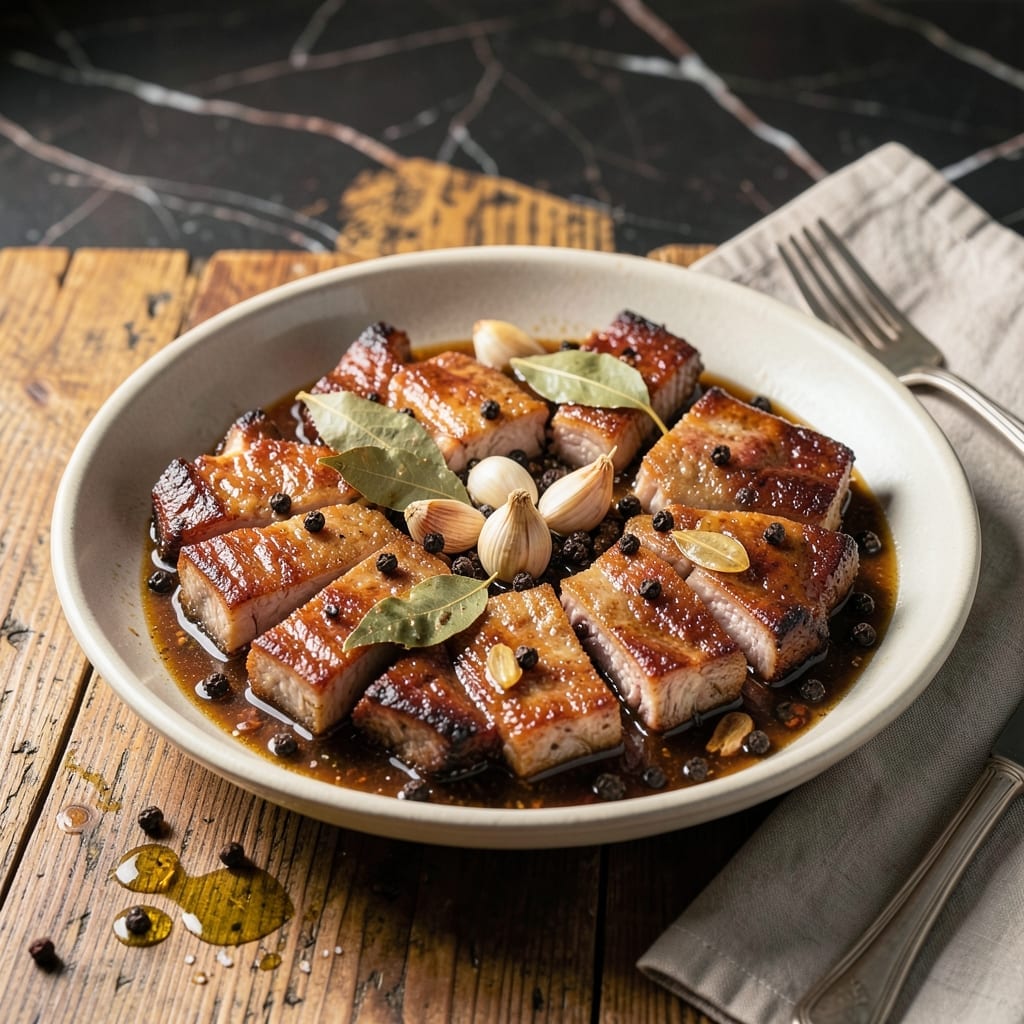
This brine transforms pork ribs from good to unforgettable. A simple soak in salt, sugar, and spices ensures juicy, flavorful meat that falls off the bone.
The process is straightforward but precise. With just a few hours of brining, you’ll achieve tender, well-seasoned ribs ready for grilling or smoking.
Ingredients for Brine Recipe for Pork Ribs
Short list of powerful ingredients transforms ribs from good to unforgettable.
| Ingredient | Amount | Notes |
|---|---|---|
| Pork Ribs 🥩 | 4 lb | Baby back or St. Louis style |
| Kosher Salt 🧂 | 1 cup | Diamond Crystal preferred |
| Brown Sugar 🍚 | ¾ cup | Light or dark variety |
| Black Peppercorns 🌶️ | 2 tbsp | Whole, for crushing |
| Bay Leaves 🍃 | 4 whole | Dried, for aroma |
| Garlic Cloves 🧄 | 6 cloves | Smashed, peeled |
| Juniper Berries 🌿 | 1 tbsp | Lightly crushed |
| Apple Cider Vinegar 🍏 | ½ cup | For acidity balance |
| Mustard Seeds 🟡 | 1 tbsp | Yellow or brown |
| Red Pepper Flakes 🔥 | 1 tsp | Adjust for heat preference |
| Fresh Thyme Sprigs 🌿 | 4 whole | Optional for depth |
| Water 💧 | 2 cups | Cold, enough to submerge ribs |
The salt is non-negotiable—Diamond Crystal kosher salt is my go-to for its clean flavor and consistent texture. Most grocery stores carry it (look for the red cylinder). For the ribs, baby back are more tender, but St. Louis style have better meat-to-bone ratio. I always ask the butcher to remove the membrane—saves you the hassle. The brown sugar adds caramelization, so don’t swap it for white (trust me, the molasses makes a difference).
No juniper berries? Gin at 1 tbsp works in a pinch (it’s made from them, after all). Out of apple cider vinegar? White vinegar plus 1 tsp sugar gets you close. Mustard seeds can be swapped for ground mustard at half the amount. The red pepper flakes are optional—skip if you’re serving a crowd with sensitive palates. Fresh thyme not available? Dried thyme at one-third the amount works fine.
Brine the ribs for 4-12 hours—any longer and the texture can get mushy. Store the raw ribs in the brine in the fridge the whole time. The brine itself keeps 1 week refrigerated if you want to make it ahead (great for chicken too). Discard the brine after use—it’s done its job.
Why You’ll Love This Recipe
- 5-Minute Mix: I just dump salt, sugar, and spices in water—no fancy steps, and the ribs soak up flavor while I do something else.
- Sweet & Savory Magic: Brown sugar and kosher salt balance perfectly, and those peppercorns and bay leaves add depth that’s hard to beat.
- Feeds a Hungry Crew: I brine a big batch for summer BBQs, and it works just as well for a quiet Sunday dinner.
- Leftovers? Yes Please: Honestly, the ribs taste even better the next day, and they reheat like a dream.
Step-by-Step Instructions for Brine for Pork Ribs
Here’s the method I use for ribs that stay moist and packed with flavor.
Step 1: Toast and Bloom the Spices
In a dry skillet over medium heat, toast the 2 tbsp Black Peppercorns, 1 tbsp Juniper Berries, and 1 tbsp Mustard Seeds for 2-3 minutes until fragrant. You’ll smell the aromas intensify—that’s your cue they’re ready.
Add the 4 whole Bay Leaves, 1 tsp Red Pepper Flakes, and 6 cloves Garlic Cloves to the skillet and toast for an additional 1 minute. This step wakes up the spices and ensures maximum flavor infusion into the brine.
Step 2: Dissolve Salt and Sugar
In a large pot, combine the 2 cups Water, 1 cup Kosher Salt, and 0.75 cup Brown Sugar. Heat over medium-high heat and stir until both the salt and sugar are completely dissolved—this should take 3-4 minutes.
The water should look clear with no visible granules. I always use Diamond Crystal kosher salt for its clean flavor and consistent dissolution. Remove from heat once fully dissolved to prevent the brine from becoming too hot for the pork ribs.
Step 3: Combine All Brine Components
Pour the toasted spices and garlic cloves into the pot with the salt-sugar water. Add the 0.5 cup Apple Cider Vinegar and 4 whole Fresh Thyme Sprigs. Stir well to combine all the elements.
Let the brine cool to room temperature—this is crucial. Adding hot brine to the pork ribs would start cooking them prematurely, leading to dryness. I usually let it sit for 30-45 minutes, stirring occasionally to speed up the cooling process.
Step 4: Submerge and Brine the Ribs
Place the 4 lb Pork Ribs in a large container or resealable bag. Pour the cooled brine over the ribs, ensuring they are completely submerged. If needed, add a bit more cold water to cover, but don’t dilute the brine too much.
Refrigerate and brine for 12-24 hours. I’ve found that 18 hours hits the sweet spot for flavor penetration without making the ribs overly salty. Turn the ribs occasionally if they’re not fully submerged to ensure even brining.
Step 5: Rinse and Prepare for Cooking
After brining, remove the pork ribs from the liquid and rinse them briefly under cold water. This removes any excess salt on the surface while keeping the flavor infused inside.
Pat the ribs dry with paper towels before seasoning or cooking. This step is essential for achieving good bark formation if you plan to smoke or roast them. The brine has done its work—now you’re ready for the next cooking stage.
Pro Tips For Making Brine Recipe For Pork Ribs
- Chill the Brine: Always refrigerate your brine and ribs together—I learned this the hard way after leaving a batch on the counter and ruining the meat. Aim for 12-24 hours in the fridge for full flavor penetration.
- Use More Salt: Kosher salt should be at least ½ cup per gallon of water, more if your ribs are thick. Sounds like a lot, but it’s what guarantees that perfect seasoning deep into the meat.
- Rinse After Brining: Give the ribs a quick rinse under cold water post-brine to remove excess salt on the surface—otherwise, your first bite might be unpleasantly harsh.
- Toast the Spices: Lightly toast the black peppercorns and bay leaves in a dry pan before adding them to the brine. It brings out their oils and makes the flavor in the meat richer and more complex.
Common Mistakes When Making brine recipe for pork ribs
Over-Salting the Brine
Using table salt instead of kosher salt can ruin your ribs. Table salt is denser, so 1 cup contains nearly twice the sodium. Stick with Diamond Crystal kosher salt for consistent results. I learned this the hard way my first time. 💡
Skipping the Cooling Step
Pouring hot brine over ribs starts cooking them prematurely. Always let it cool to room temperature first. I place my pot in an ice bath to speed this up, stirring occasionally. It takes about 30-45 minutes.
Insufficient Brining Time
Less than 4 hours won’t properly season the meat. I aim for 12-24 hours in the fridge. Any shorter and the flavor won’t penetrate deeply. Patience pays off with juicier, more flavorful ribs.
Not Fully Submerging Ribs
Ribs must be completely covered by brine for even flavor. Use a weighted plate or zip-top bag to keep them submerged. I check mine every few hours and reposition if needed.
Over-Brining Duration
Beyond 24 hours, ribs can become mushy and overly salty. Set a timer to avoid forgetting them in the fridge. I once left a batch for 36 hours—textures suffered noticeably.
Reusing Brine
Never reuse brine for another batch. It contains raw meat juices and won’t be effective. Discard after use and make fresh for each new set of ribs. This is non-negotiable for food safety. 🚫
Frequently Asked Questions
How long should I brine the ribs?
Aim for 12-24 hours in the fridge for best flavor penetration. Less than 4 hours won’t season thoroughly, while over 24 hours risks mushiness.
Can I use table salt instead of kosher salt?
No, table salt is denser and will over-salt your ribs. Stick to Diamond Crystal kosher salt for consistent, balanced flavor.
Do I need to rinse the ribs after brining?
Yes, a quick cold water rinse removes excess surface salt. Pat dry afterward for better bark formation when cooking.
Can I reuse the brine for another batch?
Never reuse brine—it contains raw meat juices. Always discard after use and make fresh for food safety.
Nutrition Facts

- BBQ Sausage Recipe Oven: Smoky Depth Without the Grill - September 28, 2026
- BBQ Chicken Bowl Recipe Rice: Smoky Sweetness Over Fluffy Grains - September 28, 2026
- Beef Cutlet Recipe Ideas: Crispy Breaded Patties With Bold Seasonings - September 28, 2026