
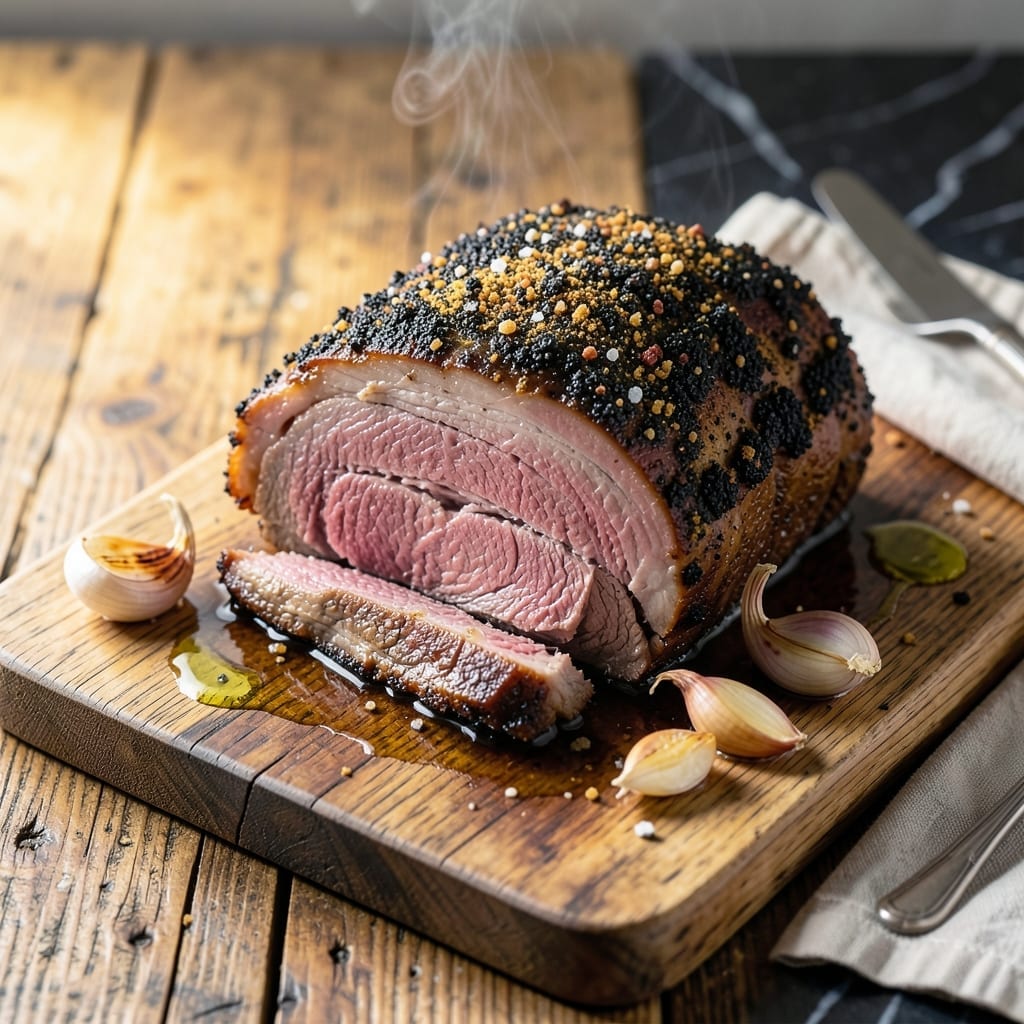
Achieving fall-off-the-bone brisket without a smoker is absolutely possible in your oven. This method delivers tender results that rival traditional barbecue, using simple techniques and consistent heat.
The key is low and slow cooking at 275°F, allowing the tough fibers to break down gradually. I’ve perfected this approach over years of trial, ensuring the meat stays juicy while developing a rich bark on the outside.
You’ll start with a well-seasoned brisket, then let the oven do the work. The long cooking time transforms the cut into something extraordinary, with each slice offering perfect texture and deep, smoky flavor.
This proves that incredible brisket isn’t limited to pitmasters. With patience and attention to detail, your home kitchen can produce competition-worthy results.
Ingredients for Brisket Recipe Oven
A well-seasoned brisket and a few pantry staples create that smoky, tender magic right in your oven.
| Ingredient | Amount | Notes |
|---|---|---|
| Beef Brisket 🥩 | 4 lb | Flat cut preferred, trimmed of excess fat |
| Coarse Kosher Salt 🧂 | 2 tbsp | Diamond Crystal brand recommended |
| Freshly Ground Black Pepper 🌶️ | 2 tbsp | Coarse grind for bark texture |
| Garlic Powder 🧄 | 1 tbsp | Not garlic salt |
| Onion Powder 🧅 | 1 tbsp | Fresh ground preferred |
| Smoked Paprika 🌶️ | 1 tbsp | For that authentic smoky depth |
| Brown Sugar 💛 | ½ cup | Light or dark both work |
| Worcestershire Sauce 🫒 | ½ cup | Anchovy-free if preferred |
| Apple Cider Vinegar 🍏 | ¼ cup | Balances the richness |
| Olive Oil 🫒 | 2 tbsp | For searing the brisket |
| Beef Broth 🥩 | 2 cups | Low-sodium preferred |
| Liquid Smoke 🔥 | 2 tsp | Optional for extra smokiness |
The brisket itself is non-negotiable—flat cut from a reputable butcher (or Costco if you’re pinching pennies) gives you the best texture. Look for good marbling; that fat renders down during the long cook, keeping everything juicy. I always ask for the fat cap trimmed to about a quarter-inch. The spices? Penzeys for the good stuff, but your grocery store’s bulk section works too.
No smoked paprika? Regular paprika plus a pinch of chipotle powder gets you close. Out of Worcestershire? Soy sauce with a splash of vinegar in a pinch. The brown sugar can be swapped for coconut sugar if you’re avoiding refined stuff. And yes, you can skip the liquid smoke—the long cook develops plenty of flavor on its own.
This reheats like a dream (honestly better the next day). Store sliced brisket in its juices for 4-5 days in the fridge, or freeze for 3 months. Perfect for meal prep—make a big batch and thank yourself later.
Why You’ll Love This Recipe
- Set and Forget: I rub the brisket with salt, pepper, garlic and onion powder, pop it in the oven, and let the heat do the work—no babysitting required.
- Deep, Smoky Flavor: That crust from the coarse salt and spices gives every bite a rich, savory punch that’s hard to resist.
- Feeds a Crowd: Honestly, one brisket means leftovers for sandwiches, tacos, or a hearty dinner the next day.
- Budget Stretcher: A single cut serves my family for days, and the spices are already in my pantry—no fancy ingredients needed.
Step-by-Step Instructions for Oven Brisket
This method delivers incredible tenderness with minimal effort—your oven does all the hard work.
Step 1: Prepare and Season the Brisket
Pat the 4 lb Beef Brisket dry with paper towels, then place it on a large sheet of heavy-duty foil. This removes excess moisture that can steam the meat instead of searing it. Season all over with the 2 tbsp Coarse Kosher Salt, 2 tbsp Freshly Ground Black Pepper, 1 tbsp Garlic Powder, 1 tbsp Onion Powder, and 1 tbsp Smoked Paprika.
Press the seasoning into the meat so it adheres well. Sprinkle the 0.5 cup Brown Sugar evenly over the top, pressing gently. This creates a flavorful bark while the sugar caramelizes during cooking.
Step 2: Build the Flavor Base and Seal
In a small bowl, whisk together the 0.5 cup Worcestershire Sauce, 0.25 cup Apple Cider Vinegar, 2 tbsp Olive Oil, 2 cups Beef Broth, and 2 tsp Liquid Smoke. Pour this mixture over the brisket, ensuring it pools around the meat in the foil.
Seal the brisket tightly in the foil, creating a packet that traps all the liquid and steam. This step is crucial—it allows the brisket to braise in its own juices, keeping it incredibly moist. Place the sealed packet on a rimmed baking sheet to catch any potential leaks.
Step 3: Slow-Roast to Perfection
Preheat your oven to 300°F. Once hot, place the brisket on the middle rack and roast for 4 to 5 hours. The low and slow cooking method breaks down the tough connective tissue, transforming it into melt-in-your-mouth gelatin.
You’ll know it’s ready when the brisket is fork-tender and the internal temperature reaches 195-205°F. Resist the urge to open the foil during cooking—every peek releases precious moisture and heat.
Step 4: Rest and Serve
Carefully transfer the brisket packet to a large cutting board. Open the foil, letting the steam escape away from you to avoid burns. Allow the brisket to rest for 20 minutes in its juices—this lets the muscle fibers relax and reabsorb the moisture.
Slice the brisket against the grain into ¼-inch thick pieces. Serve immediately with the rich, flavorful juices spooned over the top. Each bite should be tender, juicy, and packed with smoky, savory depth.
Pro Tips For Making Brisket Recipe Oven
- Start Low and Slow: Set your oven to 275°F—any higher and the brisket will toughen up before it has a chance to break down. I learned this the hard way after pulling a dry, chewy disaster out of a 325°F oven.
- Dry the Brisket First: Pat the brisket completely dry with paper towels before seasoning, or the rub won’t stick and the crust won’t form. Sounds tedious, but it actually changes the outcome.
- Don’t Skip the Rest: Let the brisket rest under foil for at least 30 minutes after cooking, or all the juices will spill out when you slice it. My grandmother swore by this, and she was right.
- Season Overnight: Rub the brisket with salt, pepper, garlic powder, and onion powder the night before cooking. It seems like a small thing, but the flavors penetrate deeper and taste more balanced.
Best Sauces and Condiments for This Dish
Classic BBQ Sauce
My go-to pairing is a tangy Kansas City-style BBQ sauce—its thick, sweet, and smoky profile complements the brisket’s richness. I like Sweet Baby Ray’s for convenience, but homemade with 2 cups ketchup, ½ cup apple cider vinegar, and ¼ cup brown sugar adds a personal touch. 🔥
Spicy Kick Options
For heat lovers, mix 1 cup BBQ sauce with 1 tbsp sriracha or 1 tsp chipotle powder. The spice cuts through the fat beautifully. I also love a drizzle of hot honey for a sweet-heat contrast that’s unexpected but addictive.
Vinegar-Based Sauce
A Carolina-style vinegar sauce offers a bright, tangy counterpoint to the brisket’s depth. Whisk 1 cup apple cider vinegar, ¼ cup water, 2 tbsp brown sugar, and 1 tbsp crushed red pepper. It’s thin but packs a punch.
Creamy Complements
Serve with ranch dressing or blue cheese dressing on the side for dipping. The cool creaminess balances the smoky meat. I prefer Hidden Valley Ranch for its classic flavor, but a homemade version with fresh dill elevates it.
Mustard-Based Twist
Try a South Carolina-style mustard sauce for a unique twist. Combine ½ cup yellow mustard, ¼ cup honey, 2 tbsp apple cider vinegar, and 1 tsp garlic powder. It’s bold and pairs surprisingly well with oven-brisket.
Pickled Vegetables
Quick-pickled red onions or jalapeños add crunch and acidity. Thinly slice 1 onion, cover with ½ cup vinegar and 1 tbsp sugar, then refrigerate for 30 minutes. The brightness cuts through the richness perfectly.
Nutrition Facts
Frequently Asked Questions
What oven temperature works best?
Cook at 300°F for ideal results. This temperature balances tenderness and cooking time perfectly. Higher heat risks drying it out, while lower may not break down the fibers enough.
How do I know when it’s done?
Use a meat thermometer – it should read 195-205°F internally. The brisket should be fork-tender and easily pull apart. Don’t rely on time alone, as thickness varies.
Can I cook it faster at higher heat?
Not recommended. The low and slow method is key for breaking down connective tissue. Cooking at 350°F+ may save time but will sacrifice tenderness and juiciness.
Should I add liquid during cooking?
No need – the sealed foil traps moisture. Opening to add liquid releases heat and steam, potentially drying the meat. Trust the initial 2 cups beef broth in the recipe.

- BBQ Sausage Recipe Oven: Smoky Depth Without the Grill - September 28, 2026
- BBQ Chicken Bowl Recipe Rice: Smoky Sweetness Over Fluffy Grains - September 28, 2026
- Beef Cutlet Recipe Ideas: Crispy Breaded Patties With Bold Seasonings - September 28, 2026