
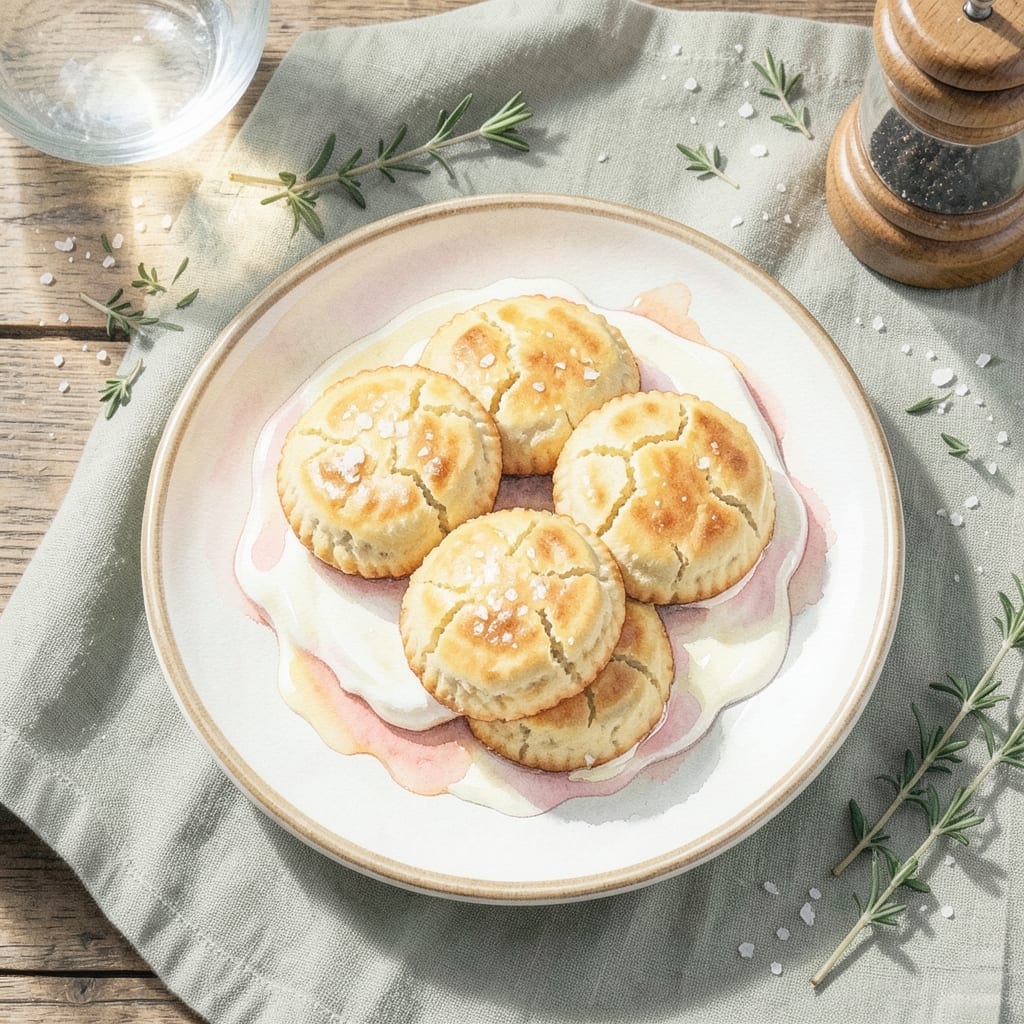
There’s a simple secret to achieving flaky biscuits without buttermilk that most home bakers miss. This method relies on a specific fat-to-flour ratio and a clever liquid substitution that maintains the perfect texture.
The key is using melted butter as both the fat and the “swim” element, creating layers as the biscuits bake. A mixture of milk and a touch of vinegar replicates buttermilk’s tang and acidity, ensuring proper rise and tenderness.
You’ll end up with golden, pull-apart biscuits with distinct layers and a rich, buttery flavor. The tops develop a slight crust while the interiors remain soft and moist, soaking up that melted butter goodness.
Perfect for breakfast or alongside any meal. Here’s how to make them.
Ingredients for Butter Swim Biscuits Recipe Without Buttermilk
Eight ingredients deliver flaky, buttery layers without a single drop of buttermilk.
| Ingredient | Amount | Notes |
|---|---|---|
| All-Purpose Flour 🌾 | 2 ½ cups | Plus extra for dusting |
| Baking Powder 🧂 | 1 tbsp | Aluminum-free preferred |
| Granulated Sugar 🍚 | 1 tbsp | Balances acidity |
| Salt 🧂 | 1 tsp | Diamond Crystal kosher salt |
| Unsalted Butter 🧈 | ¾ cup | Melted and divided |
| Whole Milk 🥛 | 1 cup | Cold, for best results |
| White Vinegar 🍶 | 1 tbsp | Or apple cider vinegar |
| Large Egg 🥚 | 1 whole | For structure and richness |
The flour is the foundation—King Arthur or Gold Medal give consistent results. Baking powder must be fresh (test by dropping a bit in hot water; it should bubble vigorously). Unsalted butter allows you to control the salt content precisely, which matters for the perfect balance. Plugra European-style butter (with its higher fat content) creates even flakier layers, but standard butter works too.
No vinegar? Lemon juice at the same ratio works equally well. Out of whole milk? Half-and-half thinned with water or even unsweetened almond milk (plus extra vinegar) can substitute. The egg is optional but recommended for structure—omit it only if absolutely necessary, and add an extra tablespoon of melted butter to compensate for moisture.
Store biscuits in an airtight container at room temperature for 1-2 days. For longer storage, freeze unbaked biscuits on a tray, then transfer to a bag—they’ll keep for 1 month. Reheat frozen biscuits straight from the freezer, adding 3-5 minutes to the bake time.
Why You’ll Love This Recipe
- One Bowl Wonder: I mix everything right in the baking dish—no extra bowls, no fuss, just flour, butter, and a few pantry staples.
- Breakfast or Dinner: I serve these with jam in the morning or alongside soup at night. Between us, they disappear either way.
- Budget Friendly: Flour, butter, and basic staples are all it takes. I’ll be real: it’s cheaper than a bakery run and twice as satisfying.
Step-by-Step Instructions for Butter Swim Biscuits Without Buttermilk
This method delivers tender, flaky layers with a rich buttery finish every time.
Step 1: Create a Buttermilk Substitute
In a measuring cup, combine the 1 cup Whole Milk and 1 tbsp White Vinegar. Stir gently and let it sit at room temperature for 5 minutes until the mixture curdles slightly and thickens. This acidulated milk mimics buttermilk perfectly.
You’ll see small curds forming—this is the vinegar reacting with the milk proteins. The slight tang this creates is essential for activating the 1 tbsp Baking Powder and achieving the proper rise and flakiness in your biscuits.
Step 2: Mix and Shape the Dough
In a large bowl, whisk together the 2.5 cups All-Purpose Flour, 1 tbsp Baking Powder, 1 tbsp Granulated Sugar, and 1 tsp Salt. Create a well in the center and add the 1 whole Large Egg and your prepared milk mixture.
Using a wooden spoon, stir until the ingredients just come together into a shaggy dough. Turn it onto a lightly floured surface and knead gently 4-5 times until smooth. Overworking the dough develops gluten, which would make your biscuits tough rather than flaky.
Step 3: Prepare the Butter Base and Arrange Dough
Melt 0.5 cup of the 0.75 cup Unsalted Butter and pour it into a 9×9-inch baking dish, spreading it evenly across the bottom. The remaining 0.25 cup will be used later for topping.
Roll the dough out into a 9×9-inch square that’s about 1-inch thick. Cut this into 9 equal squares and arrange them in a single layer in your buttered dish. The squares should fit snugly together—this ensures even rising and that characteristic “swim” effect.
Step 4: Add Final Butter and Bake
Melt the remaining 0.25 cup Unsalted Butter and pour it evenly over the arranged dough squares. This generous butter coating is what creates the rich, golden crust and keeps the biscuits incredibly moist as they bake.
Bake in a preheated 400°F oven for 20-25 minutes until the tops are golden brown and the butter has been fully absorbed. You’ll know they’re done when a toothpick inserted in the center comes out clean and the biscuits have nearly doubled in height.
Step 5: Rest and Serve Warm
Let the biscuits rest in the pan for 5 minutes after removing them from the oven. This allows the butter to set slightly and the structure to firm up, making them easier to serve without falling apart.
Use a spatula to lift each biscuit out, serving them warm with the buttery bottoms facing up. The layers should be distinct and flaky, with a rich, golden crust where the butter pooled and baked. These are best enjoyed fresh from the oven when the texture is at its peak.
Pro Tips For Making Butter Swim Biscuits Recipe Without Buttermilk
- Chill the Butter: Keep your unsalted butter ice cold until the very last moment—I learned this the hard way after my first few batches spread into flat, sad discs.
- Measure Flour Right: Spoon your all-purpose flour into the measuring cup and level it off; scooping directly from the bag packs it down and makes dense biscuits.
- Skip Overmixing: Stir the dough just until it comes together, even if it looks shaggy—overworking it develops gluten and ruins the tender texture.
- Hot Oven, Hot Pan: Preheat your oven to 425°F and the baking pan with it; the sizzle when the butter hits the pan is what gives these biscuits their signature crisp edges.
Make-Ahead Tips for Leftovers
Overnight Prep
Mix your dough the night before and store it covered in the fridge. The cold rest enhances flavor development and makes the biscuits even more tender. In the morning, let it sit at room temperature for 20 minutes before shaping. 💡
Shape and Freeze
After cutting your dough into squares, arrange them on a parchment-lined tray and freeze for 1 hour. Then transfer to a freezer bag. They’ll keep for up to 1 month and can go straight from freezer to baking dish.
Morning Bake
For fresh biscuits with zero morning effort, prepare the entire dish (butter in pan and dough arranged) the night before. Cover tightly with plastic wrap and refrigerate. In the morning, bake as directed, adding 5-10 minutes to the cooking time.
Room Temperature Storage
Baked biscuits stay fresh at room temperature in an airtight container for 1-2 days. To revive, warm in a 350°F oven for 5-8 minutes until the butter melts again. The texture will be nearly as good as fresh.
Freezer to Oven
Frozen unbaked biscuits can go directly into the buttered pan. Add 3-5 minutes to the baking time. No need to thaw—this method actually helps create extra flaky layers as the butter melts gradually. 🔥
Butter Prep Tip
Measure and portion your butter the night before. Keep the 0.5 cup for the pan and 0.25 cup for topping in separate containers in the fridge. Cold butter melts more evenly when you’re ready to bake.
Nutrition Facts
Frequently Asked Questions
Can I use a different vinegar for the buttermilk substitute?
Yes! Apple cider vinegar or lemon juice work just as well as white vinegar. Use the same 1 tbsp measurement for any acid. The slight flavor difference won’t be noticeable in the final biscuits.
Why do my biscuits turn out dense?
Overworking the dough is the most common cause. Knead just 4-5 times to combine. Also, ensure your baking powder is fresh—old leavening loses its potency, preventing proper rise.
Can I bake these in a different pan size?
A 9×9-inch pan works best for even butter distribution. For an 8×8-inch, reduce butter slightly to avoid pooling. Larger pans may require extra dough to fill properly.
How do I know when they’re fully baked?
The tops should be golden brown and a toothpick inserted should come out clean. The butter will be fully absorbed, and the biscuits will have nearly doubled in height after 20-25 minutes.

- BBQ Sausage Recipe Oven: Smoky Depth Without the Grill - September 28, 2026
- BBQ Chicken Bowl Recipe Rice: Smoky Sweetness Over Fluffy Grains - September 28, 2026
- Beef Cutlet Recipe Ideas: Crispy Breaded Patties With Bold Seasonings - September 28, 2026