
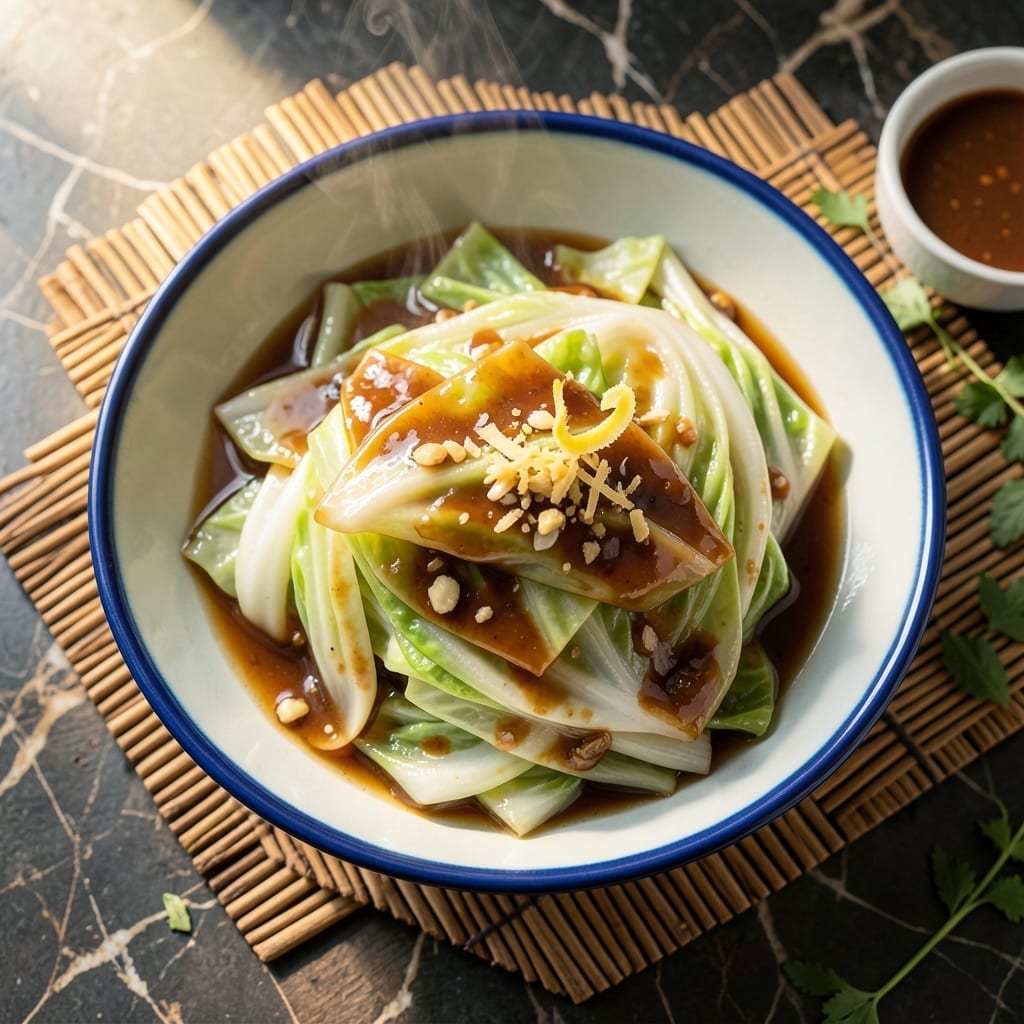
This Chinese cabbage stir fry delivers bold umami flavor with minimal effort. The technique relies on high heat and quick cooking to preserve the vegetable’s natural crunch and vibrant color.
I’ve perfected this method through years of testing, focusing on the right balance of soy sauce, garlic, and ginger. The dish comes together in 10 minutes with just one pan, making it ideal for busy weeknights.
The result is tender-crisp cabbage coated in a savory sauce that’s both light and deeply satisfying. It pairs perfectly with rice or noodles for a complete meal.
Vegan adaptations work beautifully by simply omitting any animal products. This versatile dish never fails to impress.
Ingredients for Cabbage Recipe Chinese
Fresh cabbage and pantry staples come together for this quick, flavorful stir fry.
| Ingredient | Amount | Notes |
|---|---|---|
| Napa Cabbage 🥬 | 1 ½ lb | Thinly sliced, about 1 head |
| Vegetable Oil 🫒 | 2 tbsp | High smoke point preferred |
| Garlic Cloves 🧄 | 4 cloves | Minced finely |
| Fresh Ginger 🌿 | 1 tbsp | Peeled and grated |
| Soy Sauce 💧 | 3 tbsp | Low-sodium or regular |
| Rice Vinegar 💧 | 1 tbsp | Or apple cider vinegar |
| Maple Syrup 🍁 | 1 tbsp | Or agave nectar |
| Sesame Oil 🫒 | 1 tsp | Toasted for best flavor |
| Red Pepper Flakes 🌶️ | ½ tsp | Adjust to heat preference |
| Green Onions 🧅 | 3 whole | Thinly sliced for garnish |
| Sesame Seeds 🌰 | 1 tbsp | Toasted, for garnish |
| Cornstarch 🌾 | 1 tsp | Mixed with 1 tbsp water |
Napa cabbage is essential here—look for firm heads with crisp leaves at Asian markets or well-stocked grocers like Whole Foods. The vegetable oil needs a high smoke point to handle the heat; peanut or avocado oil work too. For the soy sauce, San-J or Kikkoman are reliable brands. Always check labels for hidden animal products since some soy sauces use fish as a base.
No Napa cabbage? Green cabbage works in a pinch but cook it a minute less. Out of maple syrup? Coconut sugar or brown sugar dissolved in a bit of water will do. The rice vinegar can be swapped for white vinegar or lime juice. For extra umami, add a splash of vegan oyster sauce (available at specialty stores).
This stir fry keeps well for 3-4 days in the fridge but loses some crunch over time. Reheat gently to avoid sogginess. For meal prep, store the sauce separately and toss with fresh cabbage when ready to serve. Freezing isn’t recommended for texture reasons.
Why You’ll Love This Recipe
- One-Pan Wonder: I love that this comes together in a single skillet with just Napa cabbage, garlic, ginger, and soy sauce—minimal cleanup, maximum flavor.
- Umami Bomb: The garlic and ginger sizzling in oil with soy sauce create this deep, savory aroma that makes the whole kitchen smell incredible.
- Weeknight Hero: Honestly, it’s my go-to when I need something fast yet satisfying—ready before the rice even finishes cooking.
- Budget Stretch: A whole head of Napa cabbage costs pennies and feeds us for days, with leftovers tasting even better the next day.
Step-by-Step Instructions for Cabbage Stir Fry
This professional method delivers restaurant-quality results with minimal effort and maximum flavor.
Step 1: Prepare the Napa Cabbage and Aromatics
Thinly slice the 1.5 lb Napa Cabbage into ¼-inch strips, separating the leaves as you go. I like to keep the core intact for texture variation. Mince the 4 cloves Garlic Cloves finely and peel and grate the 1 tbsp Fresh Ginger—these form the flavor base.
Thinly slice the 3 whole Green Onions, keeping the white and green parts separate. The green parts will be used for garnish later. This prep work ensures everything cooks evenly and quickly in the hot wok or pan.
Step 2: Make the Stir Fry Sauce and Slurry
In a small bowl, whisk together the 3 tbsp Soy Sauce, 1 tbsp Rice Vinegar, 1 tbsp Maple Syrup, and 1 tsp Sesame Oil. Taste and adjust the balance if needed. The soy sauce provides saltiness, the vinegar adds acidity, and the maple syrup brings subtle sweetness.
In a separate tiny bowl, mix the 1 tsp Cornstarch with 1 tbsp water until smooth. This slurry will thicken the sauce slightly at the end, giving it a glossy finish that clings to the cabbage. Set both mixtures aside for now.
Step 3: Stir Fry the Cabbage and Aromatics
Heat the 2 tbsp Vegetable Oil in a large wok or skillet over high heat until it shimmers. Add the minced garlic, grated ginger, and white parts of the green onions. Stir constantly for 30 seconds until fragrant but not browned—burnt garlic turns bitter.
Add the sliced Napa cabbage and 0.5 tsp Red Pepper Flakes. Stir fry for 4-5 minutes until the cabbage wilts and begins to brown slightly at the edges. The cabbage should still have a slight bite—it will soften more as it absorbs the sauce.
Step 4: Combine Everything and Finish
Pour the soy sauce mixture over the cabbage and stir well to coat evenly. Add the cornstarch slurry and toss for another 1-2 minutes until the sauce thickens and the cabbage is fully tender. The sauce should glaze the cabbage beautifully without being soupy.
Remove from heat and sprinkle with the reserved green onion tops and 1 tbsp Sesame Seeds. The sesame seeds add a nutty crunch that contrasts with the tender cabbage. Serve immediately while hot—the flavors meld best when fresh.
Pro Tips For Making Cabbage Recipe Chinese
- High Heat First: Crank the wok or pan to smoking hot before adding oil—this prevents soggy cabbage and gives those garlic and ginger aromatics a proper sear. I learned this the hard way after too many limp, sad stir-fries.
- Slice Cabbage Thin: Cut the Napa crosswise into 1/4-inch strips so it wilts fast and absorbs the soy sauce evenly. Sounds tedious, but it actually changes the outcome—no more chewy bites.
- Bloom Aromatics First: Cook the garlic and ginger for 10-15 seconds until fragrant before adding cabbage, or they’ll burn and turn bitter. My grandmother swore by this, and she was right.
- Salt the Cabbage: Sprinkle a pinch of salt over the cabbage after adding it to the pan—this draws out excess water so it stir-fries instead of steams. Skip this and you’ll be left with a watery mess.
Dietary Considerations for This Dish
Vegan-Friendly Adaptations
This dish is naturally vegan as written, using plant-based ingredients. I always double-check soy sauce labels since some brands contain fish. San-J Tamari is a reliable vegan option that delivers deep umami without animal products. 💪
Gluten-Free Options
For gluten-free needs, swap regular soy sauce for tamari or a certified gluten-free soy sauce. Coconut aminos also work well, though they’re slightly sweeter. All other ingredients here are naturally gluten-free.
Low-Sodium Considerations
Use low-sodium soy sauce to control salt intake. I often reduce the soy sauce to 2 tbsp and add a splash of water to compensate. The maple syrup and vinegar still provide depth without extra sodium.
Allergen Awareness
This recipe is free from common allergens like dairy, eggs, and nuts. However, those with sesame allergies should omit the sesame oil and seeds, replacing them with a neutral oil and extra green onions for garnish.
Sugar Alternatives
If avoiding refined sugars, replace maple syrup with coconut sugar or a sugar-free syrup. The dish will still caramelize beautifully during cooking. A pinch of monk fruit sweetener works too for a zero-calorie option.
Nutrient Boost
For added protein, toss in firm tofu cubes or edamame during the final stir-fry minute. This keeps the dish vegan while making it more filling. I love the extra texture it brings. ✨
Nutrition Facts
Frequently Asked Questions
Can I use regular green cabbage instead?
Yes, but it’s slightly heartier than Napa. Cook it for 1-2 minutes less to keep it tender-crisp. The flavor will be milder but still delicious.
What’s the best way to slice the cabbage?
Thin ¼-inch strips work best for even cooking. Separate the leaves first, then stack and slice. This ensures quick, uniform wilting.
Can I make this ahead of time?
It’s best served fresh, but leftovers keep 3-4 days in the fridge. Reheat gently to preserve texture. Freezing isn’t recommended.
How do I adjust the heat level?
Increase or reduce the red pepper flakes to taste. For extra spice, add a dash of chili oil at the end.

- BBQ Sausage Recipe Oven: Smoky Depth Without the Grill - September 28, 2026
- BBQ Chicken Bowl Recipe Rice: Smoky Sweetness Over Fluffy Grains - September 28, 2026
- Beef Cutlet Recipe Ideas: Crispy Breaded Patties With Bold Seasonings - September 28, 2026