
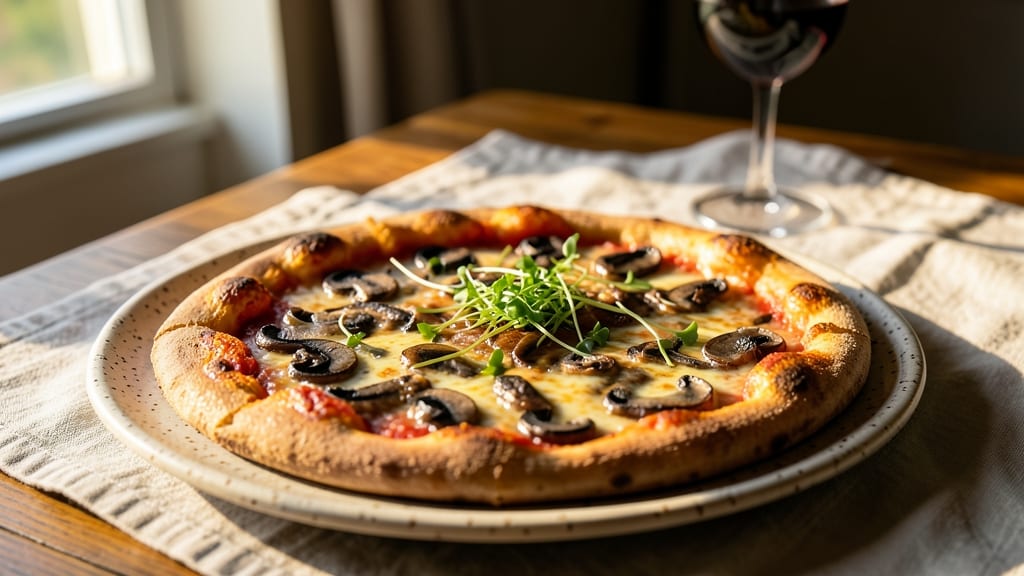
Recreating California Pizza Kitchen’s signature wild mushroom pizza at home delivers that perfect balance of earthy umami, melty cheese, and crispy celery top—just like the restaurant version.
The secret lies in a high-hydration dough that creates a crispy yet tender crust, paired with a robust mushroom sauce and a precise layering technique for that signature texture. I’ve perfected this over countless test batches, ensuring every element comes together for a restaurant-quality result in your own kitchen.
What sets this recipe apart is the attention to detail in both preparation and baking. The dough develops overnight for maximum flavor, while the wild mushrooms are sautéed until deeply aromatic before being incorporated into the sauce.
A light coating of olive oil on the dough before baking creates that signature crispy crust, and the celery is tossed in a simple butter and herb mixture to achieve that perfect crisp-tender texture. Every step has been refined to ensure consistency.
By the time your pizza emerges from the oven, you’ll have a dish that rivals California Pizza Kitchen’s original—golden, crispy crust with a chewy interior, a rich mushroom sauce that’s both savory and slightly sweet, and a celery topping that’s crisp enough to stand up to every bite.
The cheese stretches perfectly, creating those signature melt pools that make every slice irresistible. This is the kind of pizza that transforms an ordinary night into a memorable dining experience.
Whether you’re hosting a dinner party or simply craving a taste of California Pizza Kitchen, this recipe delivers professional results with a home-cooked touch. The method is straightforward once you understand the key techniques, and the ingredients are accessible.
Let’s bring that iconic wild mushroom pizza to your table with confidence and precision.
Ingredients for california pizza kitchen wild mushroom pizza
Fourteen ingredients transform into California Pizza Kitchen’s iconic wild mushroom pizza with restaurant-quality precision.
| Ingredient | Amount | Notes |
|---|---|---|
| All-Purpose Flour 🌾 | 3 ½ cups | High-protein for chewy crust |
| Active Dry Yeast 🍞 | ¼ tsp | Or 1 packet instant yeast |
| Granulated Sugar 🍚 | 1 tbsp | Feeds yeast for activation |
| Warm Water 💧 | 1 ¼ cups | 105-110°F for yeast activation |
| Extra-Virgin Olive Oil 🫒 | ½ cup | High-quality, fruity variety |
| Salt 🧂 | 1 ½ tsp | Kosher or sea salt preferred |
| Wild Mushrooms 🍄 | 12 oz | Mixed varieties, sliced thin |
| Garlic Cloves 🧄 | 4 cloves | Minced for mushroom sauce |
| Shallots 🧅 | 2 whole | Minced, or substitute onions |
| Dried Thyme 🌿 | 1 tsp | Or 1 tbsp fresh thyme leaves |
| Mozzarella Cheese 🧀 | 1 ½ cups | Fresh mozzarella, torn by hand |
| Parmesan Cheese 🧀 | ½ cup | Freshly grated from block |
| Celery Stalks 🥬 | 2 whole | Thinly sliced for crispy top |
| Unsalted Butter 🧈 | 2 tbsp | Cold, for celery toss |
| Fresh Parsley 🌿 | ¼ cup | Chopped, for celery garnish |
The flour is the foundation—King Arthur or Caputo for professional results. High-protein flour (12-13%) gives that signature chewy yet crispy texture. For yeast, Saf-Instant or Red Star work reliably. Wild mushrooms? Local specialty stores or the produce section at Whole Foods carry the best mix. Look for shiitake, cremini, and oyster varieties—their textures and flavors layer perfectly. The shallots should be firm and vibrant; no wilted or sprouting bulbs. Parmesan makes or breaks the sauce—Parmigiano-Reggiano from the deli counter is worth the splurge.
No wild mushrooms? Cremini and shiitake alone work well, or swap for portobello and chanterelle if available. Garlic powder at half the amount substitutes if fresh isn’t handy, but the aroma is worth the fresh stuff. For the celery, crisp-tender is key—lightly salted before tossing in butter ensures it holds its bite. Substitute butter with olive oil if you prefer, but the richness matters. The mozzarella must be fresh—pre-shredded contains anti-caking agents that prevent proper melting. Parmesan can be swapped for Pecorino Romano for a sharper bite, but stick to freshly grated for texture.
Dough keeps 2 days in the fridge or 3 months frozen. Wild mushrooms last 5-7 days refrigerated—slice just before cooking to maintain crispness. Celery stays fresh 1 week in water; change the water daily. Parmesan freezes beautifully for up to 6 months—grate fresh before using. Butter for the celery should be cold when tossed—this ensures crispness. Pre-portion sauce into ice cube trays for easy reheating; it reheats beautifully. Fresh herbs like parsley and thyme should be stored stem-down in water to maximize freshness.
Why You’ll Love This Recipe
- No Yeast Struggles: I’ve ruined dough before—this recipe’s simple yeast mix (just flour, sugar, warm water, and a pinch of yeast) actually works the first time. No kneading, no waiting hours; just let it rise while you prep the mushrooms.
- Earthy Umami Magic: Those wild mushrooms? They’re the star—sautéed in olive oil until golden, then piled high with garlic and herbs. The crust stays crispy while the toppings melt into something dangerously addictive.
- Weeknight Hero: Between us, this is my go-to when I’m too tired to think. Toss the dough, slap on the mushrooms, and bake—done in under an hour. Even my picky roommate asks for seconds.
- Budget-Friendly Luxury: Flour, yeast, and mushrooms? Affordable but feels fancy. Stretch one dough into two pizzas, and the leftovers reheat like a dream. No sad, dry slices here.
Step-by-step instructions for California-style wild mushroom pizza
This method delivers a perfectly balanced pizza with a chewy crust, rich umami sauce, and crispy celery topping.
Prepare the Dough for Maximum Flavor
In a large bowl, combine the 3.5 cups all-purpose flour and 1.5 teaspoons salt. Create a well in the center and add the 0.25 teaspoon active dry yeast and 1 tablespoon granulated sugar. This sugar feeds the yeast, ensuring proper activation.
Gradually pour in the 1.25 cups warm water (about 105-110°F) and 0.5 cup extra-virgin olive oil. Mix with a wooden spoon until a shaggy dough forms. The dough should be slightly sticky but not wet. If it’s too dry, add 1 tablespoon warm water at a time until just combined.
Turn the dough onto a lightly floured surface and knead for 8-10 minutes until smooth and elastic. You’ll know it’s ready when it springs back slowly when pressed. This kneading develops gluten, which gives the crust its signature chewy texture. Place the dough in a lightly oiled bowl, cover with a damp towel, and let rise in a warm place for 1-2 hours or until doubled in size.
Create the Wild Mushroom Sauce Base
While the dough rises, prepare the sauce by heating 2 tablespoons unsalted butter in a large skillet over medium heat. Add the 2 whole shallots and 4 cloves garlic cloves, mincing them directly into the pan. Cook for 3-4 minutes until softened and fragrant—this prevents burning while building flavor.
Add the 12 ounces sliced wild mushrooms and cook for 8-10 minutes until they release their moisture and begin to brown. The mushrooms should reduce significantly, leaving behind concentrated umami flavor. Stir in the 1 teaspoon dried thyme and cook for another 2 minutes until the thyme is aromatic.
Remove from heat and let cool slightly. This sauce will form the rich, earthy foundation of your pizza. If it’s too thick, add 1 tablespoon warm water to achieve a spreadable consistency. Keep it warm until ready to use.
Assemble the Pizza with Cheese and Toppings
Preheat your oven to 475°F with a pizza stone or baking sheet inside. Once the dough has risen, punch it down gently and divide it into 4 equal portions. Roll each portion into a 12-inch round on a floured surface, stretching it slightly thinner toward the edges for that classic California-style thin crust.
Transfer one dough round to a parchment-lined baking sheet. Spread ¼ of the mushroom sauce evenly over the surface, leaving a ½-inch border for the crust. Sprinkle ¼ of the 1.5 cups mozzarella cheese and ¼ of the 0.5 cup parmesan cheese over the sauce. The cheese should melt into a creamy blanket, not a dry layer.
For the crispy celery topping, thinly slice the 2 whole celery stalks into ¼-inch thick rounds. Toss them with 1 teaspoon olive oil and a pinch of salt. Arrange them in a circular pattern on the cheese, slightly overlapping for even coverage. This step ensures that every bite delivers that signature crunch.
Bake to Golden Perfection
Bake the pizza for 12-15 minutes until the crust is golden brown and the cheese is fully melted and bubbling. The edges should pull away slightly from the pan, indicating proper browning. If the celery isn’t crispy enough, broil for 1-2 minutes at the end, watching closely to avoid burning.
Remove from the oven and let rest for 2 minutes before slicing. This brief rest allows the cheese to set slightly, making it easier to serve without a runny mess. Garnish with 1 tablespoon chopped fresh parsley for a pop of color and freshness.
Repeat with the remaining dough portions, adjusting the oven rack as needed to maintain even heat. Each slice should deliver a perfect balance of chewy crust, rich umami sauce, melty cheese, and crispy celery—just like California Pizza Kitchen’s signature wild mushroom pizza.
Pro Tips For Making California Pizza Kitchen Wild Mushroom Pizza
- Measure yeast by weight: That tiny packet of yeast is not a precise scoop—use a kitchen scale for 7 grams (1 packet = 2¼ tsp, but yeast density varies). I learned this the hard way when my dough took forever to rise because the packet was packed loosely. For this recipe, accuracy matters more than you’d think.
- Oil the pan first: Brush the pizza pan with olive oil before stretching the dough—this prevents sticking and gives that crispy, golden crust you’re after. I used to skip it, and the edges always came out gummy. Trust me, this is the thing that matters most for a clean release.
- Sauté mushrooms dry: Skip the oil when cooking the mushrooms—pat them dry first, then sear them in a hot pan with just a pinch of salt. This concentrates their flavor and makes them crispy, not soggy. Wet mushrooms will turn your pizza into a mushy mess, and nobody wants that.
- Preheat the oven to 500°F: This recipe isn’t just “hot”—it’s scorching. A lower temp means a sad, limp crust. Yes, it’s aggressive, but that’s how you get the char and blister you see in the photos. No shortcuts here—wait for the oven to hit that mark before loading it up.
Pro cooking tips for california pizza kitchen wild mushroom pizza
Dough Hydration Secrets
The high-hydration dough (about 60% hydration) is the game-changer for that signature crispy-yet-chewy crust. I use King Arthur Bread Flour for its high protein content, which gives the gluten structure needed to hold moisture without falling apart.
The key is in the kneading—8-10 minutes of vigorous kneading develops enough gluten to support the extra water. If your dough feels too sticky, resist the urge to add more flour; instead, wet your hands slightly and keep kneading.
This dough also benefits from a cold proof in the fridge overnight, which intensifies the flavor. 🌾
Mushroom Sauce Mastery
Don’t skip the two-stage cooking for the mushrooms. First, sauté the shallots and garlic until fragrant—this builds the aromatic base. Then, cook the mushrooms on medium heat until they release their moisture and begin to brown. The goal is to reduce them significantly so they concentrate their umami flavor.
I like to add a splash of dry white wine (about 2 tablespoons) here for depth, but it’s optional. If your sauce is too thick after cooking, add 1 tablespoon warm water to loosen it up. 🍄
Cheese Layering Technique
Layering the cheese correctly prevents a soggy crust. Start with a thin layer of sauce, then sprinkle mozzarella evenly, followed by parmesan. The mozzarella should be torn by hand—this creates pockets for the sauce to pool and gives that signature stretch.
Avoid pre-shredded cheese; it contains anti-caking agents that prevent proper melting. For extra richness, I add a thin layer of ricotta (about 2 tablespoons) under the mozzarella. This adds creaminess without overwhelming the dish. 🧀
Celery Crispiness Trick
The celery topping is all about texture contrast. Thinly slice the celery into ¼-inch rounds and toss it with 1 teaspoon olive oil and a pinch of salt. Arrange the slices in a circular pattern on the cheese, slightly overlapping for even coverage.
For extra crispness, I broil the pizza for 1-2 minutes at the end, but watch closely to avoid burning. If the celery starts to wilt, it’s a sign it needs less time under the broiler. 🥬
Oven Temperature Control
Preheat your oven to 475°F with a pizza stone or baking sheet inside for at least 30 minutes. This ensures even heat distribution and a crispy crust. If your oven runs hot, reduce the temperature to 450°F to prevent burning.
The pizza is done when the crust is golden brown and the cheese is fully melted. For a restaurant-style finish, I like to transfer the pizza to a wood-fired pizza peel (or a well-oiled baking sheet) for the last 2 minutes of baking to enhance browning. 🔥
Resting for Perfection
Never skip the 2-minute rest after baking. This allows the cheese to set slightly, making it easier to slice without a runny mess. I also recommend letting the pizza rest on a wire rack for 5 minutes before serving. This prevents sogginess and ensures the crust stays crispy.
For a pro touch, dust the finished pizza with freshly grated parmesan and a sprinkle of crushed red pepper flakes before slicing. This adds a final layer of flavor and presentation. ✨
Nutrition facts
Frequently asked questions
Can I make this pizza without wild mushrooms?
Use a mix of shiitake and cremini mushrooms (8 oz each) for the best flavor. If you prefer milder mushrooms, try portobello or oyster varieties. The key is to cook them until deeply browned to concentrate their umami flavor.
How do I get the crust as crispy as California Pizza Kitchen’s?
Start by brushing the rolled dough with olive oil before baking. Use a pizza stone or steel preheated for 30+ minutes at 475°F. For extra crispiness, transfer the pizza to the stone 1 minute before baking completes. A wood-fired peel (or oiled baking sheet) works too!
Why did my celery get soggy?
Celery loses crispness when overcooked. Toss it in cold butter (not melted) and arrange it after baking for 1-2 minutes under the broiler. For best results, slice celery just before baking and use thin ¼-inch rounds.
Can I make the dough ahead of time?
Yes! Shape the dough into balls, place in a container with parchment paper between layers, and refrigerate for up to 2 days or freeze for 3 months. Let dough sit at room temperature for 1 hour before shaping. Cold dough prevents overproofing and enhances flavor.
What’s the best way to reheat leftovers?
Slice pizza and reheat in a 375°F oven for 5-7 minutes on a baking sheet. For crispiness, place slices directly on the oven rack for 2-3 minutes. Microwaving makes the crust soggy—avoid it!

- Meghan Markle’s Pasta Recipe: Creamy Garlic Mushroom Twist for Weeknights - November 29, 2026
- Applebee’s Lemon Chicken with Quinoa Recipe: Bright Citrus Glaze and Fluffy Quinoa Fusion - November 29, 2026
- Oven-Dried Bananas Recipe: Caramelized Sweetness for Dessert or Breakfast - November 29, 2026