
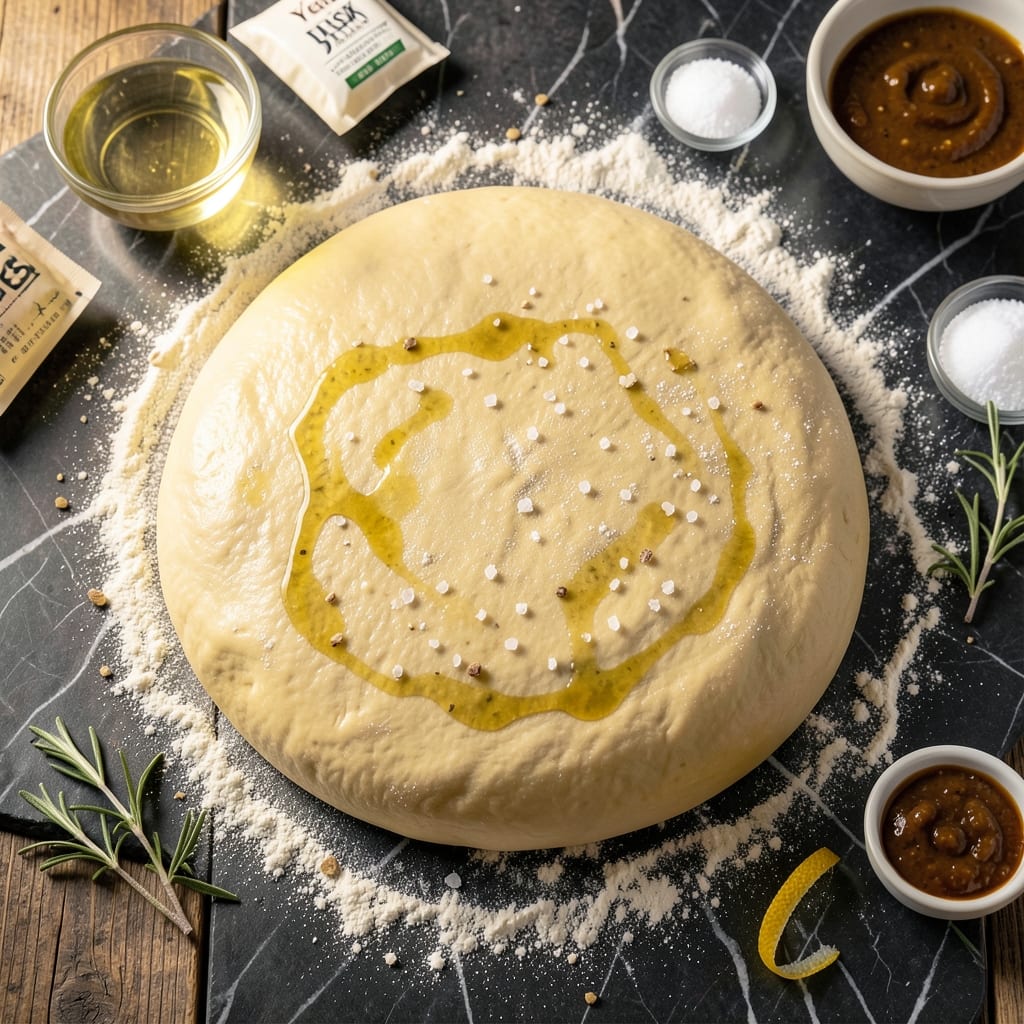
Bread flour transforms pizza dough with its higher protein content, creating a chewy texture that mimics wood-fired results. I learned this technique in my grandmother’s Sicilian kitchen, where dough was always handled with care.
This recipe requires minimal ingredients but precise method. The gluten development from bread flour gives structure while maintaining tenderness. Proper kneading and resting time are essential for the best foundation.
You’ll achieve a crust that’s crisp on the outside with a soft, elastic interior. The dough responds beautifully to high heat, puffing at the edges with characteristic air pockets.
Perfect for classic Margherita or loaded with your favorite toppings. The bread flour difference is noticeable in every bite.
Ingredients for Pizza Dough Recipe Using Bread Flour
Minimal ingredients, maximum flavor. Bread flour makes all the difference here.
| Ingredient | Amount | Notes |
|---|---|---|
| Bread Flour 🌾 | 3 ½ cups | High-protein for chewy texture |
| Warm Water 💧 | 1 ¼ cups | 110-115°F for yeast activation |
| Active Dry Yeast 🍞 | 2 ¼ tsp | One standard packet plus extra |
| Granulated Sugar 🍚 | 2 tsp | Feeds the yeast for rising |
| Kosher Salt 🧂 | 2 tsp | Diamond Crystal preferred |
| Extra-Virgin Olive Oil 🫒 | 2 tbsp | For elastic, flavorful dough |
| Semolina Flour 🌾 | ¼ cup | For dusting work surface |
| Cornmeal 🌽 | 2 tbsp | Prevents sticking on peel |
The bread flour is non-negotiable—King Arthur or Bob’s Red Mill have the protein content (12-14%) you need for that chewy bite. I grab mine in bulk at Costco since it keeps for months in the freezer. The yeast needs to be fresh (check the date on the packet). For water, use filtered if your tap has a strong taste. My grandmother always said the dough knows if you’ve skimped on quality.
No bread flour? All-purpose plus vital wheat gluten (1 tbsp per cup) works in a pinch. Out of semolina? Regular flour for dusting is fine. The olive oil can be any good-quality extra-virgin—California Olive Ranch or Colavita are solid. If you’re making this for Neapolitan-style pizza, some bakers swear by type 00 flour instead, but bread flour gets you 90% there.
Dough balls freeze beautifully for up to 3 months—wrap tightly in plastic then foil. Room temp rise is ideal, but the fridge works overnight (develops more flavor). Once baked, leftovers keep 2-3 days at room temp in a paper bag.
Why You’ll Love This Recipe
- No-Knead Magic: I just mix bread flour, yeast, sugar, and water—no fancy techniques, and it still turns out perfect every time.
- Chewy Perfection: Bread flour gives it that ideal chewy texture with a crisp edge that’s way better than store-bought.
- Freezer Friendly: I make a double batch and freeze half for those nights I need pizza in a pinch.
- Budget Stretch: Honestly, five simple pantry staples yield dough that costs pennies compared to takeout.
Step-by-Step Instructions for Pizza Dough Using Bread Flour
Here’s the method. Straightforward, tested, works every time.
Step 1: Activate the Yeast for Optimal Rise
In a small bowl, combine the 1.25 cups Warm Water with the 2.25 tsp Active Dry Yeast and 2 tsp Granulated Sugar. Let it sit undisturbed for 5-7 minutes until the mixture becomes frothy and bubbly. This visual cue means your yeast is active and ready to work.
I always use water at 110-115°F—too hot and you’ll kill the yeast, too cool and it won’t activate properly. The sugar isn’t just for sweetness; it’s the yeast’s food source that jumpstarts the fermentation process.
Step 2: Mix and Knead the Dough to Develop Gluten
In a large mixing bowl, combine the 3.5 cups Bread Flour and 2 tsp Kosher Salt. Make a well in the center and pour in the yeast mixture along with the 2 tbsp Extra-Virgin Olive Oil. Using a wooden spoon, stir until a shaggy dough forms.
Turn the dough out onto a surface dusted with 0.25 cup Semolina Flour and knead for 8-10 minutes until smooth and elastic. The bread flour’s high protein content creates that chewy texture we’re after, but it requires thorough kneading to develop the gluten properly. You’ll know it’s ready when the dough springs back when poked.
Step 3: First Rise Until Doubled in Volume
Lightly oil a clean bowl, place the dough inside, and cover with a damp towel or plastic wrap. Let it rise in a warm, draft-free spot for 1-2 hours or until doubled in size. I like to preheat my oven to its lowest setting, turn it off, then place the bowl inside with the door slightly ajar.
The dough should look puffy and jiggly when gently shaken. If your kitchen is cool, this might take closer to 2 hours. Don’t rush it—proper rising is what gives your crust that airy, wood-fired quality.
Step 4: Punch Down and Second Rise for Flavor Development
Once doubled, punch down the dough to release the air. This redistributes the yeast and prevents large air pockets in your final crust. Divide the dough into 4 equal portions for individual pizzas, or leave whole for a large pie.
Shape into balls, place on a surface dusted with 2 tbsp Cornmeal, and let rise again for 30-45 minutes. The cornmeal adds texture and prevents sticking when you transfer the dough to your peel. This second rise develops more flavor and makes the dough easier to stretch.
Step 5: Shape and Prepare for Baking
After the second rise, your dough is ready to shape. On a surface dusted with more Semolina Flour, gently press and stretch the dough to your desired thickness. The semolina adds a nice gritty texture to the crust’s underside.
Work quickly but carefully—over-handling can deflate the dough. If it springs back, let it rest for 5 minutes before trying again. Your dough should be smooth, elastic, and ready for toppings. This foundation will give you that perfect chewy crust with wood-fired flavor, whether you’re using a pizza stone, oven, or grill.
Pro Tips For Making Pizza Dough Recipe Using Bread Flour
- Proof the Yeast: Always dissolve the active dry yeast in warm water with a pinch of sugar first—I learned this the hard way after wasting flour on dough that never rose.
- Use Exact Water Temp: Aim for 105-110°F water; any hotter kills the yeast, any cooler and it won’t activate. I burned my first three batches before getting a thermometer.
- Skip the Over-Flouring: Resist the urge to add extra flour when kneading. Bread flour needs that hydration for chewiness, and too much makes the dough tough.
- Rest the Dough: Let it rise for at least 1-2 hours in a warm spot—your future self will thank you when the crust turns out light and airy instead of dense.
Best Sauces and Condiments for This pizza dough recipe using bread flour
Classic Tomato Sauce
For authentic flavor, I use San Marzano tomatoes crushed by hand with 1 tsp salt, 2 tbsp olive oil, and 3 garlic cloves. Simmer for 20 minutes until thickened. The natural sweetness pairs perfectly with bread flour dough. 🥗
White Garlic Sauce
Blend ½ cup ricotta, ¼ cup grated Parmesan, 2 tbsp olive oil, and 3 minced garlic cloves. This creamy alternative adds richness without overpowering the crust’s chewiness.
Pesto Drizzle
Process 2 cups basil, ¼ cup pine nuts, ½ cup Parmesan, and ½ cup olive oil for a vibrant green topping. Drizzle after baking to preserve fresh flavors.
Spicy Arrabbiata
Sauté 1 tbsp red pepper flakes in 3 tbsp olive oil, add 1 can crushed tomatoes, and simmer 15 minutes. This bold sauce cuts through the dough’s richness. 🔥
Olive Oil Base
Brush 2 tbsp extra-virgin olive oil on dough before adding toppings. Infuse with rosemary or chili flakes for extra flavor. A Sicilian trick from my grandmother.
Balsamic Glaze
Reduce ½ cup balsamic vinegar by half, then drizzle over finished pizza. The sweet-tart contrast elevates the chewy crust beautifully.
Nutrition Facts
Frequently Asked Questions
Why use bread flour instead of all-purpose?
Bread flour has 12-14% protein, creating more gluten for a chewier crust. All-purpose works but yields a softer, less elastic texture. The difference is noticeable in every bite.
Can I make this dough ahead of time?
Yes! Prepare the dough, let it rise once, then refrigerate for up to 48 hours. This slow fermentation develops deeper flavor. Bring to room temperature before shaping.
What’s the ideal oven temperature?
Preheat to at least 475°F for home ovens. Higher (500-550°F) mimics wood-fired results. A pizza stone or steel helps achieve a crisp, golden crust.
Why did my crust turn out dense?
Likely under-kneaded or didn’t rise long enough. Bread flour needs thorough kneading (8-10 minutes) and 1-2 hours for the first rise to develop properly.

- Potato Candy Recipe 1933: Vintage Peanut Butter Roll Delight - October 30, 2026
- Potato Chip Cookie Recipe With Pecans: Buttery Crunch Meets Nutty Richness - October 30, 2026
- Potato Patty Recipe No Egg: Crispy Edges Without the Binder - October 30, 2026