
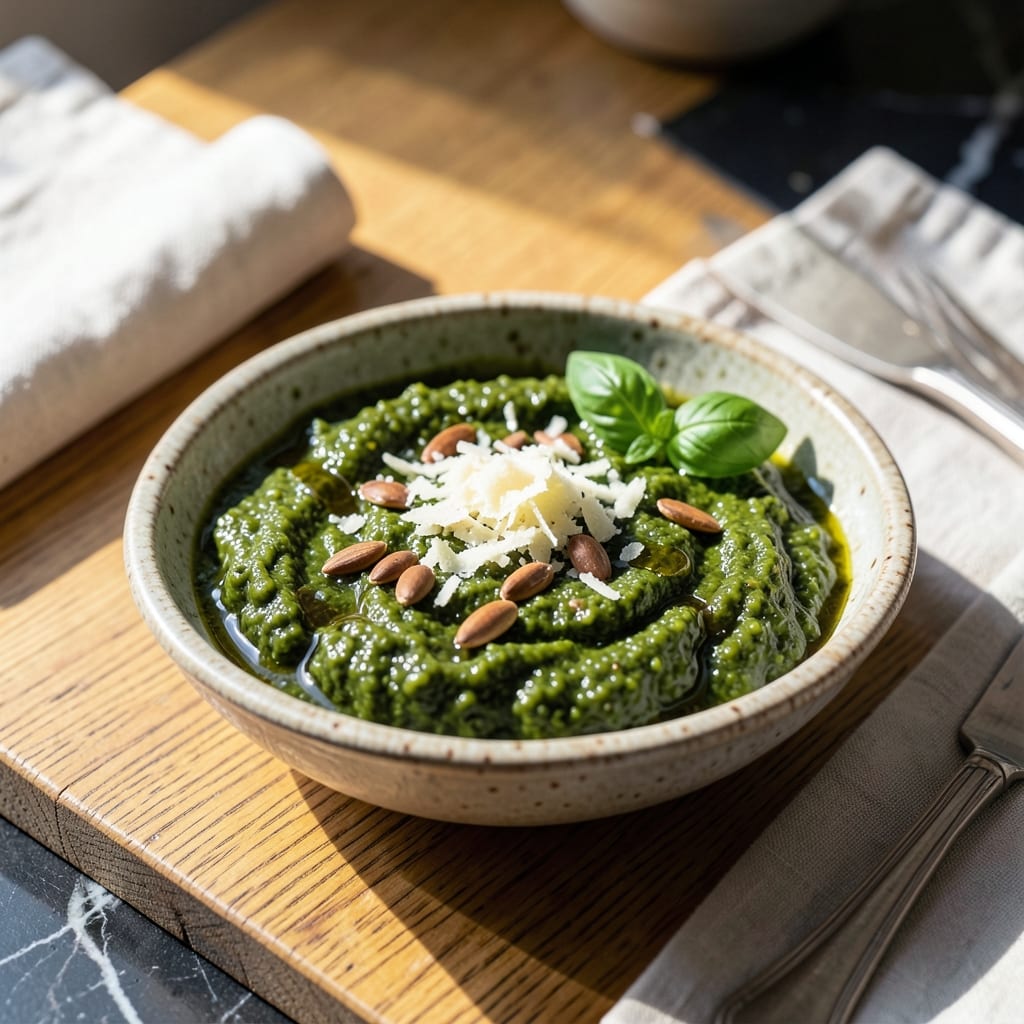
This nut-free basil pesto delivers all the fresh, vibrant flavor of traditional versions without compromise. The secret lies in substituting pine nuts with toasted sunflower seeds, which provide the same rich texture and nutty depth.
I developed this recipe to accommodate nut allergies while maintaining the classic herbaceous brightness that makes pesto so versatile. Fresh basil, garlic, and parmesan blend into a smooth, aromatic sauce that works beautifully with pasta, sandwiches, or as a dip.
It comes together in 5 minutes using simple ingredients you likely already have on hand. The sunflower seeds toast quickly in a dry pan, adding just the right amount of crunch and richness to balance the basil’s freshness.
The result is a creamy, flavorful sauce that keeps for a week in the fridge or can be frozen for later use. This pesto proves you don’t need pine nuts to achieve perfection.
Ingredients for Basil Pesto Recipe No Pine Nuts
Eight ingredients, five minutes, and you’ve got a creamy, nut-free pesto ready to elevate anything.
| Ingredient | Amount | Notes |
|---|---|---|
| Fresh Basil Leaves 🌿 | 2 cups | Packed, stems removed |
| Sunflower Seeds 🌻 | ½ cup | Raw, for toasting |
| Garlic Cloves 🧄 | 3 cloves | Peeled, rough chopped |
| Parmesan Cheese 🧀 | ¾ cup | Freshly grated preferred |
| Extra-Virgin Olive Oil 🫒 | ¾ cup | High quality, fruity |
| Lemon Juice 🍋 | 1 tbsp | Freshly squeezed |
| Sea Salt 🧂 | ½ tsp | Fine grain preferred |
| Black Pepper 🌶️ | ¼ tsp | Freshly ground |
The basil is non-negotiable here—farmers market bunches have the best aroma, but grocery store works if the leaves are vibrant. Sunflower seeds replace pine nuts perfectly (and they’re way cheaper at Trader Joe’s or Costco). The Parmesan? Parmigiano-Reggiano wedge, grated fresh. Pre-shredded won’t melt right and lacks that sharp, nutty bite.
No sunflower seeds? Pumpkin seeds (pepitas) work great—same crunch, slightly earthier flavor. Short on basil? Stretch it with fresh parsley (up to half). Want more tang? Add another squeeze of lemon. The olive oil matters here—use something you’d happily drizzle on bread. Avoid anything labeled ‘light’—it’s been refined and loses flavor.
Pesto browns fast. Pour a thin layer of olive oil on top before sealing—keeps it green. Good for 1 week in the fridge, 6 months frozen. Ice cube trays are perfect for single portions (trust me on this one).
Why You’ll Love This Recipe
- 5-Minute Blend: I toss everything in the food processor and it’s ready before I finish setting the table.
- Sunflower Surprise: The toasted sunflower seeds give it a nutty depth that pairs perfectly with the sharp Parmesan and bright basil.
- Freezer Friend: I make a double batch and freeze in ice cube trays—pesto on demand for pasta, sandwiches, or soups.
- Budget Boost: Honestly, swapping pine nuts for sunflower seeds cuts the cost in half without sacrificing richness.
Step-by-Step Instructions for Basil Pesto No Pine Nuts
This method delivers a rich, nutty flavor without pine nuts—simple, fast, and foolproof.
Step 1: Toast the Sunflower Seeds
Heat a dry skillet over medium heat. Add the 0.5 cup Sunflower Seeds and toast for 3-4 minutes, stirring frequently, until they turn golden brown and release a nutty aroma. Watch them closely—they burn easily.
This toasting step deepens their flavor, giving your pesto that classic richness pine nuts would provide. Remove them from the pan immediately once toasted to prevent over-browning. Let them cool for 5 minutes before blending.
Step 2: Pulse the Aromatics
In a food processor, combine the 2 cups Fresh Basil Leaves, 3 cloves Garlic Cloves, and toasted sunflower seeds. Pulse in 1-second bursts until finely chopped but not fully puréed—you want texture, not a smooth paste.
Stop and scrape down the sides of the bowl as needed to ensure even processing. The garlic and seeds should be broken down completely, while the basil leaves will still have some visible flecks. This creates a vibrant, chunky base for your sauce.
Step 3: Emulsify with Cheese and Oil
Add the 0.75 cup Parmesan Cheese, 0.5 tsp Sea Salt, and 0.25 tsp Black Pepper to the food processor. Pulse again until the cheese is fully incorporated and the mixture looks slightly crumbly.
With the processor running, slowly drizzle in the 0.75 cup Extra-Virgin Olive Oil through the feed tube. This slow addition is key to creating a smooth, creamy emulsion. Process for 20-30 seconds until the mixture is thick and glossy, stopping to scrape the sides if needed.
Step 4: Finish with Lemon and Adjust
Add the 1 tbsp Lemon Juice and pulse for 10 seconds to combine. The lemon brightens the flavors and balances the richness of the cheese and oil. Taste and adjust the seasoning if needed—add a pinch more sea salt if it tastes flat.
Your pesto should be thick but spoonable. If it’s too dense, drizzle in 1-2 tablespoons of water or additional olive oil while pulsing until it reaches your desired consistency. This step ensures it blends seamlessly into pasta or spreads easily on sandwiches.
Pro Tips For Making Basil Pesto Recipe No Pine Nuts
- Toast the Seeds: Lightly toast the sunflower seeds in a dry pan for 2-3 minutes until fragrant—this brings out their nutty depth and prevents a raw, bitter edge in the pesto.
- Blanch the Basil: I learned this the hard way—blanch the basil leaves in boiling water for 10 seconds, then shock in ice water to lock in that bright green color and mellow any bitterness.
- Skip the Overcrowding: Resist the urge to dump all the basil in the processor at once; pulse in batches to avoid a mushy, uneven texture that turns pesto into sad green paste.
- Use Room-Temp Cheese: Grate the Parmesan straight from the fridge, but let it sit out for 15 minutes first—cold cheese doesn’t incorporate as smoothly and can leave little white flecks in your pesto.
Perfect Pairings for This Dish
Pasta Pairings
Toss this pesto with 12 ounces of hot pasta—I love it with linguine or fettuccine for maximum sauce cling. The ridges on penne also grab the pesto beautifully. Add ½ cup reserved pasta water to loosen the sauce as needed. 🥗
Sandwich Spread
Use as a spread for caprese sandwiches—layer with fresh mozzarella, tomato slices, and arugula on ciabatta bread. It also elevates a simple grilled cheese with sharp cheddar and sourdough. The nutty flavor pairs perfectly with the richness of melted cheese.
Protein Partners
Drizzle over grilled chicken or seared salmon for a bright, herby finish. I also love mixing 2 tablespoons into 4 ounces of cream cheese for a quick veggie dip. The sunflower seeds add a satisfying crunch that complements tender proteins.
Breakfast Boost
Stir into scrambled eggs or spread on avocado toast for a flavorful morning kick. A dollop on ricotta toast with cherry tomatoes is my go-to weekend brunch. The lemon in the pesto brightens up any breakfast dish.
Salad Dressing
Thin with 2-3 tablespoons of water or olive oil to create a vibrant salad dressing. Toss with baby spinach, cherry tomatoes, and shaved parmesan for a simple green salad. The garlic and basil flavors shine in this light application. 💫
Nutrition Facts
Frequently Asked Questions
Can I use other seeds instead of sunflower?
Yes! Pumpkin seeds work great for a similar crunch. Walnuts or almonds also add richness if nut allergies aren’t a concern. Just toast them first for best flavor.
How long does this pesto keep?
Store in an airtight container with a thin layer of olive oil on top. It stays fresh in the fridge for 1 week or frozen for 6 months.
Can I make this vegan?
Absolutely—swap the parmesan for nutritional yeast or vegan hard cheese. The texture stays creamy, and the flavor remains bold and herby.
Why did my pesto turn brown?
Basil oxidizes quickly when exposed to air. To prevent browning, add a layer of olive oil and seal tightly. Fresh lemon juice also helps preserve the vibrant green color.

- BBQ Sausage Recipe Oven: Smoky Depth Without the Grill - September 28, 2026
- BBQ Chicken Bowl Recipe Rice: Smoky Sweetness Over Fluffy Grains - September 28, 2026
- Beef Cutlet Recipe Ideas: Crispy Breaded Patties With Bold Seasonings - September 28, 2026