
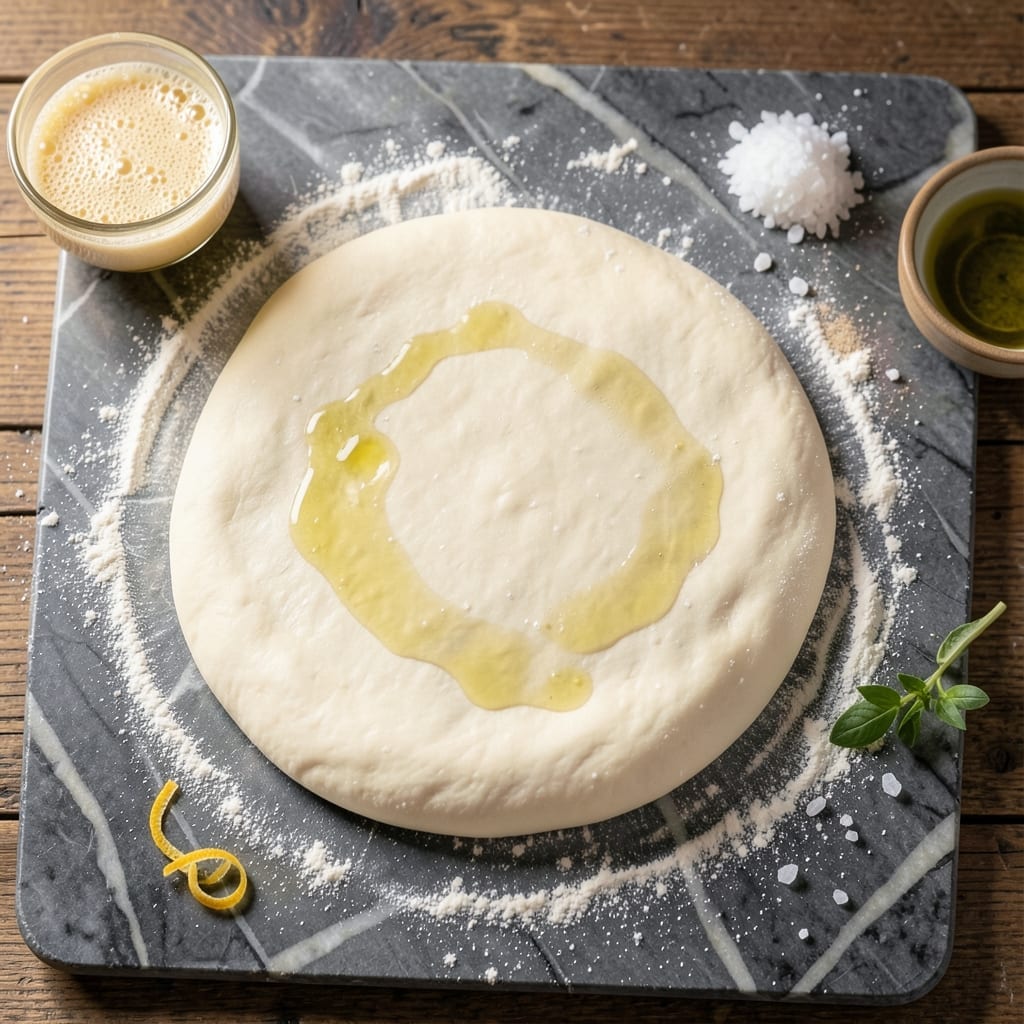
There’s nothing quite like the taste of authentic Italian pizza dough made with 00 flour. Standing in my grandmother’s kitchen in Sicily, I learned that the secret lies in the flour’s fine grind and low protein content.
This recipe delivers a chewy crust with the perfect amount of bite, just like Nonna used to make. The slow fermentation process develops complex flavors that you simply can’t achieve with regular flour.
With just a handful of simple ingredients and a bit of patience, you’ll create a dough that transforms your homemade pizza from good to extraordinary. The texture is light yet sturdy enough to hold your favorite toppings.
Whether you’re making Neapolitan-style or thin crust, this foundation will elevate your pizza night to restaurant quality at home.
Ingredients for Pizza Dough Recipe Using Oo Flour
Just six ingredients stand between you and authentic Italian pizza dough at home.
| Ingredient | Amount | Notes |
|---|---|---|
| 00 Flour 🌾 | 3 ½ cups | Fine grind, low protein |
| Warm Water 💧 | 1 ¼ cups | About 110°F |
| Active Dry Yeast 🍞 | 1 tsp | Or 1 packet |
| Sea Salt 🧂 | 2 tsp | Fine grain preferred |
| Extra-Virgin Olive Oil 🫒 | 2 tbsp | For elasticity and flavor |
| Sugar 🍚 | 1 tsp | Helps activate yeast |
| Semolina Flour 🌾 | ½ cup | For dusting, optional |
The flour is non-negotiable here. 00 flour (double zero) is what gives that silky, chewy texture—look for Caputo or Antimo brands at specialty stores or online. Most Italian markets carry it, and some Whole Foods locations too. If you can’t find it, bread flour is your backup, but the crust won’t be the same. Always check the protein content—should be under 12% for that perfect bite.
No 00 flour? Bread flour gets you closest (higher protein, but still works). Out of yeast? Instant yeast at the same amount works fine—just skip the proofing step. The olive oil can be any good extra-virgin (I like California Olive Ranch), but don’t use that old bottle from the back of your cabinet. Sugar can be swapped for honey if that’s what you’ve got, but keep the amount the same.
Dough keeps in the fridge for up to 3 days—it actually gets better with time. Freeze for 1 month wrapped tight in plastic. Bring to room temp before shaping. Semolina prevents sticking when rolling out, but all-purpose flour works too (just don’t overdo it).
Why You’ll Love This Recipe
- No-Fuss Mixing: I just dump 00 flour, yeast, salt, and olive oil into a bowl, add warm water, and let it rise—no fancy steps.
- Authentic Taste: The 00 flour gives it that thin, crispy Neapolitan-style crust with a light, airy bite.
- Weeknight Hero: I’ve used this dough for quick dinners, lazy lunches, and even impromptu parties with friends.
- Budget Stretch: A bag of 00 flour and pantry staples make multiple pizzas, and leftovers reheat beautifully.
Step-by-Step Instructions for Pizza Dough Using 00 Flour
Here’s the authentic method I use to achieve that perfect Neapolitan-style crust at home.
Step 1: Activate the Yeast
In a small bowl, combine the 1 tsp Active Dry Yeast, 1 tsp Sugar, and 1.25 cups Warm Water. Stir gently and let it sit for 5-10 minutes until the mixture becomes frothy and cloudy.
The sugar helps kickstart the yeast activation. You’ll know it’s ready when you see a layer of foam on top—this means the yeast is alive and active. If it doesn’t foam, your yeast might be expired, and you should start over with fresh yeast.
This step is crucial for developing that authentic Italian flavor and ensuring your dough rises properly. Don’t rush it; proper yeast activation guarantees a good rise.
Step 2: Mix the Dough
In a large mixing bowl, combine the 3.5 cups 00 Flour and 2 tsp Sea Salt. Make a well in the center and pour in the activated yeast mixture and 2 tbsp Extra-Virgin Olive Oil.
Using a wooden spoon or your hands, mix until a shaggy dough forms. The olive oil adds elasticity and flavor, while the fine grind of the 00 flour ensures a tender, chewy texture. You want all the flour to be incorporated, but don’t worry if it looks a bit rough at this stage.
Turn the dough out onto a lightly floured surface and knead for 8-10 minutes until smooth and elastic. The dough should spring back when pressed lightly with your finger.
Step 3: First Rise
Lightly oil a clean bowl with a bit of the Extra-Virgin Olive Oil and place the dough inside, turning to coat it evenly. Cover the bowl with a damp kitchen towel or plastic wrap and let it rise in a warm, draft-free place for 1-2 hours, or until doubled in size.
For the best results, I like to place it in an oven that’s been preheated to 100°F and then turned off. This creates the ideal environment for the dough to rise evenly. The dough is ready when it has approximately doubled in volume and feels airy when gently pressed.
This first rise develops the gluten structure and flavor, which is essential for that authentic chewy texture.
Step 4: Shape and Second Rise
Punch down the risen dough to release the air and divide it into 4 equal portions for individual pizzas. Roll each portion into a ball and place them on a surface dusted with 0.5 cup Semolina Flour. The semolina prevents sticking and adds a nice texture to the crust.
Cover the dough balls with a damp towel and let them rest for another 30-45 minutes. This second rise allows the dough to relax, making it easier to stretch and shape into your pizza crust.
You’ll notice the dough becomes softer and more pliable after this rest. It should feel smooth and elastic, ready to be stretched into your desired pizza shape.
Step 5: Stretch and Prepare for Baking
Preheat your oven to its highest setting, ideally 500°F or higher, with a pizza stone or inverted baking sheet inside. On a surface lightly dusted with Semolina Flour, gently stretch one dough ball into a circle about 12 inches in diameter.
Work from the center outward, using your fingertips to press and stretch the dough. Avoid using a rolling pin, as it can compress the air bubbles, resulting in a denser crust. The semolina will give your pizza that rustic, authentic finish.
Add your toppings and bake immediately for the best results. The high heat will create a crispy yet chewy crust with beautiful bubbly edges, just like a traditional Italian pizzeria.
Pro Tips For Making Pizza Dough Recipe Using Oo Flour
- Check Yeast First: I learned this the hard way—always proof your active dry yeast in the warm water with a pinch of sugar for 5-10 minutes before mixing. If it doesn’t bubble, your dough won’t rise, no matter how long you wait.
- Use Room-Temp Ingredients: Sounds weird, but it works: take your 00 flour and water out of the fridge 30 minutes before starting. Cold ingredients can shock the yeast and slow fermentation.
- Skip Over-Kneading: Resist the urge to knead the dough aggressively—00 flour develops gluten quickly. Stop once the dough pulls away from the bowl and feels smooth, usually around 8-10 minutes.
- Oil the Bowl: After shaping, coat the dough ball in a light layer of extra-virgin olive oil before letting it rise. This keeps the surface from drying out and adds a subtle richness to the crust.
Perfect Pairings for pizza dough recipe using oo flour
Classic Italian Toppings
Keep it simple with San Marzano tomatoes, fresh mozzarella di bufala, and basil leaves. This is the Margherita that Nonna taught me in Sicily. The sweetness of the tomatoes balances the saltiness of the cheese perfectly. 💛
Wine Pairings
A crisp Italian white like Pinot Grigio from Friuli cuts through the richness. For red lovers, a light Chianti Classico complements the acidity of tomato sauce. I always serve wine slightly chilled, even reds.
Beer Options
An Italian lager like Peroni or Birra Moretti is my go-to. The carbonation cleanses your palate between bites. For craft beer fans, a Belgian witbier with citrus notes works beautifully.
Salad Pairings
A simple arugula salad with lemon and olive oil adds freshness. I toss 4 cups arugula with 2 tbsp olive oil and 1 tbsp lemon juice. The peppery bite contrasts the rich crust.
Dessert Follow-up
End with tiramisu or panna cotta for a true Italian meal. My family always serves espresso with a small square of dark chocolate. It’s how we finish Sunday dinners in our East Coast community. 🍷
Nutrition Facts
Frequently Asked Questions
Can I use all-purpose flour instead?
Not for authentic results. 00 flour‘s fine grind and low protein create that signature chewy texture. All-purpose has higher protein, making the crust tougher. In a pinch, mix 2 cups bread flour with 1.5 cups all-purpose for a closer result.
Why does the dough need to rest twice?
The first rise develops flavor and gluten structure. The second rest lets the dough relax, making it easier to stretch without tearing. Skipping this creates a dense, tough crust. Patience is key for that airy, chewy bite.
How do I know when it’s done rising?
The dough should double in size and feel airy when gently pressed. For the first rise, look for a smooth, rounded top. For the second, the balls should spring back slowly when poked. This usually takes 1-2 hours and 30-45 minutes respectively.

- Potato Candy Recipe 1933: Vintage Peanut Butter Roll Delight - October 30, 2026
- Potato Chip Cookie Recipe With Pecans: Buttery Crunch Meets Nutty Richness - October 30, 2026
- Potato Patty Recipe No Egg: Crispy Edges Without the Binder - October 30, 2026