
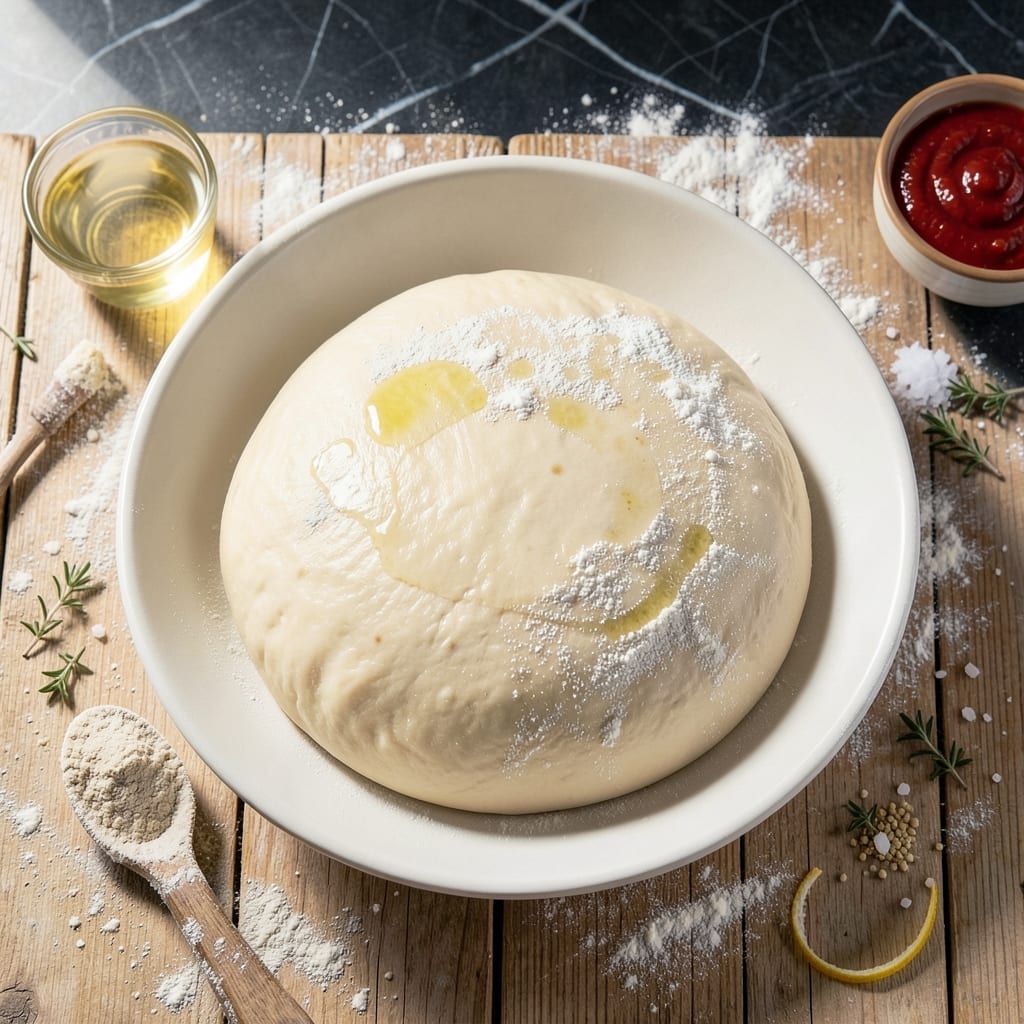
There’s nothing quite like the satisfaction of pulling a golden, bubbling pizza from your own oven. This bread flour-based dough delivers that chewy texture and artisan rise that separates homemade from store-bought.
Standing on a stool in my grandmother’s Sicilian kitchen, I learned that the right flour makes all the difference. Bread flour’s higher protein content creates the perfect structure for a crust that holds its shape while staying tender inside.
With just a few simple ingredients and a little patience for rising, you’ll create a base that bakes up crisp yet soft. The slow fermentation develops complex flavors that taste like they came from a wood-fired oven.
This recipe stays true to Italian tradition while being foolproof for home cooks. The results speak for themselves with every bite.
Ingredients for Pizza Dough Recipe Bread Flour
Bread flour, yeast, olive oil—simple ingredients for a restaurant-quality crust at home.
| Ingredient | Amount | Notes |
|---|---|---|
| Bread Flour 🌾 | 3 ½ cups | High-protein, unbleached preferred |
| Warm Water 💧 | 1 ½ cups | 105-110°F for yeast activation |
| Active Dry Yeast 🍞 | 2 ¼ tsp | One 0.25 oz packet plus extra |
| Fine Sea Salt 🧂 | 2 tsp | Diamond Crystal preferred |
| Extra-Virgin Olive Oil 🫒 | 2 tbsp | For dough elasticity and flavor |
| Granulated Sugar 🍚 | 1 tsp | Feeds the yeast |
| Cornmeal 🌽 | ½ cup | For dusting peel, prevents sticking |
| Semolina Flour 🌾 | ¼ cup | Optional for extra crispiness |
The bread flour is non-negotiable here—King Arthur or Bob’s Red Mill have the protein content (12-14%) you need for that chewy texture. Skip the all-purpose; it just won’t hold up. Yeast from a jar (not those old packets in your pantry) gives you consistent results. Fleet Farm or Whole Foods bulk sections usually have the freshest stock.
No bread flour? All-purpose plus 1 tbsp vital wheat gluten per cup gets you close. Out of yeast? You can make a sourdough starter version, but that’s a whole different beast. The olive oil can be any good-quality extra-virgin—California Olive Ranch is a solid grocery store pick. Sugar can be swapped with honey (1:1), but stick to granulated if you want to keep it strictly traditional.
Dough balls keep in the fridge for 3 days (they’ll develop more flavor) or freeze for 3 months. Bring to room temp before shaping. Cornmeal and semolina last forever in airtight containers—just don’t let them get damp (the good stuff, not the pre-shredded kind).
Why You’ll Love This Recipe
- Five Ingredients Only: I love that I can count the ingredients on one hand—flour, water, yeast, salt, and olive oil, and it still turns out better than takeout.
- Chewy Perfection: The bread flour gives it that ideal chew, while the olive oil adds a subtle richness that makes every bite satisfying.
- Freezer Friendly: I double the batch and freeze half for lazy nights, so homemade pizza is always just a thaw away.
- Budget Stretcher: A bag of bread flour and a few cents of yeast make multiple pizzas, saving me a fortune compared to delivery.
Step-by-Step Instructions for Pizza Dough
Here’s the method I use for chewy, artisan-style dough with a perfect rise every time.
Step 1: Activate the Yeast for Maximum Rise
In a large mixing bowl, combine the 1.5 cups Warm Water with the 1 tsp Granulated Sugar and 2.25 tsp Active Dry Yeast. Stir gently and let it sit for 5-7 minutes until the mixture becomes foamy and cloudy.
This is your proof that the yeast is alive and active. If nothing happens, your yeast might be expired—start fresh. The sugar gives the yeast an immediate food source to wake up and begin multiplying, which is what creates that beautiful rise in your dough.
Step 2: Mix and Knead the Dough to Develop Gluten
Add the 3.5 cups Bread Flour and 2 tsp Fine Sea Salt to the yeast mixture. Using a wooden spoon, stir until a shaggy dough forms. Then, pour in the 2 tbsp Extra-Virgin Olive Oil and continue mixing until fully incorporated.
Turn the dough out onto a lightly floured surface and knead for 8-10 minutes until smooth and elastic. You’ll notice the dough transforms from sticky and rough to silky and supple—that’s the gluten developing. If it sticks, add a sprinkle of flour, but don’t overdo it; a slightly tacky dough makes for a chewier crust.
Step 3: Let the Dough Rise Until Doubled
Shape the dough into a ball and place it in a lightly oiled bowl, turning once to coat all sides. Cover with a damp kitchen towel and let it rise in a warm, draft-free spot for 1 to 1.5 hours, or until doubled in size.
I like to preheat my oven to its lowest setting (170°F), turn it off, and let the dough rise inside. This creates a consistently warm environment. The dough is ready when it springs back slowly when pressed lightly with a finger, leaving a slight indent.
Step 4: Shape and Prepare for Baking
Punch down the risen dough to release excess air, then turn it out onto a surface dusted with 0.5 cup Cornmeal and 0.25 cup Semolina Flour. These add texture and prevent sticking as you shape the dough.
Divide the dough into 4 equal portions (since this makes 4 servings) and shape each into a ball. Let them rest for 10-15 minutes before stretching. This rest relaxes the gluten, making it easier to shape without the dough springing back. Use your knuckles to stretch the dough gently into a round, working from the center outward.
Pro Tips For Making Pizza Dough Recipe Bread Flour
- Test Your Yeast: I learned this the hard way—always proof your active dry yeast in the warm water with a pinch of sugar first. If it doesn’t bubble within 5 minutes, your dough won’t rise, no matter how long you wait.
- Weigh the Flour: Bread flour is dense and easy to overpack. Use a kitchen scale for 100% accuracy—about 125g per cup—because even 10g extra can turn your dough from supple to stiff.
- Skip Ice-Cold Water: Warm water—around 110°F—wakes the yeast up fast, but anything over 120°F kills it. I burned my first three batches before I got a thermometer and stopped guessing.
- Oil the Bowl: Coat your rising bowl with a tablespoon of extra-virgin olive oil before adding the dough. It prevents sticking and makes punching down later way easier—plus, it adds a subtle richness to the crust.
Troubleshooting pizza dough recipe bread flour
Yeast Won’t Activate
If your yeast mixture isn’t foamy after 10 minutes, the water might be too hot or cold. I always use a thermometer to confirm 105-110°F. Also check expiration dates—old yeast won’t wake up. Try fresh yeast from your local Italian deli. 🌡️
Dense, Flat Dough
This usually means the dough didn’t rise properly. Ensure your rising spot is warm enough—my Nonna always used the top of the refrigerator. Also, don’t rush the first rise: give it the full 1-1.5 hours.
Dough Too Sticky
Resist adding too much flour during kneading. A slightly tacky dough creates that coveted chewy texture. If absolutely necessary, add flour in 1 tbsp increments until manageable. Remember, bread flour absorbs more liquid than all-purpose.
Crust Too Tough
Over-kneading develops too much gluten, resulting in a tough crust. Stop once the dough becomes smooth and elastic, usually after 8-10 minutes. Also, ensure you’re not overbaking—pizza dough should bake just until golden.
Dough Springs Back
When stretching, if the dough keeps shrinking, it needs more rest. After dividing into balls, let them rest for 15-20 minutes before shaping. This relaxes the gluten strands, making them more cooperative.
Uneven Baking
For consistent results, ensure your oven is fully preheated to its highest setting (usually 500-550°F). Use a pizza stone or inverted baking sheet, and rotate the pizza halfway through baking for even browning. 🔥
Nutrition Facts
Frequently Asked Questions
Why use bread flour instead of all-purpose?
Bread flour has 12-14% protein, creating stronger gluten for that perfect chewy texture. All-purpose lacks the structure needed for an artisan rise.
Can I make this dough ahead of time?
Refrigerate the dough balls for up to 3 days for deeper flavor. Let them come to room temperature before shaping.
How thin should I stretch the dough?
Aim for 1/4-inch thickness for a classic crust. Use your knuckles to stretch from the center outward, leaving a slightly thicker rim.
What if my dough tears while stretching?
Let it rest for 5-10 minutes to relax the gluten. Patch small tears with extra dough, then continue stretching gently.

- Potato Candy Recipe 1933: Vintage Peanut Butter Roll Delight - October 30, 2026
- Potato Chip Cookie Recipe With Pecans: Buttery Crunch Meets Nutty Richness - October 30, 2026
- Potato Patty Recipe No Egg: Crispy Edges Without the Binder - October 30, 2026