
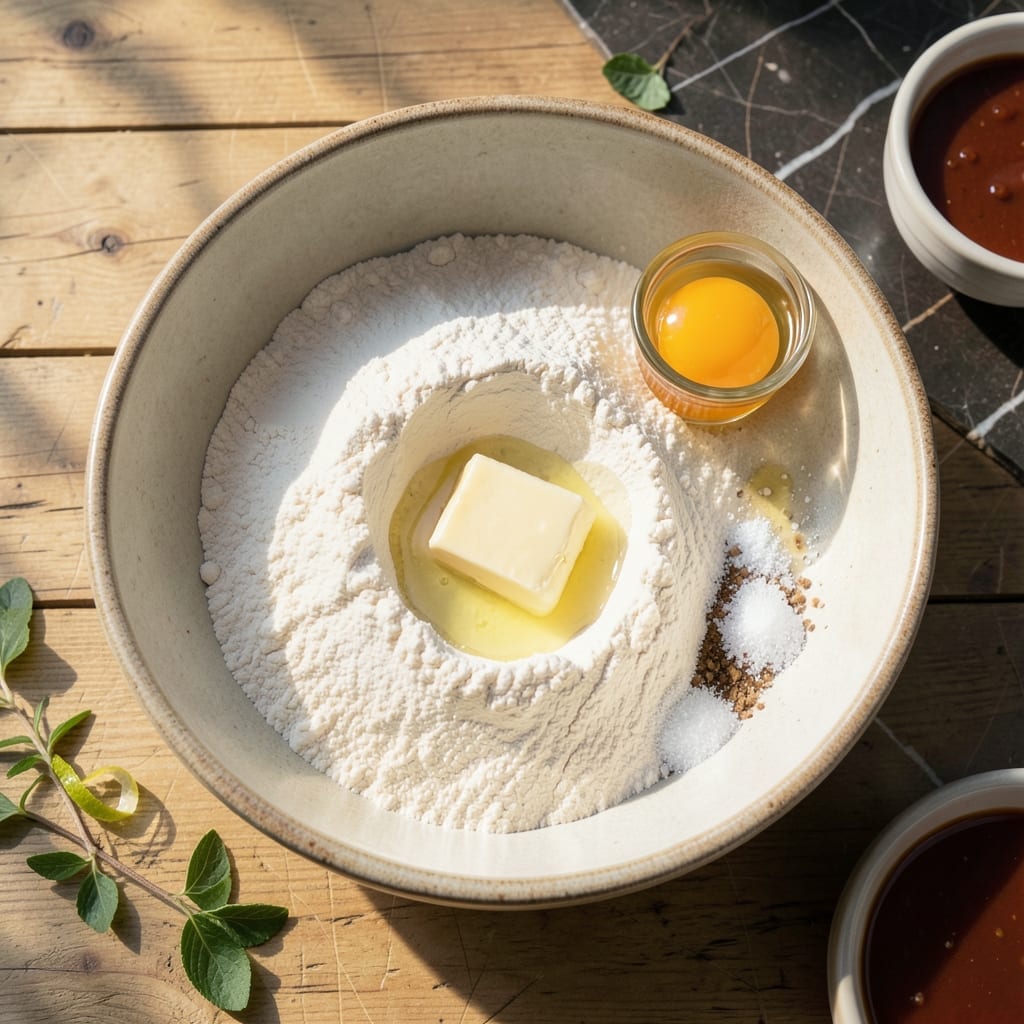
This recipe delivers the flaky, tender crust every pie deserves. The secret lies in two unexpected ingredients: vinegar and egg, which work together to create layers that separate beautifully in the oven.
Cold butter is cut into the flour until pea-sized crumbs form, then the vinegar and egg join the mix. This combination inhibits gluten development while adding just enough moisture for the dough to come together without toughness.
The result is a golden, crisp crust that holds its shape yet melts in your mouth. It’s the foundation for any perfect pie, whether filled with fruit, custard, or savory ingredients.
Chill the dough for 30 minutes before rolling for best results. This step ensures the butter stays cold, guaranteeing those coveted flaky layers.
Ingredients for Pie Crust Recipe Using Vinegar and Egg
Seven ingredients transform into the flakiest crust with vinegar and egg as the secret stars.
| Ingredient | Amount | Notes |
|---|---|---|
| All-Purpose Flour 🌾 | 2 ½ cups | Sifted for even texture |
| Unsalted Butter 🧈 | 1 cup | Cold, cubed for flakiness |
| White Vinegar 💧 | 1 tbsp | Inhibits gluten development |
| Large Egg 🥚 | 1 whole | Cold, for moisture balance |
| Granulated Sugar 🍚 | 1 tbsp | Optional for sweet crusts |
| Salt 🧂 | ½ tsp | Fine grain for even distribution |
| Ice Water 💧 | 2 tbsp | As needed for dough cohesion |
The butter must be ice-cold—cut it into cubes and return to the fridge for 10 minutes before starting. King Arthur Flour or similar high-protein brands work best for structure. Vinegar type matters less; white distilled is standard but apple cider vinegar adds subtle depth. The egg should be straight from the fridge to keep everything cold. This is non-negotiable for achieving those coveted flaky layers.
No vinegar? Lemon juice at the same amount works in a pinch. Out of unsalted butter? Use salted but reduce added salt by half. For a richer flavor, replace 2 tbsp of water with cold vodka—it evaporates faster, creating extra flakiness. The sugar can be omitted for savory pies, or swap for 1 tbsp powdered sugar for a more delicate texture.
Dough keeps wrapped tightly in plastic for 2 days in the fridge or 3 months frozen. Thaw overnight in the fridge before rolling. Baked crusts can be stored at room temperature for 1 day or frozen for 1 month. Always chill before rolling to prevent shrinking.
Why You’ll Love This Recipe
- One-Bowl Wonder: I mix everything right in the same bowl—no extra dishes, just flour, butter, and that splash of vinegar doing all the work.
- Buttery Flake Magic: The vinegar keeps the crust tender while the butter gives it that golden, layered crunch I crave.
- Sweet or Savory: Honestly, it’s my base for fruit pies and quiches alike—just skip the sugar if I’m going savory.
- Pantry Staples: Between us, I always have these ingredients on hand, so last-minute pie cravings are no problem.
Step-by-Step Instructions for Pie Crust Using Vinegar and Egg
Master this technique for consistently flaky, tender crust with perfect layering every time.
Step 1: Combine Dry Ingredients and Cold Butter
In a large bowl, whisk together the 2.5 cups All-Purpose Flour, 1 tbsp Granulated Sugar, and 0.5 tsp Salt until evenly distributed. The sugar adds subtle sweetness while the fine salt ensures consistent seasoning throughout the dough.
Add the 1 cup Unsalted Butter (cold and cubed) to the flour mixture. Using a pastry cutter or your fingertips, work the butter into the flour until the mixture resembles coarse crumbs with pea-sized butter pieces visible. This creates the flaky layers we’re after—don’t overwork it.
Step 2: Incorporate Wet Ingredients for Cohesion
Create a well in the center of the flour-butter mixture. Add the 1 whole Large Egg (cold), 1 tbsp White Vinegar, and 2 tbsp Ice Water. The vinegar inhibits gluten development, while the cold egg and water prevent the butter from melting prematurely.
Using a fork, gently mix the wet ingredients into the dry until the dough just begins to come together. You’ll see shaggy, moist clumps forming—this is exactly what you want. Avoid overmixing, as this would develop gluten and result in a tough rather than flaky crust.
Step 3: Knead and Chill for Optimal Texture
Turn the dough out onto a lightly floured surface. Gently knead it just enough to form a cohesive ball, about 4-5 turns. The dough should hold together when pressed but still have visible butter streaks. These butter layers will create the signature flakes during baking.
Divide the dough into two equal portions, flatten into discs, and wrap each tightly in plastic wrap. Chill in the refrigerator for at least 1 hour (or up to 2 days). This resting period allows the gluten to relax and the butter to firm up, ensuring maximum flakiness when rolled and baked.
Step 4: Roll and Blind Bake for Perfect Results
On a lightly floured surface, roll one dough disc to a ⅛-inch thickness, about 2 inches larger than your pie dish. Transfer to the dish, press gently into the bottom and sides, and trim excess dough, leaving a ½-inch overhang for crimping.
For pre-baking, line the crust with parchment paper and fill with pie weights or dried beans. Bake at 375°F for 15 minutes, then remove the weights and bake an additional 5-7 minutes until the edges are light golden brown. This prevents a soggy bottom in filled pies.
Pro Tips For Making Pie Crust Recipe Using Vinegar And Egg
- Chill the Butter: Cut your unsalted butter into small cubes and refrigerate for 15 minutes before mixing—I learned this the hard way after ending up with a tough crust from melted butter.
- Measure Flour Right: Spoon your all-purpose flour into the measuring cup and level it off, don’t scoop directly from the bag. My grandmother swore by this, and she was right: it prevents a dense, dry crust.
- Skip Overmixing: Mix just until the dough comes together, even if it looks shaggy. After burning three batches, I finally figured out that overworking develops gluten, making the crust tough.
- Rest the Dough: Give the dough a solid 30 minutes in the fridge after mixing—yes, even if you’re impatient like me. This relaxes the gluten and makes rolling out much easier.
Essential Equipment for Perfect Results
Mixing Tools
I always start with a large stainless steel mixing bowl—it’s sturdy and keeps ingredients cold. A pastry cutter is my go-to for cutting butter into flour, but a fork or even your fingertips work in a pinch. Avoid plastic bowls, as they can retain heat. 💡
Measuring Essentials
Accurate measurements are key for flaky results. I use OXO Good Grips measuring cups for dry ingredients and a 1-tablespoon measure for the vinegar. A kitchen scale helps for precise butter portions if you’re scaling the recipe up or down.
Rolling Equipment
A French rolling pin (without handles) gives me the most control for even thickness. Place it between two ¼-inch wooden guides to ensure consistent results. A lightly floured marble pastry board keeps the dough cool while rolling.
Chilling Setup
Plastic wrap is essential for wrapping dough discs before chilling. I prefer heavy-duty wrap to prevent freezer burn if storing longer. A flat surface in the fridge, like a baking sheet, helps the dough chill evenly.
Baking Basics
For blind baking, I rely on parchment paper and ceramic pie weights to prevent puffing. A 9-inch glass pie dish conducts heat evenly. A pastry brush helps apply egg wash for that golden finish.
Cleanup Helpers
A bench scraper is my secret weapon for dividing dough and cleaning up flour. It also helps lift the rolled crust into the pie dish without tearing. Keep a damp towel nearby to wipe sticky fingers quickly.
Nutrition Facts
Frequently Asked Questions
Why does vinegar make the crust flakier?
Vinegar tenderizes by inhibiting gluten formation. It creates a more delicate structure that separates into perfect layers when baked at 375°F.
Can I substitute the egg with something else?
Yes, use 2 tbsp ice water plus 1 tsp extra vinegar for similar results. The egg adds richness, but this swap maintains flakiness.
How long can I store the dough in the fridge?
Tightly wrapped, it keeps for 2 days refrigerated. For longer storage, freeze for up to 3 months. Always thaw overnight before rolling.
What if my crust shrinks during baking?
This usually means the dough wasn’t chilled long enough. Be sure to rest it for at least 1 hour before rolling and pricking the bottom with a fork helps too.

- Potato Candy Recipe 1933: Vintage Peanut Butter Roll Delight - October 30, 2026
- Potato Chip Cookie Recipe With Pecans: Buttery Crunch Meets Nutty Richness - October 30, 2026
- Potato Patty Recipe No Egg: Crispy Edges Without the Binder - October 30, 2026