
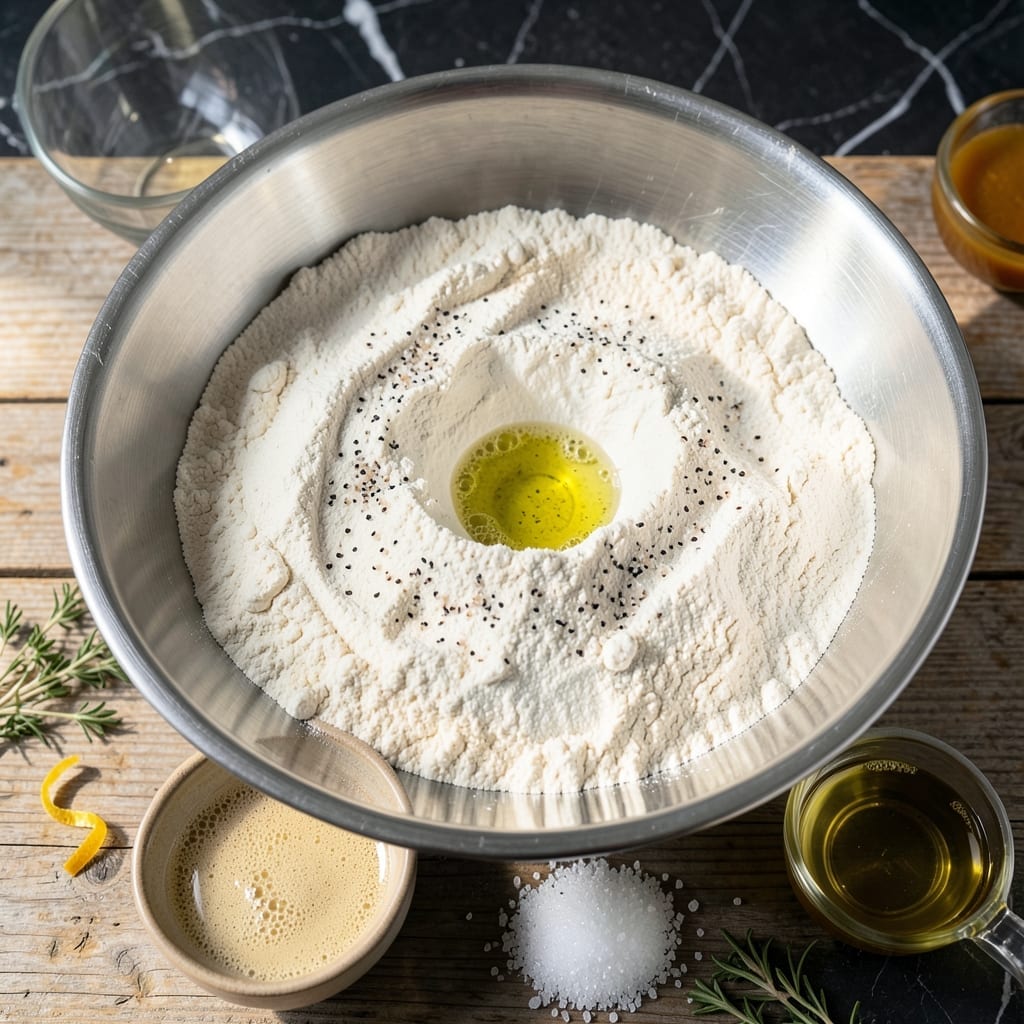
There’s nothing quite like the satisfaction of crafting homemade pizza dough from scratch. This proven method delivers a chewy crust with those coveted airy bubble pockets that make every bite perfect.
I learned the fundamentals standing beside my grandmother in Sicily, where she taught me that patience is the secret ingredient. The active dry yeast creates a light, fluffy texture that commercial doughs simply can’t match.
With just a few simple ingredients and about 2 hours of rising time, you’ll have a canvas ready for your favorite toppings. The process is straightforward but rewards attention to detail.
The result is a crust that bakes to golden perfection, sturdy enough to hold toppings yet delicate enough to fold. This is the foundation of authentic pizza night at home.
Ingredients for Pizza Dough Recipe Active Dry Yeast
Eight simple ingredients transform into the perfect pizza foundation. Nothing more, nothing less.
| Ingredient | Amount | Notes |
|---|---|---|
| Active Dry Yeast 🍞 | 2 ¼ tsp | One packet, proofed in warm water |
| Warm Water 💧 | 1 ¼ cups | 110-115°F for proofing |
| Bread Flour 🌾 | 4 cups | High protein for chewy texture |
| Fine Sea Salt 🧂 | 2 tsp | Enhances yeast activity and flavor |
| Extra-Virgin Olive Oil 🫒 | 2 tbsp | For tender, elastic dough |
| Granulated Sugar 🍚 | 1 tsp | Feeds the yeast for activation |
| All-Purpose Flour 🌾 | ½ cup | For dusting work surface |
| Cornmeal 🌽 | ¼ cup | For pizza peel, optional |
The flour is non-negotiable here. King Arthur Bread Flour delivers consistent protein content for that ideal chew. Active dry yeast from Fleischmann’s or Red Star works every time—just check the expiration date. I always use Diamonds Crystal kosher salt when I’m at home, but fine sea salt (like from Maldon) works beautifully too. Warm water temperature is critical—too hot kills the yeast, too cold won’t activate it.
No bread flour? All-purpose flour plus 1 tbsp vital wheat gluten per cup gets you close. Out of yeast? This isn’t a no-yeast recipe—grab some from the store. Sugar can be swapped for honey at equal amounts. The olive oil can be any neutral oil, but extra-virgin adds authentic flavor. No cornmeal? Extra flour on the peel works fine (just be careful transferring).
Dough keeps in the fridge for up to 3 days—it actually develops more flavor. Freeze for 1 month in airtight container. Bring to room temperature before shaping. The yeast loses potency over time, so store it in the freezer if you won’t use it within a few months.
Why You’ll Love This Recipe
- No-Knead Magic: I just mix, let it rise, and the yeast does all the work—no tired arms here.
- Crisp Yet Chewy: That olive oil in the dough gives it a golden crust with a soft, airy bite every time.
- Endless Topping Fun: Honestly, I’ve used this for thick crust, thin crust, even garlic knots.
- Pennywise Perfection: Bread flour and yeast are cheap, and this makes enough for two pizzas.
Step-by-Step Instructions for Pizza Dough with Active Dry Yeast
Here’s my proven method for achieving that perfect chewy crust with airy bubble pockets.
Step 1: Activate the Active Dry Yeast
In a small bowl, combine the 2.25 tsp Active Dry Yeast with the 1 tsp Granulated Sugar and 1.25 cups Warm Water heated to 110-115°F. The water should feel warm but not hot to the touch—too hot and you’ll kill the yeast.
Let the mixture sit for 5-10 minutes until it becomes frothy and bubbly. This visual confirmation means your yeast is active and ready to work. If it doesn’t bubble, your water might have been too hot or your yeast might be expired—start over with fresh ingredients.
Step 2: Mix and Knead the Dough
In a large mixing bowl, combine the 4 cups Bread Flour with the 2 tsp Fine Sea Salt. Create a well in the center and add the 2 tbsp Extra-Virgin Olive Oil and your activated yeast mixture.
Using a wooden spoon, mix until a shaggy dough forms. Then turn it out onto a surface dusted with 0.5 cup All-Purpose Flour and knead for 8-10 minutes until smooth and elastic. The dough should be slightly tacky but not sticky—add a bit more all-purpose flour if needed, but don’t overdo it.
Step 3: First Rise for Maximum Flavor
Form the dough into a ball and place it in a lightly oiled bowl, turning to coat all sides. Cover with a damp towel and let it rise in a warm, draft-free spot for 1-2 hours, or until doubled in volume.
I like to place mine in an oven that’s been turned off but still has the light on for gentle warmth. The dough is ready when it springs back slowly when pressed lightly with your finger. This first rise develops the gluten structure and flavor.
Step 4: Shape and Second Rise
Punch down the risen dough to release the air. Divide it into 4 equal portions for individual pizzas. On a surface dusted with 0.5 cup All-Purpose Flour, press each portion into a ¼-inch thick circle, leaving a slightly thicker rim for the crust.
Transfer to a baking sheet dusted with 0.25 cup Cornmeal if using—this prevents sticking and adds a nice texture. Cover and let rest for 15-30 minutes while you preheat your oven to its highest setting, typically 500-550°F. This second rise makes the dough easier to stretch and helps develop those airy pockets.
Pro Tips For Making Pizza Dough Recipe Active Dry Yeast
- Test the Yeast: I learned this the hard way—always bloom your active dry yeast in warm water (105-110°F) with a pinch of sugar first. If it doesn’t foam within 5 minutes, your dough won’t rise.
- Use Bread Flour: Skip all-purpose flour; bread flour’s higher protein content gives that chewy, elastic texture pizza dough needs.
- Don’t Rush the Rise: Resist the urge to speed it up with a warm oven—let it proof at room temp for 1-2 hours, or overnight in the fridge for deeper flavor.
- Oil the Bowl: Coat the rising bowl with about 1 tablespoon of olive oil before adding the dough—it prevents sticking and makes cleanup a breeze.
Best Sauces and Condiments for pizza dough recipe active dry yeast
Classic Tomato Sauce
For an authentic pairing, I use San Marzano tomatoes crushed by hand with 2 tbsp extra-virgin olive oil, 3 minced garlic cloves, and a pinch of fine sea salt. Simmer for 15 minutes—just like Nonna taught me in Sicily. 🍅
Pesto Drizzle
Blend 2 cups fresh basil, ¼ cup pine nuts, ½ cup Parmesan, and ½ cup olive oil for a vibrant topping. I learned this trick at Sunday family dinners—it adds freshness to the chewy crust. The wooden spoon Nonna gave me always gets a taste test.
Garlic Olive Oil
Infuse ½ cup olive oil with 4 crushed garlic cloves over low heat for 5 minutes. Brush on dough before baking for a fragrant base. This simple method highlights the dough’s airy pockets beautifully.
Spicy Arrabbiata
Sauté 1 diced onion, 3 minced garlic cloves, and ½ tsp red pepper flakes in 2 tbsp olive oil. Add 1 can crushed tomatoes and simmer for 20 minutes. The heat balances the dough’s sweetness perfectly. 🔥
White Sauce Base
Melt 2 tbsp butter, add 2 tbsp flour, and whisk in 1 cup whole milk. Stir in ½ cup grated Parmesan and ¼ tsp nutmeg. This creamy base complements the chewy texture wonderfully.
Nutrition Facts
Frequently Asked Questions
Can I use instant yeast instead?
Yes, but reduce the amount by 25% and skip the proofing step. Instant yeast activates faster, so add it directly to dry ingredients. The texture will be nearly identical.
Why didn’t my dough rise?
Most likely, the yeast was expired or the water was too hot. Always check the expiration date and ensure water is 110-115°F. Drafty environments can also slow rising.
How do I get a crispier crust?
Preheat your oven to its highest setting with a pizza stone inside for at least 30 minutes. Bake directly on the stone for maximum heat contact.
Can I make the dough ahead?
Prepare the dough, let it rise, then refrigerate for up to 3 days. Cold fermentation enhances flavor and makes stretching easier.

- Potato Candy Recipe 1933: Vintage Peanut Butter Roll Delight - October 30, 2026
- Potato Chip Cookie Recipe With Pecans: Buttery Crunch Meets Nutty Richness - October 30, 2026
- Potato Patty Recipe No Egg: Crispy Edges Without the Binder - October 30, 2026