
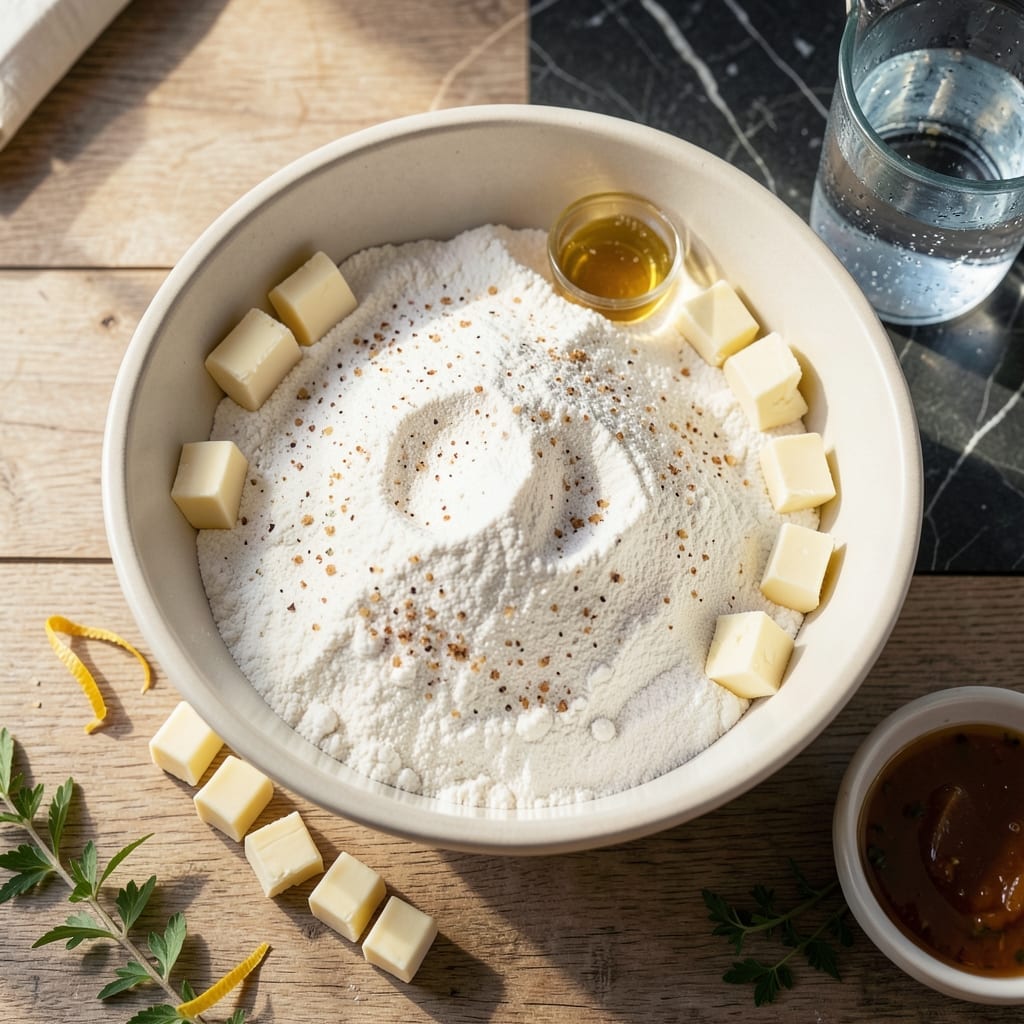
There’s a reason bakeries swear by homemade pie dough—it delivers a flaky, tender crust that store-bought simply can’t match. This recipe focuses on precision and patience, with cold butter and minimal handling creating those coveted layers. The result is a versatile base for any filling you choose.
What sets this apart is the technique: chilled ingredients, quick mixing, and a rest period ensure the butter stays intact. This prevents a tough crust and guarantees a golden, crisp finish. The process takes about 30 minutes of active prep, with downtime for resting.
The dough rolls out smoothly and holds its shape, whether for fruit pies, custards, or savory dishes. It bakes up golden and flaky, with a buttery richness that elevates every bite. You’ll notice the difference immediately.
Once mastered, this method becomes your go-to for any pie recipe. The consistency is reliable, and the flavor is unmatched.
Ingredients for Pie Dough Recipe from Scratch
Six ingredients. One bowl. The foundation for any pie you can dream up.
| Ingredient | Amount | Notes |
|---|---|---|
| All-Purpose Flour 🌾 | 2 ½ cups | Spoon and level, plus extra for dusting |
| Unsalted Butter 🧈 | 1 cup | Cold, cut into 1/2-inch cubes |
| Cold Water 💧 | ⅓ cup | Ice water preferred |
| Granulated Sugar 🍚 | 1 tsp | Optional, for sweet pies |
| Salt 🧂 | 1 tsp | Fine sea salt or table salt |
| Apple Cider Vinegar 🍏 | 1 tbsp | Or white vinegar |
The butter is non-negotiable here. European-style unsalted (like Plugrá or Kerrygold) has higher fat content, which means flakier layers. Most grocery stores stock it near the regular butter. If you only have salted, skip the added salt in the recipe. The flour? King Arthur or Gold Medal all-purpose both work beautifully—just avoid self-rising.
No apple cider vinegar? Lemon juice at the same amount does the trick. The vinegar tenderizes the gluten, but you can skip it in a pinch. For a richer crust, swap 1/4 cup of the water for vodka—it evaporates faster, creating extra flakiness. Cold is key: if your kitchen is warm, chill the flour and mixing bowl too.
The dough keeps wrapped in plastic for 3 days in the fridge or 3 months frozen. Thaw overnight before rolling. For best results, let it rest at least 30 minutes before using—this relaxes the gluten for easier handling.
Why You’ll Love This Recipe
- No-Fuss Mixing: I just pulse the flour, cold butter, sugar, and salt in a food processor—no fancy techniques, just simple steps.
- Buttery Perfection: The unsalted butter and pinch of sugar give it that rich, flaky taste that store-bought crusts can’t touch.
- Endless Possibilities: Sweet pies, savory quiches, even hand pies—this dough handles it all, and I love having it ready in my freezer.
Step-by-Step Instructions for Pie Dough From Scratch
This method ensures flaky, tender layers every time with minimal effort.
Step 1: Combine Dry Ingredients
In a large mixing bowl, whisk together the 2.5 cups All-Purpose Flour, 1 tsp Salt, and 1 tsp Granulated Sugar until evenly distributed. The sugar is optional, but I include it for sweet pies as it adds subtle caramelization to the crust.
Make sure there are no lumps in the flour mixture. This even distribution of salt and sugar prevents pockets of over-seasoned dough. Set this bowl aside while you prepare the fat.
Step 2: Cut in Cold Butter
Add the 1 cup Unsalted Butter (cut into ½-inch cubes) to the flour mixture. Using a pastry cutter or your fingers, work the butter into the flour until the mixture resembles coarse crumbs with some pea-sized butter pieces remaining.
Here’s the thing—those visible butter pieces are what create the flaky layers. The apple cider vinegar will help tenderize the dough. Stop when you see both fine crumbs and noticeable butter chunks—this takes about 3-5 minutes of cutting.
Step 3: Add Liquid and Form Dough
Create a well in the center of the flour-butter mixture. Add the 1 tbsp Apple Cider Vinegar and 0.33 cup Cold Water. Using a fork, gradually incorporate the liquid into the dry ingredients until the dough just begins to come together.
It will look shaggy and dry at first—that’s normal. Don’t be tempted to add more water. The dough should hold together when pressed but not be sticky. If it’s too dry, add cold water 1 tablespoon at a time until it just coheres.
Step 4: Chill and Rest the Dough
Turn the dough out onto a lightly floured surface and gently press it into a thick disk. Wrap this tightly in plastic wrap and refrigerate for at least 1 hour, or up to 2 days.
This resting period allows the gluten to relax and the butter to firm up, which prevents shrinking during baking and ensures those coveted flaky layers. The vinegar also works during this time to inhibit gluten formation, making for a more tender crust.
When ready to use, let the dough sit at room temperature for 10-15 minutes to soften slightly before rolling. This makes it easier to work with without cracking.
Pro Tips For Making Pie Dough Recipe From Scratch
- Chill the Butter: Cut your unsalted butter into small cubes and refrigerate for 15 minutes before mixing—this keeps it from melting into the flour and ruining the flaky texture.
- Ice the Water: Use ice-cold water straight from the fridge, about 2-3 tablespoons at a time, to bind the dough without activating the gluten too much.
- Skip Overworking: I learned this the hard way—stop mixing as soon as the dough comes together, or your crust will turn out tough instead of tender.
- Rest the Dough: Give it a solid 30 minutes in the fridge after shaping—this relaxes the gluten and makes rolling out way easier.
Perfect Pairings for pie dough recipe from scratch
Sweet Fillings
Classic apple pie with cinnamon and a touch of nutmeg makes this dough shine. I use 6-7 Granny Smith apples for tartness. Blueberry filling with 4 cups fresh berries and ½ cup sugar creates a vibrant summer treat. 💪
Custard Pies
For pumpkin pie, this crust handles the wet filling beautifully. My secret is adding 1 tsp cinnamon to the dough itself. Pecan pie needs a pre-baked crust to prevent sogginess—blind bake at 375°F for 15 minutes.
Savory Options
Quiche Lorraine with bacon and Gruyère is elevated by this buttery base. Pre-bake the crust for 10 minutes before adding the egg mixture. Chicken pot pie filling stays creamy without making the bottom crust soggy.
Fruit Variations
Peach galette is my go-to for easy entertaining—just fold the edges over 4 cups sliced peaches. For cherry pie, toss 5 cups pitted cherries with ¾ cup sugar and 2 tbsp cornstarch.
Creative Twists
Try a salted honey pie with 1 cup honey and 1 tbsp sea salt. For chocolate lovers, a chocolate ganache tart with 2 cups heavy cream and 12 oz dark chocolate is pure indulgence. ✨
Nutrition Facts
Frequently Asked Questions
Why must the butter stay cold?
Cold butter creates flaky layers as it melts during baking. If it warms up, it blends into the flour, resulting in a tough, dense crust instead of a light, airy one.
Can I use a food processor?
Yes! Pulse the flour and cold butter until pea-sized crumbs form, then add liquid. Be careful not to overmix—just until the dough comes together.
How do I fix a tough crust?
Overworked dough is the usual culprit. Next time, handle it minimally and let it rest in the fridge for at least 1 hour before rolling.
What if the dough cracks when rolling?
Let it warm slightly at room temperature for 10-15 minutes. If cracks persist, press the edges together and re-chill briefly.

- Potato Candy Recipe 1933: Vintage Peanut Butter Roll Delight - October 30, 2026
- Potato Chip Cookie Recipe With Pecans: Buttery Crunch Meets Nutty Richness - October 30, 2026
- Potato Patty Recipe No Egg: Crispy Edges Without the Binder - October 30, 2026