
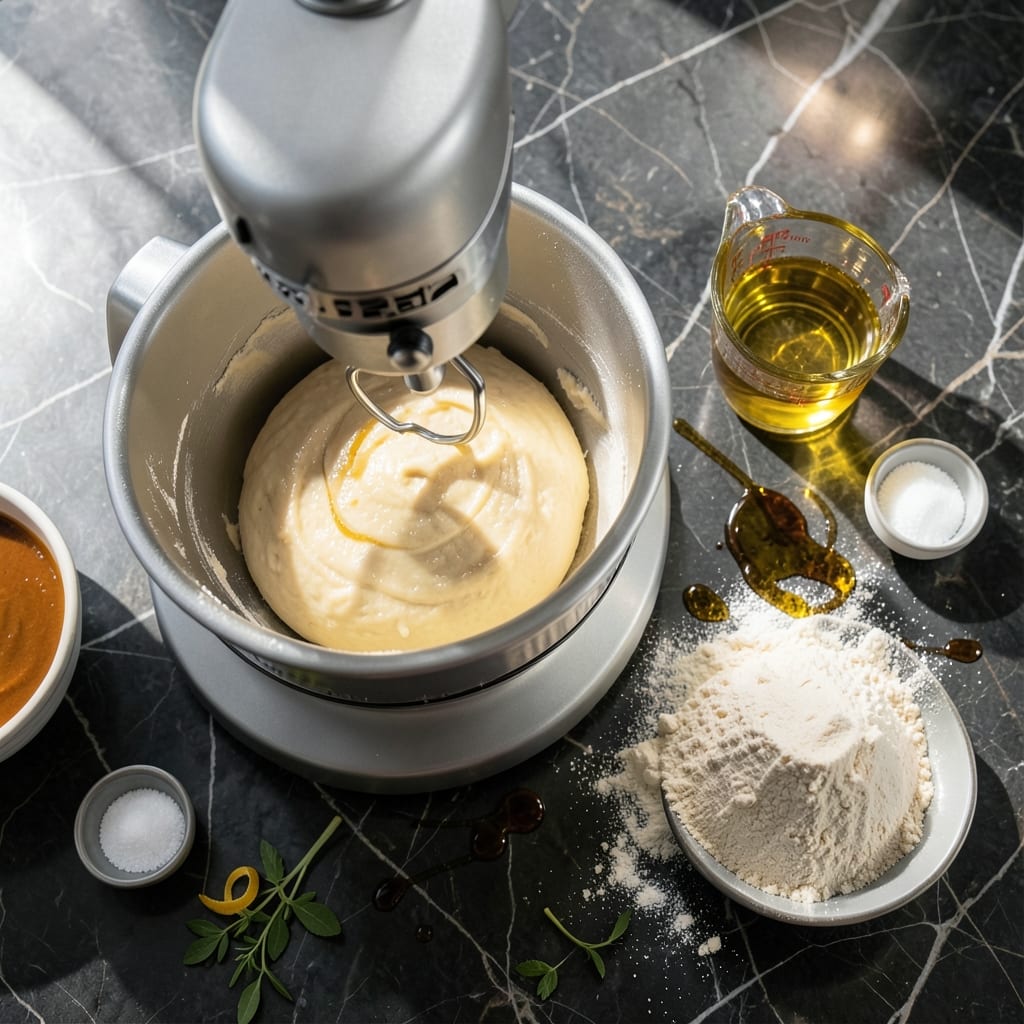
Making pizza dough at home doesn’t have to be complicated. My grandmother in Sicily taught me that great crust comes from patience and technique, not just effort.
Using a stand mixer with a dough hook makes this process effortless. The machine handles the kneading, so you get smooth, elastic dough without the manual work.
What you’ll get is a homemade crust with the perfect balance of chewiness and crispness. It’s the foundation for any pizza night, ready in minutes.
This method delivers consistent, professional results every time. Let’s get started.
Ingredients for Pizza Dough Recipe Machine
Nine simple ingredients transform into that perfect Sicilian-style crust with ease.
| Ingredient | Amount | Notes |
|---|---|---|
| Bread Flour 🌾 | 3 ½ cups | High-protein for chewy texture |
| Active Dry Yeast 🍞 | 2 ¼ tsp | One packet, proofed in warm water |
| Granulated Sugar 🧂 | 1 tsp | Feeds the yeast for activation |
| Kosher Salt 🧂 | 1 ½ tsp | Diamond Crystal preferred |
| Extra-Virgin Olive Oil 🫒 | 2 tbsp | For richness and elasticity |
| Warm Water 💧 | 1 ¼ cups | 110°F for yeast activation |
| Semolina Flour 🌾 | ¼ cup | For dusting work surface |
| All-Purpose Flour 🌾 | ½ cup | For adjusting dough consistency |
| Cornmeal 🌽 | 2 tbsp | For pizza peel dusting |
| Honey 🍯 | 1 tsp | Optional, enhances yeast activity |
The flour is everything here. King Arthur Bread Flour is my go-to for its high protein content—gives you that chewy, elastic texture. Yeast matters too: SAF Red Instant Yeast if you can find it, but any active dry works. Warm water should feel like bathwater (not hot) to wake the yeast without killing it. I always keep Diamond Crystal kosher salt on hand—it’s less dense than table salt, so you get better control.
No bread flour? All-purpose in a pinch, but add an extra tablespoon of vital wheat gluten per cup. Out of semolina? Fine cornmeal works for dusting. Honey can replace sugar if you’re out—use the same amount. The olive oil isn’t just for flavor; it keeps the dough tender. If you’re making this often, buy yeast in bulk and store it in the freezer to extend its life.
Dough balls keep in the fridge for 2-3 days (they’ll develop more flavor) or freeze for 1 month. Let frozen dough thaw overnight in the fridge. Bring ingredients to room temp before mixing—cold water can shock the yeast, and cold flour takes longer to hydrate.
Why You’ll Love This Recipe
- Set It and Forget: The bread machine does all the kneading while I sip coffee. Honestly, it’s the easiest dough I’ve ever made.
- Crispy Chewy Bliss: That olive oil in the dough gives it a rich, golden crust with just the right bite.
- Endless Meal Options: I’ve used this for calzones, focaccia, and even cinnamon rolls. Between us, it’s my secret weapon.
- Budget-Friendly Batch: One dough ball makes two large pizzas, and the ingredients cost less than delivery. I’ll be real: it’s saved me a fortune.
Step-by-Step Instructions for Pizza Dough Recipe Machine
Here’s the method. Straightforward, tested, works every time.
Step 1: Proof the Yeast and Activate the Foundation
In your stand mixer bowl, combine the 1.25 cups warm water with the 1 tsp granulated sugar and 1 tsp honey. The warmth should feel like bathwater—about 110°F. This temperature wakes up the yeast without killing it.
Sprinkle the 2.25 tsp active dry yeast over the surface and let it sit undisturbed for 5-10 minutes until it becomes foamy and aromatic. You’re looking for a thick, bubbly layer that smells slightly sweet and yeasty. This visual confirmation means your yeast is alive and ready to leaven your dough.
Step 2: Mix and Knead the Dough to Perfect Consistency
Fit your mixer with the dough hook attachment. Add the 3.5 cups bread flour and 1.5 tsp kosher salt to the yeast mixture. Start mixing on low speed until the ingredients come together, then increase to medium speed for 8-10 minutes. The dough should pull away from the sides and form a smooth, elastic ball.
With the mixer still running, drizzle in the 2 tbsp extra-virgin olive oil and let it incorporate fully. If the dough feels too sticky, add up to 0.5 cup all-purpose flour, 1 tablespoon at a time, until it reaches the right consistency. You want dough that’s tacky but not sticky—it should spring back slowly when poked.
Step 3: First Rise for Optimal Flavor Development
Lightly oil a large bowl with some of the extra-virgin olive oil and transfer the dough to it. Turn the dough to coat all sides with oil, then cover the bowl with a damp kitchen towel or plastic wrap. Let it rise in a warm, draft-free place for 1-2 hours or until doubled in size.
I like to place it in an oven with the light turned on (creates a perfect 80-85°F environment). The dough is ready when it springs back slowly when pressed lightly with a finger, leaving a slight indent. This first rise develops the gluten structure and enhances the flavor complexity of your crust.
Step 4: Divide, Shape, and Second Rise for Perfect Texture
Punch down the dough to release the air, then turn it out onto a surface lightly dusted with 0.25 cup semolina flour. Divide the dough into 4 equal portions (about 250g each) for individual pizzas. Shape each portion into a tight ball by pulling the edges toward the center and pinching them together.
Place the dough balls on a baking sheet dusted with 2 tbsp cornmeal to prevent sticking. Cover loosely with a towel and let rise for another 30-45 minutes at room temperature. The dough balls should puff up noticeably but not double in size. This second rise relaxes the gluten, making the dough easier to stretch without tearing.
Pro Tips For Making Pizza Dough Recipe Machine
- Warm Your Water: Use 110°F water for the yeast—any hotter kills it, any cooler slows activation. I learned this the hard way after a batch didn’t rise.
- Measure Flour Right: Spoon bread flour into your cup and level it off; scooping directly compresses it and makes dough too dense. My early pizzas were bricks until I fixed this.
- Don’t Rush the Knead: Let the machine run 8-10 minutes until the dough is smooth and elastic—stopping early gives you a tough crust. Yes, even if you’re impatient like me.
- Oil the Bowl: Coat the rising bowl with about 1 tablespoon of olive oil so the dough doesn’t stick. Sounds small, but it saves you from scraping half the dough off the sides later.
Troubleshooting This Recipe
Dough Too Sticky
If your dough sticks to your hands or the bowl, it needs more flour. Add 1 tbsp all-purpose flour at a time while the mixer runs on low. I’ve found King Arthur works best. Stop when the dough pulls cleanly from the sides. It should feel tacky, not wet. 💡
Dough Not Rising
Check your yeast first—if it didn’t foam during proofing, it may be expired. Ensure your water is 110°F (not hotter). Place the bowl in a warm spot, like an oven with the light on. If it’s cold in your kitchen, this can take longer than the 1-2 hours suggested.
Over-Kneaded Dough
Mixing too long can make the dough tough. Watch for it pulling away from the bowl sides and forming a smooth ball—this usually takes 8-10 minutes on medium. If it starts looking dense or dry, you’ve gone too far. Next time, check it a minute earlier.
Dense or Tough Crust
This often means under-proofed dough or too much flour. Let it rise until truly doubled in size. When shaping, avoid pressing too hard—stretch gently. Using bread flour ensures the right protein content for a chewy, not tough, texture.
Dough Tears Easily
If it’s tearing during stretching, the gluten may need more relaxation. Let the dough rest for an extra 10-15 minutes after the second rise. Dust your surface with semolina flour to prevent sticking while you work.
Uneven Baking
For consistent results, shape your dough into uniform 250g balls. Use cornmeal on your peel to prevent sticking. Rotate the pizza halfway through baking for an even golden crust, just like Nonna taught me. ✨
Nutrition Facts
Frequently Asked Questions
What attachment should I use for kneading?
Always use the dough hook attachment on your stand mixer. The flat beater won’t develop gluten properly. Knead on medium speed for 8-10 minutes until smooth.
Can I make this dough by hand instead?
Yes, though it requires more effort. Knead vigorously for 12-15 minutes until elastic. The machine just saves time and ensures consistent results.
How do I know when the dough has risen enough?
It should double in size and spring back slowly when pressed. For warmth, place it in an oven with the light on (80-85°F).
Why did my crust turn out dense?
Likely under-proofed or over-floured. Let it rise fully and measure flour precisely. Bread flour gives the best chewy texture.

- Potato Candy Recipe 1933: Vintage Peanut Butter Roll Delight - October 30, 2026
- Potato Chip Cookie Recipe With Pecans: Buttery Crunch Meets Nutty Richness - October 30, 2026
- Potato Patty Recipe No Egg: Crispy Edges Without the Binder - October 30, 2026