
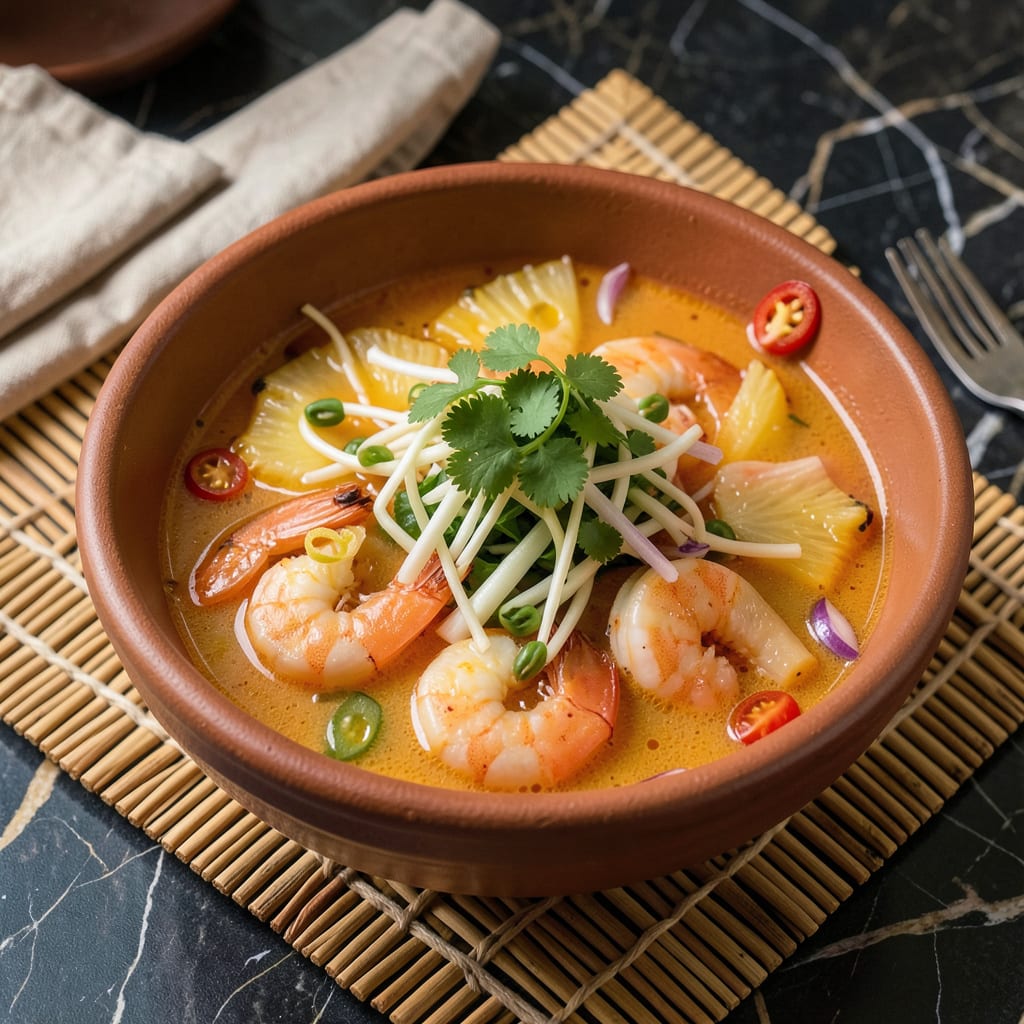
Canh chua tom is a tangy Vietnamese shrimp soup featuring a sweet-sour tamarind broth, fresh pineapple, tomatoes, and aromatic herbs like cilantro and Vietnamese mint. Ready in 30 minutes with simple ingredients.
This iconic soup captures the essence of Vietnamese comfort food through its harmonious balance of bold flavors. 🔥 The tamarind base delivers that signature sour punch, while ripe pineapple adds natural sweetness that cuts through the richness. What truly elevates it are the fresh herbs—particularly rau om (Vietnamese coriander) and ngò gai (sawtooth herb)—which contribute layers of citrusy, peppery notes you won’t find in other sour soups. I love how the shrimp absorb all these vibrant flavors during their quick 2-3 minute simmer, making every bite a perfect harmony of textures and tastes.
The beauty lies in its adaptability too. While traditional versions stick to river shrimp, coastal regions often incorporate squid or fish for variety. The broth’s complexity comes from a careful dance between fish sauce for umami depth and just enough sugar to round out the acidity. This isn’t just soup—it’s a masterclass in Vietnamese flavor balancing that comes together faster than most weeknight meals. ✨
💡 In This Article
- Key Ingredients That Define Authentic Canh Chua Tom
- Step-by-Step Techniques for Perfect Canh Chua Tom Broth
Key Ingredients That Define Authentic Canh Chua Tom
The soul of this soup lies in its tamarind base, where fresh tamarind pulp (about 2 tablespoons for 4 cups of broth) delivers a more complex, layered sourness than paste. The pulp contains natural pectin that gives the broth a subtle velvety texture, while paste can sometimes taste one-dimensional.
🔥 I’ve found that soaking the pulp in 1 cup of warm water for 15 minutes before straining extracts maximum flavor without bitterness.
Pineapple isn’t just for sweetness—it’s the acidity regulator. The enzyme bromelain in fresh pineapple (about 1 cup of chunks) actively breaks down proteins, which tenderizes the shrimp during cooking. This is why canned pineapple won’t work as well; the canning process destroys most bromelain.
The fruit’s natural sugars also caramelize slightly when simmered, adding depth that balances the tamarind’s sharpness. ✨
The herb combination is non-negotiable for authenticity. Rau om (Vietnamese coriander) contributes citrusy, slightly peppery notes, while ngò gai (sawtooth herb) adds a unique celery-like freshness. Together they create what Vietnamese call “hương vị”—the aromatic essence that makes the soup instantly recognizable. Without these, you’re missing about 40% of the flavor profile. 🌟
Protein choices reveal regional adaptations. River shrimp remain classic, but coastal versions often use squid rings (cooked just 1-2 minutes to avoid rubberiness) or firm white fish like catfish. The key is choosing proteins that can stand up to the bold broth—delicate fish would get lost.
For vegetarians, tofu puffs absorb the flavors beautifully while maintaining texture. 💫
Fish sauce selection dramatically impacts the umami foundation. Look for Red Boat or Three Crabs brands with protein levels above 25g/L—this indicates higher quality fermentation. The sauce should be added in stages: 1 tablespoon initially, then adjusted at the end.
This prevents over-salting while allowing the broth’s natural sweetness from tomatoes and pineapple to develop first. ⚡
Tomatoes serve a dual purpose beyond color. Their natural glutamates enhance umami perception by about 30% when cooked down. I recommend using Roma tomatoes (about 2 medium) for their lower water content and higher flesh-to-seed ratio. The seeds contain most of the gelatinous pectin, which helps thicken the broth slightly during the 10-minute simmer. 💛
One overlooked ingredient is the cooking oil. Traditional recipes use annatto-infused oil (just 1 teaspoon) for its subtle earthy notes and golden color. This isn’t just for appearance—the annatto’s mild peppery flavor complements the tamarind’s acidity. If unavailable, a touch of turmeric (about 1/8 teaspoon) can provide similar visual warmth without overpowering the broth. 🌟

- BBQ Sausage Recipe Oven: Smoky Depth Without the Grill - September 28, 2026
- BBQ Chicken Bowl Recipe Rice: Smoky Sweetness Over Fluffy Grains - September 28, 2026
- Beef Cutlet Recipe Ideas: Crispy Breaded Patties With Bold Seasonings - September 28, 2026