
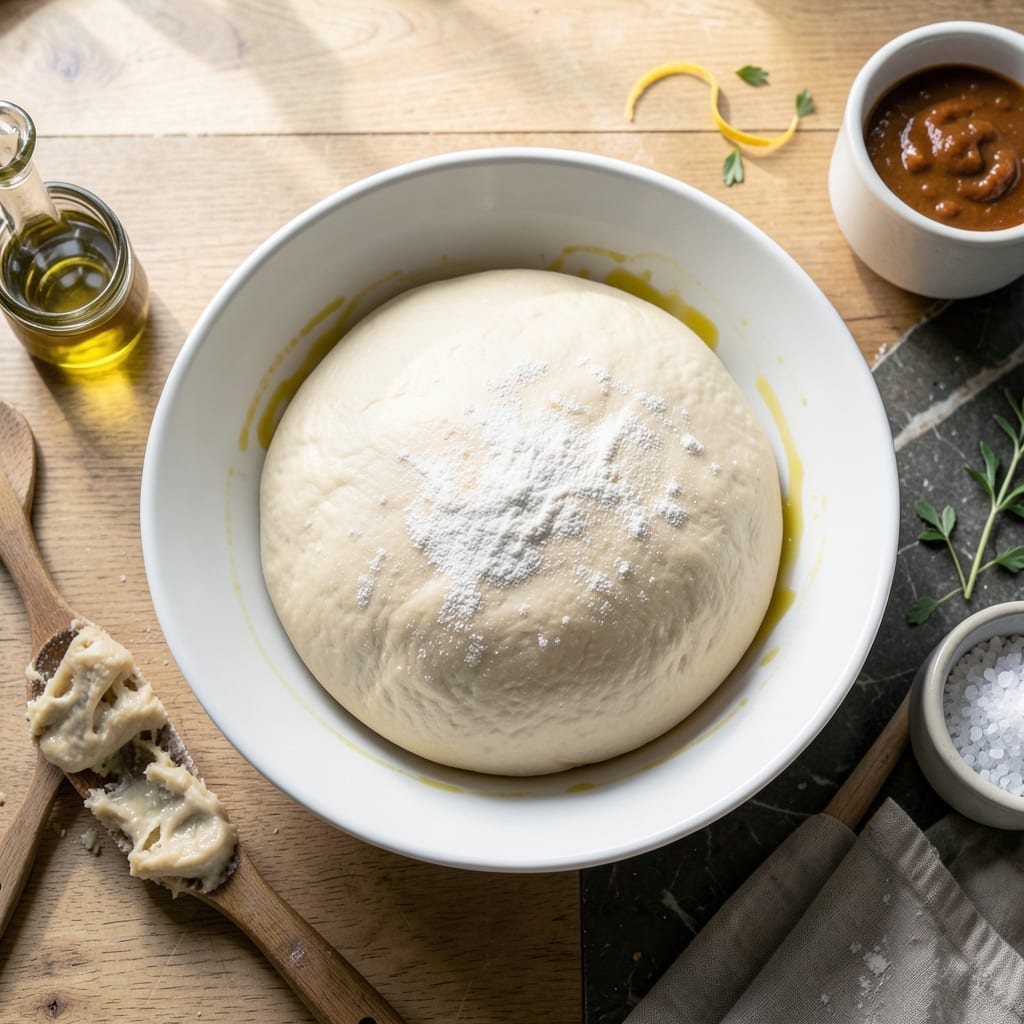
This pizza dough delivers a chewy interior with airy bubble edges that rival any pizzeria. I’ve refined the process to ensure consistent results every time, focusing on texture and flavor development.
The key is a slow fermentation in the refrigerator, which enhances the dough’s depth and makes it easier to digest. This method doesn’t require advanced techniques—just patience and a few simple ingredients.
You’ll end up with a crust that’s crisp on the outside, tender inside, and dotted with those coveted golden bubbles. It’s the foundation for any great pizza, whether you prefer classic margherita or loaded toppings.
Let this dough rise overnight for the best texture. Here’s how to make it.
Ingredients for Casey’s Pizza Dough
A few simple ingredients yield professional-quality pizza dough with perfect texture and flavor.
| Ingredient | Amount | Notes |
|---|---|---|
| Bread Flour 🌾 | 3 ½ cups | High protein for chewy texture |
| Instant Yeast 🍞 | 1 ½ tsp | Or active dry yeast, proofed |
| Fine Sea Salt 🧂 | 2 tsp | Diamond Crystal preferred |
| Granulated Sugar 🍚 | 1 tsp | Activates yeast |
| Extra-Virgin Olive Oil 🫒 | 2 tbsp | For richness and elasticity |
| Lukewarm Water 💧 | 1 ¼ cups | 110-115°F ideal |
| Semolina Flour 🌾 | ¼ cup | For dusting work surface |
| All-Purpose Flour 🌾 | ½ cup | Optional for softer dough |
The flour is critical here. King Arthur Bread Flour is my go-to for its consistent protein content (around 12.7%), which delivers that trademark chew. Bob’s Red Mill is a solid alternative. Yeast freshness matters—check the expiration date and store unopened packets in the freezer. For salt, Diamond Crystal is the standard in professional kitchens due to its pure flavor and even distribution.
No bread flour? All-purpose flour plus 1 tbsp vital wheat gluten per cup gets you close. Instant yeast can be swapped for active dry—just proof it in the warm water first. The olive oil is non-negotiable for flavor and texture, but any neutral oil works in a pinch. For the water, use filtered if your tap has a strong taste. Sugar can be replaced with honey at equal amounts if preferred.
Dough can be refrigerated for up to 3 days before using—flavor improves with time. Store dry ingredients in airtight containers in a cool, dark place for 6-12 months. Yeast keeps in the freezer for 1 year unopened.
Why You’ll Love This Recipe
- I’ll be real: five simple pantry staples and I’ve got enough for two pizzas without breaking the bank.
- No Fuss Rising: Honestly, the instant yeast means I can skip the proofing wait—just mix, knead, and go.
- Crispy Yet Chewy: That bread flour gives it the perfect texture, while the olive oil adds a rich depth I can’t get enough of.
- Weeknight Hero: Between us, this dough handles everything from quick dinners to impromptu movie nights with zero stress.
Step-by-Step Instructions for Chewy Pizza Dough With Airy Bubble Edges
This method guarantees a perfect crust with minimal effort and maximum flavor.
Step 1: Activate Yeast and Combine Wet Ingredients
In a large mixing bowl, whisk together the 1.25 cups lukewarm water, 1.5 tsp instant yeast, 1 tsp granulated sugar, and 2 tbsp extra-virgin olive oil. The water should be warm to the touch but not hot—around 110-115°F is ideal.
Let the mixture sit for 5-10 minutes until it becomes frothy and bubbly. This confirms the yeast is active and ready to work. If you don’t see bubbles, your yeast may be expired—start over with fresh yeast for best results.
The sugar helps activate the yeast, while the olive oil adds richness and elasticity to the dough. This foundation ensures a tender, flavorful crust.
Step 2: Mix Dry Ingredients and Form the Dough
In a separate bowl, combine the 3.5 cups bread flour, 2 tsp fine sea salt, and the optional 0.5 cup all-purpose flour. Bread flour’s high protein content is key for that chewy texture, while the all-purpose flour softens the dough slightly.
Gradually add the dry ingredients to the wet mixture, stirring with a wooden spoon until a shaggy dough forms. It’s okay if it looks rough at this stage—you’ll smooth it out during kneading.
Turn the dough out onto a surface dusted with 0.25 cup semolina flour to prevent sticking. Semolina adds a subtle texture and helps absorb excess moisture, making the dough easier to handle.
Step 3: Knead Until Smooth and Elastic
Knead the dough by hand for 8-10 minutes until it becomes smooth, elastic, and slightly tacky to the touch. If the dough feels too sticky, sprinkle a little more bread flour, but avoid adding too much—this can make the crust dense instead of airy.
Press your thumb into the dough; if it springs back slowly, it’s ready. This gluten development is what gives the crust its signature chew. The dough should feel alive and slightly resistant as you work it.
Shape the dough into a ball and place it in a lightly oiled bowl. Cover with a damp towel or plastic wrap to prevent drying.
Step 4: Let the Dough Rise to Double in Size
Allow the dough to rise in a warm, draft-free spot for 1-2 hours, or until it has doubled in volume. For best results, I like to place it in an oven turned off but with the light on, which provides a consistently warm environment.
You’ll know it’s ready when it looks puffy and a finger pressed gently into the dough leaves a slight indentation that doesn’t spring back immediately. This rise time develops the flavor and creates those coveted airy bubbles in the crust.
If your kitchen is cool, the rise may take closer to 2 hours. Be patient—rushing this step can compromise texture.
Step 5: Shape, Rest, and Prepare for Baking
Punch down the dough to release excess air, then turn it out onto the semolina-dusted surface. Divide it into 4 equal portions for individual pizzas or leave it whole for a large pie.
Shape the dough by stretching it gently with your hands or rolling it with a pin. Avoid overworking it, which can deflate the air bubbles. Transfer the shaped dough to a parchment-lined baking sheet.
Let the dough rest for 15-20 minutes before adding toppings. This final rest relaxes the gluten, making it easier to stretch and ensuring an even bake. Your dough is now ready for sauce, cheese, and your favorite toppings.
Pro Tips For Making Casey’S Pizza Dough
- Warm Your Water: Use 110°F water for the yeast—any hotter and you’ll kill it, any colder and it’ll take forever to rise. I learned this the hard way after a few sad, flat dough pucks.
- Measure Flour Right: Spoon bread flour into your measuring cup and level it off—don’t scoop directly from the bag, or you’ll pack it down and end up with dense, tough dough.
- Skip Cold Olive Oil: Let your extra-virgin olive oil sit at room temp for 10 minutes before mixing. Sounds weird, but it blends better into the dough and gives a more even texture.
- Double the Rise: Give the dough a full 2 hours for its first rise, even if it looks ready sooner. After rushing it once, I finally figured out why my crust was always underwhelming.
Wine and Beer Pairings for This caseys pizza dough
Italian White Wines
For a classic pairing, try a crisp Pinot Grigio from Veneto—its bright acidity and citrus notes cut through the richness of the crust. A chilled Vermentino from Sardinia offers mineral undertones that complement the dough’s depth beautifully. 🍷
Bold Red Options
If you prefer red wine, opt for a light-bodied Chianti Classico with its cherry and earthy notes. A Barbera d’Asti brings juicy acidity and soft tannins that won’t overpower your pizza. Serve slightly chilled for best results.
Craft Beer Choices
An Italian-style pilsner like Birra del Borgo’s ReAle offers a clean, crisp finish that cleanses your palate. For craft lovers, a Belgian witbier with citrus and coriander notes adds an interesting twist. 🍺
Light Lager Picks
A classic Peroni or Moretti provides a refreshing, neutral backdrop that lets the dough’s flavor shine. These Italian lagers are widely available and pair effortlessly with any topping combination.
Non-Alcoholic Pairings
For a booze-free option, try a sparkling San Pellegrino Aranciata—its citrusy fizz enhances the crust’s texture. A cold iced tea with lemon also works surprisingly well, especially for lighter pizzas.
Nutrition Facts
Frequently Asked Questions
Can I use all-purpose flour instead of bread flour?
Yes, but add 1 tbsp vital wheat gluten per cup to mimic bread flour’s protein content. This helps maintain the chewy texture. Without it, the crust may be slightly softer.
How long can I refrigerate the dough before using?
You can store it in the fridge for up to 3 days. The flavor actually improves with time due to slow fermentation. Let it come to room temperature before shaping.
Why didn’t my dough rise properly?
Check your yeast freshness first—expired yeast won’t activate. Also, ensure your water was 110-115°F and the environment was warm enough. Drafts or cold kitchens can slow the process.

- BBQ Sausage Recipe Oven: Smoky Depth Without the Grill - September 28, 2026
- BBQ Chicken Bowl Recipe Rice: Smoky Sweetness Over Fluffy Grains - September 28, 2026
- Beef Cutlet Recipe Ideas: Crispy Breaded Patties With Bold Seasonings - September 28, 2026