
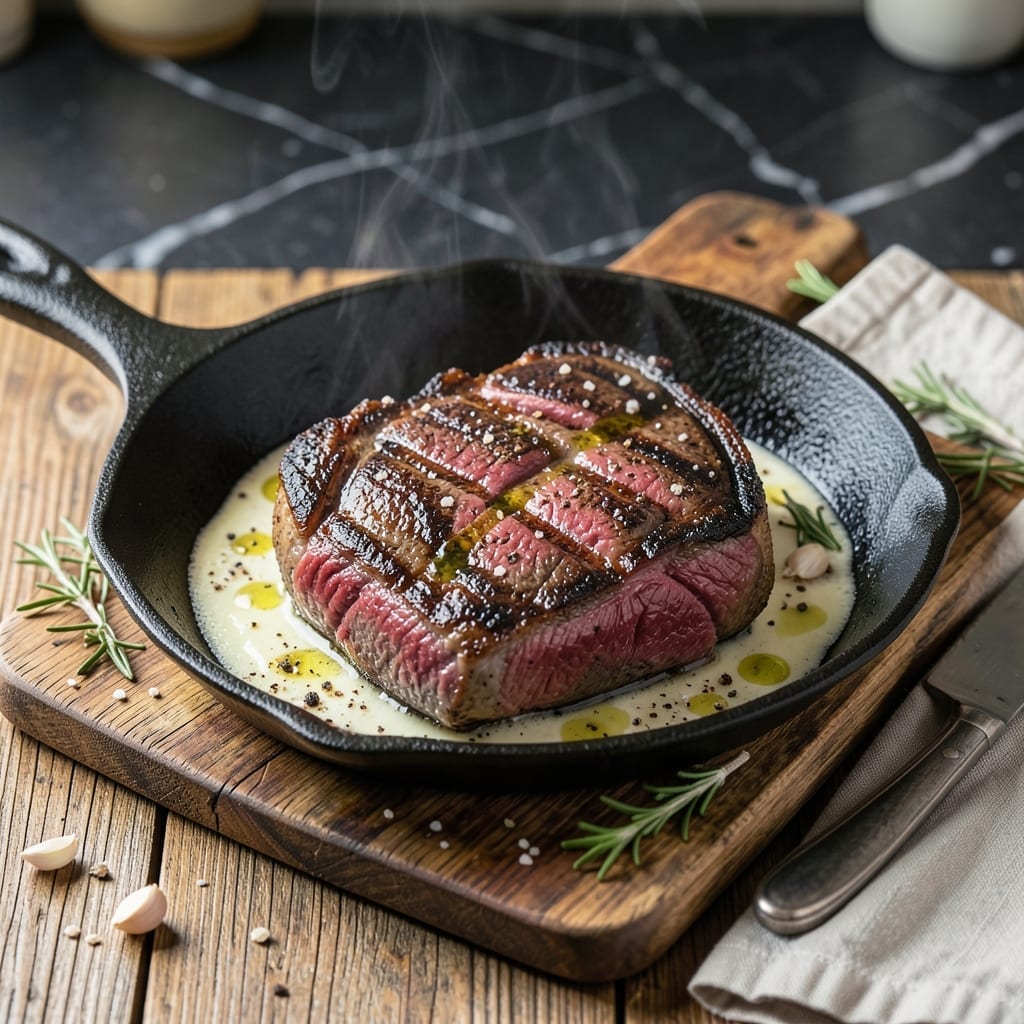
Achieving a juicy rib eye with a perfect crust in cast iron requires precision, not luck. This method delivers a steakhouse-quality result every time with minimal effort.
The key is a screaming hot pan, dry meat, and patience. I’ve tested countless variations, and this approach consistently produces a beautifully seared exterior with a tender, pink center.
You’ll sear the steak undisturbed to build a deep crust, then finish it with butter and aromatics for extra flavor. The result is a steak that’s rich, juicy, and packed with beefy flavor.
No fancy equipment needed—just a cast iron skillet, a good thermometer, and about 20 minutes of your time.
Ingredients for Cast Iron Rib Eye Steak
A few quality ingredients transform into steakhouse perfection at home.
| Ingredient | Amount | Notes |
|---|---|---|
| Rib Eye Steak 🥩 | 2 lb | Bone-in, 1.5 inches thick preferred |
| Kosher Salt 🧂 | 2 tsp | Diamond Crystal or Morton coarse |
| Freshly Ground Black Pepper 🌶️ | 1 tsp | Coarse grind for texture |
| Garlic Cloves 🧄 | 4 cloves | Lightly crushed, peeled |
| Unsalted Butter 🧈 | 4 tbsp | Divided into 1-tbsp portions |
| Fresh Rosemary Sprigs 🌿 | 2 whole | Optional for aromatic finish |
| Fresh Thyme Sprigs 🌿 | 2 whole | Optional for aromatic finish |
| Neutral Oil with High Smoke Point 🫒 | 2 tbsp | Avocado or grapeseed oil preferred |
| Flaky Sea Salt 🧂 | ½ tsp | For finishing, Maldon recommended |
The rib eye is non-negotiable here—bone-in for flavor, at least 1.5 inches thick so you get a perfect gradient from crust to center. I source mine from Whole Foods or a local butcher with dry-aged options. Pat it bone-dry before seasoning (this is crucial for that crust). Diamond Crystal kosher salt is my go-to for the initial seasoning—it adheres better and has a cleaner taste than iodized.
No rib eye? New York strip works but won’t be as tender. Swap rosemary for fresh sage if that’s what’s in the garden. Out of fresh herbs? Dried thyme at one-quarter the amount can pinch-hit. For the oil, any neutral high-smoke-point option is fine—avocado oil can handle the heat without smoking up your kitchen.
Cook immediately after seasoning—don’t let the salted meat sit. Leftovers? Wrap tightly and refrigerate for up to 4 days, but honestly, this is best eaten fresh. Reheat gently in a warm oven (not microwave) if you must. The butter can be pre-portioned ahead of time (worth the extra minute).
Why You’ll Love This Recipe
- One Pan Magic: I just need my cast iron, the steak, and a few pantry staples—no fancy tools or complicated steps.
- Buttery Garlic Crust: The sizzle of butter and garlic in the cast iron gives that rich, golden crust I can’t resist.
- Weeknight Luxury: Honestly, it feels fancy but I can pull this off even after a long day.
- Leftovers? Yes Please: Cold rib eye slices in a sandwich the next day taste even better.
Step-by-Step Instructions for Cast Iron Rib Eye Steak
This method guarantees a perfectly seared exterior with a juicy, medium-rare center every time.
Step 1: Season and Temper the Rib Eye
Pat the 2 lb Rib Eye Steak completely dry with paper towels—this is non-negotiable for achieving that perfect crust. I like to place it on a wire rack set over a plate to allow air circulation on all sides as it comes to room temperature for 45-60 minutes.
Season generously with the 2 tsp Kosher Salt and 1 tsp Freshly Ground Black Pepper on all surfaces, including the edges. Press the seasoning into the meat so it adheres well. This dry-brining step ensures the salt penetrates deeply, enhancing flavor and tenderness.
Step 2: Preheat the Cast Iron and Add Aromatics
Place your cast iron skillet over medium-high heat for 5-7 minutes until it’s screaming hot. You’ll know it’s ready when a drop of water sizzles and evaporates instantly. Add the 2 tbsp Neutral Oil with High Smoke Point and swirl to coat the pan evenly.
Add the 4 cloves Garlic Cloves, 2 whole Fresh Rosemary Sprigs, and 2 whole Fresh Thyme Sprigs to the pan. Cook for 30-45 seconds until the garlic starts to brown and the herbs become fragrant. Remove them from the pan and set aside—they’ll be used for basting later.
Step 3: Sear the Steak to Perfection
Carefully place the steak in the hot pan. For a 1.5-inch thick cut, sear undisturbed for 3-4 minutes until a deep brown crust forms. Use tongs to flip the steak—never a fork, as it pierces the meat and lets precious juices escape.
Immediately add 2 tbsp Unsalted Butter to the pan along with the reserved aromatics. Tilt the pan slightly and use a spoon to baste the steak with the melted butter, garlic, and herbs continuously. Sear the second side for another 3-4 minutes for medium-rare.
Step 4: Check Temperature and Rest
Use an instant-read thermometer to check the internal temperature. For medium-rare, aim for 125-130°F in the thickest part of the steak. If you don’t have a thermometer, use the touch test: the steak should feel like the base of your thumb when you touch your index finger to your thumb.
Transfer the steak to a cutting board and let it rest for 10-15 minutes. This crucial step allows the juices to redistribute throughout the meat. Toss the remaining 2 tbsp Unsalted Butter on top of the steak while it rests for extra richness.
Step 5: Slice and Finish
Slice the steak against the grain into ½-inch thick pieces. The grain runs in one direction—slicing perpendicular to it shortens the muscle fibers, making each bite more tender. Arrange the slices on a platter.
Sprinkle with the 0.5 tsp Flaky Sea Salt for a final finishing touch. Serve immediately while the steak is still warm. The flaky salt adds a delightful crunch and a burst of salinity that complements the rich, beefy flavor perfectly.
Pro Tips For Making Cast Iron Rib Eye Steak
- Dry the Steak: Pat the rib eye completely dry with paper towels before seasoning—moisture is the enemy of a good sear. I learned this the hard way after too many steaks steamed instead of sizzled.
- Crank the Heat: Get that cast iron screaming hot before adding the steak, then don’t touch it for 2-3 minutes to develop a proper crust. Sounds obvious, but I used to rush this step and wondered why my crust was weak.
- Use Thick-Cut: Go for at least 1.5-inch thick rib eyes—they sear better and stay juicy inside while the outside gets that perfect char.
- Baste with Butter: Tilt the pan and spoon the melted butter, garlic, and herbs over the steak repeatedly in the last minute—it adds flavor fast and looks impressive with almost no extra effort.
Creative Variations of This cast iron rib eye steak
Garlic-Herb Butter Baste
Swap the rosemary and thyme for 4 fresh sage leaves and 1 tsp crushed red pepper for a bold twist. The sage infuses the butter with earthy depth, while the red pepper adds subtle heat. I love this with a sprinkle of Parmesan cheese right before serving. 🌿
Reverse Sear Method
For thicker cuts (2 inches), start in a 250°F oven until internal temp hits 110°F, then sear in cast iron for 2 minutes per side. This guarantees even cooking without burning the butter. I use this for special occasions.
Coffee-Rubbed Version
Add 1 tbsp finely ground coffee and 1 tsp brown sugar to the salt and pepper before cooking. The coffee enhances the beef’s natural richness, while the sugar caramelizes beautifully. A pinch of cinnamon adds warmth.
Blue Cheese Finish
After resting, top with ¼ cup crumbled blue cheese and let it melt slightly from residual heat. The tangy, creamy cheese contrasts perfectly with the steak’s richness. I prefer Rogue River Blue for its bold flavor. 💛
Asian-Inspired Glaze
In the last 2 minutes of cooking, add 2 tbsp soy sauce, 1 tbsp honey, and 1 tsp grated ginger to the pan. Baste the steak with this glaze for a sweet-savory finish. Garnish with sliced scallions.
Smoked Salt Crust
Before searing, press 1 tsp smoked sea salt into the steak’s surface. This adds a subtle smokiness without needing a smoker. I find Maldon smoked salt works best. Finish with a drizzle of high-quality olive oil.
Nutrition Facts
Frequently Asked Questions
Why dry the steak before cooking?
Moisture on the surface prevents proper browning. Pat it completely dry for a deep, flavorful crust.
Can I use a thinner steak?
Yes, but reduce searing time to 2-3 minutes per side for 1-inch thick cuts. Thinner steaks cook faster and can overcook easily.
What if I don’t have a meat thermometer?
Use the touch test: medium-rare feels like the base of your thumb when touching index finger to thumb.
How hot should the pan be?
It should be screaming hot. A drop of water should sizzle and evaporate instantly. Medium-high heat for 5-7 minutes usually does it.

- BBQ Sausage Recipe Oven: Smoky Depth Without the Grill - September 28, 2026
- BBQ Chicken Bowl Recipe Rice: Smoky Sweetness Over Fluffy Grains - September 28, 2026
- Beef Cutlet Recipe Ideas: Crispy Breaded Patties With Bold Seasonings - September 28, 2026