
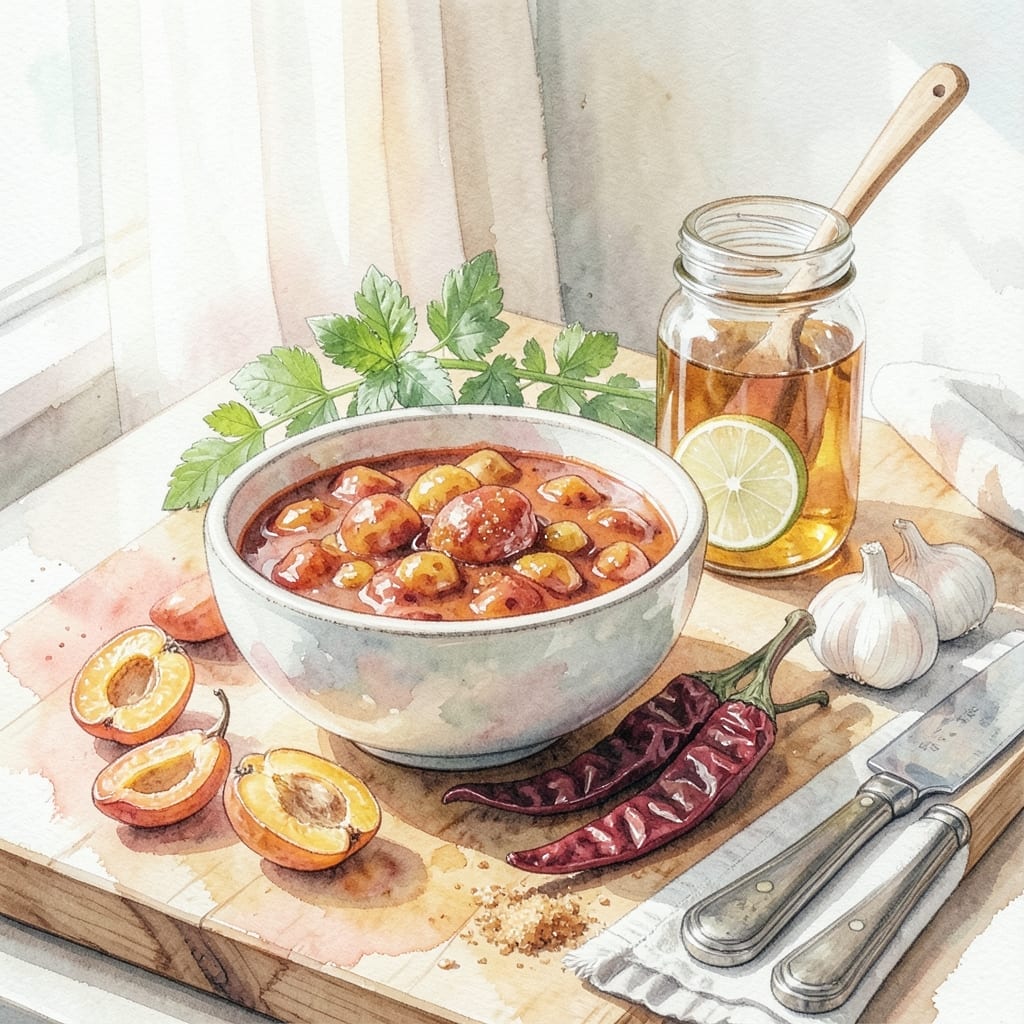
This versatile sauce brings the perfect balance of sweet, spicy, and tangy to any dish. I’ve refined this chamoy recipe over years of experimenting with fruit bases and chili combinations.
What makes this version special is its adaptability—use it as a dipping sauce, drizzle, or marinade. The key lies in slow-simmering the ingredients to develop depth without overpowering heat.
You’ll end up with a glossy, thick sauce that clings beautifully to fruits, meats, or even rims of glasses. Its complex flavor profile elevates everything it touches.
Store it in an airtight container in the fridge for up to a month. The flavors will continue to meld and intensify over time.
Ingredients for Chamoy Recipe Ideas
Eight ingredients transform into this glossy, complex sauce with perfect balance every time.
| Ingredient | Amount | Notes |
|---|---|---|
| Dried Apricots 🍑 | 1 cup | Pitted, chopped for texture |
| Dried Chili Peppers 🌶️ | ½ cup | Deseeded for less heat |
| Apple Cider Vinegar 🍏 | ½ cup | For tangy acidity balance |
| Lime Juice 🍈 | ¼ cup | Freshly squeezed preferred |
| Brown Sugar 🍚 | ½ cup | Packed, for sweetness depth |
| Garlic Cloves 🧄 | 4 cloves | Peeled, minced for aroma |
| Salt 🧂 | 1 tsp | Kosher or sea salt |
| Water 💧 | 1 cup | For simmering consistency |
The chili peppers define the heat level. Ancho or guajillo give a milder, fruitier base, while arbol or de árbol bring serious fire. Mexican grocery stores usually have the best selection dried—look for shiny, pliable pods without stems. For the apricots, organic Turkish are ideal (sweeter, more concentrated flavor), but any dried variety works in a pinch.
No dried chilies? Chili powder at 2 tbsp per 1/2 cup dried gets you close, though the depth won’t be quite the same. Swap brown sugar for coconut sugar or piloncillo (grated) for a different sweetness profile. Lime juice can be bottled (not ideal but functional), but fresh is non-negotiable for that bright, zingy finish. Out of apricots? Dried mango or peaches add great fruitiness.
This keeps 1 month in the fridge—flavors deepen with time. For longer storage, freeze in ice cube trays, then transfer to a bag. Thaw overnight before using. The sauce thickens as it cools; thin with water if needed (don’t add while hot).
Why You’ll Love This Recipe
- Five Ingredient Magic: I just dump dried apricots, chilis, vinegar, lime, and brown sugar into a pot—no chopping, no fuss.
- Sweet Heat Balance: The apricots mellow the chili burn while the lime keeps it bright and addictive.
- Endless Uses: I drizzle it on fruit, rim margaritas, or toss it with popcorn for movie night.
- Jar Full of Leftovers: Honestly, it keeps for weeks, so I always have that tangy-sweet kick ready.
Step-by-Step Instructions for Chamoy
Master this balance of sweet, spicy, and tangy with precise technique and timing.
Step 1: Rehydrate and Softens the Dried Apricots
Combine the 1 cup Dried Apricots and 1 cup Water in a small saucepan. Bring to a gentle boil over medium heat, then reduce to a simmer. Cook for 10-12 minutes until the apricots are plump and tender when pierced with a fork.
This step ensures the apricots blend smoothly into the final sauce. If the water evaporates before the apricots soften, add ¼ cup more Water and continue simmering. Drain any remaining liquid, but reserve it in case you need to adjust the consistency later.
Step 2: Toast the Dried Chili Peppers
In a dry skillet over medium heat, toast the 0.5 cup Dried Chili Peppers for 1-2 minutes per side. Watch closely—they should darken slightly and become fragrant, but not burn. Burning the peppers will make the chamoy bitter.
Once toasted, transfer the peppers to a bowl and cover with hot water to soften for 10 minutes. This step mellows their heat and makes them easier to blend. Drain before using, and remove any remaining seeds for a milder flavor.
Step 3: Blend the Base Ingredients
In a blender, combine the rehydrated Dried Apricots, toasted Dried Chili Peppers, 0.5 cup Apple Cider Vinegar, 0.25 cup Lime Juice, 0.5 cup Brown Sugar, 4 cloves Garlic Cloves, and 1 tsp Salt. Blend until completely smooth, scraping down the sides as needed.
The mixture should be thick but pourable. If it’s too thick, add 1-2 tablespoons of the reserved apricot soaking liquid or Water to reach the desired consistency. The acidity from the Apple Cider Vinegar and Lime Juice balances the sweetness of the Brown Sugar and apricots.
Step 4: Simmer and Reduce the Sauce
Transfer the blended mixture to a clean saucepan and bring to a gentle simmer over medium-low heat. Cook for 15-20 minutes, stirring frequently to prevent sticking, until the chamoy thickens slightly and develops a glossy sheen.
You’ll notice the sauce darken and the flavors deepen as it reduces. Taste and adjust the seasoning if needed—add a pinch more Salt for balance or a splash of Lime Juice for extra tang. The sauce should coat the back of a spoon but still be fluid enough to drizzle.
Step 5: Cool and Store for Optimal Flavor
Remove the chamoy from heat and let it cool to room temperature. As it cools, it will thicken further. Transfer to a clean, airtight jar or bottle for storage. The flavors will continue to meld and mature over the next 24 hours.
Stored in the refrigerator, this chamoy will keep for up to 2 weeks. For the best texture and ease of use, let it sit at room temperature for 10-15 minutes before serving to soften slightly. The final product should be smooth, vibrant, and packed with a perfect balance of sweet, spicy, and tangy notes.
Pro Tips For Making Chamoy Recipe Ideas
- Soak the Apricots: Cover dried apricots in hot water for 15-20 minutes before blending—I learned this the hard way after my first batch had chewy bits that refused to smooth out.
- Toast the Chilies: Dry-toast the chili peppers in a pan for 30 seconds until fragrant, but don’t let them burn or your chamoy will taste bitter instead of fruity and spicy.
- Balance the Sweet: Add brown sugar gradually and taste as you go—after over-sweetening my second batch, I now start with half the amount and adjust from there.
- Strain Twice: Run the blended mixture through a fine-mesh strainer twice for a silky texture—sounds tedious, but it’s the only way to get that perfect, smooth finish.
Regional Styles of chamoy recipe ideas
Mexican Street Style
This is the classic version you’ll find at fruit stands across Mexico. I use ancho and guajillo chilies for a milder, fruit-forward heat that pairs perfectly with fresh mango or pineapple. The sauce should be thin enough to drizzle over fruit cups. 🌶️
Oaxacan Bold
Oaxacan chamoy amps up the heat with chilies de árbol and adds a smoky depth by toasting the apricots and chilies together in a dry pan before blending. The result is a darker, more complex sauce that holds up to grilled meats.
Yucatán Citrus
The Yucatán version incorporates sour orange juice (or a mix of lime and orange juice) for a brighter citrus note. I also add a pinch of achiote powder for color and earthiness. This style shines with seafood dishes.
Texas Fusion
Lone Star chamoy often includes tomato paste for body and liquid smoke for that BBQ flavor. I’ve seen versions with chipotle peppers in adobo that add a smoky-sweet dimension perfect for ribs or brisket.
Modern Fruit Twist
For a contemporary take, I blend in dried mango or peaches instead of apricots. The tropical fruit base creates a vibrant sauce that’s amazing with shrimp cocktails or as a glaze for chicken wings. 💛
Spicy Margaritas
In border towns, chamoy is used to rim margarita glasses. The sauce is reduced further to a syrup consistency and mixed with tajín seasoning for the perfect sweet-spicy-salty rim. This style works best with a thinner, more liquid chamoy.
Nutrition Facts
Frequently Asked Questions
Can I use fresh fruit instead of dried?
Yes, but reduce added liquids since fresh fruit releases moisture. Use 1.5 cups fresh apricots and skip the rehydration step. Simmer longer to achieve the right thickness.
How do I adjust the heat level?
Remove all seeds from chilies for mild heat. For extra spice, add 1-2 arbol chilies or a pinch of cayenne. Taste after blending and adjust before simmering.
What’s the best way to use leftover sauce?
Drizzle over fresh fruit, mix into cocktails, or use as a glaze for grilled meats. Thin with water for a light dressing or reduce further for a thicker dip.
Can I make this without a blender?
Finely chop all ingredients first, then simmer until very soft. Mash with a potato masher, but expect a rustic texture. For smooth results, blending is essential.

- BBQ Sausage Recipe Oven: Smoky Depth Without the Grill - September 28, 2026
- BBQ Chicken Bowl Recipe Rice: Smoky Sweetness Over Fluffy Grains - September 28, 2026
- Beef Cutlet Recipe Ideas: Crispy Breaded Patties With Bold Seasonings - September 28, 2026