
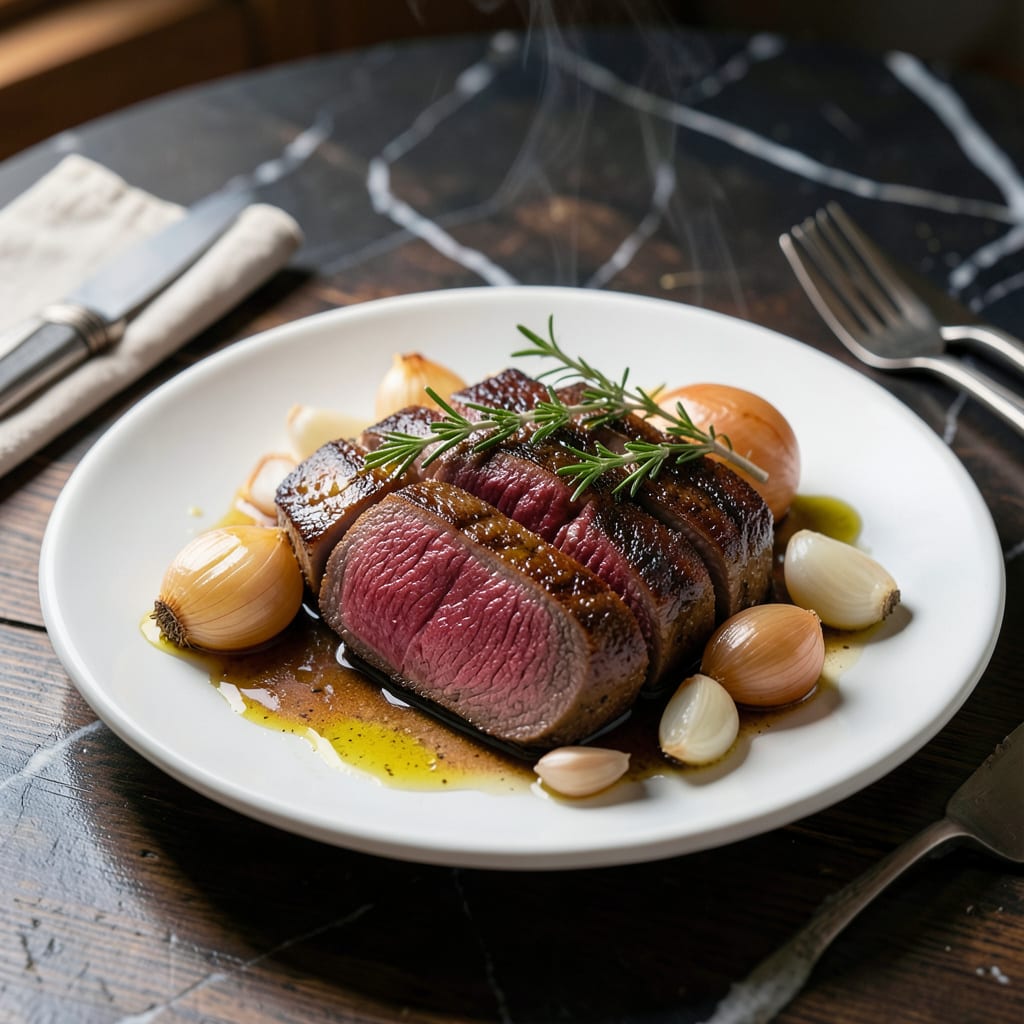
Julia Child elevated chateaubriand to an art form, and this classic French preparation honors her legacy. The tender beef center cut transforms into a masterpiece with simple yet precise techniques.
Achieving tender, perfectly cooked beef requires understanding temperature control and timing. The result is a dish that embodies French culinary elegance, ideal for special occasions.
Ingredients for Chateaubriand Recipe Julia Child
Classic French elegance requires just these refined ingredients for a showstopping centerpiece.
| Ingredient | Amount | Notes |
|---|---|---|
| Beef Tenderloin Center Cut 🥩 | 2 lb | Chateaubriand cut, trimmed and tied |
| Unsalted Butter 🧈 | 6 tbsp | Divided for searing and basting |
| Shallots 🧅 | 2 whole | Finely minced for sauce |
| Garlic Cloves 🧄 | 4 cloves | Crushed lightly with skin on |
| Fresh Thyme Sprigs 🌿 | 4 sprigs | Plus extra for garnish |
| Fresh Rosemary Sprigs 🌿 | 2 sprigs | For aromatic basting |
| Dry Red Wine 🍷 | ½ cup | Full-bodied like Cabernet Sauvignon |
| Beef Stock 🥫 | 1 cup | Low-sodium preferred for reduction |
| Dijon Mustard 🟡 | 2 tbsp | Smooth, not whole grain |
| Heavy Cream 🥛 | ½ cup | For finishing the sauce |
| Kosher Salt 🧂 | 1 ½ tsp | Diamond Crystal brand recommended |
| Freshly Ground Black Pepper 🌶️ | 1 tsp | Coarse grind preferred |
| Olive Oil 🫒 | 2 tbsp | For initial searing |
| Cognac or Brandy 🥃 | ¼ cup | Optional for deglazing |
The beef is paramount here. Whole Foods or a trusted butcher will have the center-cut tenderloin you need—look for bright red color with good marbling. The chateaubriand cut should be 6-8 inches long, trimmed of excess fat. ties help maintain shape during cooking. USDA Prime grade guarantees the tenderness Julia insisted upon, though Choice works in a pinch.
No red wine? Substitute with additional beef stock plus 1 tsp balsamic vinegar. Shallots can be replaced with yellow onion at a 1:1 ratio, though the flavor will be slightly milder. For a non-alcoholic version, omit the cognac entirely—the dish remains excellent. The herbs must be fresh; dried at one-third the amount simply won’t provide the same aromatic quality.
Prepare the beef just before cooking for optimal texture. The finished dish holds beautifully at 140°F in a warm oven for up to 30 minutes. Leftovers (if any exist) keep 3-4 days refrigerated, though chateaubriand is best enjoyed immediately.
Why You’ll Love This Recipe
- One Pan Elegance: I love that this only dirties one skillet—sear the beef, melt the butter with shallots and garlic, and it’s practically done.
- Buttery Indulgence: That combo of melted butter, thyme, and caramelized shallots makes every bite ridicuously rich.
- Dinner Party Hero: It looks fancy but honestly takes less effort than a weeknight roast, and always impresses.
- Next-Day Magic: Leftovers? Slice thin for sandwiches—if there are any left after the first serving.
Step-by-Step Instructions for Chateaubriand
Master this classic French technique for perfectly tender beef with rich, velvety sauce.
Step 1: Sear the Beef Tenderloin to Perfection
Pat the 2 lb Beef Tenderloin Center Cut dry with paper towels and season evenly with the 1.5 tsp Kosher Salt and 1 tsp Freshly Ground Black Pepper. Heat the 2 tbsp Olive Oil in a heavy skillet over medium-high heat until shimmering.
Carefully place the beef in the pan. Sear undisturbed for 3-4 minutes until a deep, golden crust forms. Flip and sear the other side for another 3-4 minutes. The surface should be deep brown with a crisp crust. This creates the flavor foundation for the dish.
Add 2 tbsp Unsalted Butter, the 4 cloves Garlic Cloves, 4 sprigs Fresh Thyme Sprigs, and 2 sprigs Fresh Rosemary Sprigs to the pan. Tilt slightly and baste the beef with the melted butter and herbs for 1-2 minutes to infuse additional flavor.
Step 2: Deglaze and Build the Sauce Base
Transfer the beef to a cutting board and tent loosely with foil to rest. Pour off all but 2 tbsp of fat from the skillet. Return to medium heat and add the finely minced 2 whole Shallots. Cook for 2-3 minutes until softened and translucent.
Carefully add the 0.25 cup Cognac or Brandy and scrape up all browned bits from the bottom of the pan with a wooden spoon. Cook until the liquid reduces by half, about 2 minutes. This step extracts maximum flavor from the fond.
Pour in the 0.5 cup Dry Red Wine and simmer for 3-4 minutes until reduced by half. The mixture should be syrupy and deeply aromatic. Add the 1 cup Beef Stock and simmer for another 5 minutes until slightly thickened.
Step 3: Finish the Sauce and Slice the Beef
Reduce heat to low and whisk in the 2 tbsp Dijon Mustard and remaining 4 tbsp Unsalted Butter, one tablespoon at a time, until the sauce is smooth and glossy. Stir in the 0.5 cup Heavy Cream and simmer for 2-3 minutes until slightly thickened.
Taste and adjust seasoning if needed. The sauce should coat the back of a spoon with a rich, velvety texture. Strain through a fine-mesh sieve if you prefer a smoother consistency, pressing gently on the shallots to extract all flavor.
Slice the rested beef into ½-inch thick medallions against the grain. The beef should be medium-rare with a warm red center. Arrange the slices on a platter and spoon the sauce over the top, allowing some to pool on the serving dish.
Step 4: Serve with Elegance
Garnish with additional Fresh Thyme Sprigs for a touch of color and freshness. The beef should be served immediately while warm, with the sauce still glossy and fluid. Each serving should include several tender medallions with a generous portion of sauce.
The final dish should showcase the beef’s natural tenderness, enhanced by the rich, wine-infused sauce. The combination of herbs, shallots, and mustard creates a complex, balanced flavor profile that complements the beef without overpowering it.
Pro Tips For Making Chateaubriand Recipe Julia Child
- Sear Hot, Oven Low: Crank the skillet to smoking hot for the initial sear—I learned this the hard way after my first gray, sad chateaubriand. Then finish at 400°F in the oven for even cooking.
- Dry the Beef Well: Pat the tenderloin bone-dry with paper towels before seasoning. My grandmother swore by this, and she was right: it’s the only way to get that deep, golden crust.
- Skip the Overcrowding: Don’t cram the pan with shallots and garlic too early—they’ll burn before the beef finishes. Add them during the last few minutes of searing instead.
- Butter Baste Often: Tilt the pan and spoon that melted butter, thyme, and shallot mixture over the beef every 30 seconds. Sounds fussy, but it actually changes the outcome—richer flavor and a glossy finish.
Dietary Considerations for This Recipe
Gluten-Free By Nature
This creation is naturally gluten-free since it relies on whole ingredients like beef, butter, and herbs. Just double-check your beef stock and Dijon mustard labels, as some brands add wheat-based thickeners. I always use Annie’s or Maille for safety. 💪
Dairy Modifications
For dairy-free versions, swap unsalted butter with olive oil or coconut oil for searing. Replace heavy cream with full-fat coconut milk, which adds richness without overpowering the dish’s elegant profile.
Vegan butter works for basting, but expect slightly different browning. The sauce will still emanate deep, savory notes from the wine and shallots.
Low-Carb Friendly
With just 6g net carbs per serving (mostly from wine and shallots), this dish fits perfectly into keto or low-carb lifestyles. The protein-rich beef and fat from butter create a satiating meal that keeps you full for hours.
Allergen Awareness
Watch for sulfites in the wine if sensitive—I recommend Frey Vineyards for sulfite-free options. The dish contains no nuts, eggs, or soy, making it safe for most common allergies.
Always confirm with guests about specific dietary restrictions before serving this elegant centerpiece. 🥗
Nutrition Facts
Frequently Asked Questions
What’s the best internal temperature for perfect results?
Use a meat thermometer and remove from heat at 125°F for medium-rare. The temperature will rise to 130-135°F while resting. This ensures tender, juicy slices every time.
How long should the beef rest before slicing?
Let it rest for 10-15 minutes under foil. This allows juices to redistribute, preventing dry meat. Slicing too soon causes flavor loss and uneven texture.
Can I use a different cut of beef?
Stick to center-cut tenderloin for authenticity. Other cuts lack the necessary tenderness. If unavailable, a whole tenderloin can work, but trim it to 2-3 inches thick for even cooking.
What if my sauce is too thin?
Simmer uncovered for 3-5 extra minutes to reduce. Avoid boiling, as it can cause separation. If too thick, whisk in 1-2 tbsp warm water.

- BBQ Sausage Recipe Oven: Smoky Depth Without the Grill - September 28, 2026
- BBQ Chicken Bowl Recipe Rice: Smoky Sweetness Over Fluffy Grains - September 28, 2026
- Beef Cutlet Recipe Ideas: Crispy Breaded Patties With Bold Seasonings - September 28, 2026